On this page
- Where to Buy a SIM Card in Thailand
- The Three Main Networks: AIS, True Move H, and DTAC
- Tourist SIM Packages Available in 2026
- How to Activate Your SIM and Register Your Passport
- Staying Connected in Regional Thailand: Coverage Gaps and Practical Workarounds
- 2026 Budget Reality: What You’ll Actually Pay
- Frequently Asked Questions
Thailand‘s real-time QR payment system, ride-hailing apps, and Google Maps-dependent transport make a working SIM card less of a luxury and more of a survival tool in 2026. The frustration most travellers hit is simple: they land at Suvarnabhumi or Don Mueang, see four carrier booths all shouting deals, and have no idea which one to trust or whether it’ll actually work when they reach a guesthouse in Mae Hong Son or a beach bungalow in Trang. This guide cuts through the noise.
Where to Buy a SIM Card in Thailand
You have more options than you probably expect, and the right one depends on where you arrive and how much you want to spend on convenience.
At the Airport
Every major international airport in Thailand — Suvarnabhumi (BKK), Don Mueang (DMK), Chiang Mai (CNX), Phuket (HKT), and Krabi (KBV) — has dedicated carrier counters in the arrivals hall. AIS, True Move H, and DTAC (which now operates under the True Move H umbrella following their 2023 merger, though both brands still sell separately) all have booths. Staff speak functional English and the process takes about five minutes. Prices at airport counters are slightly higher than elsewhere, but you walk out with a working SIM before you even reach the taxi rank, which is worth something.
Suvarnabhumi has the most competitive setup — booths from all three brands sit within 20 metres of each other in the arrivals corridor on Level 2, so you can compare packages side by side without walking far. Don Mueang’s counters are on the ground floor just past customs.
7-Eleven and Convenience Stores
There are roughly 14,000 7-Eleven stores across Thailand as of 2026, and most of them sell prepaid SIM cards. You’ll find AIS and True Move H SIMs in virtually every branch, including in small provincial towns. The packaging is in Thai, which confuses some travellers, but the staff can usually help you pick the right tourist package. The price here is genuinely lower than airport counters — sometimes by 50–100 THB for the same package.

Carrier Flagship Stores
If you’re already in a city and want the full range of packages — including longer-duration SIMs for stays over 30 days — walk into a flagship store. AIS flagship branches exist in every provincial capital. True Move H has a strong retail presence in shopping malls like CentralWorld (Bangkok), Central Festival (Chiang Mai, Phuket), and Maya Mall (Chiang Mai). These stores can also help you swap to a larger data package mid-trip or troubleshoot an activation problem. Staff at flagship stores typically have better English than convenience store clerks.
Online Before You Arrive
In 2026, buying a Thailand tourist eSIM before departure has become genuinely mainstream. Providers like Airalo, Simify, and the carriers’ own apps sell eSIM packages you activate before your flight lands. This is the fastest option for travellers with eSIM-compatible phones. The caveat: eSIM packages from third-party resellers sometimes cost more per GB than buying directly in Thailand, and local customer support is harder to reach if something goes wrong.
The Three Main Networks: AIS, True Move H, and DTAC
Following the True-DTAC merger, Thailand effectively operates with two major network infrastructures — AIS and the True/DTAC combined network — though DTAC-branded SIMs still exist and use the same towers as True Move H. Here’s what that means practically.
AIS
AIS consistently scores highest for 4G and 5G coverage in independent speed tests across Thailand. In 2026, AIS operates the widest 5G footprint, covering Bangkok, Chiang Mai, Phuket, Pattaya, Khon Kaen, and Hat Yai city centres. More importantly for travellers heading off the tourist trail, AIS has the best rural 4G coverage — their network reaches into highland areas of Chiang Rai and Mae Hong Son provinces where competitors drop to 3G or lose signal entirely. If you’re planning to spend significant time in northern Thailand’s mountains, the Isaan countryside, or remote southern provinces, AIS is the safer choice.

True Move H
True Move H is strong in Bangkok, resort islands, and major tourist corridors. Their urban speeds are fast and their tourist SIM packages are competitively priced. In 2026, True Move H expanded its 5G coverage to include Koh Samui and parts of Phuket’s west coast — areas where AIS still runs 4G. If your trip is Bangkok-focused or island-focused, True Move H performs well. In deep rural areas, coverage can thin out faster than AIS.
DTAC
Post-merger, DTAC SIMs run on the True Move H infrastructure. The main reason to choose a DTAC-branded SIM over a True Move H SIM in 2026 is price — DTAC tourist packages occasionally undercut True Move H on short-duration deals. The network performance is identical since they share towers. Some older travellers who used DTAC for years continue buying it out of habit, and that’s fine — you’re on the same network.
Tourist SIM Packages Available in 2026
Tourist SIMs in Thailand are structured around data volume, speed throttling, call minutes, and validity days. Most travellers making a 1–3 week trip will find a prepaid tourist package handles everything they need.
Short-Stay Packages (7–15 Days)
The most popular entry point. A standard 7-day tourist SIM from AIS or True Move H in 2026 offers unlimited data with a high-speed (up to 30 Mbps) allowance of 15–30 GB before throttling to 1 Mbps. This is enough for navigation, social media, video calls, and basic streaming. Prices range from 299 to 399 THB depending on the carrier and where you buy.

A 15-day package typically gives you 30–50 GB of high-speed data plus 100 minutes of local calls. These run 399–599 THB at airport counters and 349–549 THB at 7-Eleven or carrier stores. The call minutes matter more than they used to — in 2026, calling a Thai restaurant or guesthouse to confirm a booking is still common in smaller towns where online reservations aren’t always reliable.
Longer-Stay Packages (30 Days)
For a month-long stay, 30-day tourist SIMs offer 50–100 GB of high-speed data and typically 100–200 minutes of local calls. These cost between 599 and 899 THB. AIS’s 30-day package at 699 THB (sold at flagship stores) is consistently recommended by long-term travellers for its coverage depth. True Move H’s equivalent comes in at 649 THB and includes a small international calling credit, which is useful if you need to call a hotel outside Bangkok.
Data-Only vs. Data + Calls
If you rely entirely on WhatsApp, LINE, or FaceTime for calls, a data-only SIM saves a small amount of money. However, for less than 100 THB difference, having local call minutes is practical insurance — Thai taxi drivers, local tour operators, and many guesthouses outside major cities still prefer a phone call over a message.
How to Activate Your SIM and Register Your Passport
Thailand has required passport registration for all prepaid SIMs since 2017, and the process was tightened again in 2024 following new digital identity regulations. As of 2026, you cannot use a Thai SIM without registering it — carriers can and do deactivate unregistered SIMs within 24–48 hours of first use.

At the Airport or Carrier Store
The easiest path: buy your SIM at an airport booth or carrier store where staff handle the registration process while you watch. You hand over your passport, they scan it, you sign or confirm on a tablet, and the SIM is registered before you leave the counter. Done in under five minutes. This is the recommended approach for first-time visitors.
At 7-Eleven
If you buy a SIM from a convenience store, registration is your responsibility. Insert the SIM, and within a few hours you’ll receive an SMS (in Thai) with a link or instructions to register. Most carriers have an English-language registration portal you can access directly. You’ll need to upload a photo of your passport’s data page and selfie. The system is straightforward but requires a working internet connection — use the store’s WiFi or a friend’s phone hotspot to complete the process before your SIM gets cut off.
In-App Registration
AIS’s myAIS app and True Move H’s app both support English-language passport registration. In 2026, both apps use automated OCR to scan your passport photo — you hold it up to your camera and the app reads it. The process takes about three minutes and registration is usually confirmed within 30 minutes.
Staying Connected in Regional Thailand: Coverage Gaps and Practical Workarounds
Bangkok, Chiang Mai, Phuket, and the major tourist islands have reliable 4G coverage almost everywhere in 2026. The challenge arrives when you travel off the main highways and resort zones.
Where Coverage Gets Thin
The mountain districts of Mae Hong Son, Nan, and Tak provinces sit in river valleys ringed by peaks — signal drops significantly once you’re outside town centres, and some highland villages have no data connectivity at all. The same applies to sections of Kaeng Krachan National Park, parts of Khao Sok, and the interior of larger Isaan provinces like Chaiyaphum and Amnat Charoen. Even with AIS — the best rural network — you should expect stretches of 3G or no signal in these areas.

Practical Workarounds
- Download offline maps before you leave town. Google Maps offline works well for navigating Thai roads without data. Maps.me offers more detailed trail coverage for trekking areas.
- Save guesthouse and restaurant details offline. Screenshot addresses, phone numbers, and check-in instructions — don’t assume you’ll have signal when you arrive at your accommodation in a remote area.
- WhatsApp messages over WiFi. Most guesthouses in Thailand, including basic ones in small towns, offer WiFi. Communicating with your accommodation through WhatsApp over their network is a reliable backup when mobile data is unavailable.
- Satellite messaging devices. A small but growing number of adventure travellers doing multi-day treks in northern Thailand carry Garmin inReach devices in 2026 for emergency communication in zero-coverage zones.
Border Areas
Near the Myanmar, Laos, and Cambodia borders, your Thai SIM may accidentally roam onto a foreign network, which can trigger unexpected charges on some packages. Most tourist SIMs disable international roaming by default, so your data simply stops working at the border rather than running up charges — but check your specific package terms. Near the Malaysian border in Songkhla and Satun, Malaysian 4G signals bleed across, which can confuse your phone’s automatic network selection. Manually locking to a Thai network in your phone’s settings solves this.
2026 Budget Reality: What You’ll Actually Pay
Prices below are based on in-store and airport purchase prices as of mid-2026. Airport counter prices are at the higher end of each range.
- Budget (7-day, data-only, 15 GB high-speed): 299–349 THB. Available from True Move H and DTAC at 7-Eleven or carrier stores. Adequate for light navigation and messaging.
- Standard (15-day, 30 GB high-speed + 100 local call minutes): 399–549 THB. The most popular choice for two-week holidays. AIS and True Move H both offer competitive packages in this range.
- Mid-range (30-day, 50 GB high-speed + 100 minutes): 599–749 THB. Suitable for longer trips or anyone working remotely during their stay.
- Comfortable (30-day, 100 GB high-speed + unlimited social media + 200 call minutes): 799–999 THB. AIS Traveller SIM and True Move H Premium Tourist SIM sit in this bracket. Unlimited social media means full speed on Facebook, Instagram, TikTok, and LINE regardless of your main data allowance.
- eSIM from third-party resellers (7-day, 10–20 GB): 350–600 THB equivalent, depending on where you buy. Convenient but often more expensive per GB than buying in-country.

Top-up (refill) cards are sold at 7-Eleven in denominations of 50, 100, 150, 200, and 300 THB. If you’re extending a local prepaid SIM beyond its initial package, topping up and selecting a new package from the carrier’s app or USSD menu is cheaper than buying a second tourist SIM.
One cost most guides skip: a SIM card tray adapter. Many budget guesthouses have a SIM removal tool at the front desk, but bringing a paperclip or a proper ejector tool from home avoids a moment of frustration when you’re standing at the airport counter trying to swap your home SIM.
Frequently Asked Questions
Can I buy a Thailand SIM card before I arrive?
Yes. Both AIS and True Move H sell eSIM packages through their apps that you can activate before your flight. Third-party providers like Airalo also sell Thailand eSIMs. Physical SIMs can be pre-ordered through some travel retailers for airport collection. Note that third-party eSIM prices are generally higher per GB than buying a physical SIM in-country.
Do I need my passport to buy a SIM card in Thailand?
Yes, without exception. Thailand requires passport registration for all prepaid SIMs as of 2026. You’ll need to provide your passport number and a scan or photo of your data page. At airport booths and carrier stores, staff handle this for you. If you buy at 7-Eleven, you register yourself via the carrier’s app or website within a few hours of inserting the SIM.

Which network has the best coverage in rural Thailand?
AIS consistently outperforms True Move H and DTAC in rural and highland areas, particularly in northern Thailand’s mountain provinces and remote parts of Isaan. For travel confined to Bangkok, major cities, and tourist islands, all three networks perform comparably. Check each carrier’s online coverage map using your specific destination before deciding.
How long does a tourist SIM last in Thailand?
Tourist SIM packages in 2026 come in 7-day, 15-day, and 30-day validity options. Once the validity period expires, the SIM becomes inactive. You can top up and buy a new package to reactivate it, or buy a second SIM. Standard tourist SIMs cannot have their validity extended indefinitely — after 90 days of inactivity, the number is cancelled.
Is mobile data fast enough in Thailand for video calls and remote work?
In Bangkok, Chiang Mai, Phuket, and other major centres, 4G speeds average 20–50 Mbps on AIS and True Move H, which handles video calls, uploads, and cloud work comfortably. In regional towns and rural areas, speeds drop to 5–15 Mbps on 4G or lower on 3G. For serious remote work across Thailand, supplement your SIM with co-working space WiFi in areas where mobile speeds are inconsistent.
Explore more
Chiang Mai Street Food: 15 Must-Try Stalls & Markets
What to Buy in Thailand: The Ultimate Souvenir Guide
Beyond Bangkok & Phuket: Uncover Thailand’s Hidden Regional Gems
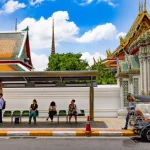
📷 Featured image by Chris Arthur-Collins on Unsplash.