On this page
- Koh Kradan: The Prettiest Island Nobody Talks About
- Koh Libong: Where Dugongs Still Live
- Koh Mook: The Emerald Cave and Actual Village Life
- Koh Ngai: For Snorkelers and People Who Like Doing Nothing
- Koh Phayam: The Holdout Near Ranong
- Koh Ra: Off-Grid and Rainforest-First
- Getting to These Islands in 2026
- Understanding the Two Seasons: Andaman vs Gulf Side
- What Accommodation Actually Costs in 2026
- What These Islands Are Missing (And How to Prepare)
- Frequently Asked Questions
💰 Click here to see Thailand Budget Breakdown
💰 Prices updated: October, 2026. Budget figures are estimates — always verify before travel.
Exchange Rate: $1 USD = ฿33.60
Daily Budget (per person)
Shoestring: ฿900.00 – ฿1,800.00 ($26.79 – $53.57)
Mid-range: ฿2,150.00 – ฿4,000.00 ($63.99 – $119.05)
Comfortable: ฿6,000.00 – ฿12,000.00 ($178.57 – $357.14)
Accommodation (per night)
Hostel/guesthouse: ฿90.00 – ฿750.00 ($2.68 – $22.32)
Mid-range hotel: ฿1,400.00 – ฿3,500.00 ($41.67 – $104.17)
Food (per meal)
Budget meal: ฿70.00 ($2.08)
Mid-range meal: ฿250.00 ($7.44)
Upscale meal: ฿1,000.00 ($29.76)
Transport
Single metro/bus trip: ฿30.00 ($0.89)
Monthly transport pass: ฿1,155.00 ($34.38)
Thailand‘s most famous islands are suffering. In 2026, Koh Phi Phi sees upwards of 10,000 visitors on a single day during peak season. Koh Samui’s main beaches are lined with sun lounger operators charging 200–300 THB per chair. Even Koh Lanta, once considered “off the beaten path,” now has a Starbucks and a traffic jam on its main road in January. If you want actual silence, actual untouched reef, and a beach where you can spread a towel without negotiating space — you have to go further. These islands exist. They’re harder to reach, lighter on infrastructure, and nothing like what Thailand tourism advertising shows you. That’s exactly the point.
Koh Kradan: The Prettiest Island Nobody Talks About
Koh Kradan sits in the Trang archipelago, about 25 kilometres offshore from Pak Meng pier. It consistently ranks among the most beautiful islands in Southeast Asia by the people who actually find it — but that group remains small. The island has no ATMs, no 7-Eleven, no motorbike rentals, and one main strip of beach-facing resorts. Most visitors are either European couples on multi-week Thailand trips or Thai families on long weekends who know their way around the province.
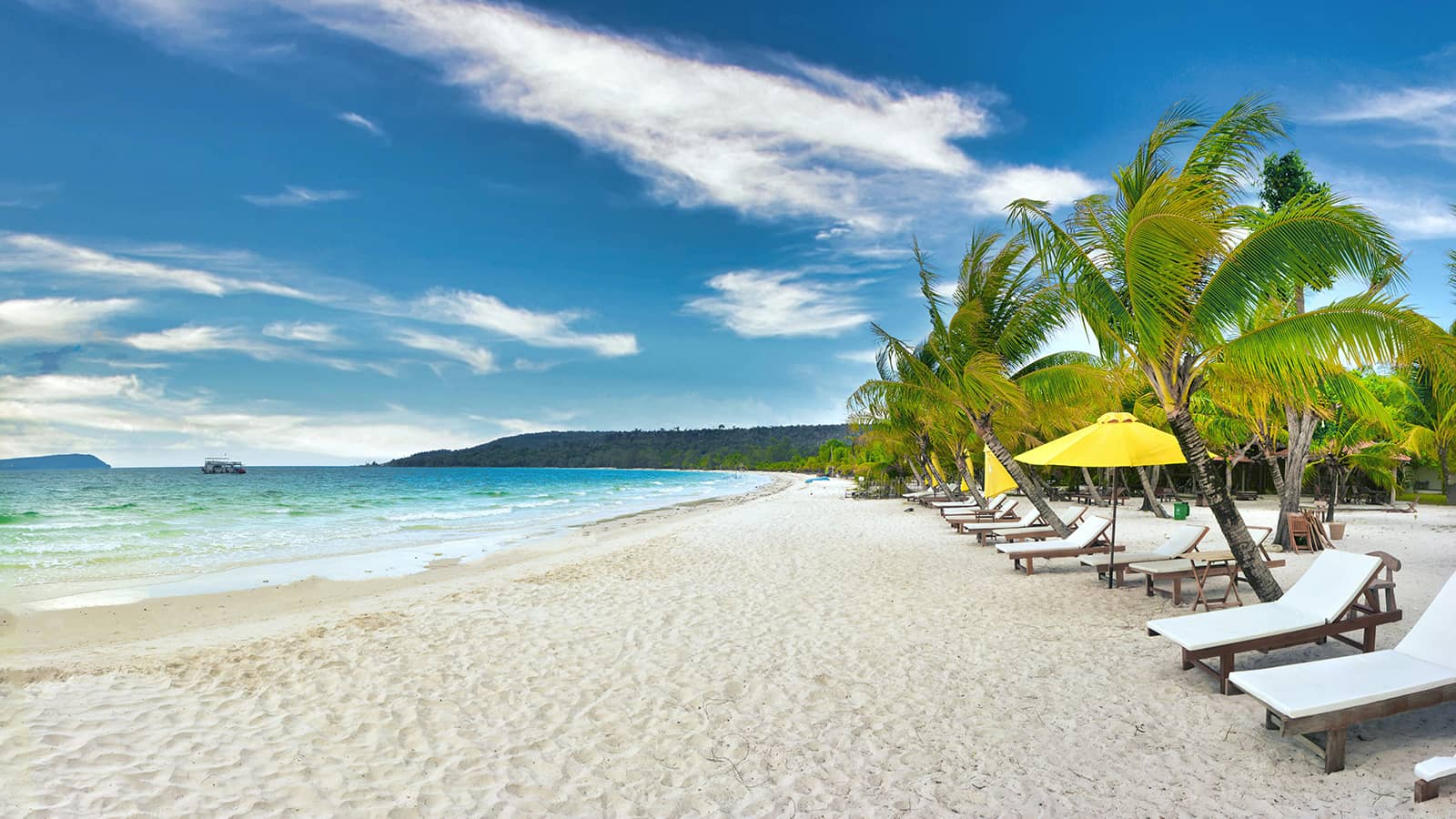
The west-facing beach is the showpiece. The sand is powdery and bone-white, and at low tide the reef shelf extends outward in brilliant turquoise and green. You can snorkel directly off the beach — no boat needed — and reach coral gardens within 50 metres of the shoreline. The water is calm enough in high season (November to April) that even non-swimmers can wade out and peer into it with a mask. Early morning, before 8am, the beach belongs to almost nobody. The sound is wind, small waves, and whatever birds are moving through the casuarina trees behind the sand.
There are maybe eight or nine places to stay on the island, ranging from simple bungalows to the slightly more polished Koh Kradan Resort. Electricity runs on generators that switch off around midnight at the budget places. That’s not a flaw — it’s a feature of how the island works.
Koh Libong: Where Dugongs Still Live
Most travellers have never heard of Koh Libong, and those who have often confuse it with Koh Lanta. It is neither small nor undeveloped in the way the other Trang islands are — Koh Libong is actually the largest island in Trang province, with a population of several thousand people, mostly Muslim fishing families. What makes it remarkable is not a perfect beach. It’s the seagrass meadows off the island’s eastern shore, which support one of the last stable dugong populations in Thailand.
The Libong Archipelago Wildlife Reserve covers much of the island and surrounding waters. Dugong sightings are not guaranteed, but the local conservation longtail boat operators run morning trips that have a reasonable success rate — particularly between January and March. Beyond dugongs, the island hosts migratory birds by the thousands during the October-to-December season, and the mudflat and mangrove ecosystems on the east coast are genuinely impressive for anyone who cares about that sort of thing.
The island has a small pier, a few simple guesthouses, and motorcycle rentals so you can explore inland villages. There are no cocktail bars or beach clubs. Evenings here mean eating fresh seafood at someone’s house-restaurant, watching fishing boats return, and not much else. For a certain kind of traveller, that’s the entire appeal.

Koh Mook: The Emerald Cave and Actual Village Life
Koh Mook is one of the few islands in Thailand where you can stay in a genuine fishing village, walk to a bakery run by a Thai-French couple, swim through a sea cave, and be back on your bungalow porch by noon. It manages this without having sold its soul to tourism — though the balance feels precarious in 2026 as more Koh Lanta visitors start doing day trips here.
The island’s signature attraction is Tham Morakot, the Emerald Cave. Getting there requires swimming or kayaking through a 70-metre tunnel of complete darkness — you follow the sound of the water and the dim light ahead — before emerging into a hidden lagoon completely enclosed by cliffs, with a white sand beach at the bottom and jungle canopy overhead. The light that bounces around the cave walls during mid-morning gives the water that iconic jade-green colour. It is legitimately one of the most dramatic natural spaces in the country. Go at high tide with a guide, go before 10am to beat the day-trippers from Koh Lanta, and don’t wear fins — you need to tread water and pull along the cave wall.
The village on Koh Mook’s eastern side has a morning market, a mosque, several small family-run restaurants, and a pace of life completely disconnected from the beach resort economy. Staying a few nights on the village side rather than the beach side gives you a completely different experience of the island.
Koh Ngai: For Snorkelers and People Who Like Doing Nothing
Koh Ngai (also spelled Koh Hai) is the kind of island that ruins all other islands for you. It’s small enough to walk end to end in under an hour, has almost no roads, and is home to about six or seven resorts, all of which face the same long beach running along the western shore. There are no villages, no permanent residents other than resort staff, and no nightlife beyond resort restaurants closing at 9 or 10pm.

The snorkeling off Koh Ngai is exceptional. The reef off the southern tip is intact and supports hard coral formations alongside an impressive variety of reef fish. Koh Chuak and Koh Waen — two tiny uninhabited islands visible from Koh Ngai’s beach — can be reached by longtail boat in 15 minutes and offer some of the best snorkeling in Trang. You can hire a boat for a half-day trip for around 800–1,200 THB per person depending on group size.
Koh Ngai is a genuine “switch off” island. The resorts have Wi-Fi, but the connection is slow enough that working remotely is frustrating. Most guests spend their time reading, snorkeling, eating, and sleeping. This is not a criticism. The beach here at sunset — the sky going orange and red over the silhouette of Koh Mook in the distance, the water flattening out as the wind drops — feels genuinely earned after the journey to get here.
Koh Phayam: The Holdout Near Ranong
Koh Phayam, reachable by boat from Ranong in the upper Andaman Sea, occupies a unique cultural space in the Thai island landscape. It has been quietly popular with long-stay backpackers and countercultural travellers for over twenty years, and in 2026 it still hasn’t changed much. The roads are unpaved or barely paved. Electricity became 24-hour only relatively recently. There are no large hotels or resort chains — only bungalow operations, a few guesthouses, and small restaurants run by people who genuinely chose to live here.
The island divides into two main beach areas: Ao Yai (Long Beach) on the southwest, which is broad and slightly more developed, and Ao Khao Kwai (Buffalo Bay) to the northwest, which is longer, wilder, and backed by cashew and rubber tree plantations. Between beaches, the interior is a tangle of paths, fruit trees, and the occasional free-ranging buffalo — which explains the bay’s name.

Koh Phayam sits in Ranong province, which means its Andaman-side season runs roughly November to May. The rest of the year it’s wet and windy, and some bungalow operations close entirely. The people who do go in low season find empty beaches, dramatically stormy skies, and rates that drop to nearly nothing. A basic bungalow that costs 600–800 THB in high season can drop to 300–400 THB in July.
Koh Ra: Off-Grid and Rainforest-First
Koh Ra is not for everyone, and it makes no attempt to be. Located north of Koh Phayam, also accessible from Ranong, Koh Ra is almost entirely covered in virgin rainforest and has a single eco-lodge — the Koh Ra Ecolodge — as its only accommodation option. There are no roads, no motorbikes, no beach clubs, and no electricity infrastructure beyond solar and generator systems at the lodge itself.
The island is managed as a conservation area. Guests come to hike through old-growth forest, spot hornbills and monitor lizards, kayak through mangrove channels, and snorkel reefs that see perhaps a few hundred visitors per year. The diving and snorkeling quality here rivals the Similan Islands, but without the day-trip crowds. The surrounding waters are UNESCO-nominated and part of a proposed marine national park expansion under review in 2026.
Staying here costs significantly more than a budget bungalow on Koh Phayam — the ecolodge operates on an all-inclusive basis and prices reflect the logistics of running a remote operation. But the experience is categorically different from anything else on this list. You are genuinely in the jungle, the nights are loud with insects and frogs, and the only light after dark comes from your accommodation and whatever stars aren’t hidden by cloud.

Getting to These Islands in 2026
None of these islands are on a single route. How you get there depends on which island you’re targeting and where you’re arriving from.
Trang Archipelago (Koh Kradan, Koh Libong, Koh Mook, Koh Ngai)
Fly to Trang Airport direct from Bangkok (AirAsia and Nok Air both operate this route in 2026, approximately 1 hour 20 minutes, from around 800–2,500 THB depending on booking lead time). From Trang town, minibuses connect to Pak Meng pier, Hat Yao pier, or Kuan Tung Ku pier — the right pier depends on your island. Ferries and speedboats run on seasonal schedules; in 2026, the Tigerline and Bundhaya Speed Ferry services still operate but check current timetables, as schedules shift between high and low season.
Alternatively, come from Koh Lanta via speedboat — multiple operators run this route during high season, typically stopping at Koh Ngai, Koh Mook, and Koh Kradan on a single journey. It takes 1.5 to 2 hours total.
Koh Phayam and Koh Ra
Fly or take a bus to Ranong. There are daily flights from Bangkok’s Don Mueang Airport (approximately 1 hour 10 minutes). The bus from Bangkok takes 8–9 hours and costs around 500–700 THB. From Ranong pier, ferries to Koh Phayam run twice daily in high season — morning and early afternoon departures — and take about 1.5 hours. For Koh Ra, contact the ecolodge directly; they coordinate boat transfers with guest arrivals.

Understanding the Two Seasons: Andaman vs Gulf Side
This is the single most important practical point for anyone planning an unspoiled island trip in southern Thailand, and it trips up a huge number of visitors every year.
Southern Thailand has two coastlines separated by the peninsula. The Andaman Sea (west coast) — which is where Koh Phayam, Koh Ra, and the Trang archipelago islands are located — has its best weather from November to April. The monsoon hits this coast from May onward, with the heaviest rain and roughest seas in June through August. Many island operations close entirely.
The Gulf of Thailand (east coast) — Koh Samui, Koh Phangan, Koh Tao — has its own monsoon, which runs roughly October to December. Its best season is typically February to September.
For the islands on this list, which are all Andaman-side, plan your trip between mid-November and mid-April for reliable weather and open ferries. January and February are peak months for visibility and sea conditions. If you go outside these windows, be prepared for cancelled ferries, closed resorts, and the genuine possibility of being stuck on or off an island longer than planned.
Within the peak season, the busiest period is the Christmas–New Year window (December 20 to January 5) and Thai Songkran (mid-April). Avoid these windows if possible. Late November, January, and early February offer the best combination of good weather and manageable visitor numbers.
What Accommodation Actually Costs in 2026
Prices on these islands have climbed since 2023, partly due to increased operating costs and partly because the audience willing to seek them out tends to have more money than the backpacker crowd of fifteen years ago. Here’s a realistic 2026 breakdown:
- Budget (fan bungalow, shared bathroom, basic breakfast): 400–800 THB per night. Available on Koh Mook village side, Koh Phayam (low season especially), and Koh Libong.
- Mid-range (en suite bungalow, air conditioning, on-site restaurant): 1,200–2,500 THB per night. Most resorts on Koh Kradan, Koh Ngai, and Koh Mook beach side fall here.
- Comfortable (beachfront bungalow, stronger Wi-Fi, pool access or direct beach access): 3,000–6,000 THB per night. The upper tier on Koh Kradan and Koh Ngai — some properties in this range are genuinely lovely without being luxury hotels.
- Koh Ra Ecolodge: Operates on full-board pricing; expect 5,000–8,000 THB per person per night including meals and activities. This reflects the remote logistics and conservation operation costs.

Food on these islands runs 80–200 THB per dish at resort restaurants, slightly less at village-side spots where they exist. Longtail boat trips typically cost 300–600 THB per person for a half-day group trip, or 1,500–3,000 THB to charter a boat privately.
Budget for 5–10% higher prices than equivalent places on Koh Lanta or Koh Phi Phi, because supply chains to remote islands cost more. A bottle of water that’s 10 THB in a 7-Eleven on the mainland might be 30–40 THB on Koh Ngai. That’s not a rip-off — it’s logistics.
What These Islands Are Missing (And How to Prepare)
Going to an unspoiled island means going somewhere that hasn’t been optimized for tourist convenience. That’s the deal. Here’s what you need to know before you arrive:
No ATMs
Koh Kradan, Koh Ngai, Koh Mook (beach side), and Koh Ra have no ATMs. Koh Libong has limited facilities. Koh Phayam has one ATM on the island that runs out of cash during peak periods. Bring all the cash you need from the mainland. Estimate your total days on island, multiply by your daily spend, add 30% buffer, and bring that amount in THB. Cards are accepted at some mid-range resorts but not reliably.

Limited Medical Facilities
These islands have no hospitals and minimal first aid. For anything more serious than a minor cut, you need a boat to the mainland. Travel insurance with medical evacuation coverage is not optional here — it’s essential. In 2026, a serious injury requiring mainland hospital transfer can take 2–4 hours depending on conditions.
Internet and Signal
Mobile signal is inconsistent or absent on all these islands. DTAC and AIS both have weak to zero coverage on Koh Ra and parts of Koh Ngai and Koh Libong. True Move H tends to have slightly better rural coverage in Trang province. Resort Wi-Fi exists but is slow. Treat these islands as digital-off destinations. If your work requires reliable internet access, these are not the right places for a workation.
Waste and Environment
Several of these islands have waste management challenges. Bring a reusable water bottle and ask resorts about their filtered water refill stations — most mid-range and above properties now have them. Avoid single-use plastics where possible. Reef-safe, non-aerosol sunscreen is strongly recommended; some resorts and boat operators on these islands have started refusing entry to guests using chemical sunscreen near reef areas.
Mosquitoes and Sand Flies
Sand flies (no-see-ums) are a genuine problem on some beach stretches, particularly at dusk. They leave small, intensely itchy bites that can become infected if scratched. Bring a DEET-based repellent. Long-sleeve shirts for evening beach walks are useful, not excessive.
Frequently Asked Questions
Which unspoiled Thai island is easiest to reach from Bangkok?
Koh Phayam near Ranong is probably the most accessible. Fly Don Mueang to Ranong (about 1 hour 10 minutes), then take the pier transfer and ferry — you can be on the island in an afternoon. Koh Mook and Koh Kradan require a Trang connection, which adds a step but is still manageable as a one-day journey.

Are these islands safe for solo female travelers?
Yes, these islands are generally very safe. The communities are small and well-connected. Solo female travellers are common on Koh Phayam and Koh Mook especially. The main precaution is the same as anywhere remote: tell someone your itinerary, have travel insurance, and don’t take unnecessary risks with sea conditions. Local boat operators are conservative about weather — listen to them.
Can I visit these islands in May or June?
Most of them are accessible in theory but not recommended. The Andaman monsoon makes sea crossings rough, ferries are reduced or suspended, and many resorts close. Koh Libong and Koh Mook village side stay open year-round, but expect rain, humidity, and a very different experience. If you go low season, accept it for what it is — dramatic and quiet — rather than expecting beach weather.
Do I need a guided tour or can I plan this independently?
Fully independent travel to all of these islands is possible and actually preferred for most travellers. The only exception is Koh Ra, where you book through the ecolodge and they handle logistics. For the Trang archipelago, ferry timetables are available online and at Trang’s main travel agencies. Koh Phayam is entirely self-navigable. Guided island-hopping tours from Koh Lanta exist for the Trang islands but aren’t necessary and limit your flexibility.
What is the best island on this list for families with children?
Koh Mook and Koh Ngai are the most family-friendly. Koh Mook has calm water on the beach side in high season, a small village with a morning market to explore, and the Emerald Cave as a memorable experience for older children. Koh Ngai has a very gentle beach gradient and calm water ideal for young swimmers. Both have comfortable mid-range accommodation with enough amenities to keep a trip comfortable without sacrificing the unspoiled experience.
Explore more
Chiang Mai Street Food: 15 Must-Try Stalls & Markets
The Ultimate Guide to Thailand’s Regional Nightlife: Bars, Clubs & Live Music Beyond Bangkok
Getting a SIM Card in Thailand: Your Guide to Staying Connected
📷 Featured image by Jakob Owens on Unsplash.