On this page
💰 Click here to see Thailand Budget Breakdown
💰 Prices updated: November, 2026. Budget figures are estimates — always verify before travel.
Exchange Rate: $1 USD = ฿33.74
Daily Budget (per person)
Shoestring: ฿900.00 – ฿1,500.00 ($26.67 – $44.46)
Mid-range: ฿2,000.00 – ฿4,000.00 ($59.28 – $118.55)
Comfortable: ฿6,000.00 – ฿12,000.00 ($177.83 – $355.66)
Accommodation (per night)
Hostel/guesthouse: ฿200.00 – ฿600.00 ($5.93 – $17.78)
Mid-range hotel: ฿1,000.00 – ฿2,500.00 ($29.64 – $74.10)
Food (per meal)
Budget meal: ฿60.00 ($1.78)
Mid-range meal: ฿250.00 ($7.41)
Upscale meal: ฿1,500.00 ($44.46)
Transport
Single metro/bus trip: ฿15.00 ($0.44)
Monthly transport pass: ฿1,200.00 ($35.57)
Koh Samui‘s night markets run on different days in different corners of the island, and most visitors find this out too late. You end up at an empty street in Maenam on a Friday while the crowds are in Bophut. A taxi back costs more than your dinner did. This guide shows you which market to visit on which night, what to buy, and how to get home without overpaying in 2026.
Which Night Market on Which Evening
Samui is a ring road island about 50 km around, and its markets rotate through the week. Fisherman’s Village in Bophut is the best-known walking street and runs on Friday evenings. Maenam holds a smaller walking street midweek, usually on Thursday. Lamai has a weekend-style night market, and Chaweng has food stalls and shops open most evenings along its main beach strip and near Chaweng Lake.
Schedules shift with the season and local events, so confirm days with your hotel front desk or a local shop owner on the day. Most markets start around 5 pm and are properly busy by 7 pm. By 10 or 11 pm, stalls are packing up.
A simple plan for a week on the island: Thursday in Maenam, Friday in Bophut, one evening in Lamai, and Chaweng any night you want food without planning ahead.
Fisherman’s Village Friday Walking Street
Bophut’s old shophouse lane is the most atmospheric market on the island. On Friday evening the road closes to traffic, and wooden buildings with string lights fill with stalls selling clothes, sarongs, hand-painted art, and small gifts. The air smells of charcoal smoke, lemongrass, and sweet coconut pancakes frying on flat griddles.
Prices here run a little higher than in Chaweng, but the quality of crafts is usually better. Look for leather sandals, handmade soaps, cotton shirts, and framed prints of Samui beaches. Live acoustic music drifts out of the beachfront bars, and you can walk to the sand between stalls.
Arrive before 6 pm. After 7:30 pm the main lane becomes shoulder-to-shoulder, and taxis and songthaews queue at both ends.
Chaweng and Lamai: The Busier, Louder Options
Chaweng is the commercial centre of Samui, and its evening scene reflects that. Stalls line the roads running off Chaweng Beach Road, selling fake-brand T-shirts, sunglasses, phone cases, and beach bags. Neon signs, bar touts, and motorbike horns create a very different mood from Bophut. It suits you if you want everything in one stretch: a snack, a foot massage, a drink, and a cheap souvenir.

Lamai is calmer. Its night market feels more local, with a mix of Thai families, long-term expats, and travellers. Stalls sell fresh fruit, grilled seafood, and snacks to eat while you walk. Clothes and accessories are cheaper than in Bophut, and sellers are less pushy.
If you only have time for two markets, pick Bophut for atmosphere and Lamai for value. Visit Chaweng only if you are already staying nearby or want a late-night food run.
What to Buy (and Skip)
Not every stall item is worth carrying home. Here is what works.
- Good buys: cotton and linen clothing, handmade soaps and coconut oil products, woven bags, silver-plated jewellery, wooden carvings, and dried fruit.
- Fine for cheap fun: beach sarongs, fisherman pants, flip-flops, and small gifts for friends.
- Skip: branded electronics, sports shirts claiming to be official, and anything labelled “pure silk” at a very low price. Most are synthetic.
For edible gifts, look for dried mango, banana chips, and packaged coconut sweets. Pack them in a sealed bag to protect your suitcase from sticky leaks.
What to Eat at the Stalls
Eat first, shop second. Hungry shoppers make bad bargainers. Walk one full lap of the market before ordering, so you can see which stalls have the longest local queues.
Good signs: a Thai family eating at a plastic table, a wok that never stops moving, and meat or seafood sitting on ice rather than at room temperature. Grilled squid brushed with sweet chilli sauce, fresh papaya salad pounded to order, and mango sticky rice scooped into a banana-leaf tray are all easy wins.
In Lamai and Chaweng, look for seafood grilled over coals and sold by weight. Ask the price per 100 grams before it goes on the grill. In Bophut, you will find more Western-style options, such as crepes, burgers, and smoothies, alongside Thai noodles and skewers.
Bargaining Without the Awkwardness
Bargaining is expected at clothing and souvenir stalls, but not at food stalls. A fair approach is to offer about 70–80% of the first price, smile, and be ready to walk away politely. If the seller calls you back with a lower number, that is usually close to their real price.

- Buy two or three items from one seller and ask for a bundle price.
- Carry small notes, ideally 20, 50, and 100 THB. Paying a 120 THB item with a 1,000 THB note weakens your position.
- Do not bargain over 10–20 THB. At that level the saving is tiny and the seller’s margin is thin.
- Ask “Is this the best price?” in a calm tone. It works better than aggressive counter-offers.
Getting There and Back After Dark
Samui has no metro or train, so transport is the hard part. Songthaews, the open-sided pickup trucks that run the ring road, are the cheapest option. Expect 50–100 THB per person for shorter hops between neighbouring areas, more for longer rides, and fewer vehicles after 9 pm. Taxis and private drivers are pricey: 300–600 THB for a ride between Chaweng and Bophut is common.
Many travellers rent scooters for 200–300 THB per day, but night driving on Samui’s hilly, poorly lit roads is risky, especially after rain. If you ride, wear a helmet and keep your licence and insurance documents with you.
A practical plan for 2026: agree a return price with your driver before you leave your hotel, or ask them to wait for a fixed fee. Cash is still the safest option at stalls, though more vendors now accept Thai QR payments. Foreign cards often fail at small stalls, and ATMs charge a 220 THB fee per withdrawal for foreign cards, so withdraw larger amounts at once. Since 2025, visitors also need to complete Thailand’s digital arrival card before entering, which makes it easier to keep your trip dates organised if you plan market days around them.
2026 Budget Reality
Here is what an evening at a Samui night market typically costs per person in 2026, not counting your transport.
- Budget (150–300 THB): Pad thai or fried noodles (60–90 THB), two skewers (20–40 THB), a fruit shake (40–60 THB), and a small snack like roti or banana pancake (40–70 THB).
- Mid-range (400–800 THB): A grilled seafood plate (200–400 THB), a drink, dessert, one foot massage (250–300 THB for an hour), and a small souvenir or two.
- Comfortable (1,000–2,000+ THB): A full seafood dinner at a beachfront restaurant near the market, a longer massage, and a few handmade items such as leather goods or small art pieces (300–800 THB each).
Transport can add 100–600 THB depending on distance and time. Cheap tourist items such as T-shirts and sarongs are usually 100–250 THB before bargaining.

Frequently Asked Questions
Which Koh Samui night market is best for tourists?
Fisherman’s Village Friday Walking Street in Bophut is the best for atmosphere, crafts, and photos. Lamai suits budget travellers who want local food and lower prices. Chaweng works if you want a large selection close to hotels, bars, and beach clubs. Many visitors try at least two during their stay.
What time do Koh Samui night markets open?
Most markets start setting up around 4:30 to 5 pm, with stalls fully open by 6 pm. The busiest period is roughly 7 to 9 pm. Many vendors begin packing away around 10 or 11 pm. Arrive early if you want shorter queues, cooler weather, and better choice.
Can I use credit cards at Samui night markets?
Mostly no. Small stalls prefer cash, and some accept Thai QR payments, though not always for foreign visitors. Shops and restaurants near the markets are more likely to take cards. Carry small bills, because vendors often struggle to change large notes late in the evening.
Is it safe to walk around Samui night markets?
Yes, the markets are generally safe and busy with families and tourists. Watch your phone and wallet in crowded lanes, and avoid carrying large amounts of cash. The main risk is the trip home: skip night scooter rides if the roads are wet or you are tired.
How much money should I bring to a Samui night market?
Bring 500–800 THB for a casual dinner and a few small purchases. Bring 1,000–2,000 THB if you plan to buy clothes, gifts, or a seafood meal and massage. Add 100–600 THB for transport back to your hotel, depending on distance.
Explore more
The Essential Koh Samui Packing List for Every Traveler
Is a Koh Tao Day Trip from Koh Samui Worth It for Snorkeling?
The Ultimate Koh Samui Itinerary: Best Things to Do & See
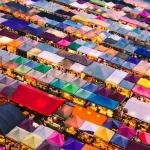
📷 Featured image by Suhyeon Choi on Unsplash.