On this page
- Cash: The Foundation for Street Food and Markets
- Getting Cash: ATMs, Fees, and Limits
- PromptPay QR: How Thailand’s Instant Payment System Works for Visitors
- E-Wallets for Everyone Else: TrueMoney and Rabbit LINE Pay
- Credit and Debit Cards: Where They Work and What They Cost
- Paying for Rides: Grab, Trains, BTS, and MRT
- Tipping: Who, When, and How Much
- 2026 Budget Reality: What Paying Actually Costs You
- Common Payment Mistakes to Avoid
- Frequently Asked Questions
💰 Click here to see Thailand Budget Breakdown
💰 Prices updated: November, 2026. Budget figures are estimates — always verify before travel.
Exchange Rate: $1 USD = ฿33.74
Daily Budget (per person)
Shoestring: ฿900.00 – ฿1,500.00 ($26.67 – $44.46)
Mid-range: ฿2,000.00 – ฿4,000.00 ($59.28 – $118.55)
Comfortable: ฿6,000.00 – ฿12,000.00 ($177.83 – $355.66)
Accommodation (per night)
Hostel/guesthouse: ฿200.00 – ฿600.00 ($5.93 – $17.78)
Mid-range hotel: ฿1,000.00 – ฿2,500.00 ($29.64 – $74.10)
Food (per meal)
Budget meal: ฿60.00 ($1.78)
Mid-range meal: ฿250.00 ($7.41)
Upscale meal: ฿1,500.00 ($44.46)
Transport
Single metro/bus trip: ฿15.00 ($0.44)
Monthly transport pass: ฿1,200.00 ($35.57)
You land in Bangkok with a card in your wallet and a phone full of apps, then discover that the noodle stall you’ve been eyeing takes only cash, the next one shows a QR code you can’t scan, and the hotel front desk wants a card. Payments in Thailand in 2026 are a mix of old and new, and the wrong setup costs you time and money. This guide shows what to use in each situation, from a 20 THB snack to a hotel bill.
Cash: The Foundation for Street Food and Markets
Thailand’s currency is the Thai Baht (THB), and cash is still the most reliable way to pay for small things. Picture a Yaowarat street stall at sunset: the wok is roaring, the air smells of smoky garlic and charred noodles, and the cook is handing over plates with one hand while taking crumpled notes with the other. That scene still runs on cash at many stalls.
Learn the notes by colour so you can pay fast:
- 20 THB: green
- 50 THB: blue
- 100 THB: red
- 500 THB: purple
- 1000 THB: brown/grey
Coins come in 1, 2, 5, and 10 THB. You may also see 25 and 50 satang coins, but they are rarely used.
Cash is essential in these places:
- Street food stalls: Many smaller stalls, especially outside major tourist areas or with low transaction volumes, remain cash-only.
- Local markets: Wet markets, night markets, and flea markets almost exclusively run on cash.
- Small shops and budget guesthouses: Independent retailers often prefer cash to avoid card processing fees.
- Tuk-tuks and songthaews: Some drivers accept QR payments if they have a personal PromptPay account, but cash is the safest option. Agree on the fare before you get in.
Carry a mix of small and medium notes. Around 500-1000 THB for daily expenses, broken into 20, 50, and 100 THB notes, keeps you out of trouble. Nobody enjoys handing a 1000 THB note to a vendor selling a 40 THB snack.
Getting Cash: ATMs, Fees, and Limits
ATMs are everywhere: bank branches, shopping malls, tourist areas, and convenience stores like 7-Eleven and FamilyMart. Big networks such as Bangkok Bank and Kasikorn have machines in nearly every town. Every Thai bank charges 220 THB per withdrawal on foreign-issued cards. That fee has stayed the same since 2024 and is not expected to change by 2026.
Most ATMs let you take out a maximum of 20,000 THB per transaction. Some Krungsri or SCB machines allow up to 30,000 THB, but that is less common. Your home bank may also set its own daily limit, so check it before you travel.

Step-by-step ATM withdrawal
- Insert your card.
- Select “English” as the language.
- Enter your 4-digit PIN.
- Select “Withdrawal,” then “Savings” or “Checking.” Either usually works for foreign cards.
- Choose or enter your amount, such as 10,000 THB or 20,000 THB.
- Confirm when the ATM warns you about the 220 THB fee.
- Decline Dynamic Currency Conversion (DCC). If the machine offers to charge you in your home currency, say no and choose THB. Your home bank will then do the conversion, usually at a much better rate.
- Collect your cash, card, and receipt.
Use ATMs attached to bank branches during business hours. If the machine swallows your card, there is staff nearby to help. Tell your home bank your travel dates before you fly so the card isn’t blocked. And withdraw larger amounts less often, because the 220 THB fee hits every time.
PromptPay QR: How Thailand’s Instant Payment System Works for Visitors
PromptPay is Thailand’s national instant payment platform. Locals link it to a bank account or national ID, scan a QR code, type the amount, and confirm. It is secure because the money moves bank to bank. You will see PromptPay QR codes at hotels, supermarkets (Lotus’s, Big C, Makro), convenience stores (7-Eleven, FamilyMart), restaurants, cafes, food courts, taxis, and Grab services. Many street food stalls and local market vendors now display one too. SRT ticket counters at major stations also widely accept it.
The catch for tourists: without a Thai bank account, you can’t use PromptPay directly. The exception is a cross-border link.
If you are from a partner country
Tourists from these countries can scan Thai PromptPay QR codes with their home banking or e-wallet app:
- Malaysia (DuitNow QR)
- Singapore (PayNow QR)
- Vietnam (VietQR)
- Indonesia (QRIS)
- Cambodia (KHQR)
Other countries, such as India, Laos, and the Philippines, may join over time, so check with your bank before you travel.
- Open your participating banking app, such as Maybank, DBS, BCA, or VPBank.
- Select “Scan QR” or the PayNow/DuitNow/VietQR/QRIS option.
- Scan the merchant’s PromptPay QR code.
- Check the amount shown in THB and your home currency.
- Confirm. The payment goes through instantly.
Expect a foreign exchange spread set by your bank or payment provider, and possibly a small transaction fee. The cost is often competitive. If you are from another country, move on to e-wallets, cards, and cash.

E-Wallets for Everyone Else: TrueMoney and Rabbit LINE Pay
TrueMoney Wallet
TrueMoney Wallet is Thailand’s leading non-bank e-wallet, and it is the best digital option for most visitors. Download it from the Apple App Store or Google Play and register with your phone number. A Thai SIM card makes this much easier because the one-time password (OTP) arrives on a local number. You can fund it two ways:
- Link a Visa or Mastercard: This is the most convenient. Your home bank’s foreign transaction fees apply. Check whether TrueMoney adds its own top-up fee for international cards.
- Top up with cash: Go to 7-Eleven, CP Fresh Mart, Lotus’s, Makro, or any TrueMoney agent. Give your phone number and the amount.
It is accepted at 7-Eleven, CP Fresh Mart, Makro, Lotus’s, many restaurants, cinemas, online services, and Grab. Many street food vendors display TrueMoney QR codes. English information is at https://www.truemoney.com/en/.
Rabbit LINE Pay
Rabbit LINE Pay lives inside the LINE messaging app and ties into the Rabbit Card used on the BTS Skytrain. Register within LINE, then link a Visa or Mastercard or top up with cash at BTS stations or partner merchants. You can link it to a physical Rabbit Card for automatic top-ups. It also works at McDonald’s, Starbucks, Boots, Watsons, other partners, and Grab. Foreign transaction fees from your home bank may apply. The website, https://www.rabbitlinepay.com/, is in Thai, so use browser translation.
Credit and Debit Cards: Where They Work and What They Cost
Visa, Mastercard, and American Express work well in the air-conditioned part of Thailand. Think major hotels, department stores like Central and Robinson, large supermarkets (Lotus’s, Big C), upscale restaurants, and international chains. Chip-and-PIN is standard, and tap-to-pay is increasingly common on modern terminals in bigger shops.
Cards are rarely accepted at street food stalls, local markets, smaller shops, budget guesthouses, and independent taxis. The exception is Grab, where the card is linked in the app.
Watch for three costs:

- Merchant surcharge: Some guesthouses and tour operators add 2-3% for card payments. That is technically against card network rules but still happens. Ask before you pay, and check whether enforcement has tightened by 2026.
- Foreign transaction fee: Your home bank may charge 0-3% on purchases made in THB. A card with no foreign fee saves real money over a long trip.
- DCC at the terminal: The same rule as at ATMs applies. If the machine offers to charge you in your home currency, choose THB.
Keep one main card for hotels, larger purchases, and emergencies, and a second card in a different place as backup.
Paying for Rides: Grab, Trains, BTS, and MRT
Grab
Grab accepts cash, linked Visa, Mastercard, or Amex cards, TrueMoney Wallet, Rabbit LINE Pay, and PromptPay through GrabPay Wallet or a direct QR scan. Linking a card or e-wallet means no exact change and no currency confusion. You can also tip in the app. Info is at https://www.grab.com/th/en/.
State Railway of Thailand (SRT)
At ticket counters, cash is widely accepted. Since 2024, PromptPay QR has become common at major stations and increasingly at smaller ones. For online booking of longer routes, you typically need a Visa or Mastercard on the official SRT website or app.
BTS Skytrain
Buy single-journey tickets with cash at machines or counters. A Rabbit Card is a stored-value card you buy and top up with cash at station counters. Rabbit LINE Pay can be linked to it for auto top-up or digital payment at some gates and machines.
MRT Subway
Single-journey tokens cost cash at machines or counters. The MRT Plus Card is a stored-value card, also bought and topped up with cash at counters. Since 2024, contactless Visa and Mastercard payments have been rolling out at MRT gates, letting you tap straight in. Full coverage across all lines is expected by 2026, but confirm at your gate before relying on it.
Tipping: Who, When, and How Much
Tipping is not mandatory in Thailand, but 20-50 baht is appreciated for good service. Keep a few small notes ready.
- Upscale and mid-range restaurants: A 10% service charge is often added automatically. If it is there, no extra tip is needed. For exceptional service, round up or add 20-50 THB.
- Local restaurants and street food: Not expected. Leaving 10-20 THB in change is a kind gesture.
- Hotel porters: 20-50 THB per bag.
- Housekeeping: 20-50 THB per day, left on the pillow.
- Massage: 50-100 THB per hour, or 10% of the service cost for good service.
- Taxis and Grab: Round up the fare. Grab has an in-app tipping option.
- Tour guides: 100-300 THB per day, depending on the tour’s length and quality.

2026 Budget Reality: What Paying Actually Costs You
The way you pay changes how much you spend. Here is what the payment side of a trip looks like in THB, by travel style.
Budget
- Carry 500-1000 THB in small notes for daily street food, markets, and songthaews.
- Tip 10-20 THB in change at local eateries, and 20 THB per day for housekeeping.
- Withdraw 20,000 THB at a time. The 220 THB fee is then about 1.1% of the amount. Withdraw 5,000 THB instead and the same fee is 4.4%.
Mid-range
- Use cash for markets and stalls, TrueMoney or a card for convenience stores and Grab, and a card for hotels.
- Tip 20-50 THB per bag for porters, 50-100 THB per hour for massages, and round up at restaurants with a service charge.
- Budget for 0-3% foreign transaction fees on card spending, and for a possible 2-3% surcharge at smaller guesthouses and tour operators.
Comfortable
- Pay mainly by card at hotels, department stores, and upscale restaurants, with cash for taxis and small purchases.
- Expect a 10% service charge on many restaurant bills, with an extra 20-50 THB for standout service.
- Tip tour guides 100-300 THB per day, and 20-50 THB per bag for porters.
Common Payment Mistakes to Avoid
- Arriving with only large notes. Vendors often can’t break a 1000 THB note for a small sale. Break big notes at a 7-Eleven.
- Assuming a QR code means you can pay. If you don’t have a Thai bank account or a partner-country banking app, you can’t scan PromptPay directly. Use cash or a TrueMoney QR where shown.
- Making many small ATM withdrawals. Each one costs 220 THB.
- Skipping the travel notice. A blocked card in a rural town with cash-only shops is a real problem.
- Going without cash outside the cities. In rural areas, cash is essential.
- Not asking about surcharges. Ask guesthouses and tour operators before handing over your card.
- Relying on one payment method. Cash, one card, and one wallet cover almost every situation.
- Not agreeing on fares. Settle tuk-tuk and songthaew prices before the ride starts.
The best setup for most visitors is cash for the street, a card for hotels and bigger purchases, and TrueMoney Wallet for convenience stores and Grab. If you are from a partner country, add your home banking app to scan QR codes.

Frequently Asked Questions
Can I use my credit card everywhere in Thailand?
No. Cards work well at major hotels, department stores, large supermarkets, and upscale restaurants. Street food stalls, local markets, small shops, budget guesthouses, and independent taxis often take cash only. Carry both, and expect a possible 2-3% surcharge at some smaller businesses.
How much does it cost to withdraw cash from a Thai ATM with a foreign card?
Thai banks charge a standard 220 THB fee per withdrawal on foreign-issued cards. Most ATMs allow up to 20,000 THB per transaction, and some Krungsri or SCB machines allow up to 30,000 THB. Your home bank may add its own fees and limits.
Can tourists use PromptPay QR codes?
Yes, if you are from a partner country: Malaysia, Singapore, Vietnam, Indonesia, or Cambodia. Scan the QR code with your home banking app. Without a Thai bank account or a partner-country app, you can’t use PromptPay directly, so use TrueMoney Wallet, cash, or a card.
Is tipping expected in Thailand?
Tipping is not mandatory, but 20-50 baht is appreciated for good service. Many mid-range and upscale restaurants add a 10% service charge, so you need not add more. Massage therapists usually receive 50-100 THB per hour, and tour guides 100-300 THB per day.
How do I pay for the BTS Skytrain and MRT?
On the BTS, buy single-journey tickets with cash, or get a Rabbit Card topped up at station counters. On the MRT, use cash for tokens or an MRT Plus Card. Contactless Visa and Mastercard payments have been rolling out at MRT gates since 2024, so check your gate.
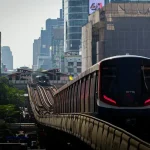
📷 Featured image by Kelvin Zyteng on Unsplash.