On this page
- Why 3 Days in Phuket Works (and What Most People Get Wrong)
- Day 1: Phuket Town and the Old City Quarter
- Day 2: Out on the Andaman Sea
- Day 3: Reading the West Coast Beaches
- Where to Stay for 3 Nights in Phuket
- Getting Around Phuket in 2026
- Eating Your Way Through Phuket
- Nightlife Without the Regret
- 2026 Budget Breakdown
- Practical Tips for Phuket in 2026
- Frequently Asked Questions
💰 Click here to see Thailand Budget Breakdown
💰 Prices updated: October, 2026. Budget figures are estimates — always verify before travel.
Exchange Rate: $1 USD = ฿33.60
Daily Budget (per person)
Shoestring: ฿900.00 – ฿1,800.00 ($26.79 – $53.57)
Mid-range: ฿2,150.00 – ฿4,000.00 ($63.99 – $119.05)
Comfortable: ฿6,000.00 – ฿12,000.00 ($178.57 – $357.14)
Accommodation (per night)
Hostel/guesthouse: ฿90.00 – ฿750.00 ($2.68 – $22.32)
Mid-range hotel: ฿1,400.00 – ฿3,500.00 ($41.67 – $104.17)
Food (per meal)
Budget meal: ฿70.00 ($2.08)
Mid-range meal: ฿250.00 ($7.44)
Upscale meal: ฿1,000.00 ($29.76)
Transport
Single metro/bus trip: ฿30.00 ($0.89)
Monthly transport pass: ฿1,155.00 ($34.38)
Phuket gets a bad reputation among travelers who spent three days in Patong and came back disappointed. The island is enormous — 576 square kilometres — and the version most people see from a package tour hotel barely scratches it. In 2026, Phuket is also navigating a new tourist tax system and updated marine park entry rules that weren’t in place two years ago, so planning even a short trip now requires a bit more homework than it used to. This itinerary cuts through the noise and builds three days that actually feel like a holiday.
Why 3 Days in Phuket Works (and What Most People Get Wrong)
Three days is the sweet spot for Phuket if you’re transiting through Southeast Asia or escaping Bangkok for a long weekend. It’s enough time to see the old city, get out on the water once, and find a beach that suits you — without spending two of those days on a coach with 40 strangers.
The mistake nearly everyone makes is treating Phuket as one place. The south tip near Rawai is quiet and local. Patong is loud and built for a very specific crowd. Phuket Town has genuine character. Surin and Kamala on the upper west coast feel more like Koh Lanta than the Phuket of brochures. Understanding which version of the island you want before you arrive saves you from rebooking your accommodation on day two.
For 2026, factor in the new Andaman Sea tourist levy of 300 THB per person, which applies to visitors entering certain marine national parks — including snorkeling zones around Phi Phi and Phang Nga Bay. Pay it online in advance through the DNP portal to avoid long queues at the boat pier.

Day 1: Phuket Town and the Old City Quarter
Start here. Phuket Town is consistently underrated and the best possible entry point to understanding the island before you head to the beach. The Sino-Portuguese shophouses along Thalang Road, Dibuk Road, and Soi Romanee are the real thing — built during the tin-mining era and genuinely photogenic at any time of day, though the morning light between 7am and 9am is something else entirely, casting long gold streaks across the painted facades while local coffee shops are just opening their shutters.
Morning: Old Town Walkabout
Walk Soi Romanee first. It’s one of the most-photographed streets in southern Thailand and worth it. Then push into the surrounding streets — Thalang and Krabi Road have better coffee shops and fewer selfie crowds. Grab a Hokkien coffee and a khanom jeen nam ya (rice noodles with fish curry sauce) at any of the old-style kopitiam cafes that open from 7am. The smell of roasted coffee beans mixed with the faint salt air is something no Phuket beach resort can replicate.
Wat Mongkol Nimit on Dibuk Road is a functioning temple, calm in the mornings and free to enter. Phuket Thai Hua Museum (entry 200 THB in 2026) gives solid context on the Peranakan heritage without being dry about it.
Afternoon: Promthep Cape or Rawai Beach
After lunch in town, take a Grab south to Rawai (about 25 minutes, 150–200 THB). Rawai Beach itself isn’t a swimming beach — it’s a longtail boat harbour — but the seafood restaurants along the front are honest, cheap, and packed with locals. Order grilled fish and hoy tod (crispy mussel pancake) and eat with your feet basically on the road.

From Rawai, it’s a 10-minute drive to Promthep Cape, the southernmost tip of the island. Sunset here draws a crowd, but if you arrive an hour early you’ll have the rocky headland mostly to yourself with clean views across the Andaman Sea toward the small islands offshore.
Evening: Back to Your Base
Head back to wherever you’re staying. If you’re in Phuket Town, the Sunday Walking Street on Thalang Road (yes, it runs on Sundays only — plan accordingly) is one of the better evening markets in the south. If your Day 1 is not a Sunday, the area around the old town still has good dinner options on Dibuk and Phang Nga Roads.
Day 2: Out on the Andaman Sea
This is the day most people come to Phuket for. Get it right.
Phang Nga Bay (the Better Choice for Most People)
Phang Nga Bay — the limestone karst sea north of Phuket — is extraordinary. The classic image of James Bond Island (Khao Phing Kan) is now heavily regulated, with timed-entry slots and the 300 THB marine park fee applied on arrival. Go with a small-group kayaking operator rather than a large longtail convoy. A good half-day kayak trip through the sea caves and mangrove channels with a maximum of 8 people costs around 1,800–2,200 THB including transfer from your hotel. You’ll paddle through cathedral-like hongs (collapsed cave chambers open to the sky) where the only sounds are water dripping and birds — the kind of silence you can’t engineer anywhere else on this island.
Coral Island (Koh Hey) — the Simpler Option
If you want straightforward beach and snorkeling without a 90-minute drive north to Phang Nga, Coral Island sits 9 kilometres off Chalong Pier and takes 25 minutes by speedboat. The snorkeling is decent but not exceptional — visibility is best between November and April. A standard day trip including boat, snorkeling gear, and beach time runs 800–1,200 THB per person depending on the operator. Avoid the cheapest options, which pack people in and rush you back in four hours.

Afternoon Return and Sunset
Most boat trips return by 3–4pm, which gives you time to clean up and catch sunset from one of the west coast beaches. Kata Noi is the smallest and most sheltered — find a spot on the rocks at the south end and watch the light go orange over the sea without a cocktail menu being pushed at you every five minutes.
Day 3: Reading the West Coast Beaches
Phuket’s west coast has six main beaches and they are not interchangeable. Here’s how to pick yours for your last full day.
Patong — Know What You’re Getting
Patong is the largest, most developed, and most crowded beach on the island. The water is fine, there are sunbeds wall-to-wall, and the infrastructure (restaurants, pharmacies, tour desks, ATMs) is excellent. If you like a lively beach scene with easy access to everything, Patong works. If you want space, it won’t. High season in 2026 sees the beach packed by 10am.
Kata and Kata Noi — The Middle Ground
Kata Beach is 15 kilometres south of Patong and noticeably calmer. Good surf from May to October, swimmable the rest of the year, and the strip behind it has decent restaurants without the full-chaos energy of Bangla Road. Kata Noi is smaller still — one curve of sand backed by trees — and one of the nicest beaches in Phuket for just lying there.
Surin and Kamala — The Quieter North
Surin Beach attracts a more low-key crowd and has some of the clearest water on the west coast during dry season. The restaurants on the north end of Surin have improved considerably since 2024, with several Thai-owned spots offering proper southern food rather than tourist menus. Kamala, just south of Surin, is relaxed and family-friendly with none of Patong’s commercial intensity.

For Day 3, take a Grab from your accommodation to whichever beach fits your mood, rent a sunbed (100–150 THB per bed), swim, eat, and do as little as possible. Your flight home can wait.
Where to Stay for 3 Nights in Phuket
Your accommodation base determines how much you spend on transport and how much time you waste sitting in traffic. Phuket’s roads in high season are genuinely slow — the main road from Patong to Phuket Town can take 40 minutes when it should take 20.
Phuket Town (Best for Culture + Budget Value)
The Old Town has a growing range of boutique guesthouses in converted shophouses. These run 600–1,500 THB per night for a clean double room with air conditioning. Staying here puts you closest to the real local life of the island and makes Day 1 a walkable experience. The trade-off is a 20–30-minute drive to any beach.
Kata or Kamala (Best All-Round Base)
Mid-range travelers get the most from basing themselves in Kata or Kamala. You’re on the west coast, close to the beach, but not in the thick of Patong’s noise. Guesthouses and small hotels here run 1,500–3,500 THB per night. Kata in particular has a good mix of local food stalls, tour operators, and convenience stores within walking distance.
Surin or Bang Tao (Best for Comfort/Luxury)
The Laguna resort complex at Bang Tao Beach north of Surin concentrates most of Phuket’s five-star properties. In high season, expect 5,000–12,000 THB per night for a pool villa at a property like Angsana Laguna. Surin has a few smaller luxury boutiques that offer better value without the sprawling resort feel. The downside is distance from Phuket Town and the southern beaches.

Getting Around Phuket in 2026
Phuket has no BTS or MRT. Public transport remains limited and the island’s traffic has not improved despite ongoing road upgrades. Here’s how people actually get around.
Grab
Grab is the most reliable and honest option. Prices are fixed before you book — a typical beach-to-beach trip runs 150–300 THB, airport to Patong costs around 600–800 THB. In 2026, Grab coverage across Phuket is solid and the app works well even in the more remote southern areas. The only friction is during surge pricing in high season evening rush hours.
Songthaews (Local Shared Taxis)
The fixed-route songthaews (covered pickup trucks) run between Phuket Town and the main beaches for 30–50 THB per person — but only from the market in town to the beach, not back reliably. They’re good for one-way trips into town in the morning. Don’t count on them for flexibility.
Scooter Rental
Scooter rentals are available at every beach from 250–350 THB per day. If you’re a confident rider and have a valid licence, this remains the most liberating way to explore the island — you can reach viewpoints, local villages, and beaches that Grab drivers find inconvenient. Helmets are legally required and traffic police enforcement has increased in 2026. Phuket’s roads are not technically difficult but some of the hill roads in the south and interior are steep.
Airport Transfers
Phuket International Airport sits at the northern tip of the island. The Smart Bus (air-conditioned, fixed route) runs to Patong for around 100 THB and takes 90 minutes with stops. Grab from the airport is more convenient at 400–800 THB depending on destination. Metered taxis exist but negotiate firmly or insist on the meter before you get in.
Eating Your Way Through Phuket

Phuket’s food scene in 2026 is more layered than most short-break visitors realise. Southern Thai food is genuinely different from the central Thai cooking most people know from Bangkok — spicier, more herbaceous, and with heavier use of turmeric, shrimp paste, and fresh coconut.
Phuket Town Markets and Stalls
The Phuket Town Weekend Night Market on Chao Fa West Road runs Saturday and Sunday evenings and is the best single food stop on the island for the money. Stalls run from 5pm and include proper southern dishes alongside the standard grilled meats and pad thai. Budget 100–200 THB for a full meal including a drink. The Malin Plaza Night Market in Patong is more tourist-oriented but open nightly and convenient if you’re staying on the west coast.
Food Courts and Day Eating
The Central Phuket mall food court (Floresta side) is cleaner and cheaper than most people expect for a mall — 60–100 THB per dish, reliable air conditioning. For the best daytime eating in Phuket Town, the area around the old Thai Hua Museum and Ranong Road has several rooftop and ground-floor restaurants serving proper khao mok gai (Thai biryani, a local specialty) and mee hokkien (Hokkien noodles), both distinctly Phuket dishes you won’t find done as well anywhere else in Thailand.
Seafood at Rawai
The Rawai seafood strip near the longtail pier is where the local fishing community eats. Pick your fish from the ice display at the front of the restaurant, agree on a price per kilogram, and tell them how you want it cooked. A full seafood meal for two with prawns, squid, and a whole fish runs 500–900 THB.
Nightlife Without the Regret
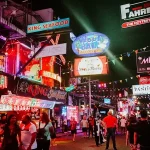
Bangla Road in Patong remains what it’s always been — a high-density strip of open-air bars, live music, and loud entertainment. In 2026 it’s slightly more regulated than it was three years ago, with earlier closing times (2am strictly enforced) and increased police presence on weekends. If that’s your scene, it’s right there. But Phuket has other options that are easier to recover from the next morning.

Rooftop Bars
The Baba Nest at Sri Panwa in Cape Panwa is the most spectacular rooftop bar on the island — a circular platform jutting over the sea on the east coast. Reservations are essential and cocktails run 400–600 THB. Closer to the main tourist areas, Vanilla Sky in Patong and several rooftop bars along the Kata hillside give similar Andaman Sea views without the journey.
Beach Clubs
Surin Beach’s beach club strip — led by Catch Beach Club — has a more grown-up crowd and better music programming than Patong. Entry is usually free but minimum spends of 500–1,500 THB apply on weekend nights. Sundays are particularly good with live DJ sets starting from 3pm. The light at golden hour turns the whole place amber and makes even a beer feel like a reward.
Quieter Evenings
Phuket Town at night is genuinely pleasant — small cocktail bars on Thalang and Phang Nga Road, live jazz from some of the old shophouse venues, and absolutely no pressure to stay out past midnight. This is where long-stay expats and slower travelers end up and it’s a world removed from Bangla Road.
2026 Budget Breakdown
Prices below reflect high season (November–March 2026) in the main tourist areas. Shoulder season costs roughly 20–30% less for accommodation.
Budget Traveler — 1,200–1,800 THB per day
- Guesthouse or hostel dorm: 400–700 THB per night
- Street food and market meals: 200–350 THB per day
- Songthaew and occasional Grab: 100–200 THB per day
- Beach activities and temple entry: 100–300 THB per day
Mid-Range Traveler — 3,000–5,000 THB per day
- Guesthouse or small hotel (private room, Kata/Kamala area): 1,500–2,500 THB per night
- Mix of sit-down restaurants and street food: 600–1,000 THB per day
- Grab for most transport: 300–500 THB per day
- Island day trip: 1,200–2,000 THB (Day 2 cost, averaged over 3 days)

Comfortable Traveler — 7,000–15,000+ THB per day
- Boutique or resort hotel (Surin, Bang Tao, or Sri Panwa): 4,000–10,000 THB per night
- Restaurant meals and beach club minimums: 1,500–3,000 THB per day
- Private taxi or car hire: 1,000–2,000 THB per day
- Private boat charter or premium tours: 4,000–8,000 THB per trip
Practical Tips for Phuket in 2026
SIM Cards and Data
Buy an AIS or DTAC tourist SIM at Phuket Airport arrivals — 299–399 THB for 7–10 days of unlimited data. This is genuinely easier than using an eSIM for most travelers and coverage across the island is excellent. The airport SIM counters are open for all major international arrivals.
Drinking Water
Tap water in Phuket is not safe to drink. Bottled water is 8–15 THB per 600ml at 7-Eleven. Most mid-range and above hotels provide filtered water in rooms — check before spending on bottles unnecessarily. A refillable 1-litre bottle and the hotel’s water station is the cleanest and cheapest setup.
Safety and Scams
The most common Phuket scams in 2026 remain the gem shop redirect (a tuk-tuk driver offers a cheap tour then “happens” to stop at a gem store) and the tuk-tuk flat rate that ends up at 3x what you expected. Use Grab for all transport. The Patong jet ski scam — where operators claim you’ve damaged their equipment — still happens. Photograph the jet ski before and after riding, or skip it entirely.
Tipping
Tipping is not obligatory but expected in sit-down restaurants and by hotel staff. Rounding up the bill or leaving 20–50 THB at a local restaurant is standard. Massage shops: 50–100 THB tip after a 60-minute session is normal. Tipping tour guides 100–200 THB for a full-day trip is appreciated.

Heat and Timing
Phuket sits between 29–35°C for most of the year. From 11am to 2pm the heat is serious — plan indoor activities (museums, malls, lunch) for this window and save walking for early morning and late afternoon. Sunscreen of SPF 50 is sold everywhere at 150–300 THB for a large bottle.
Dress for Temples
Visiting Wat Chalong or any active temple requires covered shoulders and knees. Lightweight linen trousers and a loose shirt pack small and keep you comfortable in the heat. Shorts and vest tops will be turned away at the door.
Frequently Asked Questions
Is 3 days enough time for Phuket?
Three days is enough to see Phuket Town, do one island or bay trip, and properly explore one or two beaches. You won’t see everything — the island is large — but a focused three-day itinerary delivers a genuinely satisfying trip. Prioritise quality over quantity and resist trying to fit in every beach.
What is the best time of year to visit Phuket?
November to March is dry season with calm seas, low humidity, and reliable sunshine — the best conditions for snorkeling and beach time. April gets hot and dusty before the rains. May to October is wet season with heavy afternoon storms, but mornings are often clear and prices drop 20–40% across most accommodation.
How much money do I need for 3 days in Phuket?
Budget travelers can manage comfortably on 4,000–5,500 THB total for three days excluding accommodation. Mid-range travelers should budget 9,000–15,000 THB including a mid-range hotel. Comfortable travelers with resort stays, private tours, and beach clubs should plan for 25,000–45,000 THB for three nights.
Is Phuket safe for solo travelers?
Phuket is generally safe for solo travelers including women traveling alone. The main risks are traffic (road accidents involving scooters are the most common tourist injury on the island), jet ski scams in Patong, and overpriced taxis. Use Grab, stay aware on the road, and trust your instincts in nightlife areas after midnight.
Do I need a visa for Thailand in 2026?
As of 2026, citizens of over 60 countries including the UK, USA, Australia, Germany, and most EU nations can enter Thailand visa-free for stays of up to 60 days. This was extended from 30 days in 2024 and has been made permanent for most nationalities. Check the Thai Ministry of Foreign Affairs website for your specific country before traveling.
Explore more
Phuket First-Timers Guide: Everything You Need to Know Before You Go
The Ultimate Phuket Shopping Guide: Malls, Markets & Must-Buys
Is a James Bond Island Tour from Phuket Worth It? An Honest Review