On this page
- Chaweng: The Island’s Beating Heart
- Lamai: The Relaxed Alternative Just South
- Bophut and Fisherman’s Village: Old Soul, New Money
- Maenam and Bang Po: The Quiet North Shore
- Choeng Mon: The Secluded Northeast Corner
- Nathon and the West Coast: The Authentic Underbelly
- 2026 Budget Reality: What You’ll Actually Pay Per Night
- How to Choose Your Neighbourhood
- Getting Around Between Neighbourhoods
- Frequently Asked Questions
💰 Click here to see Thailand Budget Breakdown
💰 Prices updated: October, 2026. Budget figures are estimates — always verify before travel.
Exchange Rate: $1 USD = ฿33.60
Daily Budget (per person)
Shoestring: ฿900.00 – ฿1,800.00 ($26.79 – $53.57)
Mid-range: ฿2,150.00 – ฿4,000.00 ($63.99 – $119.05)
Comfortable: ฿6,000.00 – ฿12,000.00 ($178.57 – $357.14)
Accommodation (per night)
Hostel/guesthouse: ฿90.00 – ฿750.00 ($2.68 – $22.32)
Mid-range hotel: ฿1,400.00 – ฿3,500.00 ($41.67 – $104.17)
Food (per meal)
Budget meal: ฿70.00 ($2.08)
Mid-range meal: ฿250.00 ($7.44)
Upscale meal: ฿1,000.00 ($29.76)
Transport
Single metro/bus trip: ฿30.00 ($0.89)
Monthly transport pass: ฿1,155.00 ($34.38)
Koh Samui in 2026 is not the same Island it was two years ago. The northern coast has quietly transformed with a wave of boutique openings, Airbnb regulations tightened in early 2025 have pushed more visitors toward proper hotels and resorts, and a new ring-road resurfacing project has made the west coast genuinely accessible for the first time in years. Meanwhile, Chaweng — the island’s most famous strip — is louder and more expensive than ever. With all that shifting, the single biggest mistake travellers make is booking accommodation based on outdated advice and ending up in the wrong part of the island entirely. This guide cuts through that noise.
Chaweng: The Island’s Beating Heart
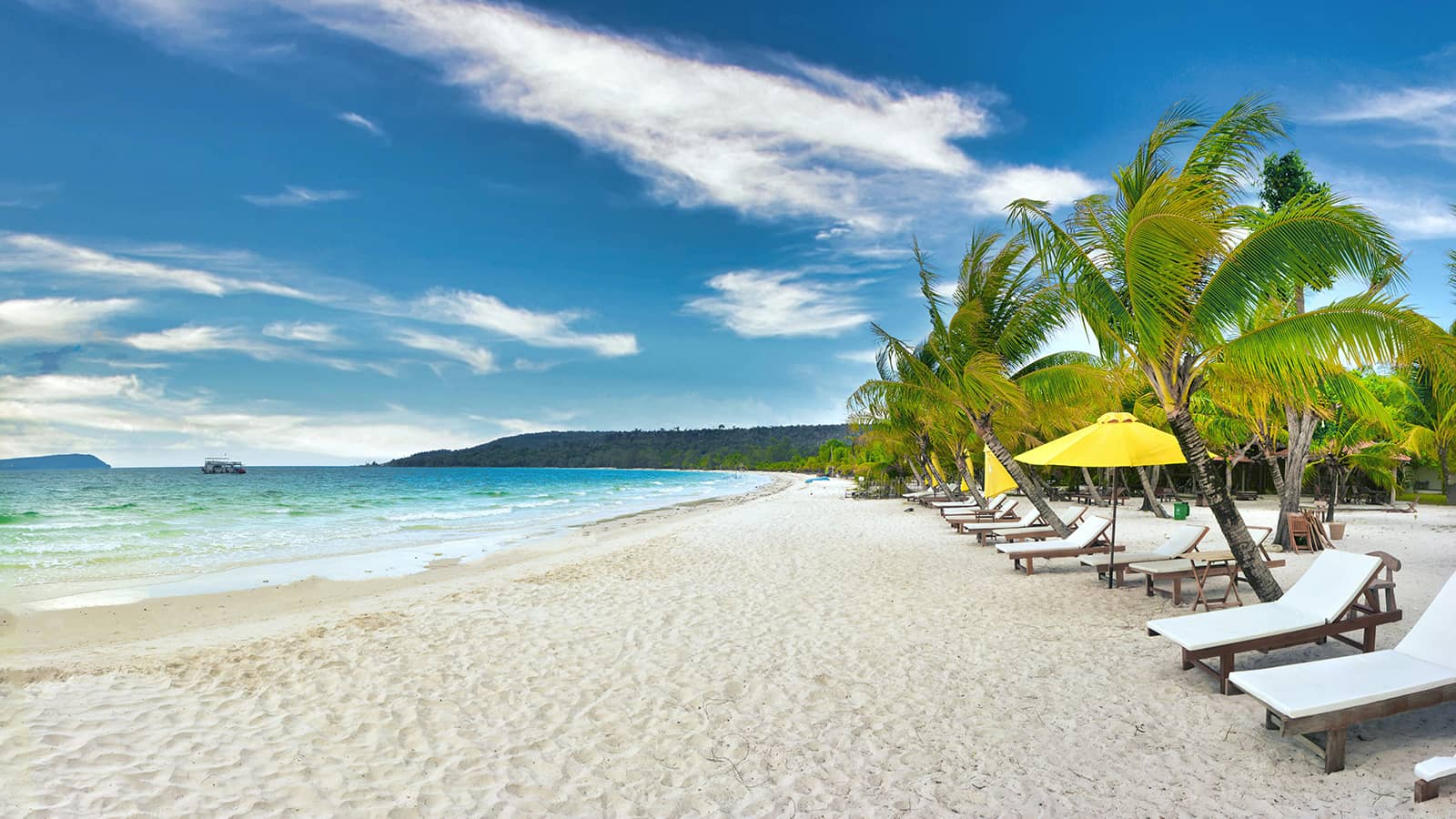
If you want the full Samui experience turned up to maximum volume, Chaweng delivers. The main beach is four kilometres of white sand facing the Gulf of Thailand, and on a clear morning the water runs a colour somewhere between turquoise and jade. By midday, those same sands are packed with sun loungers, jet ski operators, and groups of people who have clearly been up all night — because Chaweng’s nightlife on Soi Green Mango and the Beach Road strip genuinely does not stop.
This is where the island concentrates its international restaurants, rooftop bars, beachfront clubs, and the highest density of hotels at every price tier. Central Festival Samui mall sits at the southern end of the strip, giving you air-conditioned shopping without leaving the area. In 2026, Chaweng’s northern section near the roundabout has become noticeably more upscale, with several older budget guesthouses replaced by mid-range boutique properties targeting the regional luxury traveller surge from China and South Korea.
Who should stay here: solo travellers, couples who want action on the doorstep, groups celebrating something, and anyone spending fewer than five nights who wants the island’s best concentration of food and entertainment within walking distance.

Who should avoid it: light sleepers, families with young children, anyone on a genuine budget (you pay a location premium), and people who want to feel like they found a “real” part of Thailand.
Lamai: The Relaxed Alternative Just South
Drive twenty minutes south of Chaweng and the energy drops by about half — in the best way. Lamai is Samui’s second-largest beach town, long enough to offer proper resort infrastructure but calm enough that you can actually hear the waves. The beach itself is arguably better swimming than Chaweng at its southern end, where the crowd thins out and the water stays shallow and warm.
The town centre around Lamai’s main road has a good local market, Thai massage shops that haven’t tripled their prices yet, and som tam stalls where you can eat for under 100 THB. It feels like a place where actual Thai people also spend time, not a stage set for tourists. In 2026, Lamai has seen modest development — a few new garden-style resorts opened in the hills above the beach — but it has resisted the full commercialisation of its northern neighbour.
Accommodation here runs consistently cheaper than Chaweng for a comparable standard. A mid-range resort with a pool that would cost 4,500 THB per night in Chaweng typically runs 3,000–3,500 THB in Lamai. The nightlife exists — there are bars and some late-night spots — but it’s scaled down enough that noise is rarely a problem if you’re more than two streets back from the centre.
Who it suits: couples wanting a beach holiday without the circus, solo travellers who want some social options but need to sleep, anyone staying a week or more who wants everyday life mixed with their beach time.
Bophut and Fisherman’s Village: Old Soul, New Money

The north coast’s standout neighbourhood is Bophut, anchored by the Fisherman’s Village — a stretch of restored Chinese-Malay shophouses running along a narrow beach road that dates back to Samui’s trading era. On Friday evenings the walking street market fills that road with vendors, live music drifting out of beach bars, and the smell of grilled seafood. It’s genuinely atmospheric in a way that Chaweng’s more manufactured nightlife isn’t.
In 2026, Bophut has solidified its reputation as the island’s boutique hotel capital. Several high-design properties opened between 2024 and 2025 along the beachfront, targeting travellers who want style without the mega-resort scale. The beach itself is narrower and less dramatic than Chaweng or Lamai — it’s more of a calm, shallow bay ideal for swimming rather than lounging — but the tradeoff is the village atmosphere, which is hard to find elsewhere on the island.
Dining in Bophut consistently punches above its size. There are Italian and French-owned restaurants that have been here for years sitting alongside newer Thai-fusion spots, all concentrated in a walkable strip. Prices for accommodation are higher here than Lamai but often comparable to mid-Chaweng, because you’re paying for the character rather than the beach width.
Who it suits: couples celebrating something, design-conscious travellers, food-focused visitors, anyone returning to Samui who has already done the Chaweng experience and wants something more refined.
Maenam and Bang Po: The Quiet North Shore
Continue west along the north coast past Bophut and the island changes character completely. Maenam is a long, flat, lightly shaded beach with casuarina trees running behind the sand and a fraction of the crowds found further east. Bang Po, a few kilometres further, barely registers on most tourist maps — which is precisely why a growing number of long-stay travellers and remote workers have settled here.

The water along this stretch of coast is calm and clear thanks to its sheltered position, making it excellent for swimming year-round. The town of Maenam itself is functional rather than charming — a string of local shops, small restaurants, and the kind of 7-Eleven-anchored convenience that keeps longer-stay travellers sane. There are expat-owned cafés with genuinely fast WiFi and co-working-style setups that have emerged quietly since 2024.
Accommodation here skews toward simple guesthouses, standalone bungalow resorts, and rental houses. It’s the island’s best-value zone for anyone staying a week or more. A clean bungalow with air conditioning, a fan, and five metres of garden between you and the beach can be found for 800–1,500 THB per night. If you want a pool, there are small resort properties starting around 1,800 THB.
Who it suits: budget-conscious travellers, couples seeking genuine quiet, digital nomads on longer stays, families who want safe swimming without the jet ski gauntlet, and anyone who wants to decompress rather than party.
Choeng Mon: The Secluded Northeast Corner
Tucked into the northeastern tip of the island, Choeng Mon sits in a sheltered bay with some of the calmest water on Samui. The beach is short — perhaps 700 metres — but well maintained and genuinely pretty. It has the feel of a private resort cove even though it’s a public beach, partly because the hotels here are mostly large five-star properties that have invested in keeping their immediate surroundings immaculate.
This is Samui’s primary family luxury zone. Several of the island’s top-tier resorts are concentrated here, taking advantage of the flat, shallow water that’s safe for children and the relative distance from Chaweng’s late-night noise (about a 15-minute drive). In 2026, the area remains deliberately low-density — no new large developments have been approved, and the local community has successfully pushed back against commercial expansion, which keeps the atmosphere calm and the roads quiet.

Outside the big resorts, Choeng Mon has very limited independent dining and shopping. There’s a small village with a handful of restaurants and a convenience store, but you’re essentially dependent on resort facilities or a motorbike ride to Chaweng for more variety. For some people that’s a feature, not a bug.
Who it suits: families with young children, honeymooners at higher budgets, anyone seeking luxury facilities with genuine peace, travellers who plan to base themselves at a resort and only venture out occasionally.
Nathon and the West Coast: The Authentic Underbelly
Most visitors see Nathon only through the window of a ferry terminal, which is a shame. This is Samui’s main administrative town and the closest thing the island has to a place where ordinary Thai life still dominates. The market on the main road sells fresh produce at local prices, the restaurants serve southern Thai food to local workers, and nobody is trying to sell you a bucket cocktail.
The west coast facing the Gulf sunset has improved dramatically since the ring-road resurfacing project completed in late 2025. What was a potholed detour is now a genuinely pleasant coastal drive, and a few small guesthouses and one proper resort have opened to take advantage of the sunset views, which are among the best on the island. The sunsets here — the sky turning deep orange over the mainland hills across the water — are something Chaweng simply cannot offer.

Accommodation is the cheapest on the island by a significant margin. Basic guesthouses in Nathon run 400–700 THB per night. The tradeoff is that the west-coast beach is narrow and not ideal for swimming, and you’ll need transport to reach the better beaches. If you’re island-hopping and need a cheap base for a night or two near the ferry, or if you’re the kind of traveller who actively wants to be away from tourism infrastructure, the west coast makes real sense.
Who it suits: budget travellers, ferry transit stays, travellers who want to experience a Thai town rather than a resort town, photographers chasing sunset shots.
2026 Budget Reality: What You’ll Actually Pay Per Night
Prices below reflect actual 2026 high-season rates (December–February) for a standard double room. Shoulder season (March–May, September–October) typically runs 15–25% lower.
Chaweng
- Budget: 700–1,200 THB — fan room or basic guesthouse, no pool, noisy street location
- Mid-range: 2,500–4,500 THB — pool access, air conditioning, beach road or near-beach position
- Comfortable: 5,500–12,000 THB — beachfront resort, private pool options, international standard
Lamai
- Budget: 600–1,000 THB — clean guesthouse, fan or aircon, short walk to beach
- Mid-range: 1,800–3,500 THB — garden resort with pool, good value for quality
- Comfortable: 4,000–8,500 THB — beachfront boutique resort, sea-view rooms
Bophut
- Budget: 900–1,400 THB — limited options, mostly small guesthouses away from the village
- Mid-range: 2,800–5,000 THB — boutique hotel in the village, pool, character
- Comfortable: 6,000–15,000 THB — design-forward beachfront property
Maenam and Bang Po
- Budget: 500–900 THB — bungalow resort, fan or aircon, beach access
- Mid-range: 1,500–2,800 THB — small pool resort, garden bungalows
- Comfortable: 3,500–6,500 THB — boutique property, beachfront position
Choeng Mon
- Budget: Rarely available — entry level starts around 2,500 THB
- Mid-range: 3,500–7,000 THB — smaller resort properties on the bay
- Comfortable: 8,000–25,000 THB — five-star resort, private pool villa
Nathon and West Coast
- Budget: 400–700 THB — local guesthouse, basic facilities
- Mid-range: 1,200–2,500 THB — newer small resort with pool, sunset views
- Comfortable: 3,000–5,500 THB — boutique property, limited options

How to Choose Your Neighbourhood
The honest answer is that the right neighbourhood depends entirely on what you’re optimising for, and most people haven’t clearly decided before they book.
- You want nightlife and maximum convenience: Chaweng, full stop. Accept the noise and the price premium.
- You want a beach holiday with some social life but actual sleep: Lamai is your answer. It’s what Chaweng was about fifteen years ago.
- You want atmosphere, good food, and a sense of place: Bophut. Stay in the village or within walking distance of it.
- You want quiet, low cost, and safe swimming: Maenam or Bang Po. Rent a scooter and you have the whole island accessible.
- You’re travelling with children or want genuine luxury without compromise: Choeng Mon. Budget accordingly.
- You want the most authentic Thai experience with minimal tourist infrastructure: Nathon or the west coast. Know what you’re trading off.
One practical note: Samui is not a large island — the ring road circles it in about 50 kilometres. Staying in the “wrong” area is not a disaster if you have transport. The issue is noise, beach quality at your front door, and daily convenience, not access to the rest of the island.
Getting Around Between Neighbourhoods
Transport on Samui has been a persistent frustration for visitors, and 2026 hasn’t fully solved it. There is no public bus system. The traditional option — shared songthaews (covered pickup trucks) — runs along the ring road and costs 50–100 THB per person between major towns, but they run infrequently after dark and can be hard to find during midday heat.
Ride-hailing apps including Grab and local competitor Bolt now cover Samui more reliably in 2026 than they did in 2024, especially around Chaweng, Lamai, and Bophut. Expect to pay 150–350 THB for most inter-neighbourhood trips. Airport transfers from Samui Airport (USM) to Chaweng run approximately 250–400 THB via app.

Motorbike rental remains the most practical option for independent travellers: 200–350 THB per day for a basic automatic scooter from a local rental shop. International visitors should technically hold a valid motorcycle licence — enforcement has increased slightly at checkpoints in 2025 — so carry your licence if you have one. Car rental is available from 1,200–2,000 THB per day and is the right call for families or anyone uncomfortable on two wheels on Samui’s sometimes steep interior roads.
Taxis exist but have no meters — always agree on a price before you get in. A tuk-tuk from Chaweng to Bophut should cost no more than 200 THB; if quoted significantly higher, negotiate or open Grab.
Frequently Asked Questions
Which area of Koh Samui is best for first-time visitors?
Chaweng is the most practical first visit because everything — restaurants, transport, activities, pharmacies, clinics — is concentrated and walkable. You pay a premium and accept the noise, but you won’t spend half your holiday figuring out logistics. Once you know the island, other neighbourhoods make more sense on return trips.
Which neighbourhood in Koh Samui is best for families with young children?
Choeng Mon has the calmest, shallowest water and the least chaotic beach environment on the island. Maenam is a strong budget-friendly alternative with similarly calm swimming conditions. Both are significantly quieter than Chaweng or Lamai and have a more relaxed pace suited to children’s schedules.
Is it cheaper to stay on the west coast of Koh Samui?
Yes, significantly. Nathon and the west coast offer the lowest accommodation prices on the island, sometimes 40–50% less than equivalent quality in Chaweng. The tradeoff is that beaches on the west side are narrow and not ideal for swimming, and you’ll need a motorbike or transport to reach the better beach areas on the east and north coasts.

Has Koh Samui changed much since 2024?
Several things shifted. Airbnb-style short-term rental regulations tightened in 2025, pushing more accommodation into registered hotels. The west coast ring road was resurfaced, improving access. Bophut added several new boutique hotels. Ride-hailing app coverage improved. Chaweng’s northern end saw notable upscale development targeting Asian leisure travellers. Overall costs are higher than 2023–2024 by roughly 10–15%.
What is the quietest neighbourhood in Koh Samui?
Bang Po, at the western end of the north coast, is the quietest area with proper accommodation options. Choeng Mon is the quietest established resort zone. The west coast around Nathon is quieter still, but services and dining options are very limited. Any of these three will suit travellers who find Chaweng and Lamai overwhelming.
Explore more
Your Perfect 5-Day Koh Samui Itinerary: What to Do & See
The Ultimate Koh Samui Itinerary: Best Things to Do & See
Koh Samui Must-Do’s: Unforgettable Experiences for Your Island Getaway