On this page
- Understanding Thai Baht Before You Land
- Cash Is Still King — What to Use It For and How Much to Carry
- Using ATMs in Thailand Without Getting Burned
- When Cards Actually Work (And Where They Don’t)
- Cross-Border QR Payments — The Biggest Change for Tourists Since 2024
- Digital Wallets Worth Knowing About (And One That Actually Works for Tourists)
- Tipping in Thailand — The Practical Numbers
- 2026 Budget Reality — What Things Actually Cost
- Security and Common Money Mistakes to Avoid
- Frequently Asked Questions
💰 Click here to see Thailand Budget Breakdown
💰 Prices updated: October, 2026. Budget figures are estimates — always verify before travel.
Exchange Rate: $1 USD = ฿33.60
Daily Budget (per person)
Shoestring: ฿900.00 – ฿1,800.00 ($26.79 – $53.57)
Mid-range: ฿2,150.00 – ฿4,000.00 ($63.99 – $119.05)
Comfortable: ฿6,000.00 – ฿12,000.00 ($178.57 – $357.14)
Accommodation (per night)
Hostel/guesthouse: ฿90.00 – ฿750.00 ($2.68 – $22.32)
Mid-range hotel: ฿1,400.00 – ฿3,500.00 ($41.67 – $104.17)
Food (per meal)
Budget meal: ฿70.00 ($2.08)
Mid-range meal: ฿250.00 ($7.44)
Upscale meal: ฿1,000.00 ($29.76)
Transport
Single metro/bus trip: ฿30.00 ($0.89)
Monthly transport pass: ฿1,155.00 ($34.38)
A lot of first-timers arrive in Thailand in 2026 thinking their contactless card and a Google Pay setup will handle everything. It won’t. You’ll hit your first street food market, want a bowl of boat noodles for 60 THB, and suddenly realise the vendor has never seen a tap-to-pay terminal in her life. Getting your money strategy wrong on day one wastes time, costs more, and starts the trip on a frustrating note. This checklist covers everything you actually need to know — cash, ATMs, cards, QR payments, tipping, budgeting, and the scams to sidestep — so you land prepared.
Understanding Thai Baht Before You Land
Thailand’s official currency is the Thai Baht (THB). Banknotes come in five denominations: 20 THB (green), 50 THB (blue), 100 THB (red), 500 THB (purple), and 1,000 THB (grey/brown). Coins run from 1, 2, 5, and 10 baht, plus 25 and 50 satang coins — though satang coins rarely appear in everyday transactions and you can mostly ignore them.
The most useful notes for daily life are the 50 THB and 100 THB. Street food typically costs 50–120 THB per dish. A 1,000 THB note is fine for paying hotel bills or supermarket runs, but hand one to a tuk-tuk driver for a 60 THB fare and expect a painful search for change. Get small notes from ATMs early in your trip or break large notes at 7-Eleven.
Don’t exchange money at the airport beyond what you need for your first taxi or meal. Airport rates are notably worse than what you’ll find in the city. Currency exchange booths like SuperRich Thailand (superrich.co.th) consistently offer competitive rates in Bangkok and tourist areas. Check the rate on Google before exchanging so you know what fair looks like.
Cash Is Still King — What to Use It For and How Much to Carry
Despite years of digital payment growth, cash remains non-negotiable for authentic Thai experiences in 2026.
You will need cash for:
- Street food stalls — from pad thai carts to fruit vendors, the vast majority accept cash only
- Fresh markets and night markets — including Chatuchak Weekend Market in Bangkok and the Sunday Walking Street in Chiang Mai
- Tuk-tuks and street-hailed taxis — ride-hailing apps like Grab accept cards, but flagging down a taxi or jumping in a tuk-tuk means cash
- Temple entrance fees — many smaller temples and local attractions are cash-only at the gate
- Small local shops and guesthouses outside major tourist hubs
For a typical day of exploring, carry 1,000–2,000 THB in mixed small denominations. Don’t walk around with more than 5,000 THB loose in crowded areas. Keep a separate emergency stash of 1,000–2,000 THB tucked away in your bag, not your wallet.
Using ATMs in Thailand Without Getting Burned
ATMs are everywhere — inside 7-Eleven and FamilyMart convenience stores, at shopping malls, bank branches, and airport arrivals halls. Bangkok Bank and Kasikornbank (KBank) have among the most reliable ATM networks for foreign cards.
Standard withdrawal limits are 10,000 THB per transaction at most ATMs. Some standalone Bangkok Bank or Kasikornbank machines allow withdrawals of up to 20,000 or even 30,000 THB — check what the ATM screen offers before confirming.
Every ATM transaction using a foreign card triggers a local bank fee of 220 THB. This fee has been stable for years and is projected to remain unchanged through 2026. On top of that, your home bank will likely add its own foreign transaction fee of 1–3%. To minimise charges, make fewer, larger withdrawals rather than multiple small ones. Some international cards — such as Wise (wise.com) or Revolut — reimburse or waive ATM fees. Check your card’s terms before you travel.
Follow this sequence at every ATM to avoid costly mistakes:
- Insert your card and select English
- Enter your 4-digit PIN
- Select Withdrawal → Savings Account (debit) or Credit Card
- Enter your amount and confirm the 220 THB fee
- When asked about currency conversion, always choose THB — never your home currency
- Collect card, cash, and receipt
That last point — choosing THB — is critical. If you let the ATM convert to your home currency (called Dynamic Currency Conversion or DCC), the machine applies its own exchange rate, which is almost always worse than your bank’s rate. Choosing THB means your bank handles the conversion, which is typically far better value.
Thai ATMs accept Visa, Mastercard, Plus, and Cirrus networks universally. American Express and JCB are accepted at most major bank ATMs as well.
When Cards Actually Work (And Where They Don’t)
Credit and debit cards work reliably at hotels, department stores, supermarkets, and international-style restaurants. In Bangkok, places like Central, Siam Paragon, Robinson, and MBK Center all accept major cards without issue. Supermarket chains — Lotus’s, Big C, Makro, and Gourmet Market — also accept cards at checkout.
In 2026, contactless payments including Apple Pay and Google Pay are increasingly accepted wherever tap-to-pay terminals exist. This has expanded significantly since 2024, making card payments faster and more secure at mid-range and upscale venues.
Where cards fail:
- Street food stalls and fresh markets
- Small guesthouses and family-run accommodation
- Local noodle shops and shophouse restaurants
- Most tuk-tuks and street-flagged taxis
- Temple donation boxes
Before attempting a card payment anywhere that looks locally run, ask: “Rap card mai?” (Do you accept cards?). It saves awkward moments. Notify your bank before leaving home that you’re travelling to Thailand — cards blocked for “suspicious activity” at midnight in Bangkok are no fun to deal with.
Cross-Border QR Payments — The Biggest Change for Tourists Since 2024
This is the single most significant development for tourists arriving in Thailand in 2026. The Bank of Thailand has expanded its cross-border QR payment network, allowing visitors from several countries to pay directly at PromptPay QR codes using their home banking apps — no Thai bank account needed.
If you’re from any of these countries, check whether your bank app supports cross-border QR payments to Thailand:
- Singapore — PayNow via DBS PayLah!, OCBC Digital, UOB TMRW
- Malaysia — DuitNow QR via Maybank MAE, CIMB Clicks, Public Bank
- Indonesia — QRIS via various Indonesian bank apps and e-wallets
- Vietnam — VietQR via Vietnamese bank apps
- Cambodia — Bakong app
- Hong Kong — FPS via various Hong Kong bank apps
To use it: open your home banking app, tap Scan QR or Scan to Pay, scan the PromptPay QR code at the merchant, confirm the amount (displayed in THB with a conversion to your home currency), and authenticate with your PIN or biometrics. The merchant sees confirmation instantly.
Fees are generally lower than credit card foreign transaction fees — typically 0.5%–1.5% set by your home bank or wallet. For the most current list of cross-border partners, the Bank of Thailand’s official site (bot.or.th) lists participating networks under Payment Systems.
Visitors from the US, UK, Europe, and Australia cannot yet use this system directly — for them, cash and cards remain the primary tools.
Digital Wallets Worth Knowing About (And One That Actually Works for Tourists)
Grab (grab.com/th) is the one digital wallet that genuinely works well for tourists right now. Download the app, link your international Visa, Mastercard, or Amex card, and you can pay for GrabCar, GrabTaxi, GrabBike, and GrabFood deliveries without handling cash. Reliability with international cards has improved significantly since 2024. For transport and food delivery, it’s the most practical cashless option available to foreign visitors.
TrueMoney Wallet (truemoney.com) is widely accepted at 7-Eleven, Lotus’s, McDonald’s, and Starbucks, but it requires a Thai phone number and linking a Thai bank account or card to function fully. Registration hurdles make it impractical for short-stay tourists. Skip it unless you’re staying longer than a month and want to set it up properly.
Rabbit LINE Pay (rabbitlinepay.com) integrates with the LINE messaging app and works for BTS Skytrain ticket purchases and some affiliated merchants. However, it requires a Thai LINE account linked to local financial accounts. For transport in Bangkok, a physical Rabbit Card — bought and topped up at any BTS station — is far simpler and handles everything you need on the Skytrain.
Tipping in Thailand — The Practical Numbers
Tipping is not mandatory in Thailand but is genuinely appreciated in service-oriented settings. Here’s what makes sense in 2026:
- Restaurants with a 10% service charge already on the bill — no additional tip required, though rounding up is always welcome
- Restaurants without a service charge — 5–10% for good service, left in cash on the table
- Hotel porters/bellhops — 20–50 THB per bag
- Housekeeping — 50–100 THB per day, left somewhere visible
- Taxi/tuk-tuk — rounding up to the nearest 10 or 20 THB is standard and appreciated
- Massage and spa — 50–100 THB for a standard one-hour massage; 100–200 THB for longer or more upscale treatments
- Tour guides — 100–300 THB per person per day depending on quality and length
2026 Budget Reality — What Things Actually Cost
Prices below reflect 2026 conditions and are per person per day, excluding accommodation.
Budget Traveller — 800–1,200 THB/day
Street food meals (3x daily at 60–120 THB each), local bus or MRT travel, free beaches or temples, water from 7-Eleven. This is genuinely achievable if you eat where locals eat and avoid tourist-trap restaurants.
Mid-Range Traveller — 1,500–3,000 THB/day
A mix of street food and sit-down restaurants, Grab rides or BTS, a couple of paid attractions or a day tour. The 1,500–3,000 THB band covers most independent travellers comfortably.
Comfortable Traveller — 3,500–6,000 THB/day
Meals at mid-to-upscale restaurants, private transfers, spa treatments, cooking classes or boat tours, and shopping at central malls. Still excellent value by global standards.
For context: a bowl of boat noodles at a Yaowarat market stall costs around 60–80 THB. A BTS Skytrain single journey runs 17–60 THB depending on distance. A one-hour Thai massage at a reputable spa is typically 300–500 THB. A Singha beer at a local restaurant is around 60–80 THB.
Security and Common Money Mistakes to Avoid
Thailand is generally safe for travellers, but money mistakes are easy to make when everything is unfamiliar. These are the ones that catch first-timers most often:
- Accepting Dynamic Currency Conversion — always press “Continue in THB” and never “Pay in [home currency]” at ATMs or card terminals
- Exchanging money at the airport beyond immediate needs — rates are poor; exchange more in the city
- Carrying all your cash and cards in one place — split them across different pockets and bags
- Not notifying your bank before travelling — cards get blocked. Do this at least 48 hours before departure
- Trusting unofficial currency exchange offers — anyone approaching you on the street with a “very good rate today” is not your friend
- Assuming ATMs near tourist sites are cheaper — all Thai ATMs charge the same 220 THB foreign card fee regardless of location
- Using a credit card at an ATM without checking interest — many credit cards treat ATM withdrawals as cash advances and charge interest from day one, even if you pay the bill in full
Frequently Asked Questions
How much cash should I bring to Thailand for two weeks?
Bring enough foreign currency to exchange for roughly 3,000–5,000 THB on arrival for immediate costs — transport, first meals, SIM card. After that, rely on ATMs. Withdrawing in larger amounts reduces the impact of the 220 THB per-transaction ATM fee. A mid-range budget works out to around 20,000–40,000 THB over two weeks excluding accommodation.
What is the ATM fee in Thailand for foreign cards in 2026?
Thai banks charge a flat 220 THB fee per withdrawal for foreign cards. This fee has been stable for several years and is expected to continue through 2026. Your home bank may also add its own foreign transaction or cash advance fee on top of this. Cards from Wise or Revolut can reduce or offset these charges depending on your plan.
Can I use Apple Pay or Google Pay in Thailand?
Yes, increasingly so. Contactless payment terminals that accept tap-to-pay have expanded significantly since 2024. Major hotels, department stores, supermarkets, and international restaurants now frequently support Apple Pay and Google Pay linked to Visa or Mastercard. Street food, markets, and small local vendors remain cash-only.
Is tipping expected in Thailand?
Tipping is not mandatory but is appreciated in tourist-facing services. Leaving 20–50 THB for porters, 50–100 THB for massage therapists, and rounding up taxi fares is standard practice. If a restaurant’s bill already includes a 10% service charge, you are not obligated to tip further, though a small additional amount for genuinely good service is always well-received.
Are credit cards widely accepted in Thailand?
Credit cards work reliably at hotels, department stores, major supermarkets, and upscale restaurants. Acceptance is limited at smaller guesthouses, local eateries, street food stalls, and markets. In 2026, contactless card payments have expanded at mid-range venues, but cash remains essential for authentic local experiences. Always carry enough baht to cover a full day without needing a card terminal.
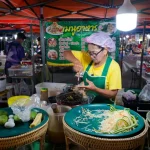
📷 Featured image by Frugal Flyer on Unsplash.