On this page
- What Makes Koh Phangan a Legitimate Wellness Destination in 2026
- The Best Retreat Centres on the Island (and What Sets Each Apart)
- Yoga Styles Available: Finding the Right Fit for Your Practice
- The Wellness Food Scene: Where to Eat Around Your Retreat
- Day Trip or Stay the Week? Planning Your Time Honestly
- 2026 Budget Reality: What a Wellness Trip Actually Costs
- Getting to Koh Phangan in 2026
- Practical Tips Before You Book
- Frequently Asked Questions
💰 Click here to see Thailand Budget Breakdown
💰 Prices updated: October, 2026. Budget figures are estimates — always verify before travel.
Exchange Rate: $1 USD = ฿33.60
Daily Budget (per person)
Shoestring: ฿900.00 – ฿1,800.00 ($26.79 – $53.57)
Mid-range: ฿2,150.00 – ฿4,000.00 ($63.99 – $119.05)
Comfortable: ฿6,000.00 – ฿12,000.00 ($178.57 – $357.14)
Accommodation (per night)
Hostel/guesthouse: ฿90.00 – ฿750.00 ($2.68 – $22.32)
Mid-range hotel: ฿1,400.00 – ฿3,500.00 ($41.67 – $104.17)
Food (per meal)
Budget meal: ฿70.00 ($2.08)
Mid-range meal: ฿250.00 ($7.44)
Upscale meal: ฿1,000.00 ($29.76)
Transport
Single metro/bus trip: ฿30.00 ($0.89)
Monthly transport pass: ฿1,155.00 ($34.38)
Koh Phangan built its reputation on full moon chaos, but in 2026, a different kind of traveller is arriving — one carrying a yoga mat instead of a bucket cocktail. The island’s wellness scene has matured significantly since 2024, with serious retreat centres now outnumbering beach bars in certain parts of the island. The challenge isn’t finding a retreat anymore. It’s sorting the genuine, transformative experiences from the Instagram-flavoured weekends dressed up in spiritual language. This guide cuts through that.
What Makes Koh Phangan a Legitimate Wellness Destination in 2026
Koh Phangan’s rise as a wellness hub wasn’t accidental. The island sits in the Gulf of Thailand with a geography that naturally divides itself: the south coast absorbs the party energy around Haad Rin, while the north and west — particularly Srithanu, Ban Tai, and Chaloklum — have developed into genuinely quiet, intention-driven communities. These areas have warm, still waters, almost no commercial noise, and a resident population of long-term yoga teachers, Ayurvedic practitioners, and nutritional therapists who chose to stay permanently.
Since 2024, the Thai government’s wellness tourism push under its Medical and Wellness Hub policy has brought cleaner regulation to retreat businesses. In 2026, certified retreat operators must register with the Department of Health Service Support, which means the fly-by-night operators who offered “detox” programs with no qualified staff have largely been squeezed out. What remains is more trustworthy than it was two years ago.
The island also benefits from something intangible. Step onto the wooden deck of a Srithanu yoga shala at 6:30am and you hear nothing but the tide moving through the mangroves below. That silence — real, textured silence punctuated by birdsong — is itself therapeutic in a way that resort spas in Phuket or Bangkok simply cannot replicate.
The Best Retreat Centres on the Island (and What Sets Each Apart)
These are established centres with consistent track records and real teaching staff. Programs change seasonally, so always confirm schedules directly before booking.
Agama Yoga (Mae Haad)
One of the largest yoga schools in Southeast Asia, Agama offers structured courses rather than drop-in retreats. Their month-long Level 1 course is deeply systematic, covering asana, tantra philosophy, pranayama, and meditation. This is not a casual option — students attend six days a week. It suits people who want actual knowledge, not just relaxation.
The Sanctuary (Haad Tien)
The Sanctuary is only accessible by boat from Haad Rin, which enforces a genuine sense of removal from ordinary life. It combines colonic therapy, fasting programs, yoga, and a raw food kitchen. The setting — a sheltered bay with no road access — means your phone signal disappears along with your regular habits. Programs run three to 14 days.
Vikasa (Koh Tao, with Koh Phangan affiliates)
While Vikasa’s main campus is on nearby Koh Tao, it regularly runs retreat programs based on Koh Phangan and is worth mentioning for travellers considering both islands. Teacher training intensives here have a strong reputation in the global yoga community.
Orion Healing Centre (Ban Tai)
Orion specialises in fasting, detox, and juice cleanse programs. Their seven-day and 14-day fasting retreats are medically supervised and use a combination of colonics, herbal supplements, and breathwork. For travellers whose primary goal is physical reset rather than spiritual development, Orion is consistently well-reviewed.
Samma Karuna (Srithanu)
This centre focuses on emotional healing alongside movement practice. Programs integrate somatic therapy, conscious relationship workshops, and trauma-informed yoga. It draws a different demographic than the fitness-oriented centres — people working through something specific rather than just seeking a holiday upgrade.
Yoga Styles Available: Finding the Right Fit for Your Practice
Koh Phangan’s yoga landscape covers almost every major tradition. Understanding the differences saves you from booking a rigorous Ashtanga intensive when what you actually need is restorative yin.
- Hatha: The most common style on the island. Slower-paced, alignment-focused, suitable for all levels. Good for beginners or anyone recovering from injury.
- Ashtanga: A set sequence of postures practised in a flowing, physically demanding style. Available at several independent shalas in Srithanu. Expect to sweat.
- Yin: Long-held passive postures targeting connective tissue. Widely offered as evening classes across the island. Excellent paired with a more active morning practice.
- Tantra: In the Koh Phangan context, this generally refers to the classical tradition taught at Agama — energy work, meditation, and philosophy. Unrelated to the “neo-tantra” workshops that float around the island and vary enormously in quality.
- Breathwork and Pranayama: Offered as standalone workshops or woven into retreat programs. Transformational breathwork sessions, in particular, have grown significantly in popularity since 2024 and are now a core offering at several centres.
The Wellness Food Scene: Where to Eat Around Your Retreat
Srithanu village is the centre of gravity for wellness-aligned eating on the island. Walking its main road at lunchtime, you pass the thick, warm smell of turmeric and coconut from kitchens serving Ayurvedic thalis, followed by cold-press juice bars where the whirr of masticating juicers provides the local soundtrack.
Bubba’s Coffee Bar is a long-standing institution in Srithanu for breakfast — good coffee, proper smoothie bowls, and a social hub where the retreat community gathers between sessions. Dirt restaurant on the same strip serves creative whole-food cooking that satisfies without feeling punishing. The Yoga Kitchen near Haad Yao produces some of the best plant-based Thai food on the island — actual Thai flavours, not just tofu in a green curry.
For travellers on fasting programs, most retreat centres provide program meals. If you’re eating freely, budget around 150–350 THB per meal at wellness-focused restaurants. Standard Thai local restaurants around the island remain excellent and affordable — a bowl of khao tom (rice soup) or a plate of pad kra pao at a shophouse near Ban Tai will cost 60–100 THB and is far fresher than it looks.
Day Trip or Stay the Week? Planning Your Time Honestly
Koh Phangan is not a day trip destination for wellness purposes. There is no practical way to travel from the mainland, attend a meaningful retreat session, and return the same day. The ferry journeys from Surat Thani or Chumphon eat up most of a day in each direction.
The minimum useful visit for a retreat experience is four nights. This gives you two to three full practice days, proper acclimatisation to island pace, and enough time to actually unwind before you have to start thinking about leaving. Most structured retreat programs run five, seven, or 14 days for this reason.
If you have only a weekend, Koh Phangan still works — but frame it as a soft reset rather than a transformational retreat. Arrive Friday evening, attend drop-in yoga classes Saturday and Sunday, eat well, sleep without an alarm, and leave Monday. That’s genuinely valuable. Just don’t expect to have resolved anything deep in 48 hours.
The optimal stay for most visitors in 2026 is seven to ten days. Long enough to settle into a rhythm, benefit from a structured program, explore the island’s quieter beaches like Haad Khuat (Bottle Beach) in the north, and leave feeling genuinely different rather than just temporarily relaxed.
2026 Budget Reality: What a Wellness Trip Actually Costs
Wellness tourism on Koh Phangan covers a wide price range. Here is an honest breakdown for a seven-day stay in 2026:
Budget Tier (35,000–55,000 THB total for 7 days)
- Accommodation: Fan-cooled bungalow or guesthouse near Srithanu, 400–700 THB per night
- Yoga: Drop-in classes at independent shalas, 300–500 THB per class or 1,500–2,500 THB for a weekly pass
- Food: Eating at local Thai restaurants plus a few wellness cafes, 300–500 THB per day
- Transport: Songthaew shared taxis and occasional scooter rental, 200–400 THB per day
Mid-Range Tier (70,000–110,000 THB total for 7 days)
- Accommodation: Air-conditioned private room at a retreat centre or boutique guesthouse, 1,500–2,500 THB per night
- Structured retreat program including meals: 5,000–8,000 THB per day depending on centre
- Occasional treatments (Thai massage, sound healing): 800–1,500 THB per session
Comfortable Tier (130,000 THB and above for 7 days)
- Private villa accommodation with pool access: 4,000–8,000 THB per night
- Premium retreat programs with private instruction and tailored nutrition plans
- Daily massage or Ayurvedic treatment: 1,500–3,000 THB per session
Note that most all-inclusive retreat packages bundle accommodation, meals, and classes into a single price. When comparing packages, confirm exactly what is and isn’t included — “meals” at some centres means three full daily meals, while others cover only a light breakfast and post-yoga smoothie.
Getting to Koh Phangan in 2026
There is no commercial airport on Koh Phangan. Access is always by boat, which shapes the entire experience — the slower arrival is part of the transition.
From Bangkok
The most common route is a flight from Suvarnabhumi or Don Mueang to Koh Samui (approximately 1 hour, 1,800–4,500 THB), followed by a 30-minute ferry to Koh Phangan (around 300 THB). Alternatively, fly to Surat Thani (cheaper at 900–2,500 THB) and take a combined bus-ferry transfer, which takes around three hours total from the airport.
Overnight train from Bangkok’s Hua Lamphong or Bang Sue Grand Station to Surat Thani remains a popular option for travellers who enjoy the journey. The sleeper train costs 600–1,400 THB and arrives in Surat Thani around 8–9am, connecting to a morning ferry to Koh Phangan.
From Koh Samui
Multiple Raja Ferry and Seatran ferry crossings daily, 30–45 minutes, approximately 200–350 THB. The most convenient inter-island connection.
From Koh Tao
Regular Lomprayah and Songserm high-speed catamaran services, approximately 1 hour, 350–500 THB. Useful if you’re combining a diving trip on Koh Tao with a wellness stay on Koh Phangan.
Practical Tips Before You Book
- Verify teacher credentials: Ask retreat centres directly about their lead teachers’ training hours and lineage. Legitimate centres welcome this question. Registered yoga teachers under Yoga Alliance standards should have at minimum a 200-hour certification, with senior teachers holding 500 hours.
- Weather timing: November through March is peak season with reliable dry weather. April to May is hot but manageable. The Gulf of Thailand monsoon affects Koh Phangan from October to November, though this is also when some centres offer their best rates and quietest programs.
- Scooter safety: Koh Phangan’s roads are hilly and poorly lit in places. Motorbike accidents among tourists remain one of the most common medical incidents on the island. If you haven’t ridden a scooter confidently before, use songthaews or hire a driver for the week.
- Visa considerations: Thailand’s 60-day tourist visa on arrival (extended from 30 days in late 2024) covers most retreat program lengths comfortably. For programs longer than 60 days, a tourist visa from a Thai embassy before travel is necessary.
- Digital detox policies: Several centres, including The Sanctuary and Samma Karuna, encourage or require participants to limit phone and social media use during programs. Factor this into your planning if remote work obligations apply.
Frequently Asked Questions
Is Koh Phangan suitable for complete yoga beginners?
Yes. Most retreat centres offer beginner-friendly programs, and drop-in Hatha classes across Srithanu welcome newcomers explicitly. You don’t need any prior experience to benefit. Beginners should avoid booking intensive Ashtanga programs or advanced teacher training courses, which assume a committed existing practice.
How do I avoid the Full Moon Party crowds during a wellness retreat?
Stay in the north or west of the island — Srithanu, Chaloklum, or Haad Khuat are effectively different worlds from the Haad Rin party zone. The Full Moon Party happens on the south coast and generates noise contained largely to that area. Most retreat centres in Srithanu are unaffected.
Are the retreat programs medically safe?
Reputable centres with fasting or detox programs use qualified medical supervision. In 2026, registered operators must comply with Department of Health Service Support guidelines. Always disclose any medical conditions before enrolling. Anyone with a history of eating disorders should approach fasting-based programs cautiously and consult a doctor first.
Can I attend a retreat solo as a woman traveller?
Koh Phangan’s wellness community is predominantly female, and solo women make up a large share of retreat participants. Srithanu in particular has a strong sense of community safety. Standard precautions apply — share your itinerary with someone at home, choose accommodation with good reviews, and trust your instincts in unfamiliar situations.
What’s the difference between a retreat package and drop-in yoga classes?
A retreat package bundles accommodation, meals, and a structured daily program into one price, providing accountability and community. Drop-in classes let you design your own schedule with more flexibility and lower cost. Retreat packages suit people who want structure and immersion; drop-in works better for independent travellers staying longer term.
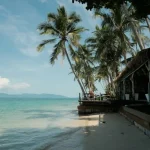
📷 Featured image by Moustapha KEBE on Unsplash.