On this page
- The Grand Palace Complex & Wat Phra Kaew
- Wat Pho — More Than the Reclining Buddha
- Wat Arun — Crossing the River and Getting the Timing Right
- Lesser-Known Temples That Reward the Detour
- The Riverside & Old City Temple Walk
- Dress Code, Entry Rules & What Gets Tourists Turned Away in 2026
- Getting to the Temples Without Losing Your Mind
- Best Time to Visit Each Temple
- Temple Etiquette & Spiritual Practice
- Budget Breakdown — Temple Visits in Bangkok (2026)
- Frequently Asked Questions
💰 Click here to see Thailand Budget Breakdown
💰 Prices updated: October, 2026. Budget figures are estimates — always verify before travel.
Exchange Rate: $1 USD = ฿33.60
Daily Budget (per person)
Shoestring: ฿900.00 – ฿1,800.00 ($26.79 – $53.57)
Mid-range: ฿2,150.00 – ฿4,000.00 ($63.99 – $119.05)
Comfortable: ฿6,000.00 – ฿12,000.00 ($178.57 – $357.14)
Accommodation (per night)
Hostel/guesthouse: ฿90.00 – ฿750.00 ($2.68 – $22.32)
Mid-range hotel: ฿1,400.00 – ฿3,500.00 ($41.67 – $104.17)
Food (per meal)
Budget meal: ฿70.00 ($2.08)
Mid-range meal: ฿250.00 ($7.44)
Upscale meal: ฿1,000.00 ($29.76)
Transport
Single metro/bus trip: ฿30.00 ($0.89)
Monthly transport pass: ฿1,155.00 ($34.38)
Bangkok‘s temple circuit has changed more than most visitors expect. In 2026, the Grand Palace area now operates a stricter crowd-management system with timed entry windows, and the Chao Phraya Express Boat has expanded its tourist boat services with new stops that make temple-hopping far more efficient than it was two years ago. At the same time, overtourism around the top three sites has pushed a new wave of travelers toward the city’s quieter sacred sites — and honestly, that’s where some of Bangkok’s most rewarding experiences are hiding. This guide cuts through the noise and tells you exactly what you need to know before you go.
The Grand Palace Complex & Wat Phra Kaew
No amount of crowd warnings will stop you visiting the Grand Palace, nor should they. This is one of the most architecturally staggering places on the planet. The complex covers 218,000 square metres in the heart of the old city, and Wat Phra Kaew — the Temple of the Emerald Buddha — sits at its centre. The golden spires and mosaic-encrusted chedis catch the first light of dawn in a way that makes even seasoned travellers stop walking and just look.
The Emerald Buddha itself is surprisingly small — about 66 centimetres tall — carved from a single block of jade and seated high on a golden throne inside an immaculate bot. Photography inside the bot is not allowed, and the rule is enforced. The mural galleries surrounding the inner courtyard depict the entire Ramakien epic across 178 panels, which alone could take an hour if you slow down and read the scene labels.
In 2026, entry to the Grand Palace complex costs 500 THB per person, unchanged from recent years. Timed entry slots are now bookable online via the Grand Palace’s official ticketing portal — booking at least 48 hours ahead is strongly recommended for weekends and Thai public holidays. Entry is between 08:30 and 15:30, with last admission strictly at 15:30.
Wat Pho — More Than the Reclining Buddha
Wat Pho sits just south of the Grand Palace walls, which makes visiting both on the same morning entirely practical. Most people come for the Reclining Buddha, and that experience delivers. The gold-plated figure stretches 46 metres long inside a building that barely contains it — you walk the length of the hall looking up at the soles of the feet, each one inlaid with 108 auspicious symbols in mother-of-pearl. The air inside is thick with incense and the quiet shuffle of visitors.
What many skip is the rest of the compound. Wat Pho is Thailand’s oldest centre of public education, and the stone inscriptions covering courtyard walls are a UNESCO-listed archive of traditional Thai medicine, massage, and literature. The massage pavilions at the back of the compound are run by graduates of the Wat Pho Thai Traditional Medical School — a one-hour traditional Thai massage here costs around 420 THB, and the therapists are genuinely skilled. It’s a legitimate reason to budget an extra hour inside the compound.
Entry to Wat Pho costs 200 THB in 2026, making it considerably cheaper than the Grand Palace. It opens at 08:00 and closes at 18:30, giving you more flexibility with timing. There are decent toilets inside, drinking water for sale, and shaded rest areas — all useful if you’ve already walked the Grand Palace complex.
Wat Arun — Crossing the River and Getting the Timing Right
Wat Arun, the Temple of Dawn, sits on the west bank of the Chao Phraya and is best reached by the cross-river ferry from Tha Tien pier — a 5-minute, 5 THB ride that drops you almost at the temple gates. The name is slightly misleading: the temple is not actually best seen at dawn. The prime time to visit is late afternoon, around 16:00–17:30, when the sun hits the western bank and the entire 82-metre prang glitters with its mosaic of Chinese porcelain fragments.
The central tower is climbable via steep stone steps, and the renovated balcony level at about halfway up gives you an unobstructed view across the river to Wat Pho and the city skyline. The climb is steep enough that most visitors grip the handrails. Worth it. Entry is 100 THB in 2026 — one of the best-value temple admissions in the city.
Stay past sunset if you can. The temple is lit at night and reflects beautifully in the river, and the area around Tha Tien pier on the opposite bank has become a legitimate food-and-coffee strip with riverfront seating. It’s one of the most pleasant spots in Bangkok once the main tourist rush clears out around 18:00.
Lesser-Known Temples That Reward the Detour
Bangkok has over 400 wats within city limits. The three temples above attract 95% of tourists. The rest of the list is wide open.
Wat Suthat Thepwararam
On the edge of Sanam Luang near the Giant Swing, Wat Suthat is one of Bangkok’s six Royal Temples of the First Grade — and it consistently goes undervisited. The bot is the tallest in Bangkok and contains a 8-metre Phra Si Sakyamuni Buddha brought from Sukhothai. The doors of the bot are themselves masterpieces of intricate lacquered woodwork. Entry is 100 THB. Expect a small fraction of the crowds you’ll face at Wat Pho.
Wat Ratchanatdaram (Loha Prasat)
A five-minute walk from Khao San Road, Wat Ratchanatdaram is home to Loha Prasat — a metal castle with 37 spires that is one of only three structures of its kind ever built in the world. The others are in India and Sri Lanka, both now in ruins. This one is intact, beautifully maintained, and almost always quiet when you arrive. Entry is free. The surrounding neighbourhood around Ratchadamnoen Avenue has a distinctly un-touristed Bangkok feel that’s disappearing fast elsewhere in the old city.
Wat Benchamabophit (The Marble Temple)
In Dusit district, about 2 kilometres north of the Grand Palace, Wat Benchamabophit is built from Carrara marble imported from Italy and was commissioned by King Rama V in 1899. The main hall is a fusion of Thai and European architectural styles that somehow works completely. It’s also one of the few Bangkok temples where you can still see monks collecting alms in the early morning along the canal. Entry is 50 THB. It’s quietest on weekday mornings.
The Riverside & Old City Temple Walk
Bangkok’s old city district — Rattanakosin Island — is compact enough that many of the major temples can be connected on foot, particularly if you start early before the heat peaks. A practical walking route: start at Wat Mahathat (near Sanam Luang, free entry, active meditation centre), move to Wat Phra Kaew and the Grand Palace, then walk south along the river wall to Wat Pho, and finish with the cross-river ferry to Wat Arun. That circuit covers the three headline temples and takes a full morning if you pace it well — roughly 5–6 hours including ferry time and a rest stop.
The streets between these temples — particularly Maharat Road and Wang Lang Market on the west bank — are full of small food stalls, fresh coconut water sellers, and amulet markets where you’ll see locals shopping for Buddhist charms alongside monks. The amulet market behind Wat Mahathat is genuine, not tourist-facing, and worth wandering through even if you buy nothing.
For temples further afield like Wat Benchamabophit or Wat Traimit (home to the world’s largest solid gold Buddha, 40 THB entry, near Chinatown’s Yaowarat Road), Grab is the practical option. A ride from the old city to Chinatown runs around 60–100 THB depending on traffic.
Dress Code, Entry Rules & What Gets Tourists Turned Away in 2026
Dress code enforcement at Bangkok’s major temples has tightened significantly since 2024. Officials at Wat Phra Kaew and Wat Pho now turn away visitors at the gate who aren’t appropriately covered — no exceptions for tourists, no sarong loans at the Grand Palace entrance (you’ll be directed to return properly dressed). The rules are consistent across all active temples:
- Shoulders must be covered — sleeveless tops are not acceptable, even with a scarf draped over them at the strictest sites
- Knees must be covered — shorts above the knee will get you turned away; three-quarter length is the safe minimum
- No see-through clothing — light linen is fine, thin synthetic fabrics held up to light are not
- Shoes must be removable — you’ll take them off before entering any bot or viharn; flip-flops are practical
- No hats inside religious buildings
The simplest approach in 2026: pack a lightweight pair of linen trousers in your day bag if you’re wearing shorts, and keep a thin long-sleeved layer accessible. Lightweight trousers are sold by vendors outside most major temples for around 100–150 THB if you arrive underprepared — but buying on the street and being turned away are two different experiences in the heat.
Some temples also ask you to check bags over a certain size. The Grand Palace has security scanning at the entrance. Drones are strictly prohibited at all temple sites and Thai authorities have become more aggressive about confiscating equipment since 2025.
Getting to the Temples Without Losing Your Mind
Bangkok’s transport options for temple visits are genuinely good in 2026, as long as you pick the right one for where you’re going.
Chao Phraya Express Boat
The Tourist Boat (orange flag) runs regularly between Sathorn Pier (Central Pier, connected to BTS Saphan Taksin station) and Phra Arthit Pier near Khao San Road, stopping at all the key temple piers. A day pass costs 200 THB and includes unlimited rides. Tha Chang pier is the closest to the Grand Palace; Tha Tien pier is the closest to Wat Pho and the Wat Arun cross-river ferry. In 2026, the expanded boat service now runs until 20:00 on weekends, which is useful if you’re visiting Wat Arun at sunset.
BTS + Walk or Grab
The BTS Silom Line ends at Saphan Taksin, which connects directly to the river pier. From there, a 20-minute boat ride gets you to Tha Chang. There is no BTS or MRT station within walking distance of the Grand Palace or Wat Pho — this is one part of Bangkok where the train doesn’t complete the trip. Budget a Grab or a metered taxi for the last leg if you’re not using the river boat.
Tuk-Tuks
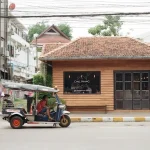
Useful for short hops between temples in the old city, but agree on the fare before you get in. 80–150 THB for most short temple-to-temple runs is reasonable. Be wary of any tuk-tuk driver who offers a “temple tour” that involves stopping at a tailor or gem shop — it’s a classic commission-based detour that’s still common in 2026 despite years of warnings.
Best Time to Visit Each Temple
Timing your temple visits correctly makes a material difference to both the quality of experience and your comfort level in Bangkok’s heat.
Grand Palace & Wat Phra Kaew
Open 08:30–15:30. The absolute best window is 08:30–09:30. Weekday mornings in the low season (May to October) are quietest. Avoid weekends and Thai public holidays entirely if you can — the timed entry system helps, but the inner courtyards still fill up.
Wat Pho
Opens at 08:00. Same early-morning logic applies. The compound is large enough that even with moderate crowds it never feels as claustrophobic as the Grand Palace. Late afternoon (16:00–18:00) is also pleasant here — many visitors have already left, and the light through the compound trees is excellent.
Wat Arun
Avoid morning entirely if photography matters to you — the temple faces west and is in shadow most of the morning. Arrive between 15:30 and 17:30 for the best light. Sunset views from across the river at Tha Tien pier are outstanding and free.
Wat Benchamabophit
Weekday mornings before 09:00 give you the best chance of seeing monks in the compound and almost no other tourists. The marble catches the morning light differently to any other temple in Bangkok — it’s cooler and more serene in tone, less gold and glitter, more quiet grandeur.
Temple Etiquette & Spiritual Practice
Bangkok’s major temples are functioning religious sites, not open-air museums. That distinction matters for how you move through them.
- Remove shoes before entering any bot (ordination hall) or viharn (assembly hall). Always. The floor areas where Buddha images sit are sacred.
- Never point your feet toward a Buddha image — sit cross-legged or with your legs to the side when resting inside a hall
- Keep your voice low inside any building. Monks meditate and pray in these spaces daily.
- Don’t touch Buddha images, even small ones on lower platforms
- Women should not touch monks or hand items directly to a monk — place items on the ground or on the cloth the monk holds out
- Donations are voluntary but appropriate — small notes in donation boxes throughout the compound are how temples fund maintenance
- Merit-making practices like releasing birds, buying flower garlands for offerings, or lighting incense are open to visitors who want to participate — there’s no obligation, but observing them quietly is fine
One thing that trips up visitors: the large Buddha images visible from outside temple buildings are generally fine to photograph from a respectful distance. Moving close and posing with your back to them for selfies is considered disrespectful, and you’ll occasionally be asked to stop by staff or monks.
Budget Breakdown — Temple Visits in Bangkok (2026)
A full temple day in Bangkok is affordable by any measure. Here’s what a realistic day costs across different spending styles:
Budget Tier
- Grand Palace + Wat Phra Kaew entry: 500 THB
- Wat Pho entry: 200 THB
- Wat Arun entry: 100 THB
- Cross-river ferry (Tha Tien to Wat Arun and back): 10 THB
- Tourist Boat day pass: 200 THB
- Street food lunch near Tha Tien or Wang Lang Market: 60–100 THB
- Water and snacks: 50 THB
- Estimated total: 1,100–1,200 THB per person
Mid-Range Tier
- All of the above plus Wat Pho traditional massage (1 hour): 420 THB
- Sit-down lunch at a restaurant near the river: 200–350 THB
- Grab rides for 2–3 legs instead of boats: 150–250 THB
- Estimated total: 1,800–2,200 THB per person
Comfortable Tier
- Private guide for the Grand Palace complex (half day): 1,500–2,500 THB
- Air-conditioned restaurant lunch: 400–700 THB
- Tuk-tuk hire for the day (negotiated): 800–1,200 THB
- Cocktails at a riverside bar at Tha Tien after sunset: 300–450 THB per drink
- Estimated total: 3,500–5,000 THB per person
The lesser-known temples — Wat Suthat, Wat Ratchanatdaram, Wat Benchamabophit — add 50–150 THB each at most, making them easy additions to any budget. Wat Ratchanatdaram is free entry.
Frequently Asked Questions
How much does it cost to visit the Grand Palace in Bangkok in 2026?
Entry to the Grand Palace and Wat Phra Kaew costs 500 THB per person in 2026. The ticket also covers the Vimanmek Mansion and the Royal Thai Decorations Museum within the complex. Timed entry slots are now available online — booking ahead is recommended for weekends and public holidays to avoid long gate queues.
What is the dress code for Bangkok temples?
Shoulders and knees must be fully covered at all Bangkok temples, including the Grand Palace. Sleeveless tops and shorts above the knee are not accepted. Carry a lightweight layer and long trousers in your bag if you’re wearing summer clothing. Shoes must be removed before entering any religious hall. Enforcement is strict at the major sites in 2026.
What is the best time of day to visit Wat Arun?
Late afternoon between 15:30 and 17:30 gives the best light on Wat Arun’s western-facing prang. Morning visits leave the temple largely in shadow. Sunset views from Tha Tien pier across the river are free and arguably more dramatic than the view from inside the complex itself.
Can you visit multiple temples in one day in Bangkok?
Yes — the Grand Palace, Wat Pho, and Wat Arun can all be visited in a single morning using the Chao Phraya river boat. Start at the Grand Palace at 08:30, move to Wat Pho by 11:00, then cross to Wat Arun after lunch. Adding a fourth temple like Wat Suthat requires a short tuk-tuk or Grab ride and around 45 extra minutes.
Are Bangkok temples open every day?
Most Bangkok temples are open daily, though hours vary. The Grand Palace is open 08:30–15:30 every day except during major royal ceremonies, when it closes without advance notice. Wat Pho is open 08:00–18:30 daily. Wat Arun is open 08:00–18:00 daily. Checking each temple’s official page or the Tourism Authority of Thailand’s 2026 listings before visiting is a practical habit.
Explore more
Best Bars in Bangkok: Your Essential Guide to the City’s Top Drinking Spots
Getting Around Bangkok: Your Ultimate Guide to BTS, MRT, Taxis & More
Eating Your Way Through Yaowarat: Bangkok’s Ultimate Chinatown Food Guide
📷 Featured image by Waranont (Joe) on Unsplash.