💰 Click here to see Thailand Budget Breakdown
💰 Prices updated: October, 2026. Budget figures are estimates — always verify before travel.
Exchange Rate: $1 USD = ฿33.60
Daily Budget (per person)
Shoestring: ฿900.00 – ฿1,800.00 ($26.79 – $53.57)
Mid-range: ฿2,150.00 – ฿4,000.00 ($63.99 – $119.05)
Comfortable: ฿6,000.00 – ฿12,000.00 ($178.57 – $357.14)
Accommodation (per night)
Hostel/guesthouse: ฿90.00 – ฿750.00 ($2.68 – $22.32)
Mid-range hotel: ฿1,400.00 – ฿3,500.00 ($41.67 – $104.17)
Food (per meal)
Budget meal: ฿70.00 ($2.08)
Mid-range meal: ฿250.00 ($7.44)
Upscale meal: ฿1,000.00 ($29.76)
Transport
Single metro/bus trip: ฿30.00 ($0.89)
Monthly transport pass: ฿1,155.00 ($34.38)
Many visitors in 2026 treat Ayutthaya as a quick tick-box from Bangkok. They arrive at noon, hit three temples in 36°C heat, and leave feeling that the ruins look the same. The fix is simple: choose the right sites, time your day around the light, and know how the city is laid out. This guide shows you how.
Why Ayutthaya Feels Different
Ayutthaya was the capital of the Siamese kingdom from 1350 until Burmese armies destroyed it in 1767. At its peak, it was one of the largest cities in Asia, with canals, foreign trading quarters, and hundreds of temples. UNESCO listed the historical park in 1991.
The old centre sits on an island formed by three rivers: the Chao Phraya, the Pasak, and the Lopburi. That is why the ruins feel scattered and green rather than like a tidy museum. Red brick prangs rise beside busy roads, and working temples sit next to broken walls. Unlike Sukhothai, Ayutthaya is a living town, so you will pass school kids, motorbike repair shops, and noodle stalls between the monuments.
The Ruins Worth Your Time
- Wat Mahathat: Home to the famous Buddha head wrapped in banyan roots. In late afternoon, the light turns the old brick the colour of burnt honey, and the roots look almost carved. Keep your head lower than the Buddha when taking photos. Guards enforce this.
- Wat Phra Si Sanphet: The former royal temple, with three bell-shaped chedis in a neat row. It is the classic Ayutthaya postcard and is best early, before tour buses arrive.
- Wat Ratchaburana: You can climb down into a crypt inside the main prang, where surviving murals hint at how colourful the city once was.
- Wat Chaiwatthanaram: Across the river from the island. Its Khmer-style central tower and surrounding chedis look best at sunset, when the stone glows orange against the water.
- Wat Lokayasutharam: A huge reclining Buddha, about 42 metres long, lying in an open field. Entry is free.
- Wihan Phra Mongkhon Bophit: A large bronze Buddha inside a working hall. Free to enter, and quiet outside peak hours.
- Wat Yai Chai Mongkhon: A large, active temple with a white chedi and rows of saffron-robed Buddha statues. It sits just outside the island and is often skipped, which is a mistake.
Day Trip or Overnight?
A day trip works if you are short on time. You can see four or five sites between 8:00 and 16:00 and be back in Bangkok by evening. The trade-off is that you will be walking in the hottest hours.
Staying one night changes the experience. After the day-trippers leave, several major temples are lit up in the evening, and the island goes quiet. You can watch sunset at Wat Chaiwatthanaram, eat at the night market, and start the next morning at Wat Phra Si Sanphet with almost no crowds. If you can spare one night, take it. Opening hours and evening lighting can change, so check current times on the day.
Getting There From Bangkok in 2026
Ayutthaya is about 80 kilometres north of Bangkok. Your main options are:
- Train: The cheapest and most atmospheric option. Third-class tickets cost around 20 THB and take roughly 1.5 to 2 hours. Since the opening of Krung Thep Aphiwat (Bang Sue Grand Station), many intercity services depart from there rather than Hua Lamphong, so check which station your train uses.
- Minivan: Frequent departures from the Mo Chit area for about 60 to 80 THB. Faster than the train in good traffic, but less comfortable.
- Bus: Services from the Northern bus terminal cost about 70 to 100 THB.
- Private driver: Around 2,500 to 3,500 THB for a round trip, useful for groups.
Coming from Don Mueang Airport is also easy: the railway station is connected to the terminal by a skywalk. The Bangkok–Nakhon Ratchasima high-speed line is still under construction, so do not expect it to cut your journey time in 2026.
When you reach Ayutthaya station, the old island is across the river. A small ferry crosses in a few minutes for about 5 THB.
Getting Around the Island
The sites are spread over several kilometres, and the heat makes distance feel longer than it is.
- Bicycle: 50 to 100 THB a day. Best in the cool season, and the island is flat. Be careful on the busy main roads.
- Tuk-tuk: A 3 to 4 hour tour usually costs 600 to 1,000 THB. Agree on the route and price before you start.
- Scooter: About 250 to 350 THB a day if you have experience and a valid licence.
- River boat: A sunset loop around the island is a relaxed way to see the temples from the water. Prices vary by operator, so confirm the price before boarding.
Ride-hailing apps are patchy here, so do not rely on them. Local tuk-tuks and songthaews are more dependable.
Where to Eat in Ayutthaya
- Boat noodles: Small bowls of rich, dark pork or beef broth, usually 15 to 25 THB each. The area near the Pridi Damrong Bridge is known for it. Order five or six bowls, as locals do.
- River prawns: Ayutthaya is famous for large freshwater prawns, grilled over charcoal until the shells blister and the smoke carries along the riverbank. Riverside restaurants charge 500 to 1,000 THB or more depending on size.
- Roti sai mai: Thin, crepe-like roti wrapped around spun sugar threads that melt on your tongue. Look for stalls around Chao Phrom Market and Hua Raw Night Market, usually 30 to 60 THB.
- Hua Raw Night Market: A good evening stop with grilled meats, noodles, and desserts, and a fair way to end a full day.
2026 Budget Reality
Ayutthaya is one of the cheaper heritage stops in Thailand. Temple tickets are the main cost, at around 50 THB per major site for foreigners. Some sites, like Wat Lokayasutharam and Wihan Phra Mongkhon Bophit, are free. Prices can change, so confirm at the gate.
- Budget (about 600 to 900 THB per day): Train return, bicycle hire, 3 to 4 temple tickets, street food meals, and a dorm bed if staying overnight (about 250 to 400 THB).
- Mid-range (about 1,800 to 3,000 THB per day): Tuk-tuk tour, all major temples, restaurant meals, and a guesthouse or small hotel (900 to 1,800 THB).
- Comfortable (about 4,000 to 7,000 THB per day): Private driver or transfer, riverside boutique hotel (2,500 to 5,000 THB), river prawn dinner, and a boat tour.
Practical Tips for Visiting
- Dress code: Cover shoulders and knees at active temples such as Wat Yai Chai Mongkhon and Wihan Phra Mongkhon Bophit. Carry a light scarf.
- Heat: March to May can pass 38°C. Bring water, a hat, and sunscreen. November to February is cooler, at around 20 to 32°C, and much more comfortable for walking.
- Flooding: Heavy rain from September to October can flood low-lying areas. The 2011 floods reached the historical park, and some sites are close to the rivers. Check conditions before you go.
- Tuk-tuk scams: Drivers may offer very cheap tours that include shopping stops. Ask for the route in writing, or on your phone, and skip the extras.
- Respect the sites: Do not climb on ruins or touch Buddha statues. Many are protected, and fines can apply.
Frequently Asked Questions
Is Ayutthaya worth visiting as a day trip from Bangkok?
Yes. It is only about 1.5 to 2 hours by train or minivan, and you can see the main ruins in one day. For a calmer experience and sunset light, stay one night. Day trips work best if you start early and avoid midday heat.
What is the cheapest way to get from Bangkok to Ayutthaya?
The third-class train is cheapest at around 20 THB each way, taking roughly 1.5 to 2 hours. Minivans cost around 60 to 80 THB and are often faster. Check whether your train leaves from Krung Thep Aphiwat or Hua Lamphong before heading out.
How much are Ayutthaya temple tickets in 2026?
Major sites like Wat Mahathat, Wat Phra Si Sanphet, and Wat Ratchaburana cost around 50 THB each for foreign visitors. Some sites, including Wat Lokayasutharam and Wihan Phra Mongkhon Bophit, are free. Prices can change, so confirm at each entrance.
What is the best time of year to visit Ayutthaya?
November to February is best, with cooler temperatures of about 20 to 32°C and mostly dry weather. March to May is very hot, and September to October brings heavy rain and some flood risk. If you visit in the hot months, go early and late.
What should I wear when visiting Ayutthaya’s temples?
Cover your shoulders and knees, especially at active temples. Wear light, breathable clothing and comfortable shoes with good grip, since the ground is uneven. A hat and sunscreen help too. Carry a scarf or shawl if you are unsure whether an area requires extra cover.
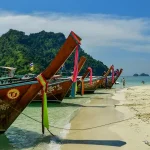
📷 Featured image by Jared Rice on Unsplash.