On this page
- Understanding Koh Phangan’s Geography Before You Plan
- The 5-Day Itinerary Framework
- The Beach Breakdown — Which Shore Matches Your Style
- The Yoga and Wellness Scene in 2026
- Adventure Beyond the Beach
- Where to Eat Without Getting Ripped Off
- Getting to Koh Phangan in 2026
- Budget Reality — What Things Actually Cost in 2026
- Day Trip or Overnight? How Long You Actually Need
- Practical Tips Specific to Koh Phangan
- Frequently Asked Questions
💰 Click here to see Thailand Budget Breakdown
💰 Prices updated: October, 2026. Budget figures are estimates — always verify before travel.
Exchange Rate: $1 USD = ฿33.60
Daily Budget (per person)
Shoestring: ฿900.00 – ฿1,800.00 ($26.79 – $53.57)
Mid-range: ฿2,150.00 – ฿4,000.00 ($63.99 – $119.05)
Comfortable: ฿6,000.00 – ฿12,000.00 ($178.57 – $357.14)
Accommodation (per night)
Hostel/guesthouse: ฿90.00 – ฿750.00 ($2.68 – $22.32)
Mid-range hotel: ฿1,400.00 – ฿3,500.00 ($41.67 – $104.17)
Food (per meal)
Budget meal: ฿70.00 ($2.08)
Mid-range meal: ฿250.00 ($7.44)
Upscale meal: ฿1,000.00 ($29.76)
Transport
Single metro/bus trip: ฿30.00 ($0.89)
Monthly transport pass: ฿1,155.00 ($34.38)
Koh Phangan has a reputation problem — or rather, a perception gap. Most people picture it as a beach rave island and nothing else. But in 2026, the island has matured into something more layered: serious yoga retreats operating beside party beaches, motorcycle trails cutting through jungle to empty coves, and a food scene that’s moved well past pad thai and bucket cocktails. The real planning challenge now is that the Full Moon Party still draws enormous crowds every month, and if your trip accidentally overlaps with it — or the Half Moon or Black Moon events — accommodation prices triple and the south of the island becomes a different place entirely. This guide helps you build a Koh Phangan Itinerary that works for your style, whether you’re here for stillness, surf, or something in between.
Understanding Koh Phangan’s Geography Before You Plan
Koh Phangan is roughly 167 square kilometres, which sounds manageable until you realise the interior is dense jungle with steep hills and the road network is patchy. The island divides clearly into zones, and where you stay determines everything about your daily experience.
Haad Rin in the south is Full Moon Party ground zero. The beach is beautiful but the village around it runs entirely on tourism, and it never really quiets down. Thong Sala is the main town and ferry pier on the west coast — practical, local-feeling, and where the night market and best cheap restaurants are. Chaloklum in the north is a fishing village with a completely different pace. Sri Thanu and Haad Salad on the northwest coast have become the wellness corridor — quiet bungalows, yoga shalas, and vegan cafés strung along a road that actually has good tarmac. The east coast — beaches like Haad Thian and Haad Yao — requires a bit more effort to reach and rewards you with near-solitude.
A key infrastructure note for 2026: the road connecting Thong Sala to Sri Thanu was repaved in late 2025 and is now significantly easier to navigate by scooter. The eastern coastal road, however, remains steep and rutted in sections — manageable in dry season, risky in the wet.
The 5-Day Itinerary Framework
Day 1 — Arrive, Orient, Exhale
Arrive via ferry from Koh Samui or Surat Thani. Check into your accommodation in Sri Thanu or Haad Salad if you’re on a wellness trip, or Chaloklum if you want the fishing village atmosphere. Rent a scooter immediately — ideally from a shop in Thong Sala where pricing is more competitive. Spend the afternoon on Haad Salad beach and eat dinner at the Thong Sala night market. Your first evening should be slow.
Day 2 — Full North Loop
Head to Chaloklum village early for breakfast at a local Thai coffee shop. From there, take the road east to Thong Nai Pan Noi — one of the most beautiful bays on the island, flanked by forested headlands. The drive takes about 40 minutes on a dry road and involves a steep descent. Snorkel off the northern headland in the afternoon, then return via the west road at sunset.
Day 3 — Yoga Morning, Jungle Afternoon
Book a morning class at one of the retreat centres in Sri Thanu (more on these below). After lunch, hike to the Domsilas Viewpoint or take the trail through the interior to Phaeng Waterfall — a 20-minute walk from the road, rewarding after rain. The waterfall drops into a pool surrounded by jungle, the air noticeably cooler than the coast.
Day 4 — South Exploration (Non-Party Version)
Visit Haad Rin in the morning on a non-Full Moon week and it’s a genuinely lovely beach — clear water, soft sand, far quieter than its reputation suggests. Walk the headland path to Haad Seekantang (also called Leela Beach) for even more seclusion. Return via the west coast road and stop at Ao Chaophao for sunset swimming.
Day 5 — East Coast Hidden Bays
Hire a longtail boat from Chaloklum or arrange a kayak tour to reach the east coast bays — Haad Thian, Haad Tien, Haad Wai Nam. These are accessible by boat or difficult jungle trail and feel genuinely remote. Spend the full day here and bring your own snacks. Return by boat in late afternoon.
The Beach Breakdown — Which Shore Matches Your Style
- Haad Rin (south): Party atmosphere, beautiful beach, full infrastructure. Avoid during Full Moon unless that’s your specific goal.
- Haad Salad (northwest): Calm, shallow water, good snorkelling on the north end. Popular with couples and families.
- Thong Nai Pan Noi (northeast): Arguably the best beach on the island. Clear water, dramatic hills, fewer day-trippers because it’s harder to reach.
- Haad Yao (west): Long stretch of sand with reliable sunset views. Gets busy in high season but never overwhelming.
- Chaloklum Bay (north): A working fishing pier rather than a swimming beach — but the atmosphere is the most authentic on the island.
- East coast bays: Haad Thian and surrounding coves are for people who genuinely want to be left alone. Boat access recommended.
The Yoga and Wellness Scene in 2026
Koh Phangan has been a serious yoga destination since the early 2010s, but the scene has consolidated in 2026 around a smaller number of genuinely high-quality centres rather than the proliferation of casual operations that existed a few years ago. The northwest corridor from Sri Thanu to Haad Salad is where most of the established centres operate.
Orion Healing Centre and The Yoga Retreat in Sri Thanu both run multi-day detox and yoga programmes that attract a serious international crowd. Drop-in classes are available at both, typically running 08:00–10:00 and again at 17:00–19:00. Expect to pay 400–700 THB per drop-in class in 2026. For full retreat packages running 5–7 days including accommodation and meals, prices range from 12,000 to 28,000 THB depending on the programme and room type.
Sound healing sessions have become particularly popular — you’ll find them listed at most centres as evening add-ons. Cacao ceremonies, which were everywhere a few years ago, are still offered but the novelty has worn off for repeat visitors. What’s newer in 2026 is the integration of traditional Thai herbal medicine consultations at several wellness centres, offered by certified practitioners rather than the informal operators that used to dominate.
Adventure Beyond the Beach
Koh Phangan’s interior gets overlooked because most visitors stay coastal, but there’s real adventure available if you push inward.
Scooter touring: The island’s hill roads offer some of the best riding in the Gulf of Thailand. The road from Chaloklum down to the east coast viewpoints involves hairpin bends and forest canopy overhead — take it slowly and you’ll encounter almost no other traffic.
Phaeng Waterfall: The national park that surrounds it charges a small entrance fee (around 100 THB in 2026) and the trail system has been improved with clearer signage since 2025. Combine it with a visit to the Domsilas rock viewpoint for sweeping views over the island’s western bays.
Kayaking: Several operators in Chaloklum and Haad Yao run half-day kayak tours around the north and east coast. These are excellent for reaching beaches that are inaccessible by road. Rates run around 800–1,200 THB per person for a guided half-day including snorkelling stops.
Freediving: Koh Phangan has a quiet but solid freediving community. Two or three schools operate year-round, and the calm east coast waters make it a better environment for beginners than the busier dive sites around Koh Tao. Entry-level courses run approximately 5,500–7,000 THB for a two-day AIDA2 certification.
Where to Eat Without Getting Ripped Off
The rule on Koh Phangan is simple: the closer to a beach or sunset view, the higher the markup. The best food is either in Thong Sala town or in small local spots along the main roads rather than the beachfront restaurants.
The Thong Sala Night Market — open from around 17:00 every evening — is genuinely one of the best street food markets in the southern Gulf islands. Grilled pork skewers, fresh papaya salad with fermented crab, boat noodles, and mango sticky rice are all available for 40–80 THB per dish. The market smells of charcoal and fish sauce and chilli, the kind of sensory hit that reminds you this is real Thai cooking, not tourism food.
Karma Kafe in Sri Thanu serves excellent plant-based food that doesn’t feel like deprivation — their jackfruit massaman in particular is rich and slow-cooked with proper depth. Nira’s Home Bakery near Haad Salad is the best breakfast spot on the northwest coast, busy by 08:30 most mornings. For seafood, Chaloklum Bay restaurants — specifically the simple restaurants facing the fishing pier — serve grilled fish and steamed crab at genuinely local prices because their clientele is still partly actual local fishermen.
Getting to Koh Phangan in 2026
There is no direct airport on Koh Phangan — Koh Samui Airport (USM) is the closest, and from there it’s a 30-minute ferry to Don Sak pier and then a connecting ferry to Thong Sala. The combined journey from Koh Samui to Koh Phangan takes around 30–50 minutes depending on the ferry operator.
From Surat Thani on the mainland, you can take the overnight ferry (departs around 23:00, arrives early morning — useful and budget-friendly) or the high-speed catamaran that takes about 2.5 hours. The main operators in 2026 are Lomprayah and Seatran, both operating regular daily services. Booking online 24–48 hours ahead is sufficient except during Full Moon Party weeks when you should book at least a week in advance.
From Bangkok, the fastest routing is a flight to Koh Samui (around 1 hour 20 minutes with Bangkok Airways, which operates a near-monopoly on the route) followed by the ferry connection. Budget travellers take the overnight train or bus to Surat Thani and then the ferry — total journey time around 12–14 hours but significantly cheaper.
Budget Reality — What Things Actually Cost in 2026
Budget tier (under 1,500 THB per day): Fan room in a guesthouse 400–700 THB per night, night market meals 60–150 THB, scooter rental 200–250 THB per day, drop-in yoga 400 THB. Achievable if you stay in Thong Sala or a simple bungalow in Sri Thanu and eat locally.
Mid-range tier (1,500–3,500 THB per day): Air-conditioned bungalow with pool access 1,200–2,000 THB per night, mix of restaurant meals and street food, one or two activities per day. This is the most comfortable experience for most visitors.
Comfortable tier (3,500 THB and above per day): Boutique villa or high-end retreat accommodation from 3,500 THB per night, spa treatments 800–2,000 THB, guided tours and boat charters. During Full Moon Party week, all accommodation prices increase significantly — budget accommodation effectively disappears below 1,500 THB per night.
One practical 2026 note: Thailand’s digital nomad visa (LTR visa) and the new 90-day tourist visa extension rules mean more long-stay visitors on Koh Phangan, which has gradually pushed up monthly rental prices for bungalows. Short-stay tourists are not affected, but the overall baseline cost of the island has risen roughly 15–20% since 2023.
Day Trip or Overnight? How Long You Actually Need
Koh Phangan is not a day trip destination. From Bangkok or Chiang Mai, the journey time alone makes it impractical for anything less than three nights. Even from Koh Samui, a day trip is technically possible by ferry but wastes most of your time in transit and doesn’t give you enough island to explore.
The minimum meaningful visit is three nights — you’ll see the main beaches, eat well, and do one or two activities. Five nights, as outlined in the itinerary above, gives you a complete experience. If you’re doing a yoga retreat, plan for at least seven nights since most programmes are structured around full weeks.
Koh Phangan works best as part of a Gulf islands combination — Koh Tao for diving, Koh Phangan for a mix of activities and recovery, Koh Samui for the last night before flying out. The ferry connections between all three are frequent and the total island-hopping route is very manageable.
Practical Tips Specific to Koh Phangan
- Full Moon dates: Check the lunar calendar before booking. The party is the night before the full moon and into the early hours. If you don’t want to be near it, avoid Haad Rin and the south for two days either side of the full moon date.
- Scooter safety: More accidents happen on Koh Phangan’s hills than on most Thai islands because of the terrain. Wet roads on descents are genuinely dangerous. Rent from a reputable shop, check the brakes before you leave, and go slower than you think you need to.
- Water: Tap water is not safe to drink. Large refill stations throughout the island charge 1–5 THB per litre — bring a reusable bottle rather than buying single-use plastic.
- Mobile signal: AIS and DTAC have reasonable coverage across most of the island in 2026, but the east coast and deep interior have gaps. Download offline maps before exploring remote areas.
- Seasons: High season is December through April. The Gulf of Thailand’s weather pattern means the east coast can be rough during November — west coast beaches are protected then. Monsoon season (October–November) brings heavy rain but also lush jungle and far fewer tourists.
Frequently Asked Questions
Is Koh Phangan good for travellers who don’t want the Full Moon Party?
Absolutely. Most of the island operates completely independently of the party scene. The northwest coast, north coast, and east coast bays are quiet year-round. Avoid the south during full moon week and you’ll find a relaxed, genuinely beautiful island with good food, excellent yoga, and accessible adventure activities.
How many days should I spend on Koh Phangan?
Three nights is the minimum for a meaningful visit; five nights lets you explore the island without rushing. Yoga retreat programmes are typically structured around a full week, so plan for seven nights if that’s your focus.
What is the best time of year to visit Koh Phangan?
December through April offers the most reliable weather and calmest sea conditions. January and February are peak months with strong tourist numbers. May through September is shoulder season — still largely pleasant with occasional rain. October and November are the wettest months but accommodation is cheaper and the island is far less crowded.
Is Koh Phangan expensive compared to other Thai islands?
Mid-range by Thai island standards. It’s cheaper than Koh Samui and Phuket, slightly more expensive than Koh Tao for accommodation. Street food and local restaurants remain affordable. The main cost driver is accommodation during Full Moon Party periods, when prices across the island spike significantly regardless of how far you are from Haad Rin.
Can I get around Koh Phangan without renting a scooter?
It’s difficult but possible. Songthaew shared taxis connect Thong Sala to most major beaches and cost 100–200 THB per person. Taxis and app-based transport exist but are expensive. For the north and east coast, boat access is often more practical than road transport. Renting a scooter remains by far the most flexible and cost-effective option for most visitors.
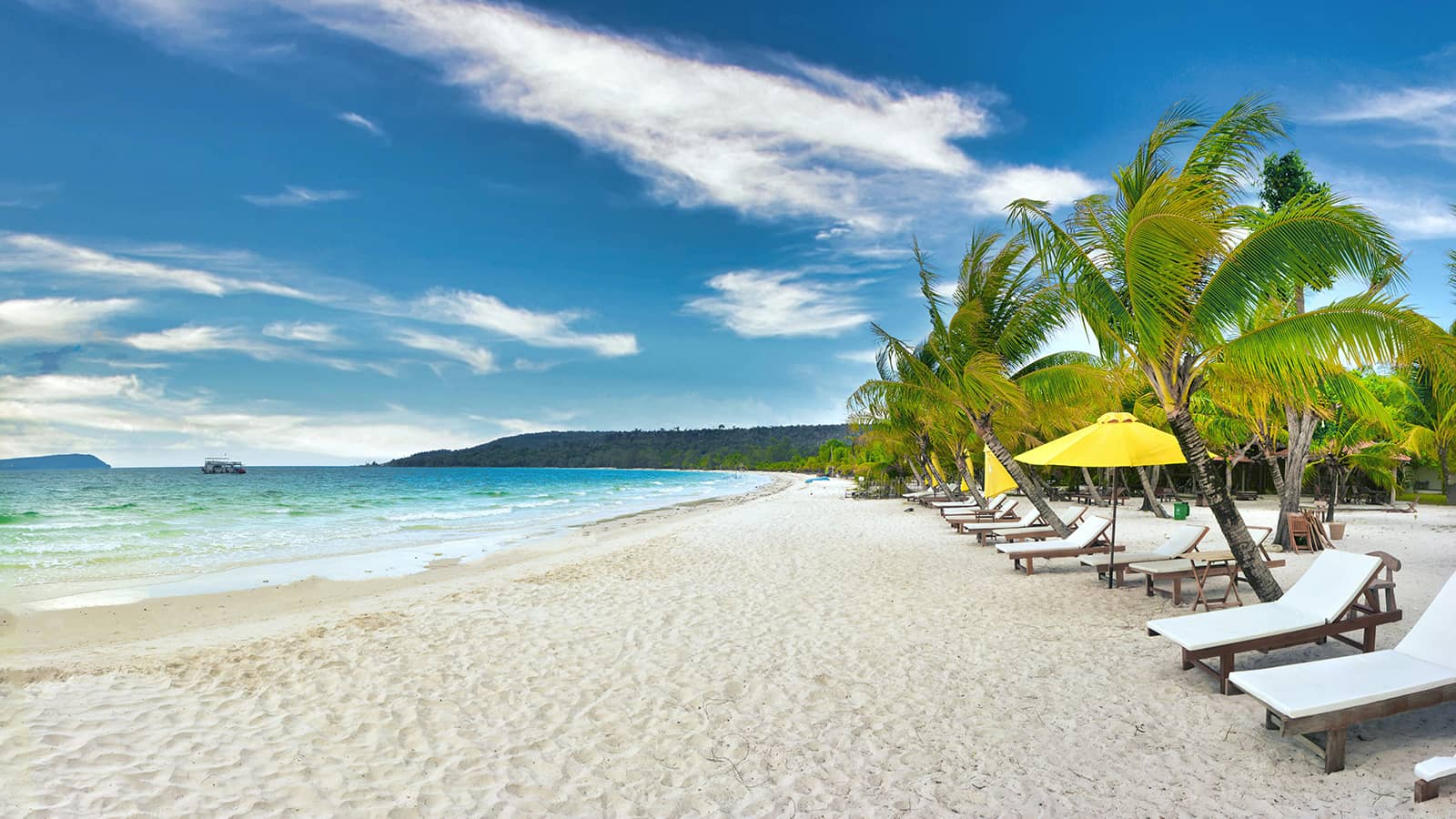
📷 Featured image by Kevin Bosc on Unsplash.