On this page
- Matching the Transport Mode to Your Route
- Domestic Flights: Airlines, Fares and Baggage
- BTS Skytrain and MRT: Riding Bangkok’s Rails Step by Step
- Grab, Songthaews and Tuk-tuks: Local Transport Outside the Rails
- Intercity Buses: VIP, First Class and Standard
- Thai Railways: Day Trains and Overnight Sleepers
- Ferries and Long-tail Boats: Getting to the Islands
- 2026 Transport Budget Reality
- What Has Changed Since 2024
- Common Mistakes to Avoid
- Frequently Asked Questions
Thailand has planes, trains, buses, ferries, Tuk-Tuks and long-tail boats, and the hard part is choosing among them. Prices change by the week, booking windows differ by mode, and a wrong choice can cost you half a day or a few thousand baht. This guide covers each option in practical order, with 2026 fares in Thai Baht (THB), step-by-step instructions, and the changes since 2024 that affect how you pay and book.
Matching the Transport Mode to Your Route
Start with the type of trip, then pick the vehicle. For long distances such as Bangkok to Chiang Mai or Phuket, flights are the fastest option. Buses and trains cost less and let you sleep through the journey. Inside Bangkok, the BTS Skytrain and MRT beat road traffic almost every time. Outside the capital, songthaews, Grab and tuk-tuks fill the gaps. For the islands, you will almost always finish the trip on a ferry or a long-tail boat.
Many trips combine several modes. A typical southern route might be an overnight train to Surat Thani, a bus to the pier, a catamaran to Koh Tao, and a long-tail boat to a quiet beach. Plan the connections first and book the fixed-schedule legs (trains and flights) before the flexible ones.
Domestic Flights: Airlines, Fares and Baggage
Flying is the most efficient way to cover Thailand’s long distances. Four airlines handle most routes:
- Thai AirAsia: a leading low-cost carrier with an extensive network (airasia.com).
- Nok Air: a popular low-cost airline that often serves provincial airports (nokair.com).
- Thai Lion Air: budget-friendly with good coverage (lionairthai.com).
- Bangkok Airways: a boutique airline known for higher service quality and lounges at its privately owned airports, including Koh Samui, Trat and Sukhothai (bangkokair.com).
You can buy tickets on the airline websites or through online travel agencies such as Trip.com, Expedia or Skyscanner. Booking 2-4 weeks ahead generally gives lower fares.
Typical One-Way Fares in 2026
- Bangkok (BKK/DMK) to Chiang Mai (CNX): THB 1,500-3,500 on budget airlines; THB 2,800-5,000 with Bangkok Airways.
- Bangkok (BKK/DMK) to Phuket (HKT): THB 1,600-3,800 on budget airlines; THB 3,000-5,500 with Bangkok Airways.
- Bangkok (BKK) to Koh Samui (USM): THB 4,500-8,000+, Bangkok Airways only.
Baggage rules matter as much as the ticket price. Low-cost carriers typically charge extra for checked bags. Bangkok Airways includes a checked allowance, usually 20 kg, in standard fares. Add the bag fee to a budget fare before comparing it with Bangkok Airways.

BTS Skytrain and MRT: Riding Bangkok’s Rails Step by Step
Bangkok’s rail network is the best way to avoid the city’s traffic. Watching the grid of cars crawl below from an elevated BTS platform at rush hour makes the case for it. Both systems run roughly 06:00 to 24:00 daily.
BTS Skytrain
The BTS has the Sukhumvit Line (light green), the Silom Line (dark green) and the Gold Line, a feeder line. A single journey ticket costs THB 17-62, depending on distance. Machines accept coins and notes, and counters are also available.
The Rabbit Card is a stored-value card. It costs THB 100 for the card plus a minimum top-up of THB 100. Fares are slightly cheaper than single tickets, and you can also use the card at various retailers. Top up at any BTS station counter.
Since 2024, direct EMV contactless payment (Visa, Mastercard, JCB, UnionPay) has been accepted at all BTS gates. For most visitors, this removes the need for tokens or a card.
To buy a single journey ticket:
- Find your destination station on the map above the ticket machine and note the fare.
- Select that fare amount on the touch screen.
- Insert coins or banknotes (THB 20, 50, 100).
- Collect your ticket, a small plastic token, and your change.
- Tap the token on the sensor at the entry gate.
- Insert the token into the slot at the exit gate.
MRT Subway
The MRT network covers the Blue Line, Purple Line, Yellow Line (monorail) and Pink Line (monorail). Single journey tokens cost THB 17-43, depending on distance. The MRT Plus Card works like the Rabbit Card: THB 100 for the card plus a minimum top-up of THB 100, with slightly cheaper fares. Top up at any MRT station counter.
EMV contactless cards (Visa, Mastercard) are accepted at all MRT gates on the Blue and Purple lines, and the Yellow and Pink lines also accept EMV.
To buy an MRT single journey token:
- Find your destination station on the map above the ticket machine and note the fare.
- Select that fare amount on the touch screen.
- Insert coins or banknotes (THB 20, 50, 100).
- Collect your ticket, a small black token, and your change.
- Tap the token on the sensor at the entry gate.
- Tap the token on the sensor at the exit gate.
The exit differs between the two systems. On the BTS you insert the token into a slot. On the MRT you tap it again.
Grab, Songthaews and Tuk-tuks: Local Transport Outside the Rails
Grab
Grab is the dominant ride-hailing app in Thailand, available on iOS and Android. Its main services are:
- GrabTaxi: licensed taxis at the metered fare plus a booking fee of THB 20-50.
- GrabCar: private cars with a fixed upfront fare, more comfortable than some taxis.
- GrabBike: motorcycle taxis, faster for short distances in traffic.
- GrabFood/GrabMart: food and grocery delivery.
You can pay with cash, a credit or debit card linked to the app, or the GrabPay Wallet, which you top up by bank transfer or at convenience stores.
Typical 2026 fares are THB 60-120 for 2-3 km, and THB 350-600 for an airport transfer from BKK or DMK to the city centre, depending on traffic and vehicle type.
To book a ride:
- Download and register the Grab app.
- Enter your destination. The app detects your pickup location automatically.
- Choose your service, such as GrabCar or GrabTaxi.
- Check the fare shown: fixed for GrabCar, estimated for GrabTaxi.
- Confirm the booking and check the driver and vehicle details.
- Pay the driver in cash, or let the app charge your linked card or wallet when the trip ends.
Songthaews
Songthaews are red or white covered pickup trucks with two benches in the back. You find them in provincial towns and cities such as Chiang Mai, Phuket and Pattaya. They run fixed routes or work as shared taxis. On a fixed route, flag one down and climb in, which costs THB 20-50 per person. For a shared taxi or charter, agree the price and destination before you board. Expect THB 100-300+ depending on distance and negotiation.
Tuk-tuks
The three-wheeled auto-rickshaws are mostly used by tourists for short trips or the novelty. Always negotiate the fare before you start. A 1-2 km ride typically costs THB 100-200, and tourists are often quoted higher. Be firm on the price and refuse drivers who try to detour to gem shops or tailor shops.
Intercity Buses: VIP, First Class and Standard
Buses are affordable and reach almost everywhere. Operators include the government-run Transport Company (Baw Khaw Saw, BKS) and many private companies. There are three classes:

- VIP: the most comfortable, with 24-28 seats (often 2+1), wider seats, more legroom, an onboard toilet, free snacks and water, and sometimes a meal stop.
- First Class: 32-40 seats (2+2), air-conditioned, with an onboard toilet.
- Second Class/Standard: basic, air-conditioned or fan-cooled, with more frequent stops.
You can buy tickets at bus terminals, such as Bangkok’s Mo Chit, Southern and Ekkamai terminals. Online options include 12Go.asia, which is popular for comparing and booking, BusOnlineTicket.co.th, and some operators’ own sites. Travel agencies in tourist areas also sell tickets.
Popular Routes and 2026 Fares
- Bangkok to Chiang Mai (about 9-11 hours): VIP THB 650-950; First Class THB 500-750.
- Bangkok to Phuket (about 12-14 hours): VIP THB 800-1,100; First Class THB 650-900.
- Bangkok to Pattaya (about 2-3 hours): First Class THB 130-180.
Thai Railways: Day Trains and Overnight Sleepers
Trains run by the State Railway of Thailand (SRT) are a scenic, comfortable alternative to buses. Waking in a sleeper berth as the carriage rolls past flooded rice fields in soft morning light is one of the best ways to travel here. The main lines are Northern (to Chiang Mai), Northeastern (to Nong Khai and Ubon Ratchathani) and Southern (to Surat Thani and Hat Yai).
Train Types and Sleeper Classes
- Ordinary: the slowest and cheapest, stopping at every station.
- Rapid: faster than Ordinary, with fewer stops.
- Express: faster still, with limited stops.
- Special Express: the fastest and most comfortable, air-conditioned, with limited stops.
Sleeper trains run on longer routes and are especially popular for overnight trips from Bangkok to Chiang Mai or Surat Thani:
- 1st Class Sleeper: a private air-conditioned cabin for 1-2 people, with a washbasin.
- 2nd Class A/C Sleeper: an air-conditioned berth in an open-plan carriage with privacy curtains. The upper berth is cheaper, and the lower berth is wider and has a window.
- 2nd Class Fan Sleeper: similar, but with fans, often on older trains.
How to Book
Book online at the official SRT site, dticket.railway.co.th. Bookings open 30-90 days in advance depending on the route. You can also buy at any major SRT station or through a travel agency, which charges a small commission.
Typical 2026 fares for Bangkok to Chiang Mai (about 11-14 hours):
- 2nd Class A/C Sleeper, lower berth: THB 950-1,200
- 2nd Class A/C Sleeper, upper berth: THB 850-1,050
- 1st Class Sleeper: THB 1,400-1,800

Bangkok to Surat Thani (about 9-12 hours), the gateway to the islands, has similar pricing.
Ferries and Long-tail Boats: Getting to the Islands
Ferries
The main ferry routes run from Surat Thani and Chumphon to Koh Samui, Koh Phangan and Koh Tao, and from Phuket and Krabi to Koh Phi Phi, Koh Lanta and Railay. The main operators are:
- Lomprayah High Speed Ferries: catamarans, often sold with combined bus and ferry tickets (lomprayah.com).
- Seatran Discovery/Ferry: services to Koh Samui and Koh Phangan (seatrandiscovery.com, seatranferry.com).
- Raja Ferry Port: car and passenger ferries to Koh Samui and Koh Phangan (rajaferryport.com).
Book through operator websites, 12Go.asia, travel agencies or at the pier. Booking ahead is recommended in peak season.
Typical 2026 fares:
- Surat Thani (Donsak Pier) to Koh Samui: THB 250-450, depending on ferry type.
- Phuket (Rassada Pier) to Koh Phi Phi: THB 450-700.
- Combined bus and ferry from Bangkok to Koh Samui, Phangan or Tao: THB 1,200-1,800.
Long-tail Boats
These traditional wooden boats have a long propeller shaft. The engine roars, the bow throws up warm spray, and you slide up to a beach no ferry can reach. Use them for short transfers, island-hopping tours and secluded beaches. You can charter one privately or share with other passengers, and you will find them at most piers and popular beaches.
Agree the price and route before boarding. For a private charter, confirm whether the price covers a return trip and how long the boat will wait. Typical 2026 prices:
- Short shared transfer, such as Railay West to Phra Nang Beach: THB 100-200 per person.
- Half-day private charter, such as island hopping around Krabi: THB 1,500-3,000, depending on duration and number of islands.
2026 Transport Budget Reality
Here is how the main Bangkok to Chiang Mai options compare, using 2026 fares, along with typical local costs.
Budget
- First Class bus, Bangkok to Chiang Mai: THB 500-750
- Bangkok to Pattaya by First Class bus: THB 130-180
- BTS or MRT single trips: THB 17-62
- Songthaew on a fixed route: THB 20-50 per person

Mid-range
- VIP bus, Bangkok to Chiang Mai: THB 650-950
- 2nd Class A/C Sleeper train: THB 850-1,200
- Budget airline, Bangkok to Chiang Mai: THB 1,500-3,500
- Grab for short trips (2-3 km): THB 60-120
Comfortable
- 1st Class Sleeper train: THB 1,400-1,800
- Bangkok Airways, Bangkok to Chiang Mai: THB 2,800-5,000
- Airport transfer by Grab from BKK or DMK: THB 350-600
- Private half-day long-tail charter: THB 1,500-3,000
Remember the extras. Low-cost airline baggage fees, Grab booking fees of THB 20-50 on GrabTaxi, and the THB 100 card fee on a Rabbit or MRT Plus card all add up.
What Has Changed Since 2024
- Contactless on Bangkok rails: the biggest change is EMV contactless card payment directly at BTS and MRT gates, which removes the need for tokens or stored-value cards on single journeys.
- Yellow and Pink Lines: these monorails opened in late 2023/early 2024 and are fully integrated into the MRT network, accepting EMV.
- Flights: no major new domestic airlines have entered the market. Competition has led to dynamic pricing, so early booking matters more for budget fares. Some smaller regional routes may have seen slight frequency adjustments.
- Grab: it has expanded service areas and refined fare algorithms. Ride-hailing regulations are more clearly defined, which has increased legitimacy and driver accountability.
- Trains: the SRT online booking system at dticket.railway.co.th has steadily improved. High-speed rail projects such as Bangkok-Nakhon Ratchasima are still under construction and are not expected to significantly affect the traditional routes here by 2026. Double-tracking work continues to improve efficiency and cut journey times on some lines.
- Buses: online booking is more common, and quality and safety standards at major operators have stayed consistent.
- Boats and tuk-tuks: ferry, long-tail and tuk-tuk prices have risen slightly because of fuel costs and inflation. Environmental rules in some national parks have become stricter, which may affect certain long-tail routes or activities, so confirm with your operator before booking a park trip.
Common Mistakes to Avoid
- Leaving train bookings late. Sleepers sell out. Book when the window opens.
- Ignoring baggage fees. A cheap Thai AirAsia, Nok Air or Thai Lion Air fare can cost more once you add a checked bag. Bangkok Airways usually includes 20 kg.
- Taking a tuk-tuk without a price. Agree the fare first, and say no to detours to gem or tailor shops.
- Buying a token when you do not need one. Your contactless card works at BTS and MRT gates.
- Mixing up exit gates. On the BTS, insert the token into the slot. On the MRT, tap it.
- Boarding a long-tail boat with a vague deal. Confirm the price, route, return trip and waiting time before you step on.
- Assuming Koh Samui flights are cheap. Bangkok to Koh Samui is Bangkok Airways only and costs THB 4,500-8,000+. A combined bus and ferry ticket at THB 1,200-1,800 is far cheaper.
- Booking ferries last minute in peak season. Reserve ahead through the operator, 12Go.asia or an agency.

Frequently Asked Questions
Can I use my credit card on the BTS and MRT in Bangkok?
Yes. Since 2024, the BTS accepts Visa, Mastercard, JCB and UnionPay contactless cards at all gates. The MRT accepts Visa and Mastercard EMV on the Blue, Purple, Yellow and Pink lines. You tap in and out, so you don’t need a token or a Rabbit Card for single trips.
How much is a Grab from Bangkok airport to the city centre?
Expect THB 350-600 from Suvarnabhumi (BKK) or Don Mueang (DMK) to the city centre in 2026. The price depends on traffic and vehicle type. GrabCar shows a fixed fare before you confirm, while GrabTaxi gives an estimate plus a THB 20-50 booking fee.
Is the train or the bus better from Bangkok to Chiang Mai?
The train suits travellers who want a berth and a scenic ride. A 2nd Class A/C Sleeper costs THB 850-1,200 and takes about 11-14 hours. The bus is cheaper, with First Class at THB 500-750 and VIP at THB 650-950, and takes about 9-11 hours.
How do I book Thai train tickets online?
Use the official State Railway of Thailand site, dticket.railway.co.th. Bookings open 30-90 days ahead depending on the route. You can also buy at any major SRT station or through a travel agency, which charges a small commission. Book early for sleepers.
How do I get from Bangkok to Koh Samui?
You can fly with Bangkok Airways to Koh Samui (USM), which costs THB 4,500-8,000+. Or take a combined bus and ferry ticket for THB 1,200-1,800, or a train to Surat Thani and then a ferry from Donsak Pier for THB 250-450. Lomprayah, Seatran and Raja Ferry all serve the island.
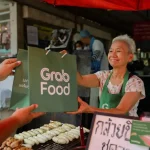
📷 Featured image by Duangphorn Wiriya on Unsplash.