On this page
- Enforcement Has Tightened — Here’s What That Means for You in 2026
- Why the Dress Code Exists: More Than a Rule, It’s a Statement of Respect
- The Core Requirements: What Every Temple Actually Asks For
- Your Complete Packing Checklist for Temple Visits
- What to Do If You Arrive Underprepared
- Dress Code Variations: Royal Temples vs. Regular Wats
- The Men’s Guide: What Gets You Through the Gate
- The Women’s Guide: The Details That Catch People Out
- Children and Family Travel: Dress Code Rules for Kids
- 2026 Budget Reality: What Temple-Appropriate Clothing Costs in Thailand
- Frequently Asked Questions
Enforcement Has Tightened — Here’s What That Means for You in 2026
If you visited Thailand’s temples a few years ago wearing shorts and a tank top and nobody stopped you, that experience is increasingly rare in 2026. The Fine Arts Department and temple administrations at major sites — including Wat Phra Kaew in Bangkok and Wat Phra That Doi Suthep in Chiang Mai — have significantly stepped up dress code enforcement over the past two years. Visitors are being turned away at the gate, sometimes after queuing for 45 minutes in 38°C heat. This article gives you the exact packing checklist you need so that never happens to you.
Why the Dress Code Exists: More Than a Rule, It’s a Statement of Respect
Thailand is a deeply Buddhist country. Around 95% of the population identifies as Theravada Buddhist, and temples — called wats — are not tourist attractions in the way a museum is. They are active places of worship. Monks live, study, and pray there. Laypeople come to make merit, offer flowers, and kneel before sacred Buddha images that have stood for centuries.
When you enter a wat in modest clothing, you are signalling that you understand this. You are a guest in a sacred space, not a spectator at a theme park. The dress code is not arbitrary — it reflects the Buddhist concept of kwan, or spiritual dignity. Revealing clothing is seen as disrespectful to the Buddha, to the monks, and to the Thai people who worship there.
Lese-majeste laws in Thailand also extend into the cultural sphere: showing disrespect at royal temples (those under royal patronage) can carry serious consequences. This is not a space where “I didn’t know” carries much weight with authorities.
The Core Requirements: What Every Temple Actually Asks For
Despite variations between sites, the baseline rules are consistent across Thailand’s Buddhist temples. Memorise these before you pack:

- Shoulders must be covered. Sleeveless tops, spaghetti straps, strapless dresses, and sports bras are not acceptable. Shoulders must be fully covered — not just partly.
- Knees must be covered. Shorts, short skirts, and mini dresses do not pass. The standard is fabric reaching at least to the knee. Mid-calf or ankle length is always safe.
- No see-through clothing. Thin, sheer fabric that reveals skin underneath does not count as “covered.” Temple guards check for this.
- No tight or form-fitting clothing. At stricter royal temples, skin-tight leggings or body-con skirts can be refused even if they technically reach the knee.
- Shoes come off at the entrance to the ubosot (ordination hall). This is non-negotiable at every temple. Wear footwear that slips on and off easily.
- No hats inside temple buildings. You can wear a hat in the open courtyards for sun protection, but remove it before entering any indoor shrine or hall.
These six points are the universal standard. Everything else in this article builds on them.
Your Complete Packing Checklist for Temple Visits
This list is designed to cover you for any temple in Thailand — from a neighbourhood wat in Chiang Rai to the Grand Palace complex in Bangkok. Pack these items and you will never be turned away.
Essential Clothing Items
- Lightweight long trousers or maxi skirt (1–2 pairs/pieces): Linen or loose cotton are ideal for hot weather. Light colours reflect heat better. Avoid white at Buddhist ceremonies as it is associated with mourning, but white is fine for regular temple visits.
- Short-sleeved or long-sleeved shirts with full shoulder coverage: Loose-fitting shirts in breathable fabric. A collared shirt is ideal. A plain round-neck tee with full shoulder coverage works fine.
- A lightweight cardigan, shawl, or button-up shirt: This is your insurance layer. If you are wearing a sleeveless dress elsewhere that day, throw this in your bag. It doubles as an air-conditioning layer in tuk-tuks and temples alike.
- A sarong or lightweight scarf: Versatile and packable. Wrap it as a skirt if your shorts are too short, drape it over your shoulders, or use it as a lap covering when you sit. A sarong roughly 90cm x 180cm is the most useful size.
- Slip-on sandals or flat shoes that come off easily: You will be removing your shoes at every main hall. Flip-flops work fine but can feel unstable on polished stone floors. Lightweight leather sandals or cloth slip-ons are comfortable and quick to remove.

Supporting Items to Pack
- Small dry bag or ziplock bag: For storing your shoes when you carry them inside rather than leaving them at the entrance.
- Sunscreen to apply before you enter: You cannot apply sunscreen inside temple buildings. Put it on before you go in. Many Thai sunscreens in 2026 are reef-safe and non-greasy — worth picking up locally.
- A small fan or handheld misting fan: Modest temple clothing in 35°C heat is genuinely uncomfortable. A battery-powered misting fan from a local 7-Eleven (around THB 150–200) makes a significant difference.
- Water bottle: Drink before you enter. Eating and drinking are not permitted inside temple buildings.
What to Do If You Arrive Underprepared
It happens. You come straight from the beach, your luggage is elsewhere, or you simply misjudged the day’s plans. Here is what you can actually do on the spot:

Sarong Rental at Major Temples
Wat Phra Kaew, Wat Pho, and several other high-traffic Bangkok temples offer free sarong loans or low-cost rentals at the gate. You pay a small deposit (typically THB 50–100), wrap the sarong around your waist or shoulders as needed, and return it when you leave. The sarongs at these sites are clean but basic — functional, not fashionable.
Note that this service is not available at smaller community wats. If you are visiting a quiet temple off the tourist trail, nobody will be lending you anything. Dress appropriately before you arrive.
Buy Something Nearby
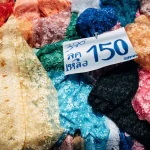
Near almost every major temple in Thailand, street vendors sell lightweight fisherman’s pants and cotton wraps specifically aimed at underprepared tourists. They are cheap (THB 80–200 typically), cheerful looking, and absolutely functional. The markets around Wat Phra That Doi Suthep in Chiang Mai are lined with these vendors. Buying one is no great hardship — and you’ll probably wear them again at your guesthouse or on a boat trip.
What Doesn’t Work
Do not try to tie a t-shirt around your waist to create a makeshift skirt. Temple staff have seen every workaround, and most will ask you to rent a proper garment. Similarly, very thin leggings worn with a short tunic top often do not pass at stricter temples even though they technically cover the knee — the overall silhouette is too form-fitting for royal sites in particular.
Dress Code Variations: Royal Temples vs. Regular Wats
Not all temples have the same level of enforcement. Understanding the distinction helps you plan your outfits for each day.
Royal Temples (Wat Luang)
These are temples under royal patronage — the most significant and most strictly enforced. Wat Phra Kaew (Temple of the Emerald Buddha), Wat Pho (Reclining Buddha), Wat Arun (Temple of Dawn), and Wat Phra That Doi Suthep all fall into this category. These sites have multiple dress-check points, staff who actively approach visitors, and no tolerance for borderline outfits. Dress conservatively, full stop.

City Wats and Tourist Temples
Popular but non-royal temples such as Wat Chedi Luang in Chiang Mai or Wat Chalong in Phuket are slightly more relaxed in practice, though the same rules technically apply. You are less likely to be turned away at the gate, but you will still receive a polite (or less polite) request to cover up if you are clearly underdressed. Respect the space regardless of enforcement level.
Small Neighbourhood Wats
These are community temples that most tourists never visit because they are not on the standard tour circuit. They are also where you can have the most genuine cultural experience — watching a morning alms-giving ceremony, observing Thai families making merit. Enforcement at these temples is informal, but the expectation of modest dress is even more important because you are a rare foreign guest and the community is watching how you behave.
The Men’s Guide: What Gets You Through the Gate
Men generally have an easier time with temple dress codes, but there are still common mistakes worth knowing.
- Full-length trousers: Any style of long trousers works — chinos, linen trousers, loose cotton pants. Jeans are fine but hot in the Thai climate. Avoid very ripped jeans where skin is visible above the knee.
- Long shorts that reach below the knee: Some temples accept these for men, particularly at non-royal sites. However, at Wat Phra Kaew, trousers are strongly preferred and shorts that end exactly at the knee may be questioned. If in doubt, wear trousers.
- T-shirts with full shoulder coverage: A standard crew-neck or V-neck t-shirt is fine as long as it fully covers both shoulders. Tank tops, muscle shirts, and singlets are not acceptable.
- No hats or caps inside halls: A baseball cap in the temple courtyard is tolerated but look around you — Thai worshippers do not wear hats here. Remove yours as a gesture of respect even if nobody asks you to.
- Shoes off before the ubosot: Wear shoes that are easy to remove. Lace-up hiking boots are annoying for everyone in the queue behind you.

The Women’s Guide: The Details That Catch People Out
Women face more complex judgement calls because the variety of clothing options is wider. Here are the specific scenarios that cause problems:
- Maxi dresses with straps: A long maxi dress that covers the ankles is great — but if it has thin shoulder straps, it fails. Bring a cardigan or shawl to layer over it.
- Wide-leg palazzo trousers: These work perfectly at most temples. They are loose, long, and breathable. One of the best wardrobe choices for temple days in Thailand.
- Leggings: Thick, opaque leggings worn with a long top that covers the hips and bottom are usually accepted at regular wats. At royal temples, the interpretation is stricter — a knee-length or longer skirt or trousers is much safer.
- Linen or cotton co-ord sets: A matching linen set with wide-leg trousers and a short-sleeved top is ideal. Lightweight, stylish, and fully compliant.
- Head scarves: Not required at Buddhist temples (this is a common misconception from conflating different religious dress codes). However, a scarf around your shoulders is always a gracious gesture.
- Backless dresses: The back must also be covered at many stricter temples. A cardigan worn loosely over a backless dress solves this.

Children and Family Travel: Dress Code Rules for Kids
Children under roughly six or seven years old are generally given more leeway at most Thai temples. A toddler in shorts will not be turned away. That said, teaching children to dress respectfully for temples is a valuable travel lesson, and most Thai families dress their children modestly for temple visits.
- Children aged 8 and above should follow the same general rules as adults — covered shoulders, covered knees.
- Pack a lightweight sarong or a thin long-sleeved layer for each child in your group as a backup.
- Girls’ sundresses with straps: bring a small cardigan. This applies to the same logic as adult women’s dress.
- Boys in shorts: if the shorts reach the knee, most temples will not stop you, but trousers are safer at royal temples.
- Children should also remove shoes when adults do. Make sure their shoes are easy to slip on and off — velcro closures work well for younger children.
- Remind children not to climb on statues, touch Buddha images, or point their feet toward altars. These customs matter as much as clothing.
2026 Budget Reality: What Temple-Appropriate Clothing Costs in Thailand
You do not need to buy specialist “temple clothing” before you leave home. Thailand’s markets, department stores, and even 7-Eleven convenience stores have everything you need at prices that are genuinely low.
Budget Tier (Street Markets and Walking Street Vendors)
- Fisherman’s pants (one size fits most): THB 80–150
- Lightweight cotton wrap/sarong: THB 80–200
- Basic cotton t-shirt: THB 80–120
- Flip-flops or basic sandals: THB 60–150
Mid-Range Tier (Chatuchak Weekend Market Bangkok, Jim Thompson-style fabric shops, chain stores like Uniqlo Thailand)
- Linen trousers: THB 300–600
- Cotton maxi skirt: THB 250–500
- Lightweight button-up shirt or blouse: THB 300–700
- Leather or fabric slip-on sandals: THB 350–800
Comfortable Tier (Central Department Store, premium Thai brands, resort boutiques)

- Linen co-ord set (trousers and top): THB 900–2,500
- Quality wide-leg trousers with UV protection fabric: THB 700–1,800
- Premium sandals: THB 800–2,000
If you are buying clothing specifically for temple visits in Thailand in 2026, budget THB 300–600 total at market prices for a functional, compliant outfit. You will get genuine value and the items pack small for the return journey.
Temple entry fees themselves vary. Wat Phra Kaew charges THB 500 for foreign visitors (as of 2026). Wat Pho charges THB 300. Many smaller wats are free to enter. Factor these into your daily budget alongside clothing costs.
Frequently Asked Questions
Can I wear shorts to Thai temples if they reach my knees?
At most regular wats, knee-length shorts for men are tolerated. At royal temples like Wat Phra Kaew, trousers are strongly expected and borderline shorts are often refused. Women in shorts below the knee face similar inconsistency. To be certain, wear full-length trousers or a skirt that clears the knee by several centimetres.
Do I need to cover my head at Thai Buddhist temples?
No. Head coverings are not required at Thai Buddhist temples. This is sometimes confused with rules at other religious sites. You should remove hats when entering indoor halls and shrines as a gesture of respect, but scarves, hijabs, or head wraps are not part of the Buddhist temple dress code in Thailand.
Are there temples in Thailand where the dress code doesn’t apply?
Every Buddhist temple in Thailand has a dress code in principle. Enforcement varies — major royal temples are strict, small neighbourhood wats are more informal. However, respectful dress is expected everywhere. Even if no one stops you, dressing modestly is the right approach. The rules exist out of genuine religious and cultural significance, not just for tourist management.
What happens if I’m turned away from a temple in 2026?
You will be asked to either return to the gate to borrow or rent a sarong (available at major sites), leave and change, or purchase something from nearby vendors. You will not be fined. However, you will lose time and potentially miss the temple entirely if you cannot find a solution nearby. Coming dressed correctly is always the better option.
Is it disrespectful to buy a cheap market sarong just to get past the gate?
No. Using a market sarong or a rented wrap to comply with the dress code is completely fine. What matters is that you are covered appropriately when you enter the sacred space. Thai people are pragmatic about this — the gesture of covering yourself matters far more than the price tag on what you are wearing.
📷 Featured image by Worachat Sodsri on Unsplash.