On this page
- The Wai — Thailand’s Greeting and How to Use It Correctly
- The Royal Family and Lese-Majeste: What Every Visitor Must Understand
- Temple Etiquette: Dress, Behaviour, and Sacred Spaces
- Buddhism in Daily Life — What You’ll See and How to Respond
- Shoes, Feet, and Heads: The Body Hierarchy That Shapes Thai Interaction
- Thai Communication Style — Reading Between the Lines
- Dining Customs and Meal Traditions
- 2026 Budget Reality: What Respect Costs (and Saves) You
- Essential Thai Phrases for Cultural Moments
- Frequently Asked Questions
Thailand welcomed over 38 million international visitors in 2025, and that number is climbing in 2026. With more travellers arriving than ever, incidents of cultural misunderstanding have also increased — from tourists sitting on temple rooftops for photos to social media posts mocking sacred images. Thai authorities have responded with stricter enforcement at major temples and clearer signage in multiple languages. Understanding Thai customs before you land is no longer just good manners. In some cases, it’s the difference between a smooth trip and a serious legal problem.
The Wai — Thailand’s Greeting and How to Use It Correctly
The wai is the most visible social gesture in Thailand. You press your palms together in front of your chest, fingers pointing upward, and give a slight bow. It functions as hello, thank you, goodbye, and a mark of respect — all wrapped into one graceful movement.
But the wai has rules, and getting them wrong can actually be rude. The height of your hands and the depth of your bow signal the social rank of the person you’re greeting. When greeting a monk, your hands rise to forehead level. For elders or people of high status, they sit around chin or nose level. Between equals, chest height is standard.
As a foreign visitor, you are not expected to initiate a wai. Most Thais greeting tourists will smile or shake hands, and that is perfectly acceptable. If someone wais you, the polite response is to wai back, roughly mirroring their gesture. If a child or someone clearly younger wais you first — say, a shop assistant — a warm smile and a small nod is enough. Returning a full wai to someone of very low social standing (like a young service worker) can actually cause awkward confusion rather than goodwill.
Never wai with something in your hands — especially food, drinks, or shopping bags. Put things down first, or at minimum press your palms together with fingers pointing upward and acknowledge the gesture clearly with your expression and a nod.
The Royal Family and Lese-Majeste: What Every Visitor Must Understand
Thailand’s lese-majeste law — Section 112 of the Criminal Code — criminalises any statement, action, or image that is considered defamatory, insulting, or threatening to the King, Queen, Heir Apparent, or Regent. The penalties are severe: up to 15 years in prison per count. In 2026, this law continues to be actively enforced, and it applies to everyone in Thailand, including foreign tourists.
Practically speaking, this means several things you need to take seriously:
- Never make jokes about the royal family, even privately in a group of other tourists. You cannot know who is listening or recording.
- Do not post critical, mocking, or satirical content about Thai royals on social media while you’re in the country — or content that could be traced back to your visit.
- If you hear other tourists making disrespectful comments, distance yourself. You don’t want to be associated with the conversation.
- Treat images of the King and Queen with respect. These appear on currency, in shops, in restaurants, on billboards, and at the front of cinemas (a royal anthem plays before every film screening — stand).
- Stepping on a banknote to stop it blowing away is technically illegal because the King’s image is on it. Pick it up with your hand instead.
This is not a topic where cultural relativism is a useful frame. You are a guest in Thailand. The reverence Thai people hold for their royal family is deep, genuine, and not simply the result of legal pressure. Approaching it with the same respect you’d give any deeply held national value is the right posture.
Temple Etiquette: Dress, Behaviour, and Sacred Spaces
Thailand has over 40,000 Buddhist temples (wats), and many of them are active places of worship that also welcome visitors. The way you behave inside — and the way you dress before you enter — matters a great deal.
Dress Code
Shoulders and knees must be covered, for both men and women. That means no sleeveless shirts, no shorts, no short skirts. Some popular temples like Wat Phra Kaew in Bangkok and Doi Suthep in Chiang Mai offer sarongs to borrow or rent at the entrance for around 20–50 THB, but relying on this is unreliable and slightly disrespectful — dress properly before you arrive. Long linen trousers and a light cotton shirt are ideal for Thailand’s climate and cover everything you need.
Shoes
Remove your shoes before entering any temple building (bot or ubosot). This applies to smaller shrines too. Look for the shoe rack at the entrance. Leave your shoes neatly — don’t toss them. When you leave, put them back on outside.
Behaviour Inside
- Keep your voice low. Active worship is often happening nearby.
- Women must not touch monks or hand objects directly to them. Place items on a cloth or table nearby for the monk to receive.
- Photography of Buddha images for respectful, personal documentation is generally acceptable — posing irreverently in front of statues, climbing on structures, or turning your back to an image for a selfie is not.
- If a monk is praying or chanting, wait quietly. Do not interrupt.
Buddhism in Daily Life — What You’ll See and How to Respond
Buddhism is not a background feature of Thai life. It is woven into the everyday in ways that visitors will encounter constantly, whether they visit a temple or not.
Alms giving (tak bat) happens every morning across Thailand, typically between 6:00–8:00 AM. Monks walk barefoot along their route, and local people offer food in a act of merit-making that is deeply personal. As a visitor, observe from a respectful distance. Do not photograph monks at close range during tak bat without permission. Some tourist areas have turned this into a performance experience — if you’re in a spot where alms-giving feels staged or commercial, you’re probably not watching the real thing.
Spirit houses (san phra phum) stand outside almost every home, business, hotel, and building. They are miniature houses on a pillar, often decorated with offerings — flowers, incense, small figurines, drinks. They mark the spiritual “home” of protective spirits. Do not touch offerings on a spirit house. Do not treat them as a photo prop.
Buddhist holidays occur several times a year and affect what is available to you as a traveller. On Wan Phra (Buddhist holy days, roughly weekly), some restaurants will not serve alcohol. On Makha Bucha, Visakha Bucha, and Asanha Bucha days, alcohol sales are prohibited nationally. In 2026, these restrictions are still actively enforced. Plan around them rather than trying to find workarounds.
Shoes, Feet, and Heads: The Body Hierarchy That Shapes Thai Interaction
Thai culture assigns spiritual value to different parts of the body, and this directly affects how people interact in daily life. Understanding this makes many Thai customs feel logical rather than arbitrary.
The head is considered the most sacred part of the body. Never touch another person’s head — including children, which goes against the instinct many foreign visitors have to pat a cute kid on the head. This applies to adults, strangers, and friends alike unless you know someone extremely well and they are comfortable with it. The same logic means you should not ruffle a child’s hair at a market stall or temple.
The feet are the lowest part of the body, physically and spiritually. Pointing your feet at another person, at a Buddha image, or at a shrine is considered rude or even offensive. When sitting on the floor — at a temple, in someone’s home — tuck your feet to the side or behind you. Never prop your feet up on a table or chair in a shared space. On public transport, keep feet on the floor.
This hierarchy also explains why passing objects over someone’s head is considered disrespectful — you’re putting a lower-status object in the space above the body’s most sacred point. Step around people rather than reaching over them.
Thai Communication Style — Reading Between the Lines
Thailand is what cross-cultural researchers call a high-context culture. A lot of meaning travels through tone, facial expression, silence, and what is deliberately not said. For visitors coming from more direct communication cultures, this can cause real misunderstandings.
“Mai pen rai” — often translated as “never mind” or “it doesn’t matter” — is one of the most common phrases you’ll hear. It reflects a genuine cultural value: avoiding unnecessary conflict, preserving harmony, and not letting small problems become big emotional scenes. This is not passivity. It is a deeply held approach to daily life that prioritises social smoothness over individual expression.
What this means practically:
- If a Thai person smiles while saying something that sounds like bad news, they may be managing your emotions rather than genuinely indicating everything is fine. Read the words, not just the expression.
- “Yes” in Thailand often means “I heard you,” not necessarily “I agree” or “that will happen.”
- Direct confrontation — raising your voice, expressing strong frustration in public, making demands — is considered deeply embarrassing for everyone involved, including bystanders. You will not get better results by escalating. You will almost certainly get worse ones.
- If someone laughs in a tense or awkward moment, they are not mocking you. Laughter is a common way of defusing discomfort in Thai social interaction.
The phrase “sanuk” (fun, enjoyable) describes a value that runs through Thai social life. Activities, work, and interactions are better when they carry some lightness. Approaching interactions with warmth, patience, and a genuine smile gets further than efficiency and urgency every single time.
Dining Customs and Meal Traditions
Eating in Thailand is a communal activity, and there are unspoken rules around shared meals that are worth knowing before you sit down.
In a traditional Thai meal setting, dishes arrive at the table simultaneously rather than in courses. Everyone shares everything. It is polite to wait until all dishes have arrived before eating — rushing to start on the first dish that arrives reads as impatient. Rice is the anchor of the meal, not a side dish. Other items are flavourings and accompaniments to the rice, even when they’re the more expensive components of the order.
Serving spoons exist for shared dishes — use them, not your personal spoon or fork. In Thai dining, the fork is used to push food onto the spoon, not to go directly into the mouth. Chopsticks are for noodle dishes; they’re not the default utensil the way many visitors assume from other Asian food cultures.
If you’re eating at a table with Thai companions, wait for the eldest or most senior person to begin before you do. Finishing every grain of rice in your bowl signals satisfaction and is considered polite. Leaving a large amount of food uneaten can sometimes imply the food wasn’t good, though this is less rigidly observed in tourist-facing restaurants.
2026 Budget Reality: What Respect Costs (and Saves) You
Cultural respect is mostly free. But there are real costs associated with being a prepared, respectful visitor — and real savings too.
Costs Worth Budgeting For
- Temple entrance fees: Major temples charge 100–500 THB in 2026. Wat Phra Kaew sits at 500 THB for foreigners. Smaller community temples are usually free.
- Appropriate clothing: If you don’t have lightweight long trousers and modest tops, buy them before your first temple visit. A pair of linen trousers from a Chatuchak stall or a Chiang Mai Night Bazaar vendor runs 150–350 THB. Much cheaper than being turned away at the gate.
- Sarong or temple scarf rental: 20–50 THB at major sites if needed.
- Alms offering items (optional): If you want to participate respectfully in tak bat with local guidance, a small set of food offerings costs around 50–100 THB from nearby vendors.
What Respect Saves You
- Budget tier: Travellers who are culturally respectful and non-confrontational almost universally report better prices in markets, less friction with local vendors, and smoother everyday interactions. A calm, smiling approach in a tuk-tuk negotiation saves you 20–50 THB per ride compared to aggressive bargaining.
- Mid-range tier: Hotels, tour guides, and local services respond better — upgrades, extensions, and small extras happen more often for guests who treat staff with genuine warmth and respect.
- Comfortable tier: Legal trouble from lese-majeste violations or disrespectful behaviour at sacred sites carries penalties that are financially devastating and life-altering. The cost of ignorance here is not inconvenience — it is potentially years of legal proceedings.
Essential Thai Phrases for Cultural Moments
Thai is a tonal language with five tones. The same syllable pronounced with a different tone is a completely different word. That said, making a genuine effort with basic phrases is universally appreciated, even when your tones are imperfect. Thais respond warmly to visitors who try.
A few notes on pronunciation: “kh” is an aspirated “k” sound (like the “k” in “kind”). The “r” sound is often softened toward “l” in everyday speech. Male speakers add krap (also written “khrap”) at the end of polite phrases; female speakers add ka.
Greetings and Politeness
- Sawadee krap / Sawadee ka — Hello / Goodbye (male / female) — sa-wa-dee krap / sa-wa-dee ka
- Khop khun krap / Khop khun ka — Thank you (male / female) — kop-kun krap / kop-kun ka
- Chai — Yes — chai
- Mai chai — No — mai chai
- Mai pen rai — Never mind / No problem — mai pen rai
- Khot thot krap / Khot thot ka — Excuse me / Sorry — kor-toht krap / kor-toht ka
Practical Cultural Phrases
- Tao rai? — How much? — tao rai (rising tone on “rai”)
- Aroy mak — Very delicious — a-roi mak — use this after eating and watch the reaction
- Pood thai mai dai — I can’t speak Thai — poot tai mai dai
- Chuay duay krap / ka — Please help me — chuay duay krap / ka
- Suay mak — Very beautiful — useful when admiring a temple or landscape
You don’t need to master the language. You need enough to signal genuine effort and good intentions. In most tourist areas and larger cities, English is widely understood by people working in hospitality, transport, and retail. In rural areas or smaller towns, a translation app with offline capability is a worthwhile backup.
Frequently Asked Questions
Is it disrespectful to photograph Buddhist monks in Thailand?
Photographing monks from a respectful distance, without interrupting their activities, is generally accepted. Getting close during alms-giving (tak bat), touching monks for a photo, or asking them to pose is not appropriate. Always ask permission with a smile before photographing anyone directly, and accept a refusal gracefully.
What happens if I accidentally break a cultural rule in Thailand?
For minor situations — forgetting to remove shoes, entering a temple with bare shoulders — a genuine, immediate apology and correction is usually enough. Thais are generally forgiving of honest mistakes made by respectful visitors. Serious violations involving the royal family or sacred sites carry legal consequences that cannot be resolved with an apology alone.
Can women interact with Buddhist monks at all?
Yes. Women can speak to monks, ask questions, and observe ceremonies. The specific restriction is physical contact and directly handing objects to a monk. Female visitors should sit or stand a respectful distance away, and if offering something, place it on a cloth or nearby surface rather than passing it directly hand-to-hand.
Is the “no touching heads” rule really enforced, or is it more of a guideline?
No one will arrest you for patting a child on the head, but it will visibly make Thai parents or bystanders uncomfortable. It’s a genuine cultural value, not a performative one. Extending the same respect you’d give any strongly held local custom — treating it as real rather than optional — is the appropriate approach for a respectful visitor in 2026.
Do I need to stand during the royal anthem at Thai cinemas in 2026?
Yes. The royal anthem plays before every film screening in Thailand, and standing is both legally expected and genuinely observed by Thai audiences. Remaining seated is considered deeply disrespectful and has resulted in confrontations and legal complaints against foreign visitors in recent years. Stand, stay quiet for the duration, and sit when others sit.
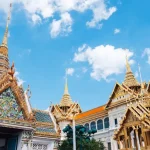
📷 Featured image by topcools tee on Unsplash.