On this page
- Before You Land: What Thailand Actually Checks at the Border in 2026
- Visa Types at a Glance: Exemption, VOA, Tourist Visa, and e-Visa
- Step-by-Step Through Suvarnabhumi Immigration
- The Immigration Stamp: Why You Must Check It Before Walking Away
- Baggage Claim and Customs: What Gets You Flagged
- Getting from BKK to Bangkok City Centre
- 2026 Budget Reality: What Arrival Day Actually Costs
- Common Mistakes That Slow You Down or Get You Turned Away
Suvarnabhumi Airport handles tens of millions of passengers a year, and in 2026 it remains one of the busiest immigration bottlenecks in Southeast Asia. The Thailand Pass is long gone, the standard 30-day visa exemption has returned for most Western nationalities, and the e-Visa system has matured — yet travellers still regularly show up underprepared, missing a return ticket printout or unsure which lane to join. Whether this is your first time landing at BKK or your twentieth, the difference between breezing through in 20 minutes and standing in a hot, crowded hall for 90 minutes usually comes down to knowing exactly what to expect before the wheels touch down.
Before You Land: What Thailand Actually Checks at the Border in 2026
Thai immigration officers are looking for four things when you arrive. Get these sorted before you board your flight and you will have nothing to worry about at the counter.
- Passport validity of at least six months beyond your departure date from Thailand. Not your arrival date — your departure date. If you plan to stay 30 days, your passport needs to be valid for at least six months and 30 days from today.
- A confirmed return or onward ticket. Airlines occasionally ask for this at check-in, and immigration officers may ask at the counter. A screenshot on your phone is usually accepted, but a printout avoids any ambiguity.
- Proof of accommodation. A confirmed hotel booking for at least the first few nights is standard. A printed or downloaded booking confirmation works fine.
- Sufficient funds. There is no fixed rule on how much cash you must carry, but the general guidance for visa-exempt and Visa on Arrival travellers is 10,000 THB per person or 20,000 THB per family. This is checked at the officer’s discretion — most travellers are never asked — but having it available protects you if you are.
One important 2026 update: the Thailand Pass system, which required advance online registration with vaccine certificates and insurance during the COVID-19 era, was discontinued on 1 July 2022 and is completely irrelevant to your arrival. You do not need to register anything in advance simply to enter Thailand as a tourist. Similarly, the TM.6 Arrival/Departure card that used to be handed out on international flights was officially discontinued for air arrivals in June 2022. You will not be filling out a paper card on the plane.
Visa Types at a Glance: Exemption, VOA, Tourist Visa, and e-Visa
Understanding which category applies to you before you arrive removes the single biggest source of confusion at BKK.
Visa Exemption (30 Days)
Citizens of more than 60 countries — including the United States, United Kingdom, Canada, Australia, New Zealand, most EU member states, Japan, South Korea, Singapore, and Malaysia — enter Thailand visa-free for tourism. In 2026, the standard permitted stay is 30 days per entry. Thailand temporarily extended this to 45 or 60 days during 2022–2024 to boost post-pandemic tourism, but that extended period has reverted to the standard 30 days. If you need more time, a single extension of 30 days is available at any local Immigration Office inside Thailand for a fee of 1,900 THB.
One practical note on land border entries: some nationalities using visa exemptions via land crossings — from Malaysia, Laos, Cambodia, or Myanmar — are subject to a limit of two land-border entries per calendar year. Air arrivals at BKK are not subject to this specific restriction.

Visa on Arrival (VOA)
Citizens of approximately 19 countries — including China, India, Kazakhstan, Uzbekistan, Taiwan, and Saudi Arabia — are eligible for a Visa on Arrival at BKK. This grants a stay of up to 15 days and costs 2,000 THB (cash only, Thai Baht). Thailand periodically waived this fee for Chinese and Indian nationals during 2023–2024, but the 2,000 THB standard fee is expected to be in force in 2026 unless a new waiver is announced.
At BKK, the VOA counter is located before the main immigration hall. Follow overhead signs marked “Visa on Arrival” immediately after disembarkation. You will need: your passport, one passport-sized photo (4×6 cm, taken within the last six months — photo booths are available at the airport for around 100–200 THB), a completed TM.88 application form (available at the counter), proof of your return flight and accommodation, and the 2,000 THB fee in cash. After your VOA is stamped, you proceed to a dedicated VOA immigration counter for your entry stamp.
Tourist Visa (TR) and the e-Visa System
If your nationality is not eligible for visa exemption or VOA — or if you want a longer stay of up to 60 days with a possible 30-day extension — you apply for a Tourist Visa in advance through a Royal Thai Embassy or Consulate. Since 2023, Thailand’s e-Visa platform at thaievisa.go.th has made this process significantly easier. You register online, upload your passport scan, photo, flight bookings, accommodation, and financial documents, pay the fee online (generally 1,000–2,000 THB per entry depending on nationality and single vs. multiple entry), and receive your approved visa by email. No in-person embassy visit required for most nationalities. At immigration, simply present your passport — the officer scans the e-Visa reference data electronically.
Step-by-Step Through Suvarnabhumi Immigration
The layout of BKK immigration is logical once you know what to expect. Here is the process from the moment you step off the plane.

- Exit the aircraft and follow the signs. Large overhead signs in English and Thai guide you toward “Immigration” (ตรวจคนเข้าเมือง). Depending on your gate, this can be a 10–15 minute walk. Moving walkways and travellators are installed throughout the terminal — use them. The hall feels cool and the lighting is bright and clinical, a stark contrast to the warm, humid Bangkok air you will meet outside.
- If you need a Visa on Arrival, peel off before the main hall. Signs for VOA appear before you reach the main immigration counters. Join this queue first, complete your application, and you will be redirected to the VOA immigration counter afterwards.
- Choose your lane at the main immigration hall. The hall opens up into a wide space with multiple counter banks. Your options:
- e-Gates (Automated Passport Control): Primarily for Thai citizens, but select foreign nationals from countries including Singapore, Hong Kong, Japan, South Korea, the United Kingdom, Germany, and others with reciprocal agreements may be eligible. The process is fast — scan your passport, press your fingerprints to the reader, look into the facial recognition camera, and you are through in under 30 seconds. Check the signs carefully to confirm your eligibility.
- Manual counters — Foreign Passports: This is where the majority of international tourists queue. Staff capacity at these counters varies by time of day.
- Diplomatic / APEC Business Travel Card / Airline Crew: Separate dedicated lanes.
- Wait times vary significantly. During peak arrival windows — late evenings, early mornings, and public holidays when multiple long-haul flights land within the same hour — manual counter queues can stretch to 30–90 minutes or more. Off-peak arrivals typically clear in 15–45 minutes. Midnight flights from Europe and early morning arrivals from East Asia are the most congested.
- At the counter: Hand your passport open to the photo page. The officer will ask about your purpose of visit (tourism), intended length of stay, and may request your return ticket or hotel booking. Answer directly and briefly. The officer takes fingerprint scans and a photo as part of the standard process.

The Immigration Stamp: Why You Must Check It Before Walking Away
This is the step almost every travel guide skips, and it matters. After the officer returns your passport, open it immediately and check the entry stamp before you leave the counter.
Confirm three things: the entry date is correct, the permitted duration of stay matches what you expect (30 days for most visa-exempt nationalities, 15 days for VOA), and the stamp is legible and not smudged. Errors are uncommon but they do happen. If something looks wrong, raise it at the counter immediately — correcting a stamp error at the point of entry takes two minutes. Discovering it at an extension office or when you are trying to leave the country is a far more complicated problem.
The date stamped is the date you must depart by — not the date by which you should start thinking about leaving. Overstaying is a serious offence. The penalty is 500 THB per day of overstay, payable at the airport when you depart. Overstays exceeding 90 days result in a ban from re-entering Thailand, with the ban length increasing the longer the overstay. An overstay of more than one year triggers a 10-year ban. Thai immigration maintains electronic records and these bans are enforced.
Baggage Claim and Customs: What Gets You Flagged
After your passport is stamped, follow signs to “Baggage Claim” (รับกระเป๋า). Check the overhead screens for your flight number to find the right carousel. Bags generally start appearing 15–30 minutes after you clear immigration — give it time before assuming your bag is lost.

Customs at BKK operates a standard two-channel system:
- Green Channel (Nothing to Declare): Use this if you are carrying goods within the duty-free limits. The standard personal allowance includes 200 cigarettes (or 250g of tobacco), one litre of alcohol, and personal effects at reasonable quantities. There are no customs duties on goods for personal use under a reasonable value threshold.
- Red Channel (Goods to Declare): Use this if you are carrying dutiable or restricted items, or if you are unsure.
A few specifics worth knowing:
- Cash: Carrying more than 450,000 THB (or the equivalent in foreign currency) in or out of Thailand requires a declaration at customs. This is strictly enforced.
- Narcotics: Thailand’s drug laws are among the most severe in the world. There is no ambiguity here.
- Certain firearms and ammunition require advance permits.
- E-cigarettes and vaping devices: These remain illegal to import into Thailand as of 2026. Customs officers do confiscate them and fines apply.
Getting from BKK to Bangkok City Centre
Once you exit through the arrivals doors into the main terminal concourse, you will immediately feel the energy of the airport shift — the smell of coffee shops and convenience stores, the hum of hundreds of conversations in a dozen languages. Your transport options are practical and well-organised.
Airport Rail Link (Suvarnabhumi City Line)
The most reliable option for getting into central Bangkok without traffic stress. The Airport Rail Link station is on Level B1 — follow the signs from the arrivals level, take the lift or escalator down. The SA City Line runs between Suvarnabhumi and Phaya Thai station, stopping at Lat Krabang, Ban Thap Chang, Hua Mak, Ramkhamhaeng, Makkasan (where you can transfer to the MRT at Phetchaburi station), Ratchaprarop, and Phaya Thai (BTS Skytrain interchange). The service runs approximately 05:30 to 00:00 daily. Fares are 15–45 THB depending on how many stops you travel. Journey time to Phaya Thai is around 30 minutes. Note: the SA Express Line (non-stop service to Makkasan) was discontinued years ago and is not operating in 2026.

Public Metered Taxi
Follow the “Public Taxi” signs to the designated taxi stand on Level 1 (Ground Floor). Take a numbered queue ticket from the automatic dispenser, which assigns you a specific bay. The fare is metered, plus a 50 THB airport surcharge, plus expressway tolls (typically around 75 THB for most routes into central Bangkok). Total expected cost to central Bangkok: 250–450 THB excluding tolls and the surcharge. Travel time ranges from 30 minutes at off-peak hours to 60 minutes or more in heavy traffic. Never accept offers from unlicensed drivers inside the terminal — use only the official metered taxi queue.
Grab
Grab is the dominant ride-hailing app in Thailand in 2026. Book through the app before you leave the arrivals hall. Designated pickup points for Grab are on Level 2 (Arrivals Level), near Gates 4 or 5 — follow the in-app pickup instructions. Pricing is transparent and agreed upfront; airport surcharge and tolls are typically included in the quoted fare. Payment through the app means no cash handling.
2026 Budget Reality: What Arrival Day Actually Costs
Here is a realistic breakdown of the costs you will encounter from touchdown to your hotel room door.
- Visa on Arrival fee: 2,000 THB (if applicable)
- Visa extension at an Immigration Office (if needed later): 1,900 THB
- VOA passport photo (if needed): 100–200 THB at airport photo booth
- Airport Rail Link to central Bangkok: 15–45 THB
- Public metered taxi to central Bangkok: 330–525 THB (including 50 THB surcharge and ~75 THB tolls on top of the metered fare)
- Grab to central Bangkok: 350–500 THB depending on destination and time of day
- Tourist SIM card (AIS, DTAC, or True Move H at airport counters): 299–599 THB for packages covering 7–30 days of data
- Coffee and a snack at the airport before heading out: 150–300 THB at standard airport cafés
Budget traveller arrival day total (Rail Link + SIM + snack): approximately 500–900 THB
Mid-range arrival day total (Grab + SIM + coffee): approximately 800–1,400 THB
Comfortable arrival (Grab, airport lounge day pass if delayed, SIM, meal): 2,000–3,500 THB
Common Mistakes That Slow You Down or Get You Turned Away
These are the issues that come up repeatedly — and most of them are entirely avoidable.
- No return ticket. Airlines and immigration both take this seriously. Booking a flexible or refundable onward ticket for the day you plan to leave — even if you later change it — is cheap protection. Budget airlines like AirAsia allow date changes for a small fee.
- Passport expiring within six months. This catches people who renewed their passport years ago and haven’t looked at the expiry date recently. Check it before you book your flights.
- Assuming the 60-day exemption is still in effect. The temporary extensions that applied in 2023–2024 have reverted. If you plan to stay longer than 30 days, apply for a Tourist Visa through thaievisa.go.th before you travel, or factor in a 1,900 THB extension visit to an Immigration Office.
- Arriving at the VOA counter without a photo or without Thai Baht cash. The VOA fee is cash only in THB. Currency exchange booths are available airside, but adding a currency exchange queue on top of a VOA queue at peak hours is genuinely unpleasant. Sort your Thai Baht cash at the airport exchange before joining the VOA line.
- Not checking your stamp before leaving the counter. As covered above, do this every single time.
- Ignoring the e-Gate option. If your nationality is eligible for e-Gates, use them. The time saving is significant during peak congestion periods.
- Bringing e-cigarettes or vaping equipment. These are confiscated and fines apply. Leave them at home or dispose of them before you land.
- Using unlicensed taxis. The touts inside the terminal are persistent. The metered taxi queue or Grab are your two safe options.
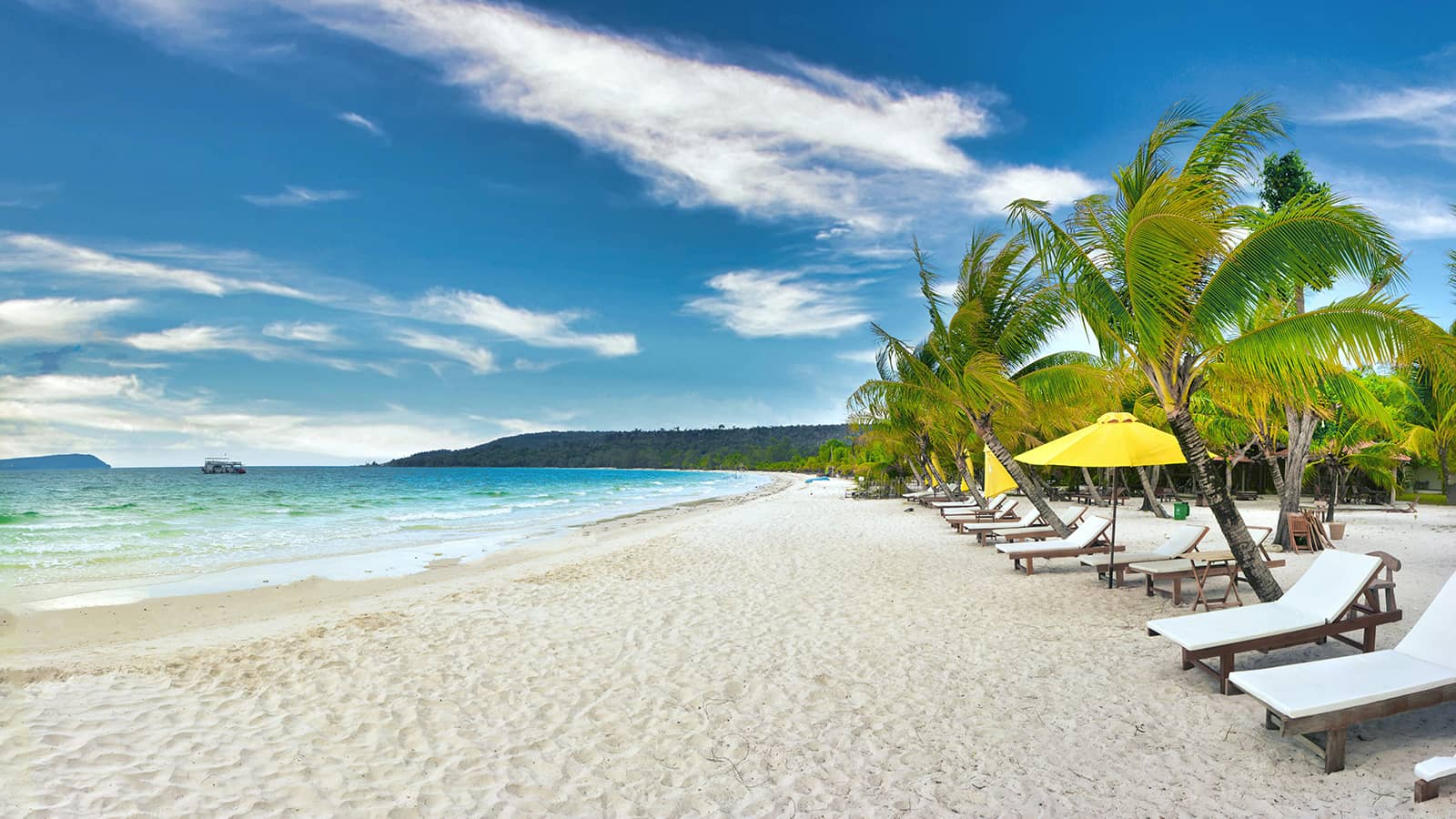
📷 Featured image by Rutpratheep Nilpechr on Unsplash.