On this page
- The Islands at a Glance: Know What You’re Choosing
- The Four Islands Tour: What You Actually Get
- Phi Phi Islands from Krabi: Day Trip vs. Overnight
- Bamboo & Chicken Islands: The Quieter Alternative
- Hong Islands & Thalen Bay: Kayaking Into the Hidden Rooms
- Railay & Tonsai: Island Energy Without Being an Island
- How to Book Your Tours: What Actually Matters in 2026
- Snorkeling & Diving: Where the Water Is Actually Worth It
- Getting to the Islands: Departure Points, Piers & Ferries
- Budget Breakdown: Real 2026 Costs
- Best Time for Island Hopping in Krabi
- Practical Tips for Krabi Island Hopping
- Frequently Asked Questions
💰 Click here to see Thailand Budget Breakdown
💰 Prices updated: October, 2026. Budget figures are estimates — always verify before travel.
Exchange Rate: $1 USD = ฿33.60
Daily Budget (per person)
Shoestring: ฿900.00 – ฿1,800.00 ($26.79 – $53.57)
Mid-range: ฿2,150.00 – ฿4,000.00 ($63.99 – $119.05)
Comfortable: ฿6,000.00 – ฿12,000.00 ($178.57 – $357.14)
Accommodation (per night)
Hostel/guesthouse: ฿90.00 – ฿750.00 ($2.68 – $22.32)
Mid-range hotel: ฿1,400.00 – ฿3,500.00 ($41.67 – $104.17)
Food (per meal)
Budget meal: ฿70.00 ($2.08)
Mid-range meal: ฿250.00 ($7.44)
Upscale meal: ฿1,000.00 ($29.76)
Transport
Single metro/bus trip: ฿30.00 ($0.89)
Monthly transport pass: ฿1,155.00 ($34.38)
Krabi’s island hopping scene has a reputation problem in 2026. Not because the islands got worse — they didn’t — but because the gap between a rushed, overcrowded group tour and a genuinely memorable day on the Andaman Sea has never been wider. The Four Islands tour boats still clog Ao Nang pier every morning at 8am. Phi Phi Don still fills up by noon. But the travelers who plan even slightly smarter are having some of the best experiences Thailand offers. This guide cuts through the noise so you spend more time floating in turquoise water and less time elbowing strangers for a patch of sand.
The Islands at a Glance: Know What You’re Choosing
Krabi province sits on Thailand’s Andaman coast and claims over 150 islands in its waters. Most visitors never see more than four or five. Here’s a fast character sketch of the ones worth planning around:
- Koh Phi Phi Don — The biggest personality in the group. Developed, lively, expensive by Krabi standards. Tonsai Bay is wall-to-wall tourists by midday. Worth it for the viewpoint hike and for overnight stays when day-trippers leave.
- Koh Phi Phi Leh — No residents, no overnight stays allowed. Home to Maya Bay, which reopened with strict capacity limits. Still stunning, still busy.
- Koh Lanta — Technically a separate district but reachable on longer day trips or as an overnight. Slower pace, long sandy beaches, less of a circus.
- Koh Hong — Small, protected, famous for its hidden lagoon (hong means “room” in Thai). One of the best snorkeling spots in the province.
- Koh Kai (Chicken Island) — Named for the rock formation that looks like a chicken head. Shallow reef close to shore, calm water, good for first-time snorkelers.
- Koh Mor & Koh Tub — Two tiny islands connected by a sandbar at low tide. A classic Four Islands stop.
- Koh Poda — White sand, clear water, limestone backdrop. Photogenic but small. Gets crowded fast on group tours.
- Bamboo Island (Koh Mai Phai) — North of Phi Phi, ringed in shallow coral, far fewer visitors than the main Phi Phi cluster.
The Four Islands Tour: What You Actually Get
The Four Islands tour is Krabi’s most-booked experience, and it delivers — if you understand what it actually is. Operators cover a combination of Koh Kai, Koh Tub, Koh Mor, and Koh Poda, with snorkeling stops at one or two points. Departure is from Ao Nang or Nopparat Thara pier, usually around 8:30am, returning by 4:30pm.
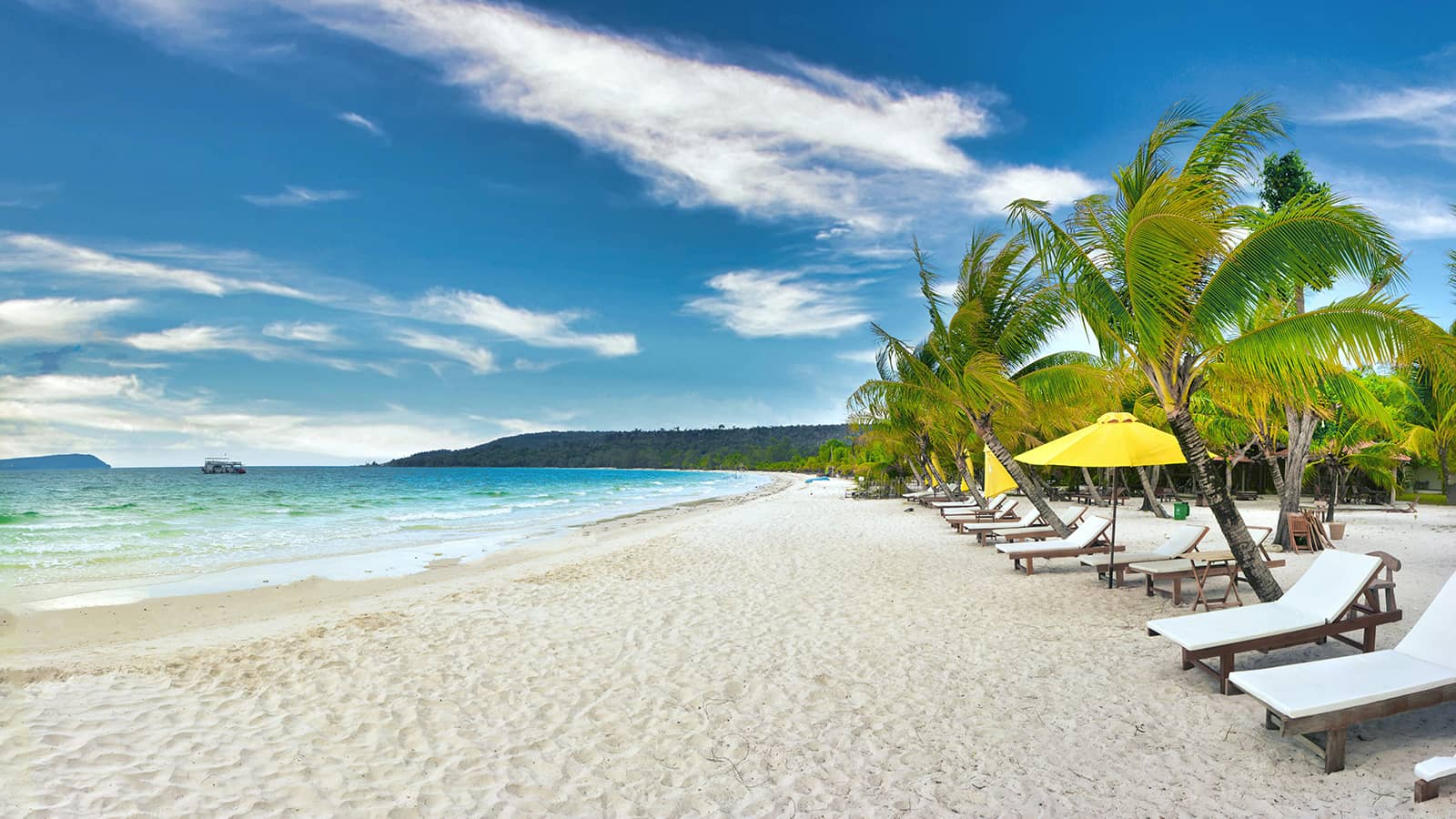
What the brochure doesn’t tell you: the snorkeling stops are timed to the crowd, not the tide. If five boats arrive at the Koh Poda reef simultaneously, visibility drops fast. The sandbar between Koh Tub and Koh Mor is genuinely beautiful — pale sand, jade-green water, limestone cliffs rising straight from the sea — but at peak season (December to February) it resembles a beach party more than a secluded paradise.
The longtail boat version of this tour costs around 500–700 THB per person on a group booking. Speedboat group tours run 900–1,200 THB. Private longtail charters start at around 2,500–3,000 THB for the whole boat, which fits four to six people comfortably.
Phi Phi Islands from Krabi: Day Trip vs. Overnight
Phi Phi is 45 minutes from Ao Nang by speedboat, or about 1.5 hours by ferry from Krabi Town pier. On a day trip, you share Maya Bay, Monkey Beach, and Phi Phi Don’s Tonsai Bay with hundreds of other visitors who all arrived on the same morning ferry rush.
The overnight calculus is different. Stay on Phi Phi Don and you’ll see the island before 7:30am — the longtails are docked, the village is quiet, and the water at Lo Dalam Bay glows a shade of blue that photos genuinely cannot capture. By 9am the day boats start arriving and the atmosphere shifts completely. Staying overnight isn’t about the nightlife (though there’s plenty of that); it’s about owning the early morning and late afternoon when the island is actually at its best.
Maya Bay on Phi Phi Leh has had rotating closure periods since it first reopened in 2022. As of 2026, it operates under timed entry — tour boats must book a designated slot. No anchoring is permitted in the bay; all boats must use the mooring buoys. The reef is recovering visibly. If your tour operator doesn’t mention the mooring system when you ask about Maya Bay, find a different operator.
Ferry from Krabi Town to Phi Phi Don: 350–450 THB one way. Speedboat day tours including Maya Bay from Ao Nang: 1,400–1,800 THB per person.
Bamboo & Chicken Islands: The Quieter Alternative
Koh Mai Phai — Bamboo Island — sits north of Phi Phi Don and receives a fraction of the traffic. The beach is narrow and the interior is exactly what the name suggests, dense bamboo. But the snorkeling on the eastern side is some of the most rewarding in the area: shallow coral heads, abundant reef fish, and water that clears to 8–10 metres visibility on calm days. You can wade in from the beach without fins and still find plenty to look at.
Koh Kai (Chicken Island), part of the standard Four Islands route, is actually worth a slower visit than most group tours allow. The rock formation is best seen from the water — rent a kayak from the longtail operators who hang around the beach — and the low-tide pools on the northern end have sea cucumbers, small crabs, and the occasional starfish. It takes maybe 20 minutes for most group tours to clear out, and the remaining half-hour before departure is the best part of the visit.
Combining Bamboo and Chicken Islands on a private longtail day out of Ao Nang costs around 3,000–4,000 THB for the whole boat. Shared tour options are harder to find since these islands aren’t a standard route, but a few Ao Nang operators will put together small-group departures for 800–1,100 THB per person if you ask ahead.
Hong Islands & Thalen Bay: Kayaking Into the Hidden Rooms
The Hong Islands (Koh Hong group) in the Ao Thalane area, north of Ao Nang, are a genuinely different experience from the open-water island hopping elsewhere in Krabi. The main feature is a series of enclosed lagoons — the “rooms” or “hong” — accessible only by kayak through low sea caves at the right tide. Paddle through a dark limestone tunnel, ceiling brushing your head if you sit up straight, and emerge into a hidden lagoon rimmed entirely by cliff face, with egrets standing at the waterline and the sky a perfect circle above you.
The air smells of salt and wet limestone, and the only sounds are the splash of your paddle and whatever birds happen to be nesting in the cliff crevices. This is one of those travel moments that doesn’t need any embellishment.
The Thalen Bay mangrove area pairs well with Hong Islands on the same trip. Kayaking through the mangrove channels at high tide gives you close views of mudskippers, monitor lizards, and if you’re patient, macaque troops working the shoreline. The combination of mangroves and sea cave lagoons is offered by several Ao Nang operators as a full-day tour for 1,200–1,600 THB per person including kayak rental and guide.
This tour is notably less crowded than the Four Islands or Phi Phi routes, partly because it requires slightly more physical effort and partly because it doesn’t have a famous beach at the end of it. That’s exactly why it’s worth doing.
Railay & Tonsai: Island Energy Without Being an Island
Railay is technically connected to the mainland — it’s a peninsula — but you can only reach it by longtail boat because the limestone cliffs are impassable by road. That quirk gives it genuine island energy. Most visitors arrive from Ao Nang (15 minutes, 100 THB per person on a shared longtail) or from Krabi Town pier (45 minutes by ferry).
Railay East is the boat landing — muddy at low tide, mangroves, longtails lined up. Railay West is the beach: a curve of white sand, palms overhead, limestone walls on either side. Walk between them in under five minutes. Tonsai Beach, the next cove over, is a five-minute walk through jungle from Railay West (easier at low tide) and has a distinct climber-and-backpacker culture that feels very different from the resort side of Railay.
Railay works both as a half-day add-on to a Four Islands tour (some operators swing by on the return) and as a base for a full day exploring the coves, caves, and viewpoints. The Diamond Cave (Tham Phra Nang) and Princess Cave on Phra Nang Beach are worth an hour of wandering. The viewpoint hike between Railay East and West is steep, exposed, and muddy — rope-assisted in the steepest section — but the panorama from the top looks straight over the Andaman toward Koh Poda and Koh Kai.
How to Book Your Tours: What Actually Matters in 2026
The Ao Nang beachfront strip has dozens of tour operators, and by 2026 the price competition has compressed standard tours to nearly identical rates. The real differentiator is boat size, departure time, and group cap.
A few things to confirm before you pay:
- Group size: Standard speedboats take 10–15 passengers. “Private” speedboats can be chartered for 4–8 people. Longtails hold 8–10.
- Departure time: Earlier is almost always better. The 7:00–8:00am window gets you to popular sites before the bulk of departures.
- Snorkel gear included: Most tours include a mask and snorkel. Ask if fins are included — some operators charge separately (50–100 THB).
- National park fee: Koh Phi Phi Leh and certain protected islands charge a national park entry fee. As of 2026 this is 400 THB for foreigners. Confirm whether this is included in your tour price or paid separately at the pier.
- Online vs. walk-in: Online booking platforms (Klook, Viator, and several Thai-specific apps) sometimes offer 10–15% lower rates than walk-in pier prices, but walk-in negotiation still works for private longtail charters, especially if you’re booking for a group of four or more.
Snorkeling & Diving: Where the Water Is Actually Worth It
Krabi’s snorkeling quality varies more than the tour brochures suggest. The best sites in 2026:
- Koh Hong lagoon area — Coral is intact, fish density is high, limited boat traffic.
- East side of Koh Mai Phai (Bamboo Island) — Shallow, clear, diverse reef fish.
- Around Koh Poda — Good visibility when seas are calm and boats haven’t stirred the bottom. Best before 10am.
- Hin Daeng & Hin Muang — Two submerged seamounts about 45 minutes south of Koh Lanta by speedboat. Manta rays are reliably sighted here from November through April. Not accessible on standard day tours from Ao Nang — you’ll need a dedicated diving operator based in Koh Lanta or southern Krabi. Open-water certification required for most dive sites here.
For diving specifically, Krabi Town has a handful of PADI-certified operators. A two-dive day trip to local sites runs 2,500–3,500 THB. Hin Daeng/Hin Muang full-day trips from Koh Lanta run 4,000–5,500 THB including two dives, gear, and lunch. Visibility in peak season (December–March) regularly exceeds 15 metres at these sites.
Getting to the Islands: Departure Points, Piers & Ferries
Krabi’s geography means departure point matters. The main launch points:
Ao Nang Pier (Nopparat Thara)
The most convenient for most travelers. Longtails to Railay leave constantly throughout the day. Most Four Islands and Phi Phi day tours depart here. Walk down the beach road from any Ao Nang hotel and you’ll reach it in under 10 minutes.
Krabi Town Pier (Chao Fa Pier)
Slower ferry option for Phi Phi and Koh Lanta. Less convenient than Ao Nang for island hopping but useful if you’re staying in Krabi Town. Ferries to Phi Phi Don run two to three times daily in high season. Journey time: 1.5–2 hours. Price: 350–450 THB one way.
Railay East Pier
If you’re based at Railay, you can join tours that swing by. Some operators run custom pickup from the Railay pier for an additional surcharge of around 150–200 THB.
Grab is widely available in Krabi Town for getting to and from piers. From central Ao Nang to the Nopparat Thara pier on foot is perfectly manageable. From Krabi Airport to Ao Nang, expect 400–600 THB by Grab or metered taxi.
Budget Breakdown: Real 2026 Costs
Prices below reflect what you’ll actually pay in 2026, including the national park fee increases that took effect in late 2024.
Budget Tier (Shared Tours, Longtail)
- Four Islands shared longtail tour: 500–700 THB per person
- Phi Phi shared speedboat day tour: 1,400–1,600 THB per person
- Railay longtail (one way, shared): 100 THB per person
- Hong Islands kayak group tour: 1,200 THB per person
- National park fee (where applicable): 400 THB per person
- Snorkel gear rental (if not included): 50–100 THB
- Typical full day out (including ferry, tour, lunch, gear): 1,500–2,200 THB
Mid-Range Tier (Speedboat Group Tours, Private Longtail)
- Private longtail for Four Islands (whole boat, 4–6 people): 2,500–3,500 THB
- Four Islands speedboat group: 900–1,200 THB per person
- Phi Phi premium speedboat (smaller group, earlier departure): 1,800–2,200 THB per person
- Two-dive day trip from Krabi: 2,500–3,500 THB per person
- Typical full day out: 2,500–4,000 THB
Comfortable Tier (Private Speedboat Charter)
- Private speedboat charter (full day, 6–8 passengers): 12,000–18,000 THB per boat
- Private Phi Phi + Maya Bay custom itinerary: 15,000–22,000 THB per boat
- Hin Daeng/Hin Muang liveaboard dive (1 night/2 days): 8,000–12,000 THB per person
Best Time for Island Hopping in Krabi
Krabi sits on the Andaman coast, which means the weather follows the southwest monsoon — and the timing really does matter for island hopping.
November to April is the main season. Seas are calm, visibility is high, and all islands and tours operate at full capacity. December to February is peak peak — expect higher prices, more crowds, and advance booking requirements for popular tours. The water temperature sits around 28–30°C.
May to October is monsoon season. The southwest monsoon hits the Andaman hard from around June to September. Seas can become genuinely rough — the Four Islands tour and Phi Phi speedboats frequently cancel. If you visit in this window, shoulder months (May and October) are workable with some flexibility. June through September sees regular cancellations. Some operators run in calm periods between weather fronts, but you need to build cancellation flexibility into your schedule.
Jellyfish are more common on the Andaman coast from May onward. Box jellyfish risk is highest in June–August at certain beaches. This is rarely severe enough to close beaches, but swimming shoes and a rash guard are worth packing if you’re visiting outside of peak season.
The sweet spot for combining low crowds with reliable weather is late October to mid-November (just as the season opens) and March to early April (before school holiday peak kicks in).
Practical Tips for Krabi Island Hopping
A few things that make a real difference on the water:
- Reef-safe sunscreen only — Required at all national park marine areas in 2026. Chemical sunscreens (oxybenzone, octinoxate) are banned. Buy reef-safe products in Ao Nang before departure; longtail operators at the pier will turn you back if you show up with the wrong kind, or increasingly they just sell you a replacement on the spot at inflated prices.
- Dry bag — Longtails get wet. Bring or rent a dry bag (50–100 THB per day from many Ao Nang shops) for your phone and cash.
- Cash at the pier — National park fees are often cash-only at collection points. Bring at least 1,000 THB in small bills beyond your tour payment.
- Motion sickness — Speedboats on choppy Andaman seas are rougher than they look. If you’re susceptible, take medication before departure, not after you’re already on the water.
- Hydration — Tours provide drinking water, but bring extra on hot days. Dehydration on open-water tours is surprisingly common.
- Clothing — A rash guard or thin long-sleeve shirt doubles as sun protection and a light layer for the boat ride back in the late afternoon breeze.
Frequently Asked Questions
How many islands can you visit in one day from Krabi?
Most standard tours cover three to four islands in a full day. Speedboat tours can fit in five if the itinerary is efficient. Quality matters more than quantity — two or three islands with proper time at each beats a rushed five-stop circuit where you spend 20 minutes at every beach.
Is it worth doing a private tour instead of a group tour in Krabi?
Yes, if you have three or more people. A private longtail for four to six people often costs only 20–30% more than buying individual group tickets, and you control the pace, the stops, and the timing. The difference is most noticeable at popular spots like Koh Poda and the Koh Tub sandbar.
Can you visit Maya Bay from Krabi in a single day?
Yes. Speedboat day tours from Ao Nang include Maya Bay as a standard stop. Journey time is roughly 45 minutes each way. As of 2026, boats must book a timed entry slot for Maya Bay — confirm this when booking your tour, as operators without a confirmed slot may arrive and be turned away.
What is the national park entry fee for Krabi’s islands in 2026?
The national park fee for protected marine areas including Koh Phi Phi Leh and Koh Hong is currently 400 THB for foreign adults. Some tour prices include this fee; others do not. Always ask before booking and carry cash for pier-side payment if needed.
Is island hopping possible during the rainy season in Krabi?
It’s possible but unreliable between June and September. Seas can be rough enough to cancel tours with little notice. If you visit in this period, build at least two extra days into your schedule in case of cancellations, and consider travel insurance that covers weather-related tour disruptions. May and October are much more workable shoulder months.