💰 Click here to see Thailand Budget Breakdown
💰 Prices updated: October, 2026. Budget figures are estimates — always verify before travel.
Exchange Rate: $1 USD = ฿33.60
Daily Budget (per person)
Shoestring: ฿900.00 – ฿1,800.00 ($26.79 – $53.57)
Mid-range: ฿2,150.00 – ฿4,000.00 ($63.99 – $119.05)
Comfortable: ฿6,000.00 – ฿12,000.00 ($178.57 – $357.14)
Accommodation (per night)
Hostel/guesthouse: ฿90.00 – ฿750.00 ($2.68 – $22.32)
Mid-range hotel: ฿1,400.00 – ฿3,500.00 ($41.67 – $104.17)
Food (per meal)
Budget meal: ฿70.00 ($2.08)
Mid-range meal: ฿250.00 ($7.44)
Upscale meal: ฿1,000.00 ($29.76)
Transport
Single metro/bus trip: ฿30.00 ($0.89)
Monthly transport pass: ฿1,155.00 ($34.38)
Most people hear “Koh Phangan” and picture buckets, neon paint and 30,000 people on one beach. In 2026 that picture still holds for a few nights each month, when boats sell out and prices jump across the island. The rest of the time, Koh Phangan is a green, hilly island with empty bays, jungle waterfalls and fishing villages. This guide shows you how to find that version, and how to plan around the party instead of through it.
The Other Koh Phangan
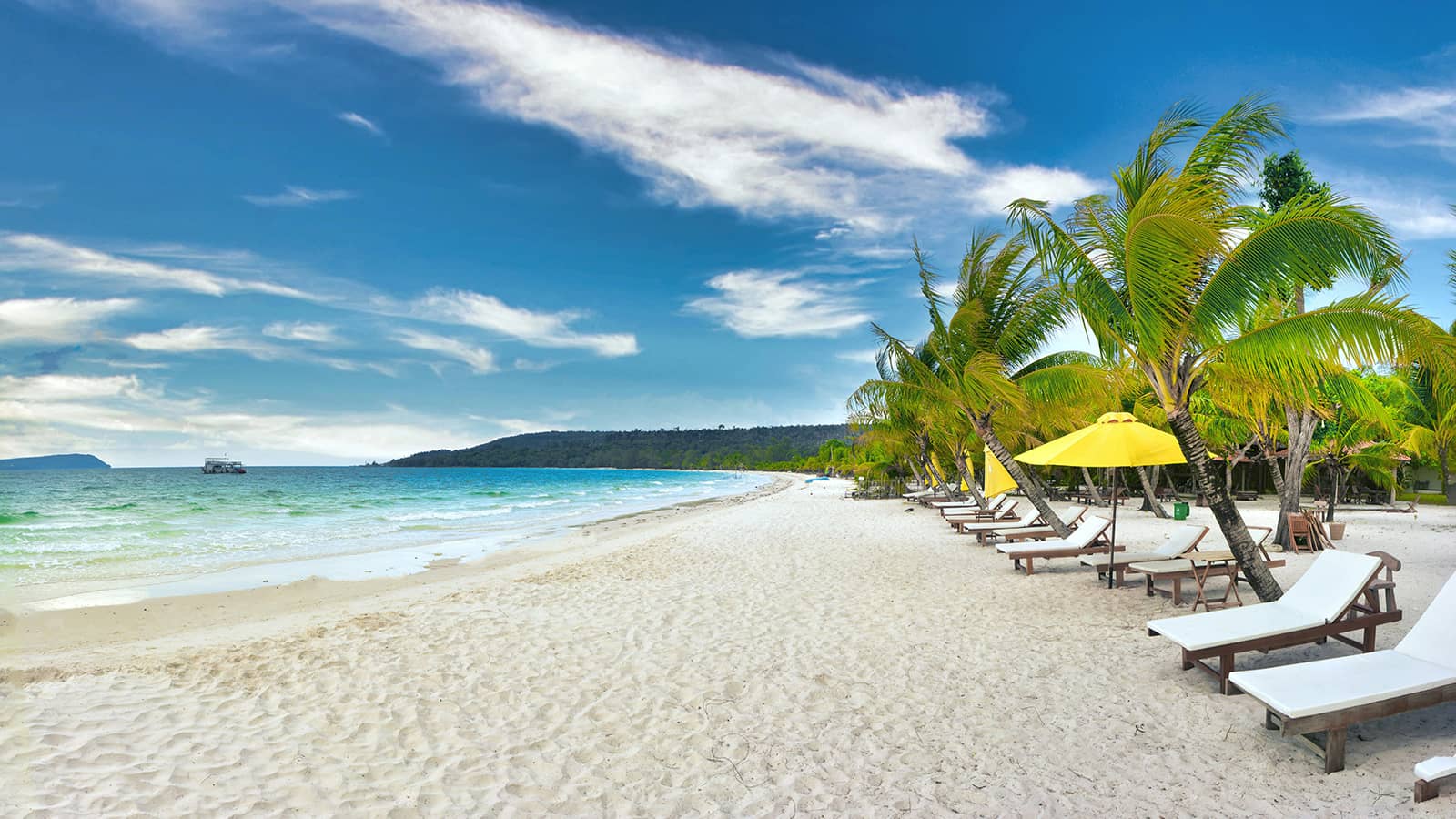
The party lives on one small corner. Haad Rin, at the southern tip, hosts the Full Moon Party. Drive 30 to 40 minutes in almost any other direction and the mood changes completely. The island is about 168 square kilometres, and most of its interior is steep jungle with only a few roads crossing it. That is why so many bays stay undeveloped.
Koh Phangan also draws a long-stay crowd of yoga teachers, breathwork facilitators, remote workers and families. You will hear more conversations about sleep, cacao and sound baths than about shots. It is relaxed rather than glamorous, and many of the best places are simple bungalows with a hammock and a sea view.
Quiet Beaches and Where to Stay
Thong Nai Pan Noi and Yai (northeast)
These two bays sit side by side, split by a small headland. Thong Nai Pan Noi is the smaller and more sheltered of the two, with calm water for swimming. Thong Nai Pan Yai is longer and has more cafés. The access road is steep, so many visitors arrive by taxi rather than scooter.
Haad Salad and Chaloklum (north)
Haad Salad is known for sunsets and snorkelling near the rocks at the edge of the bay. Chaloklum is a working fishing village with a harbour, a small beach and the departure point for boats to Bottle Beach. Stay here if you want local life more than resort comforts.
Bottle Beach (Haad Khuad)
This small beach has no through road. You arrive by longtail boat from Chaloklum or by a rough 40-minute hike. A handful of bungalows and beach restaurants sit behind the sand. At night, with no traffic and very little light, the only sounds are waves and the occasional gecko.
Haad Yao, Srithanu and Mae Haad (west)
Haad Yao has a long sweep of sand and gentler crowds. Srithanu, just north of it, is the island’s wellness hub, full of yoga studios and vegetarian cafés. Mae Haad has a sandbar that connects to Koh Ma at low tide. Go in the morning, when the sand is cool and the water is clear and shallow around your ankles.
Beyond the Sand: Waterfalls, Temples and Wellness
The interior is where Koh Phangan feels most distinct from its neighbours. Phaeng Waterfall, inside the national park, is the easiest to reach, with pools to cool off in and short walking paths. Than Sadet, on the northeast coast, is a quieter stream that tumbles over granite boulders toward the sea. Thai kings visited it, and royal initials are carved into the rocks. Wang Sai is better after rain, when water volume is higher.
Wat Khao Tham, above Ban Tai in the south, offers meditation retreats in a hillside temple setting. For wellness, Srithanu is the centre: drop-in yoga classes, Thai massage, sound healing and ecstatic dance. Many classes accept walk-ins, so you do not need to book a full retreat to try them.
Where to Eat
For variety, start at the Thong Sala night market near the pier. In the evening, grills and woks fire up, and the air fills with the smell of charred pork skewers, lemongrass and sweet chilli. A plate of pad kra pao with a fried egg is a good first meal after the ferry. On Saturdays, the Walking Street market in Thong Sala adds more stalls and crafts.
In Chaloklum, eat at the harbourside seafood restaurants. The fish is landed locally, and a grilled catch of the day with tamarind sauce, eaten as boats bob in the dark water, is one of the island’s best simple dinners. Srithanu and Haad Yao cover the other end of the scale: smoothie bowls, raw desserts, tempeh bowls and good coffee. Thong Nai Pan has beachfront cafés that work well for long lunches.
Getting There
All routes end at Thong Sala pier or at Haad Rin. Nothing flies directly into Koh Phangan, so you will use the mainland or Koh Samui as your gateway. Ask at the ticket desk about current schedules, as boat times change seasonally.

- Bangkok by night train: Trains run to Phun Phin station in Surat Thani, taking about 10 to 12 hours. From there, take a bus to the pier and then a ferry.
- Bangkok by bus and boat: Combination tickets via Don Sak or Chumphon take roughly 11 to 13 hours total and are the cheapest overall.
- Fly and ferry: Fly Bangkok to Koh Samui or Surat Thani, then take a ferry. This is the fastest option, at around 3 to 4 hours door to door.
- From Koh Samui: Boats from Bangphang or Mae Nam take 30 to 60 minutes. Lomprayah, Seatran and Raja operate on this corridor.
Also remember that foreign visitors must complete the Thailand Digital Arrival Card before arrival. It is free and online, so do it three days ahead of travel.
Getting Around
Scooters are the default and cost 200 to 300 THB a day. They are also the island’s main source of injuries. Roads to Thong Nai Pan, Bottle Beach and some waterfalls are steep and loose in places. If you have never ridden before, this is the wrong place to learn. Wear a helmet and check that your travel insurance covers scooter use with a valid licence.
Shared songthaew taxis and private rides are available but expensive by Thai standards. A trip from Thong Sala to Thong Nai Pan commonly costs around 400 to 600 THB per vehicle. Longtail boats link Chaloklum and Bottle Beach for roughly 100 to 200 THB a person, depending on the group and the weather.
Day Trip or Overnight?
From Bangkok, a day trip is not realistic. The travel alone takes most of a day each way, so plan at least three nights, and four or five if you want to see both coasts.
From Koh Samui, a day trip is possible and fairly common. Take a morning boat to Thong Sala, hire a driver or scooter and see Phaeng Waterfall, Haad Salad and a seafood lunch in Chaloklum. You will see highlights, but you will rush. One overnight stay gets you sunrise and sunset in the same place, and that is where the island works best. If your base is Samui and you have two days, spend a night on the north or west coast.
When to Go
The driest months on the Gulf side run roughly from January to April, with calm seas and clear water. May to September is hotter and has intermittent showers. October to December is the wettest, with rough seas that can disrupt boats, though waterfalls are at their strongest. Bottle Beach can become hard to reach by boat in heavy swells.

2026 Budget Reality
Prices have risen since 2024, especially for beachfront rooms and around the full moon. These are typical ranges per person per day, excluding long-distance transport.
- Budget: 900 to 1,500 THB. A fan bungalow or dorm bed (300 to 800 THB), street meals at 60 to 120 THB, and a shared scooter or walking.
- Mid-range: 2,000 to 4,000 THB. An air-conditioned bungalow near the beach (1,200 to 3,000 THB), café meals at 200 to 400 THB, a scooter at 200 to 300 THB and a yoga class at 400 to 600 THB.
- Comfortable: 5,000 to 12,000 THB or more. A pool villa or boutique resort room (4,000 to 10,000 THB), seafood dinners at 500 to 1,000 THB, private taxis and spa treatments.
Ferry from Koh Samui usually costs 300 to 450 THB. Bangkok to Koh Phangan by bus and boat commonly costs 900 to 1,400 THB, and flights to Samui or Surat Thani vary widely by date.
Frequently Asked Questions
Is Koh Phangan only worth visiting for the Full Moon Party?
No. The party is only one night a month at one beach. The rest of the island offers quiet bays, waterfalls, wellness centres and fishing villages. Many visitors skip the party entirely and enjoy the island more because of it, especially in the north and west.
Which side of Koh Phangan is the quietest?
The north and northeast are quietest. Bottle Beach, Thong Nai Pan Noi and Chaloklum have the fewest crowds and the slowest pace. The west coast, around Haad Yao and Srithanu, is calm too, but with more cafés, yoga studios and long-stay visitors.
How many days do you need on Koh Phangan?
Three to four nights is a good minimum for travellers coming from outside the region. That gives you time to settle in, visit a waterfall, explore two beaches and try a wellness class. If you want to cover both coasts without rushing, plan five nights.
Is it safe to rent a scooter on Koh Phangan?
It can be, but the island has steep, uneven roads and many accidents involving tourists. Only ride if you have experience, wear a helmet, avoid riding at night or after drinking, and make sure your insurance covers it. If unsure, use taxis or longtail boats.
Can you visit Koh Phangan on a day trip from Koh Samui?
Yes. Boats run between the two islands in 30 to 60 minutes. A day is enough to see Thong Sala, one waterfall and a west or north coast beach. It will feel rushed, though, so an overnight stay is better if your schedule allows.