On this page
- From Jet Bridge to Arrival Hall: The BKK Flow
- Which Entry Route Fits Your Passport
- Visa-Exempt Entry: The 30-Day Baseline
- Visa on Arrival and the E-VOA Shortcut
- Tourist Visa (TR) and the e-Visa Portal
- Documents, Arrival Card and Immigration Lanes
- Customs: Green Channel, Red Channel, Allowances
- Getting from BKK to the City
- 2026 Budget Reality
- Staying Longer, Overstays and the Elite Visa
- Land Border Re-Entries
- Common Mistakes to Avoid
- Frequently Asked Questions
The hardest part of arriving at Suvarnabhumi in 2026 is not the queue. It is not knowing which queue is yours. Thai Entry rules have shifted several times since 2024, and old blog posts still circulate with wrong stay lengths and missing steps. This guide covers the airport flow, the visa options, the documents officers may ask for, and the cheapest and fastest ways into Bangkok.
From Jet Bridge to Arrival Hall: The BKK Flow
After you leave the plane, follow the signs for “Immigration” and “Baggage Claim”. The order is always the same:
- Immigration: Have your passport ready, and an arrival card if one is required.
- Baggage claim: Collect your bags from the carousel shown on the screens.
- Customs: Use the Green Channel if you have nothing to declare, or the Red Channel if you do.
- Arrival hall: Transport, currency exchange and other services are here.
Which Entry Route Fits Your Passport
Thailand’s rules depend on your nationality, why you are visiting and how long you will stay. There are three main routes:
- Visa-exempt entry: No visa needed. Most Western travellers use this.
- Visa on Arrival (VOA): For about 19–20 nationalities, bought at the airport or arranged online as an E-VOA.
- Tourist Visa (TR): For everyone else, or for anyone who wants a longer stay. You apply before you fly.
Check your passport against the Ministry of Foreign Affairs of Thailand visa page (www.mfa.go.th/en/page/visa-information) before you book flights, not at the airport.
Visa-Exempt Entry: The 30-Day Baseline
Citizens of about 64 countries can enter for tourism without a visa. The list includes most EU countries, the USA, Canada, the UK, Australia, New Zealand, Japan, South Korea, Singapore and Malaysia, among others. The standard stay is 30 days.
Some passports have received more. G7 citizens (Canada, France, Germany, Italy, Japan, UK, USA) and Nordic citizens (Denmark, Finland, Norway, Sweden) were granted 45 days until 31 May 2024. Russian citizens were granted 60 days until 30 April 2024. I cannot promise that those longer stays apply to your passport in 2026, so plan around 30 days. Confirm your exact allowance with the Thai embassy or the MFA website before you fly.
For visa-exempt entry, officers can ask for:
- A passport valid for at least 6 months beyond your departure date.
- Proof of a confirmed flight out of Thailand within your permitted stay.
- Proof of funds, commonly cited as 10,000 THB per person or 20,000 THB per family. This is rarely checked, but confirm the current figure before you travel.
- Proof of accommodation, such as a hotel booking.

Visa on Arrival and the E-VOA Shortcut
Eligible nationalities include Bhutan, Bulgaria, China, Cyprus, Ethiopia, Fiji, Georgia, India, Kazakhstan, Malta, Mexico, Nauru, Papua New Guinea, Romania, Saudi Arabia, Taiwan, Uzbekistan and Vanuatu. The list may change, so check the current version. The VOA gives you 15 days and costs 2,000 THB, cash only at the airport counters.
Step by step at BKK
- Follow the “Visa on Arrival” signs. The counter is before the main immigration hall.
- Pick up and fill in the VOA application form.
- Submit your passport, the form, one 4×6 cm photo, your flight itinerary, proof of accommodation and the 2,000 THB fee. The same funds rule applies as above (10,000 THB per person or 20,000 THB per family).
- Wait for the visa to be affixed to your passport. This takes anywhere from 30 minutes to over 2 hours at peak times.
- Join the Visa on Arrival immigration lane for your entry stamp.
No photo? Booths at the airport charge roughly 200–300 THB.
The E-VOA option
The E-VOA is run by VFS Global and has been fully operational since 2024. You apply online at www.thailandevoa.com before your trip. The cost is 2,000 THB plus a service fee of about 600 THB. Standard processing takes about 3 working days. Express processing takes 1 working day and costs about 2,500 THB extra. You get approval by email, then use the dedicated E-VOA counter at BKK. Fees can change, so check the portal when you apply.
Tourist Visa (TR) and the e-Visa Portal
If you are not visa-exempt or VOA-eligible, or you want more than the exempt stay, you must apply at a Thai embassy or consulate in your home country or country of residence before you travel. A single-entry Tourist Visa usually gives 60 days and costs 1,000 THB. You can extend it once, by 30 days, at an immigration office in Thailand for 1,900 THB. Multiple-entry versions may be available, so ask your embassy about the fee.
Many embassies now use the official e-Visa platform at www.thaievisa.go.th. Check whether yours does. You will usually need:

- Your passport and the application form
- A passport-sized photo
- A flight itinerary and proof of accommodation
- Financial statements
Processing can take a few days or several weeks, so apply early.
Documents, Arrival Card and Immigration Lanes
Keep your passport, onward ticket and accommodation details in one easy pocket or folder. Do not bury them in checked luggage. Officers rarely ask for everything, but when they do, they want it quickly.
Arrival records are moving digital, but be ready for a paper arrival card. If one is required, it is handed out on your flight or at immigration. Fill it in accurately, with your hotel name and address. Also check the Thai Immigration Bureau site (www.immigration.go.th) before departure for any online arrival form that applies to you.
At the hall, look for “Foreign Passport” or “All Passports” lanes. There are separate lanes for Visa on Arrival and for APEC Business Travel Card holders. Walk to the correct one before you join a queue, as the lines can be long.
Customs: Green Channel, Red Channel, Allowances
After baggage claim, you reach customs. Use the Green Channel if you have nothing to declare. Use the Red Channel if you carry goods above the duty-free limits or any prohibited items. The duty-free allowances are:
- 1 litre of alcoholic beverages
- 200 cigarettes or 250 grams of tobacco
- Personal effects worth up to 20,000 THB
If you are unsure about an item, declare it. A short conversation in the Red Channel is better than a problem in the Green one.
Getting from BKK to the City
Airport Rail Link (SRT)
The cheapest and most predictable option. The station is on the B1 (Basement) level. The City Line (SA City Line) is the main service, and the old Express Line was discontinued years ago. It runs roughly 05:30 to 24:00, every 10–15 minutes. Fares run from 15 THB to 45 THB depending on distance, paid at machines or counters. It takes about 30 minutes to Phaya Thai, which connects to the BTS Skytrain. Makkasan connects to MRT Phetchaburi.
Taxi
The official taxi stand is on Level 1, near Gates 4 and 7. Follow the “Public Taxi” signs and take a queue ticket from the machine. It shows your bay and taxi number. You pay the metered fare, a 50 THB airport surcharge and the expressway tolls, about 75 THB for the two main tolls. To Sukhumvit or Silom, expect about 250–400 THB on the meter, so roughly 375–525 THB in total.

Grab
You can book a taxi or private car on the Grab app. The price is fixed, may be slightly higher than the meter, and helps if you worry about language or route. Pick-up points at BKK are clearly marked.
Bus and public vans
A free shuttle leaves from Level 1, outside Gate 5, for the Public Transportation Center. From there you can take BMTA buses across Bangkok, or minivans to nearby provinces. City bus fares are about 25–40 THB. The old Airport Express (AE) buses were discontinued years ago.
Rental cars
Avis, Budget, Hertz, Sixt, National and Europcar have counters on Level 2 (Arrivals). Renting on your first day after a long flight, in Bangkok traffic, is a hard start.
2026 Budget Reality
Here is what the first few hours cost, in Thai Baht:
- Budget: Visa-exempt entry (free), Airport Rail Link (15–45 THB) or public bus (25–40 THB). Total: under 100 THB.
- Mid-range: Visa-exempt entry, official metered taxi at roughly 375–525 THB including surcharge and tolls. If you need a VOA, add 2,000 THB cash, plus 200–300 THB for a photo if you did not bring one.
- Comfortable: E-VOA (2,000 THB plus about 600 THB service fee, or about 2,500 THB extra for express) and a Grab private car, which may cost slightly more than the metered taxi.
Staying Longer, Overstays and the Elite Visa
If 30 days is not enough, you have three options. Apply for a Tourist Visa before you fly (60 days, extendable once by 30 days for 1,900 THB). Visit an immigration office well before your permitted stay ends to ask about an extension. Or look at the Thailand Elite Visa, a long-stay programme for people who want to live in Thailand rather than visit. Check its current packages and prices on the official Thailand Elite website.
Do not overstay. Overstay fines are 500 THB for each extra day, up to a maximum of 20,000 THB, and serious overstays can bring detention or an entry ban. Set a phone reminder for your last legal day.
Land Border Re-Entries
The same visa rules (visa-exempt, VOA, pre-arranged visa) apply at land crossings with Malaysia, Laos, Cambodia and Myanmar. Not all crossings have VOA facilities, and each has opening hours, so check in advance. Repeated back-to-back “visa runs” attract extra scrutiny, and officers can refuse entry if they think you are living in Thailand without a proper long-stay visa. Whether a limit on land entries per calendar year is enforced for your nationality in 2026 may vary, so ask before relying on border hops. For longer stays, get the right visa.

Common Mistakes to Avoid
- Assuming 45 or 60 days: Old posts say your passport gets longer. Confirm before you fly.
- Passport validity: Under 6 months beyond your departure date can cause trouble.
- No onward ticket: Airlines may refuse boarding, and immigration can ask for it.
- Arriving without cash for the VOA: The fee is cash only at the counter.
- Joining the wrong lane: VOA, APEC and foreign passport lanes are separate.
- Taking unofficial taxi touts: Use the Level 1 queue ticket system, near Gates 4 and 7, and insist on the meter.
- Missing the last train: The Airport Rail Link stops around 24:00.
- Forgetting Thailand Pass: It no longer exists as an entry requirement.
Frequently Asked Questions
Do I need a visa for Thailand at Suvarnabhumi in 2026?
It depends on your passport. About 64 countries, including most EU states, the USA, Canada, the UK, Australia and New Zealand, get visa-exempt entry, normally 30 days. About 19–20 nationalities can use Visa on Arrival. Everyone else needs a Tourist Visa before flying. Check the MFA website for your exact length.
How much is the Visa on Arrival at BKK?
The VOA costs 2,000 THB, paid in cash at the airport counter, and gives you 15 days. Bring a 4×6 cm photo, or pay about 200–300 THB at an airport booth. The online E-VOA costs 2,000 THB plus a service fee of about 600 THB.
Is the Thailand Pass still required?
No. The Thailand Pass was discontinued on 1 July 2022 and is not required in 2026. You still need a valid passport (6 months beyond departure), proof of onward travel and proof of accommodation. Also check the Immigration Bureau website for any digital arrival form before you fly.
What is the cheapest way from BKK to central Bangkok?
The Airport Rail Link from the B1 level, at 15–45 THB. It runs about 05:30 to 24:00, every 10–15 minutes, and takes around 30 minutes to Phaya Thai. From there you can change to the BTS Skytrain, or to MRT Phetchaburi via Makkasan.
How much is a taxi from BKK to Sukhumvit or Silom?
Expect 250–400 THB on the meter, plus the 50 THB airport surcharge and about 75 THB in tolls. That is roughly 375–525 THB in total. Use the official stand on Level 1, near Gates 4 and 7, and take a queue ticket from the machine.
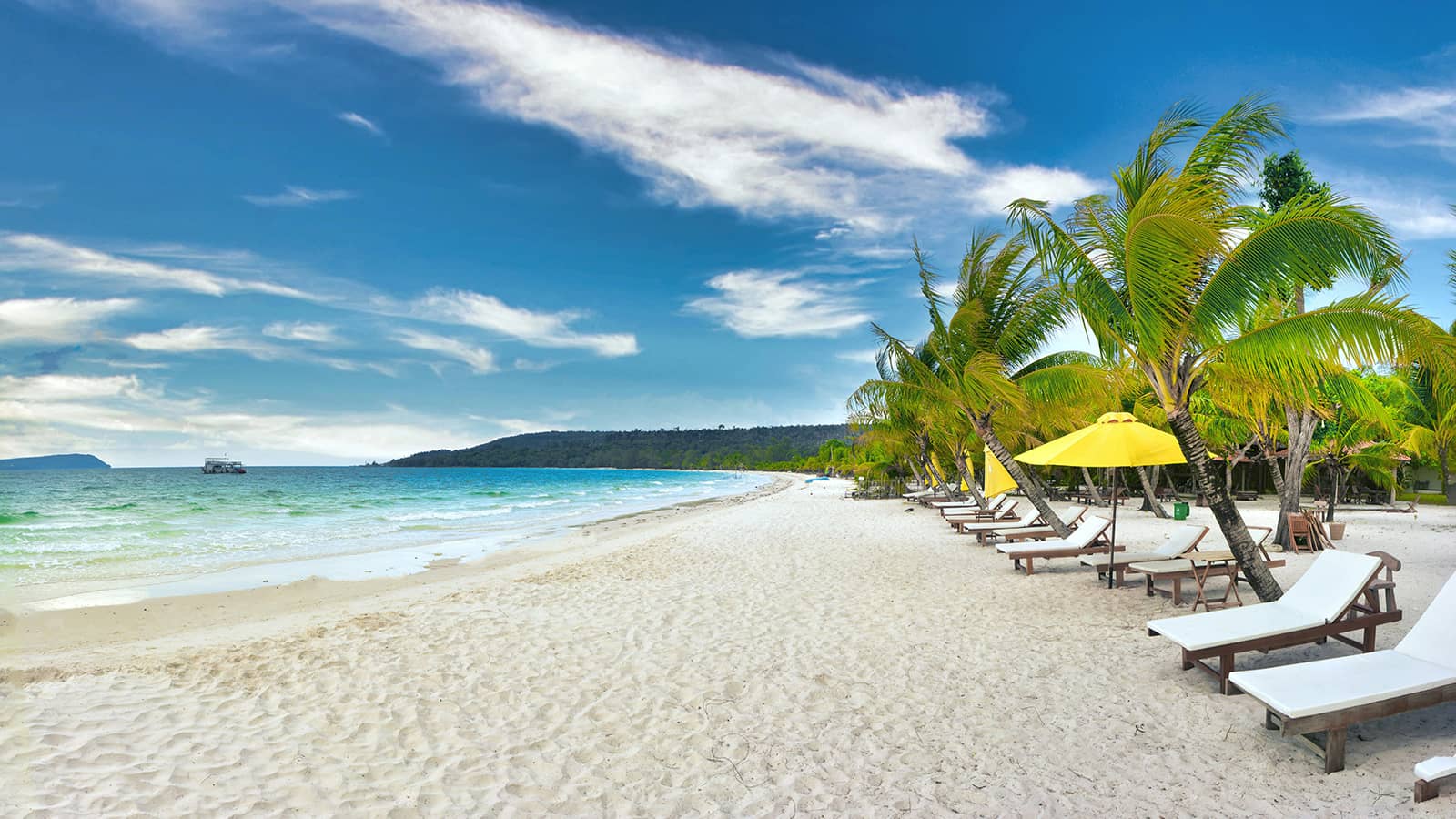
📷 Featured image by Raphael Nicolas on Unsplash.