On this page
- Domestic Flight Apps: AirAsia MOVE, Nok Air, Thai Lion Air, Bangkok Airways
- Bangkok Rail Apps: BTS Skytrain, MRT, and the EMV Contactless Shift
- Intercity Bus Booking: 12Go Asia, BusOnlineTicket, and Nakhonchai Air
- SRT D-Ticket: Booking Sleeper Trains on the State Railway of Thailand
- Grab and Street-Level Transport: Cars, Bikes, Tuk-tuks, Songthaews
- Ferry and Island Boat Apps: Booking Water Transport
- 2026 Budget Reality: What Thailand Transport Actually Costs
- Common Mistakes That Cost Time and Money
- Frequently Asked Questions
In 2026, Thailand’s Transport network is more connected than ever — but also more fragmented across apps, cards, and booking systems that don’t always talk to each other. Tourists who show up without the right apps installed often lose hours queuing at ticket counters, overpay for rides they could have booked for half the price, or miss ferries because they didn’t know online check-in was required. This guide covers every app and platform you actually need, with exact fees, step-by-step instructions, and what’s changed since 2024.
Domestic Flight Apps: AirAsia MOVE, Nok Air, Thai Lion Air, Bangkok Airways
Thailand’s domestic routes are well-served by four main carriers, each with its own mobile app. The app you need depends entirely on who’s flying you.
- Thai AirAsia — app is called AirAsia MOVE (formerly AirAsia Superapp). Available on iOS and Android. Beyond flights, it now integrates hotels, car hire, and ride-hailing in one place.
- Nok Air — Nok Air app, straightforward booking and check-in.
- Thai Lion Air — Thai Lion Air app.
- Bangkok Airways — Bangkok Airways app, the only full-service domestic carrier of the four, including lounge access on some fares.
All four apps follow the same basic booking flow: open the app, tap “Book a Flight,” enter your origin and destination airport codes (BKK for Suvarnabhumi, DMK for Don Mueang, CNX for Chiang Mai, HKT for Phuket), choose your dates, pick a fare, enter passenger details, and pay. Payment options across all apps include Visa, Mastercard, JCB, and Thai e-wallets like PromptPay and TrueMoney Wallet. Your e-ticket arrives in the app and by email — mobile boarding passes are accepted at check-in counters and security.
2026 price ranges for one-way domestic economy fares:
- Budget airlines (AirAsia, Nok Air, Thai Lion Air): 900–2,500 THB, excluding checked baggage and seat selection
- Bangkok Airways: 1,800–4,500 THB, typically includes baggage allowance and in-flight service
The most important 2026 update: budget airlines have tightened carry-on size and weight limits considerably since 2024. What passed as cabin luggage two years ago may now be rejected at the gate. Always check the specific airline’s baggage policy inside the app before you fly. Checked baggage remains an add-on fee for all three budget carriers — it is never included unless you specifically purchased it during booking.
Official booking sites if you prefer a browser: airasia.com, nokair.com, lionairthai.com, bangkokair.com.
Bangkok Rail Apps: BTS Skytrain, MRT, and the EMV Contactless Shift
Bangkok’s elevated and underground rail network covers ground that would take 45 minutes by taxi in 15 minutes by train — if you know how to use it. There are two separate systems with two separate apps and two separate fare structures.
- BTS Skytrain — use the BTS Skytrain app for route planning and Rabbit Card top-up
- MRT Blue and Purple Lines — use the Bangkok MRT app
Cards and payment options:
- Rabbit Card (BTS): Stored-value card. Costs 200 THB to buy (card deposit + minimum load). Top up at station ticket offices or via the Rabbit Card app — though app top-up requires linking a Thai bank account or registered Thai credit card, which most tourists won’t have.
- MRT Plus Card: Same concept, costs 180 THB to purchase. Top up at MRT station ticket offices.
- EMV Contactless: The biggest change since 2024. By 2026, international Visa and Mastercard contactless credit and debit cards are accepted directly at turnstiles on both BTS and MRT networks. Tap your card to enter, tap the same card to exit — the fare is calculated and charged automatically. This removes the need to buy a stored-value card at all for short trips.
One thing that has not changed: BTS and MRT are still two separate systems with separate fares. Even if you tap through both networks on the same contactless card, you’ll be charged twice — once per system. There is no single integrated fare.
2026 fare ranges:
- BTS Skytrain: 17–62 THB per journey. Day Pass: approximately 150 THB for unlimited rides.
- MRT: 17–45 THB per journey.
Network expansion note: the Yellow Line (Lat Phrao to Samrong) and Pink Line (Khae Rai to Min Buri) became fully operational in early 2025, adding significant reach into areas previously inaccessible by rail. Check the updated maps in both apps before planning routes — older maps still circulating online don’t include these lines.
Intercity Bus Booking: 12Go Asia, BusOnlineTicket, and Nakhonchai Air
VIP overnight buses between cities are genuinely comfortable in 2026 — wide reclining seats, USB charging ports, personal entertainment screens on newer coaches — and they cost a fraction of flying. The trick is knowing where to book.
The three main platforms:
- 12Go Asia (app and website: 12go.asia) — the most widely used aggregator for buses, trains, and ferries across Southeast Asia. Shows multiple operators side by side with real-time seat availability.
- BusOnlineTicket — similar aggregator, slightly different operator coverage. Worth cross-checking against 12Go Asia for the same route.
- Nakhonchai Air (nakhonchaiair.com) — one of Thailand’s largest intercity bus operators. Book directly on their site or app for potentially better seat selection and slightly lower fees than aggregators.
How to book via 12Go Asia:
- Download the 12Go Asia app or visit the website
- Select “Bus” as your transport type
- Enter your origin city, destination city, and travel date
- Filter by “VIP” or “First Class” if you want the premium coaches
- Select your preferred departure time and seat position
- Enter passenger details and pay by card or PayPal
- Your e-ticket arrives by email — show it on your phone at the departure terminal
2026 price estimates:
- Bangkok to Chiang Mai (VIP 24-seater): 600–900 THB
- Bangkok to Phuket (VIP): 800–1,200 THB
Mo Chit 2 terminal in Bangkok (the main northern and northeastern bus hub) has undergone ongoing facility upgrades. Arrive at least 30 minutes before departure — the terminal is large and the gate numbering is not always intuitive for first-timers.
SRT D-Ticket: Booking Sleeper Trains on the State Railway of Thailand
There is something deeply satisfying about falling asleep in your berth somewhere outside Bangkok and waking up to the sounds and smells of the North — forested hills in the early morning haze, vendors calling out from station platforms as the train slows through small towns. Sleeper trains on the State Railway of Thailand (SRT) deliver exactly that experience, and the booking app has improved dramatically.
The official app is SRT D-Ticket, available on iOS and Android. You can also book at railway.co.th.
How to book a sleeper berth:
- Download SRT D-Ticket and create an account
- Tap “Search Train” and enter your origin and destination stations
- For Bangkok departures, use Krung Thep Aphiwat Central Terminal — this replaced Hua Lamphong as the main hub for long-distance trains. Hua Lamphong still handles some short-distance and tourist services.
- Select your travel date and browse available services. Look for “Special Express” or “Express” for overnight routes.
- Choose your class and berth type — lower berths cost slightly more than upper berths
- Enter passenger details including your passport number
- Pay by credit/debit card or PromptPay
- Your QR code e-ticket is stored in the app — show it to the conductor onboard
2026 fare estimates:
- Bangkok to Chiang Mai (2nd class air-conditioned lower berth, overnight): 800–1,200 THB
- Bangkok to Surat Thani (for onward ferry to Koh Samui/Tao/Phangan, 2nd class lower berth): 700–1,100 THB
- Bangkok to Ayutthaya (3rd class day train): 20–50 THB
Double-track line construction continues on key corridors, and newer rolling stock is being introduced on popular overnight routes. Journey times have improved slightly since 2024, though trains still run on the slower side compared to regional high-speed rail. Book sleeper berths at least two to three weeks in advance for peak season travel (December–January, Thai national holidays).
Grab and Street-Level Transport: Cars, Bikes, Tuk-tuks, Songthaews
Grab dominates ride-hailing in Thailand in 2026 and is the single most useful app for day-to-day local transport. Open it anywhere in a major city and you’ll have a metered, trackable, price-confirmed ride in minutes — no bargaining required, no argument about the route.
Grab services available in Thailand:
- GrabCar — private cars in Economy, Premium, and SUV tiers
- GrabBike — motorcycle taxi, single passenger only, faster in traffic
- GrabTaxi — hails a metered taxi through the app
- Grab Tuk-tuk / Songthaew — being integrated into the app in tourist areas including Phuket and Chiang Mai, offering fixed-price bookings for these traditionally negotiation-based modes
2026 fare estimates (Bangkok, approximately 5 km):
- GrabCar: 80–150 THB (varies with traffic and demand surges)
- GrabBike: 50–100 THB
- Tuk-tuk (negotiated directly): 100–300 THB for short tourist-area rides — always agree on a price before you get in
- Songthaew on fixed route: 10–30 THB per person. Private hire: 300–800 THB negotiated
- Grab Tuk-tuk/Songthaew: 100–250 THB
Pay Grab by cash handed to the driver, or link a credit/debit card for fully cashless payment. The Thai government has tightened the regulatory framework for ride-hailing since 2024, leading to more standardized driver vetting and pricing practices.
Ferry and Island Boat Apps: Booking Water Transport
Getting to Thailand’s islands requires either a ferry booking or a direct conversation with a long-tail boat driver — and knowing which situation calls for which approach saves both time and money.
For scheduled inter-island ferries, use:
- 12Go Asia — the most complete aggregator for ferry routes, including combined bus+ferry tickets from Bangkok to island destinations in one booking
- Lomprayah High-Speed Ferries (lomprayah.com) — Gulf of Thailand islands: Koh Samui, Koh Phangan, Koh Tao
- Seatran Discovery (seatrandiscovery.com) — similar Gulf island routes, comparable speeds and prices
- Andaman Sea operators (Bundhaya Speed Boat, Tigerline Ferry) — typically booked via their own sites or 12Go Asia
2026 fare estimates:
- Phuket to Koh Phi Phi (one-way): 400–600 THB
- Surat Thani (Donsak Pier) to Koh Samui/Phangan/Tao (standard ferry, one-way): 300–700 THB
- High-speed catamaran from Surat Thani town or airport to Koh Tao: 700–1,200 THB
- Long-tail boat (short transfer or beach hop, price per boat): 300–800 THB
- Long-tail boat full-day private island charter: 1,500–3,000 THB
Long-tail boats are not booked through apps — you walk to the pier, find a driver, state your destination, and negotiate before you sit down. Confirm whether the quoted price is for the whole boat or per person.
A significant 2026 update: safety regulation enforcement for long-tail boats and smaller ferry operators has increased, with stricter requirements for life jackets and passenger manifests. Operators who previously waved these requirements away are now more likely to comply. If a boat operator doesn’t offer life jackets, that’s your cue to find another one.
2026 Budget Reality: What Thailand Transport Actually Costs
Here’s a clear picture of what to expect across modes and budget levels.
Budget traveller:
- BTS/MRT single journey: 17–45 THB
- Songthaew on fixed route: 10–30 THB per person
- 3rd class train (Bangkok–Ayutthaya): 20–50 THB
- Budget domestic flight (no baggage): 900–1,500 THB
- Standard ferry to Gulf islands: 300–700 THB
Mid-range traveller:
- GrabCar short city ride: 80–150 THB
- VIP bus Bangkok to Chiang Mai: 600–900 THB
- 2nd class sleeper train berth: 700–1,200 THB
- Budget flight with baggage included: 1,500–2,500 THB
- High-speed ferry: 400–800 THB
Comfortable traveller:
- Bangkok Airways full-service domestic flight: 1,800–4,500 THB
- GrabCar Premium or SUV: 150–350 THB per ride
- Long-tail private charter (full day): 1,500–3,000 THB
- 1st class sleeper train: 1,200–2,000 THB
Common Mistakes That Cost Time and Money
Even experienced travellers make these errors. Avoid them.
- Not downloading apps before arrival. Mobile data at Thai airports is limited before you have a local SIM. Download Grab, 12Go Asia, SRT D-Ticket, and your airline’s app while still on home WiFi.
- Assuming BTS and MRT fares combine. They don’t. Two separate systems, two separate charges, even on the same contactless card tap.
- Boarding a tuk-tuk or songthaew without agreeing on a price first. The price confusion happens at the destination, not during the ride. Agree before you move.
- Forgetting that budget airline prices exclude baggage. A 900 THB base fare can become 1,500 THB once you add a 20kg bag. Check before you book.
- Not booking sleeper train berths early enough. Lower berths on overnight trains sell out weeks in advance during high season. Book through SRT D-Ticket as soon as your dates are confirmed — tickets open 60 days before travel.
- Showing up at the wrong Bangkok train station. Krung Thep Aphiwat Central Terminal is now the main hub for long-distance trains. If your app or booking shows “Hua Lamphong,” double-check — most overnight services no longer depart from there.
- Paying cash for a Grab ride when you have a foreign card. Linking your international Visa or Mastercard to Grab works smoothly in 2026. It’s faster, avoids small-change issues, and keeps a payment record.
Frequently Asked Questions
Can I use Google Maps to navigate Bangkok’s BTS and MRT?
Yes, Google Maps covers both networks with accurate route planning and real-time departures as of 2026. It’s useful for planning, but you still need the BTS Skytrain or Bangkok MRT app (or a contactless card) to actually pay for your journey. Use Google Maps for routing, the rail apps for payment.
Is Grab available outside Bangkok?
Grab operates in most major Thai cities including Chiang Mai, Phuket, Pattaya, Hua Hin, and Khon Kaen. Coverage in smaller towns is limited or unavailable. In those areas, local motorcycle taxis, songthaews, and negotiated tuk-tuks remain the standard options. The app will tell you if no drivers are available in your area.
Do I need to print my ferry or bus e-tickets?
Not usually. Showing your e-ticket QR code on a mobile screen is accepted at virtually all ferry piers and bus terminals that use 12Go Asia, Lomprayah, Seatran, and Nakhonchai Air in 2026. Having a screenshot saved offline is smart insurance if your mobile data drops at a remote pier.
How far in advance should I book a sleeper train through SRT D-Ticket?
SRT opens bookings 60 days in advance. For popular overnight routes like Bangkok to Chiang Mai or Bangkok to Surat Thani during December–January peak season or Thai national holidays, book as soon as the booking window opens. Lower berths (more comfortable) sell out first — upper berths stay available longer.
Is cash or card better for getting around Thailand in 2026?
Both. EMV contactless cards now work on BTS and MRT turnstiles, and Grab accepts linked international cards. However, cash remains essential for songthaews, long-tail boats, tuk-tuks, rural transport, and small ferry operators. Carry a mix — ideally 500–1,000 THB in small notes at all times when travelling outside Bangkok.
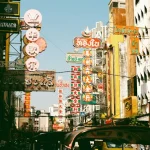
📷 Featured image by Umpholphat Dangam on Unsplash.