On this page
- Documents, Money and Entry Items for 2026
- Clothing for Krabi’s Heat, Humidity and Sudden Rain
- Footwear for Boats, Cliffs and Jungle Trails
- Sun, Reef and Bug Protection
- Island-Hopping and Beach Gear
- Tech, Power and Connectivity
- Health and First-Aid Kit
- Temple and Cultural Dress
- Seasonal Adjustments: Dry Season vs Green Season
- What to Leave at Home
- 2026 Budget Reality: What to Buy in Krabi Instead
- Frequently Asked Questions
💰 Click here to see Thailand Budget Breakdown
💰 Prices updated: October, 2026. Budget figures are estimates — always verify before travel.
Exchange Rate: $1 USD = ฿33.60
Daily Budget (per person)
Shoestring: ฿900.00 – ฿1,800.00 ($26.79 – $53.57)
Mid-range: ฿2,150.00 – ฿4,000.00 ($63.99 – $119.05)
Comfortable: ฿6,000.00 – ฿12,000.00 ($178.57 – $357.14)
Accommodation (per night)
Hostel/guesthouse: ฿90.00 – ฿750.00 ($2.68 – $22.32)
Mid-range hotel: ฿1,400.00 – ฿3,500.00 ($41.67 – $104.17)
Food (per meal)
Budget meal: ฿70.00 ($2.08)
Mid-range meal: ฿250.00 ($7.44)
Upscale meal: ฿1,000.00 ($29.76)
Transport
Single metro/bus trip: ฿30.00 ($0.89)
Monthly transport pass: ฿1,155.00 ($34.38)
Most people overpack for Krabi, then find out the hard way that the trip does not suit a big suitcase. Low-cost carriers on domestic routes into Krabi Airport (KBV) often weigh carry-on bags strictly at 7 kg, and extra checked baggage costs real money. Then you reach Ao Nang or Railay, and the “pier” is a beach where you wade into the sea to board a longtail boat. A hard-shell case with tiny wheels does not belong there. This guide covers what to pack, what to skip, and what is cheaper to buy once you land, based on how Krabi works in 2026.
Documents, Money and Entry Items for 2026
Start with paperwork, because it is the one category you cannot replace on the road. Thailand now requires the Thailand Digital Arrival Card (TDAC) for most foreign visitors. It is free, and you fill it in online shortly before you arrive. Do it on the official government site only, since copycat sites charge fees. Save the confirmation as a screenshot and keep it offline too, because airport Wi-Fi can be slow.
- Passport with at least six months of validity and blank pages. Visa-exempt stay rules have changed more than once since 2024, so check the current limit with the Thai embassy site before you fly.
- Onward ticket or proof of exit. Airlines still ask for it at check-in, especially on one-way bookings.
- Travel insurance printout and digital copy. Make sure it covers scooter use if you plan to rent one, and water activities such as snorkelling and kayaking. Many cheap policies exclude both.
- Two passport photocopies. Keep one in your day bag and leave one in your room. Boat operators and scooter shops sometimes ask for a copy, and it is better to hand over a copy than your real passport.
- Driving licence and International Driving Permit if you want to rent a scooter or car legally. Without them, your insurance may refuse a claim after an accident.
- Cash in small notes. Bring 20, 50 and 100 THB notes. Longtail boat drivers, songthaew drivers and market stalls rarely have change for a 1,000 THB note.
- Two bank cards from different networks. Krabi has plenty of ATMs in Ao Nang and Krabi Town, but Thai ATMs charge a 220 THB foreign card fee per withdrawal, so take out larger amounts less often.
National park entry is paid in cash at the ticket booth, usually around 400 THB for foreign adults at places like the Phi Phi islands and Hong Islands. Tour operators sometimes include it and sometimes do not, so keep 400–800 THB spare for each day you go island-hopping.
Clothing for Krabi’s Heat, Humidity and Sudden Rain
Krabi sits on the Andaman coast, where daytime temperatures hover around 30–33°C all year and humidity rarely drops below 70%. Cotton jeans take a day to dry and then smell of mildew. Think light, quick-dry and loose.
A realistic one-week clothing list looks like this:
- 4–5 lightweight T-shirts or tank tops in quick-dry fabric or thin cotton
- 2 pairs of shorts, one of them quick-dry for boat days
- 1–2 loose trousers or a long skirt for temples and evenings
- 2 swimsuits so one can dry while you wear the other
- 1 long-sleeve rash guard or UPF shirt. This does more for your skin than any amount of sunscreen on a four-hour boat day.
- 1 light dress or collared shirt for a nicer dinner in Ao Nang or Klong Muang
- 1 very light rain jacket or poncho
- Underwear and socks for the number of days you are walking, since you will do laundry anyway
Laundry is cheap, around 40–60 THB per kilogram at small shops in Ao Nang and Krabi Town, usually back within 24 hours. This is the best reason to pack for five days even on a two-week trip. Skip anything that must be hand-washed or ironed.
Colours matter more than people think. Thick black fabric holds heat during a midday hike to the Tiger Cave Temple viewpoint, while pale linen and light cotton breathe better. Sweat shows less on patterned fabric than on pale grey.
Footwear for Boats, Cliffs and Jungle Trails
Krabi is hard on shoes. You will wade through shallow sea at Railay, scramble over wet limestone, and walk muddy forest trails around Emerald Pool. Three pairs cover everything, and any more is wasted space.
- Strap-on sports sandals such as Teva or Keen style. These are your main shoe. They grip on slippery pier steps and survive wet landings.
- Cheap flip-flops for the hotel, beach and bathroom floors. Buy them in Krabi for 100–200 THB if you want to save bag space.
- Light closed shoes with a grippy sole, for jungle walks, Khao Ngon Nak trail, or Phra Nang Cave viewpoint climbs. Old trail runners are perfect. Brand-new shoes can cause blisters in this heat.
Reef shoes or water shoes are optional but useful. Some of the beaches at Railay and the Hong Islands have sharp rocks and broken coral right at the waterline, and the sea urchin spines are painful. The Emerald Pool walk also ends in a stream that is slippery with algae. You can rent or buy basic water shoes at Ao Nang for 150–350 THB.
The 1,260 steps up to the Tiger Cave Temple (Wat Tham Suea) are steep, humid and uneven. Wear shoes with real grip, not flat flip-flops. Monkeys wait near the lower stairs too, so keep food zipped away.
Sun, Reef and Bug Protection
This is where Krabi packing gets specific. Thailand has banned sunscreens containing certain chemicals inside marine national parks, including oxybenzone, octinoxate, 4-methylbenzylidene camphor and butylparaben. Rangers can fine visitors, and the penalty is steep. Parks around Krabi, including Hat Noppharat Thara–Mu Ko Phi Phi and the Hong Islands, fall under this rule.
- Mineral sunscreen with zinc oxide or titanium dioxide, SPF 30–50. Bring one bottle from home, since good reef-safe brands cost 450–800 THB in Ao Nang and the choice is limited.
- Wide-brim hat or cap with a chin strap. Boat wind steals hats quickly.
- Polarised sunglasses. The glare off Andaman water at 11 a.m. is intense.
- After-sun aloe gel. Pharmacies sell it for about 80–150 THB, so no need to carry a big tube.
- Insect repellent with 20–30% DEET or picaridin. Mosquitoes in Krabi are most active at dusk, especially near mangroves, in Klong Muang, and along Ao Nang’s quieter side streets. Repellent costs 60–150 THB at 7-Eleven.
- Lip balm with SPF. Everyone forgets this and regrets it on the second boat day.
Island-Hopping and Beach Gear
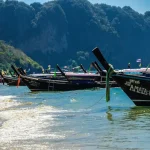
Picture the scene at Ao Nang pier at 8:30 a.m. Diesel fumes drift from the longtail engines, salt spray hangs in the air, and a driver waves you toward a boat that sits knee-deep in the sea. You will step off the sand, carrying your bag above your waist. This is why a few small items matter more than anything else on your list.
- 10–20 litre dry bag. This is the single most useful item. It protects your phone, wallet and camera from splashes and from the sudden downpours that hit even in the dry season. Shops in Ao Nang sell them for 150–400 THB, but quality varies, so a roll-top bag from home is more reliable.
- Waterproof phone pouch with a lanyard. Cheap ones leak, so test yours in a sink before you leave.
- Quick-dry microfibre towel. Many boat tours do not provide towels. A normal beach towel stays damp all day.
- Snorkel mask if you are particular about fit. Rental sets cost 50–100 THB per day, but a leaky mask ruins the Hong Lagoon experience. Many people bring their own mask and rent fins.
- Reusable water bottle, preferably 750 ml or larger. Many refill stations in Ao Nang and Krabi Town charge 1–5 THB per litre.
- Small cross-body bag or waist pack. You will carry it ashore without leaving valuables on the boat.
- Climbing chalk bag and shoes if you plan to climb at Railay. Gear shops rent shoes and harnesses for about 100–250 THB per half day, so you only need to pack your own if you climb often.
Tech, Power and Connectivity
Thailand uses 220V at 50Hz, and sockets accept flat two-pin and round two-pin plugs (Types A, B, C and O). Many modern hotels fit universal sockets, but older guesthouses in Krabi Town do not. A small universal adapter prevents a lot of hassle.
- Power bank of 10,000–20,000 mAh. Long boat days drain phones fast, especially when you take photos and use maps. Keep it in your carry-on, since airlines do not allow power banks in checked bags.
- Short charging cable and a multi-port USB charger, so one plug serves your phone, watch and camera.
- Offline maps of Krabi downloaded on Google Maps or Maps.me. Signal fades around Railay’s cliffs and on some islands.
- SIM or eSIM. Tourist SIMs from AIS, TrueMove H and dtac are sold at Krabi Airport, usually 300–600 THB for 8–15 days with plenty of data. If your phone supports eSIM, you can buy one before you fly and skip the queue.
- Action camera or phone case. Tour boats move quickly, and waterproof gear captures the colour of the water, which in March glows turquoise against grey limestone cliffs.
Drones need extra care. Thailand requires registration with the telecommunications and civil aviation authorities, and flying inside national parks without permission can bring fines or confiscation. Unless you have done the paperwork, leave the drone at home.

Health and First-Aid Kit
Krabi has good private clinics in Ao Nang and Krabi Town, and pharmacies stock most basics at lower prices than home. But a small kit saves you time when you are on a boat or an island at night.
- Prescription medicines in original packaging, plus a doctor’s letter. Some medicines, especially painkillers and ADHD or anxiety drugs, are controlled in Thailand.
- Oral rehydration salts. The heat and a few cold beers can dehydrate you faster than you notice. Packets cost 10–15 THB at 7-Eleven.
- Anti-diarrhoea tablets and probiotics. Street food in Krabi is usually fine, but an upset stomach can still happen.
- Waterproof plasters and antiseptic. Coral and limestone cuts get infected fast in warm, humid weather, so clean them right away.
- Antihistamine cream or tablets for insect bites and jellyfish stings, which are more common from May to October.
- Motion sickness tablets. Speedboats to Koh Phi Phi and Koh Lanta can be rough in the green season, even for people who never get seasick.
- Blister patches. You will thank yourself after the Tiger Cave steps.
Temple and Cultural Dress
Krabi is relaxed about beachwear, but the rules change quickly once you leave the sand. Tiger Cave Temple, local mosques in Krabi Town, and village temples expect covered shoulders and knees. Krabi province also has a large Muslim community, especially on Koh Lanta and in smaller villages, and modest dress is appreciated there.
- A light scarf or sarong that works as a shoulder cover, a beach wrap and a picnic mat
- Knee-length shorts or trousers in your day bag for impromptu temple visits
- Shoes that slip off easily, since you remove them at temple entrances
- A small towel or tissues, since many public toilets in Thailand do not stock paper
At dusk, the smell of grilled chicken skewers, sweet roti and charcoal smoke fills the Krabi Town weekend night market on Chao Fah Road (Friday to Sunday). Locals dress casually there, but a light cover-up is a good idea if you walk in from a temple visit or want to avoid mosquito bites.
Seasonal Adjustments: Dry Season vs Green Season
The same bag does not work all year. Krabi’s weather splits into two clear halves, and packing for the wrong one causes trouble.
November to April (dry season)
- Expect 30–34°C, calm seas and clear skies, with peak crowds from December to February.
- Prioritise extra sun protection, a second swimsuit and a cover-up for strong afternoon heat.
- Bring a very light layer for air-conditioned buses, minivans and restaurants, which can feel cold after a hot day outside.

May to October (green season)
- Expect heavy but short rain, rougher seas and some boat cancellations, especially from August to October.
- Pack a proper lightweight rain jacket, a dry bag for everything, and shoes that dry quickly. Skip canvas sneakers.
- Add extra mosquito repellent, motion sickness tablets and a flexible schedule for rainy days.
- Prices drop by 30–50% for hotels, which is the reason many travellers accept the weather trade-off.
What to Leave at Home
Knowing what not to pack is as useful as the list itself. These items add weight, risk or trouble in Krabi.
- Vapes and e-cigarettes. They are illegal in Thailand, and enforcement has become stricter.
- Chemical sunscreens with banned ingredients. Check the label before you pack.
- Single-use plastic items. Many national parks restrict plastic bags, foam containers and certain bottles, and rangers may inspect your bags before you board.
- Expensive jewellery and watches. They are easy to lose in the sea and attract attention in crowded markets.
- Heavy jeans, hoodies and thick towels. They stay damp, add weight and rarely get worn.
- Hair dryers. Most hotels provide one, and in this humidity, it makes little difference.
- Too many shoes. Three pairs are enough.
- Drones unless you have permits.
- Heavy guidebooks. Download maps and notes to your phone instead.
2026 Budget Reality: What to Buy in Krabi Instead
Krabi is easier to pack for than many destinations, because Ao Nang and Krabi Town sell most beach essentials at reasonable prices. The best approach is to pack your sensitive or high-quality items and buy the rest locally. Below is a realistic idea of what gear costs in 2026.
Budget (about 700–1,500 THB total)
- Basic dry bag: 150–250 THB
- Cheap flip-flops: 100–150 THB
- Rain poncho: 20–40 THB
- Insect repellent: 60–120 THB
- Rental snorkel mask: 50–100 THB per day
- Local SIM at Krabi Airport: 300–400 THB
Mid-range (about 2,000–4,000 THB total)
- Reef-safe mineral sunscreen: 450–800 THB
- Better dry bag with a strong roll-top: 400–800 THB
- Water shoes: 300–900 THB
- Quick-dry shirts or a rash guard: 500–1,200 THB
- Tourist SIM with larger data: 450–600 THB
- Light rain jacket: 600–1,200 THB
Comfortable (about 5,000–9,000 THB total)
- Personal snorkel set with a well-fitted mask: 1,500–3,500 THB
- High-quality rash guard and sun shirt: 1,200–2,500 THB
- Waterproof camera pouch or action camera accessories: 1,000–2,500 THB
- Trail sandals or water-ready shoes from a known brand: 1,800–3,500 THB
- Insured gear or backup power bank: 800–1,800 THB
Buying everything at home is not necessary. Shopping at the Ao Nang walking street near the beach is convenient, but prices there are higher than at Krabi Town markets and local pharmacies. If you are staying more than a few days and plan to buy basics, a trip to Krabi Town first can save a few hundred baht.
Frequently Asked Questions
What is the one item I should not forget to pack for Krabi?
A dry bag is the most useful single item. Longtail boat landings involve wading in the sea, and sudden rain is common. A 10–20 litre roll-top bag protects your phone, wallet and passport copy. You can buy one in Ao Nang for about 150–400 THB, but bringing your own is more reliable.
Can I bring regular sunscreen to Krabi?
You can use it on regular beaches, but not in marine national parks like the Hong Islands or Phi Phi. Thailand bans sunscreens with oxybenzone, octinoxate, 4-methylbenzylidene camphor and butylparaben there. Choose zinc-based mineral sunscreen to be safe, and wear a rash guard to reduce how much you need.
Do I need to bring a lot of cash to Krabi?
You need some cash, but not a large amount. Park fees, longtail boats, night markets and small restaurants often accept only cash. ATMs in Ao Nang and Krabi Town charge a 220 THB foreign card fee, so withdraw larger sums less often. Keep 20, 50 and 100 THB notes for easy change.
What should I wear to visit Tiger Cave Temple?
Cover your shoulders and knees, and wear shoes with good grip for the 1,260 steps. Light, breathable clothes work best, since the climb is steep and humid. Bring a small towel and water. Monkeys live near the lower stairs, so keep food and loose items zipped inside your bag.
Is it better to pack light or bring a big suitcase to Krabi?
Pack light. A 7–10 kg bag or carry-on backpack is ideal, because you will board boats from beaches, climb stairs and move between small hotels. Laundry costs around 40–60 THB per kilogram, so five days of clothes is enough. Low-cost airlines also enforce weight limits strictly, and extra fees add up.
Explore more
Krabi Night Market Guide: Best Street Food & Souvenir Finds After Dark
📷 Featured image by Vaskar Sam on Unsplash.