On this page
- Visa Exemption: Who Gets In Free and For How Long
- Visa on Arrival: The 15-Day Option for 19 Nationalities
- Tourist Visa (TR): Applying Online via thaievisa.go.th
- Extending Your Stay Inside Thailand
- Land Border Crossings: Malaysia, Laos, Cambodia, and Myanmar
- What Immigration Officers Actually Check at the Airport
- 2026 Budget Reality: Every Entry Fee in One Place
- Common Mistakes That Get Tourists Turned Away
- Frequently Asked Questions
Thailand changed its entry rules significantly in 2022 and early 2023, and in 2026 a lot of travellers are still working from outdated information — particularly around the 45-day exemption window, the old land-border entry limits, and the long-dead Thailand Pass. Getting this wrong at Suvarnabhumi Airport at 2 a.m. after a 14-hour flight is not a situation you want to be in. This guide cuts through the confusion and tells you exactly what applies to your passport in 2026.
Visa Exemption: Who Gets In Free and For How Long
Visa exemption is the entry route most travellers from Western countries, Southeast Asia, and several Middle Eastern nations will use. You simply arrive, present your passport at immigration, and receive a stamp — no application, no fee, no paperwork filed in advance. Around 64 countries and territories currently qualify.
The standard exemption for most nationalities is 30 days. Citizens of the following countries fall into this bracket: Australia, Austria, Bahrain, Belgium, Brunei, Canada, Czech Republic, Denmark, Estonia, Finland, France, Germany, Greece, Hong Kong, Hungary, Iceland, Indonesia, Ireland, Israel, Italy, Japan, Kuwait, Laos, Liechtenstein, Luxembourg, Macau, Malaysia, Maldives, Mauritius, Monaco, Mongolia, Netherlands, New Zealand, Norway, Oman, Peru, Philippines, Poland, Portugal, Qatar, Russia, Saudi Arabia, Singapore, Slovakia, Slovenia, South Africa, South Korea, Spain, Sweden, Switzerland, Turkey, UAE, UK, USA, and Vietnam.
A 60-day exemption is available under bilateral agreements for citizens of Argentina, Brazil, and Chile. South Korea and Peru also benefit from extended exemption periods under their specific bilateral agreements — check the current MFA list at www.mfa.go.th for the precise duration that applies to your passport.
Regarding the 45-day exemption: this was a temporary government measure that ran through May 31, 2025. As of 2026, the expectation is that most nationalities have reverted to the standard 30-day stamp unless Thailand has announced a further extension or a permanent bilateral upgrade. Confirm this at www.immigration.go.th before you fly.

One rule change that still catches people out: the old restriction limiting visa-exempt travellers to two land or sea border entries per calendar year was removed on October 1, 2022. In 2026 there is no explicit cap on the number of visa-exempt entries by air, land, or sea. That said, arriving every two weeks via the same border checkpoint will raise eyebrows, and an immigration officer has full discretion to deny entry if they suspect you are living in Thailand on a series of tourist stamps.
To enter visa-free you need to show: a passport valid for at least six months from your entry date, proof of a confirmed onward or return ticket out of Thailand within your permitted stay period, evidence of accommodation (a hotel confirmation or similar), and proof of sufficient funds — typically 10,000 THB per person or 20,000 THB per family. These requirements are not always checked at the desk, but carry the documentation anyway. An officer who decides to ask and finds you unprepared can send you back on the next flight.
Visa on Arrival: The 15-Day Option for 19 Nationalities
Visa on Arrival (VOA) is the route for travellers whose countries are not on the visa-exempt list but have a bilateral arrangement with Thailand for arrival-day processing. Roughly 19 to 20 nationalities qualify, including citizens of Bhutan, Bulgaria, China, Cyprus, Ethiopia, Fiji, Georgia, India, Kazakhstan, Malta, Mexico, Nauru, Papua New Guinea, Romania, Saudi Arabia, Taiwan, Uzbekistan, and Vanuatu. Check the current official list because this changes periodically.

The VOA grants a maximum stay of 15 days and costs 2,000 THB, paid in cash at the counter. Some major airports may accept card payments, but bring THB cash to be safe — the queue is long enough without adding a payment failure into the mix.
VOA is processed at the dedicated counters at Suvarnabhumi (BKK), Don Mueang (DMK), Phuket (HKT), Chiang Mai (CNX), and selected major land border checkpoints. At BKK during peak season the VOA queue can stretch to an hour or more. Here is the standard process:
- Follow signs for “Visa on Arrival” after disembarking. Do not join the regular immigration queue.
- Pick up the VOA application form from the rack near the counter and fill it in completely.
- Attach one passport-sized photo (4×6 cm, taken within the past six months).
- Present the form, your passport, confirmed return or onward ticket, accommodation proof, and evidence of 10,000 THB per person (or 20,000 THB per family) in cash or on a bank statement.
- Pay the 2,000 THB fee.
- Wait for your passport to be stamped with the 15-day VOA, then proceed to general immigration.
If you want to skip the airport queue, an online Visa on Arrival (eVOA) pre-approval is available through VFS Global. The total cost is roughly 2,500–2,600 THB (the 2,000 THB VOA fee plus a service charge of approximately 500–600 THB). Processing typically takes 24 to 72 hours, so apply at least three days before you fly. You will still visit the VOA counter at the airport, but the pre-approval generally moves you through faster. Check the current portal link via www.immigration.go.th — the direct URL can shift between service providers.
Tourist Visa (TR): Applying Online via thaievisa.go.th

If you are not eligible for visa exemption or the VOA, or you want a longer initial stay than either of those options provides, the Tourist Visa (TR) is your path. Since the Thai e-Visa system was upgraded, almost all nationalities can now apply entirely online — no embassy queues, no posting your passport.
There are two TR formats in 2026:
- Single Entry Tourist Visa: Allows one stay of up to 60 days. Fee: 1,000 THB. Valid for entry within three months of issue. Extendable by 30 days at an Immigration Office for 1,900 THB.
- Multiple Entry Tourist Visa (METV): Allows multiple entries for up to 60 days each stay, within a six-month validity window. Fee: 5,000 THB. Each 60-day period can be extended by 30 days (1,900 THB per extension). Suited to travellers who plan to leave and re-enter Thailand during a longer trip.
Apply at www.thaievisa.go.th. The process:
- Register an account using a valid email address.
- Select “Apply for a New Visa” and choose Tourist Visa (TR).
- Input your nationality, current country of residence, and intended entry point.
- Upload required documents: passport bio page scan (clear, no shadows), recent passport photo (4×6 cm), confirmed flight itinerary, accommodation bookings, and a bank statement. For the METV, include an employment letter or other evidence of strong ties to your home country.
- Pay by credit or debit card (Visa, Mastercard, JCB, or American Express).
- Submit. Processing is typically 5 to 10 working days, longer during peak season around December and January. Apply at least three weeks ahead to be safe.
- You will receive the approval letter by email. Print it and carry it alongside your passport — Thai immigration officers will check both at the arrival desk.
Financial proof requirements: Single Entry applicants should show approximately 20,000 THB per person (or 40,000 THB per family) in their bank account. METV applicants are expected to demonstrate significantly more, since the visa implies the financial capacity to fund multiple trips. There is no published exact figure, but a bank statement showing consistent balances well above the single-entry threshold helps.

Extending Your Stay Inside Thailand
You do not always have to leave and re-enter to get more time. Both a 30-day visa-exempt stamp and a single-entry Tourist Visa can be extended once at any Immigration Office inside Thailand.
The extension grants an additional 30 days on top of your current permitted stay. The fee is 1,900 THB. You need to apply before your current stamp expires — not the day it expires, but ideally a few days before to allow for queues.
Documents required for a standard extension (TM.7 application):
- Completed TM.7 form (available at the Immigration Office or downloadable from www.immigration.go.th)
- Original passport
- One passport photo (4×6 cm)
- Photocopy of your passport photo page
- Photocopy of your entry stamp page
- Photocopy of your TM.6 departure card (if one was issued — note that Thailand phased out the paper TM.6 departure card for most travellers at airports, but check current practice at land borders)
- Proof of accommodation (current hotel booking or rental agreement)
Major Immigration Offices are located in Bangkok (Chaeng Watthana Government Complex), Chiang Mai, Phuket, Pattaya, Hua Hin, Ko Samui, and most provincial capitals. Arrive early — by 8:00 or 8:30 — because queues form fast at popular offices. The walk-in process at a busy office like Bangkok or Phuket can take three to four hours from queue to stamped passport.
Land Border Crossings: Malaysia, Laos, Cambodia, and Myanmar
Land borders are fully valid entry points for visa-exempt travellers — your stamp and duration are identical to what you would receive at an airport. The two-entry-per-year limit for land crossings was abolished in 2022 and remains lifted in 2026.

Malaysia: The busiest crossings are Padang Besar (road and rail), Bukit Kayu Hitam/Danok, and Wang Kelian/Wang Prachan. The State Railway of Thailand (SRT) runs services through Padang Besar up to Hat Yai, making this the easiest rail-connected crossing for travellers coming from Kuala Lumpur or Penang.
Laos: The First Thai-Lao Friendship Bridge at Nong Khai/Vientiane is the most-used crossing and also has an SRT connection from Bangkok to Nong Khai. The Second Bridge at Mukdahan/Savannakhet and the Third Bridge at Nakhon Phanom/Thakhek are quieter options. Cross-border shuttle buses handle the bridge crossing itself.
Cambodia: Aranyaprathet/Poipet is by far the most popular crossing, used by travellers heading to Siem Reap and Angkor Wat. Buses and minivans handle this route. A word of caution: the Poipet side of the border has a well-documented history of scams targeting tourists — unofficial “officials” directing you to fake visa offices, commission-based transport touts, and more. Cross on foot after clearing Thai immigration, complete Cambodian visa formalities yourself at the official booth, and only then arrange onward transport. Hat Lek/Koh Kong is a quieter coastal option.
Myanmar: The main crossings are Mae Sai/Tachileik, Mae Sot/Myawaddy, and Ranong/Kawthoung. These borders have been subject to unannounced closures and operational restrictions since the political crisis in Myanmar began in 2021, and that situation has not fully stabilised by 2026. Always check the current operational status through the Thai Immigration Bureau or your country’s travel advisory within 48 hours of planning to use a Myanmar land crossing. Do not assume it will be open based on past experience.
What Immigration Officers Actually Check at the Airport
Walking through passport control at Suvarnabhumi is a different experience depending on which queue you join. The e-gates have expanded since 2024 and now handle passports from a wider range of countries using biometric scanning — look for the automated kiosks as you approach the hall. If your passport chip reads cleanly and your entry history is clean, you may clear immigration in under two minutes.

For the staffed lanes, here is what the officer is actually looking at. Your passport validity is the first check — six months minimum from today’s date. If you are cutting it close, expect a longer conversation or outright refusal. Next comes your entry stamp history: a pattern of monthly entries and exits with no visible work or income history will prompt questions. The officer will also scan for any previous overstay records, which are retained on the Thai immigration database indefinitely.
Officers do occasionally ask to see proof of funds. This is not common for passport holders from wealthier Western nations, but it does happen for travellers from countries where the Immigration Bureau applies additional scrutiny. Having 10,000 THB in your wallet or a bank app open on your phone with a visible balance resolves this in seconds.
2026 Budget Reality: Every Entry Fee in One Place
Here is what entry and extension fees look like in 2026 across all the main routes:
- Visa Exemption entry: 0 THB — free
- Visa on Arrival (VOA): 2,000 THB
- Online VOA pre-approval (eVOA via VFS Global): approximately 2,500–2,600 THB (includes 2,000 THB VOA fee plus 500–600 THB service fee)
- Single Entry Tourist Visa (TR): 1,000 THB
- Multiple Entry Tourist Visa (METV): 5,000 THB
- In-country extension (30 days added to any stamp): 1,900 THB
- Overstay fine: 500 THB per day, maximum 20,000 THB if you turn yourself in at immigration; risk of arrest and detention if caught at a checkpoint
Budget traveller scenario: A 30-day visa-exempt entry plus a single 30-day extension costs 1,900 THB total — less than 60 USD for 60 days in Thailand. This is the most cost-efficient legal option for citizens of exempt countries.

Mid-range scenario: A Multiple Entry Tourist Visa at 5,000 THB gives you repeated 60-day stays across six months, with each stay extendable for 1,900 THB. Over a six-month period with two entries and one extension per entry, the total visa cost is 5,000 + (1,900 x 2) = 8,800 THB.
Comfortable long-stay scenario: Thailand Elite Visa (now officially the Thailand Privilege Visa) is the premium route for stays of five years or more. The entry-level package starts at 900,000 THB as of 2026 for a five-year privilege, which includes dedicated immigration fast-track at major airports and a personal concierge service. It is not a tourist visa — it is a long-stay membership programme — but it is worth knowing about if you are planning an extended residency rather than a holiday.
Common Mistakes That Get Tourists Turned Away
Passport expiry is the single biggest avoidable problem. The six-month rule is strict. An officer will not make an exception because your flight home is in 29 days and your passport expires in five months and 28 days. Renew before you travel if there is any doubt.
Second most common: no proof of onward travel. Budget travellers who plan to figure out their exit later are the most exposed here. Immigration is not interested in your flexible plans. A confirmed ticket — even a cheap bus crossing to Malaysia or a low-cost flight to anywhere — satisfies this requirement. Some travellers book a fully refundable flight specifically for this purpose and cancel it once they are through.
Overstaying, even by one day, is a formal violation. The fine is 500 THB per day up to a cap of 20,000 THB if you voluntarily declare at departure. If you are caught at a checkpoint inside the country rather than leaving voluntarily, the consequences escalate sharply: possible detention, forced deportation, and a re-entry ban ranging from one year to ten years depending on the length of the overstay. The ban is permanent in the Thai immigration database — it does not expire quietly.

Relying on the 45-day exemption that was in effect through May 2025: if you are reading this in 2026 and someone tells you that you get 45 days automatically, verify this directly with the Immigration Bureau at www.immigration.go.th before you book a one-way ticket. The rule may have been extended again, or it may have reverted to 30 days. Do not assume.
Finally, Myanmar land border crossings: do not plan a tight itinerary around using Mae Sai or Mae Sot if you have not checked the border’s operational status in the past 48 hours. Closures with no public notice are a documented reality, and being stranded on the Thai side with an expiring visa stamp is a messy situation to untangle.
Frequently Asked Questions
How long can I stay in Thailand without a visa in 2026?
Most Western nationalities receive a 30-day stamp on arrival under the visa exemption scheme. Citizens of Argentina, Brazil, and Chile typically receive 60 days under bilateral agreements. The 45-day temporary extension that ran through May 2025 may or may not have been renewed — check www.immigration.go.th for the current position before you travel.
Can I extend my visa-exempt stamp without leaving Thailand?
Yes. A 30-day visa-exempt entry can be extended once by an additional 30 days at any Immigration Office inside Thailand. The fee is 1,900 THB. You submit form TM.7 along with your passport, a photo, and accommodation proof. Apply before your current stamp expires, not on the final day.

What happens if I overstay my visa in Thailand?
You are fined 500 THB for every day over your permitted stay, up to a maximum of 20,000 THB if you declare the overstay at the departure gate. If caught inside the country at a checkpoint, you risk detention, deportation, and a re-entry ban of one to ten years. Overstay records remain on the Thai immigration database permanently.
Do I need a return ticket to enter Thailand visa-free?
Technically yes — immigration rules require proof of onward or return travel within your permitted stay period. In practice this is not checked for every passenger, but it is checked selectively and airlines may ask before boarding. Carry a confirmed booking: a return flight, a one-way flight out, or a confirmed bus or train ticket across a land border.
Is the Thailand e-Visa available for all nationalities?
The Thai e-Visa system at www.thaievisa.go.th is available to most nationalities. The system allows you to apply for a Single Entry Tourist Visa (1,000 THB, up to 60 days) or a Multiple Entry Tourist Visa (5,000 THB, 60 days per entry across six months) entirely online without visiting an embassy. Processing takes five to ten working days. A small number of nationalities are still directed to apply in person at a Royal Thai Embassy — check the website with your specific passport to confirm.
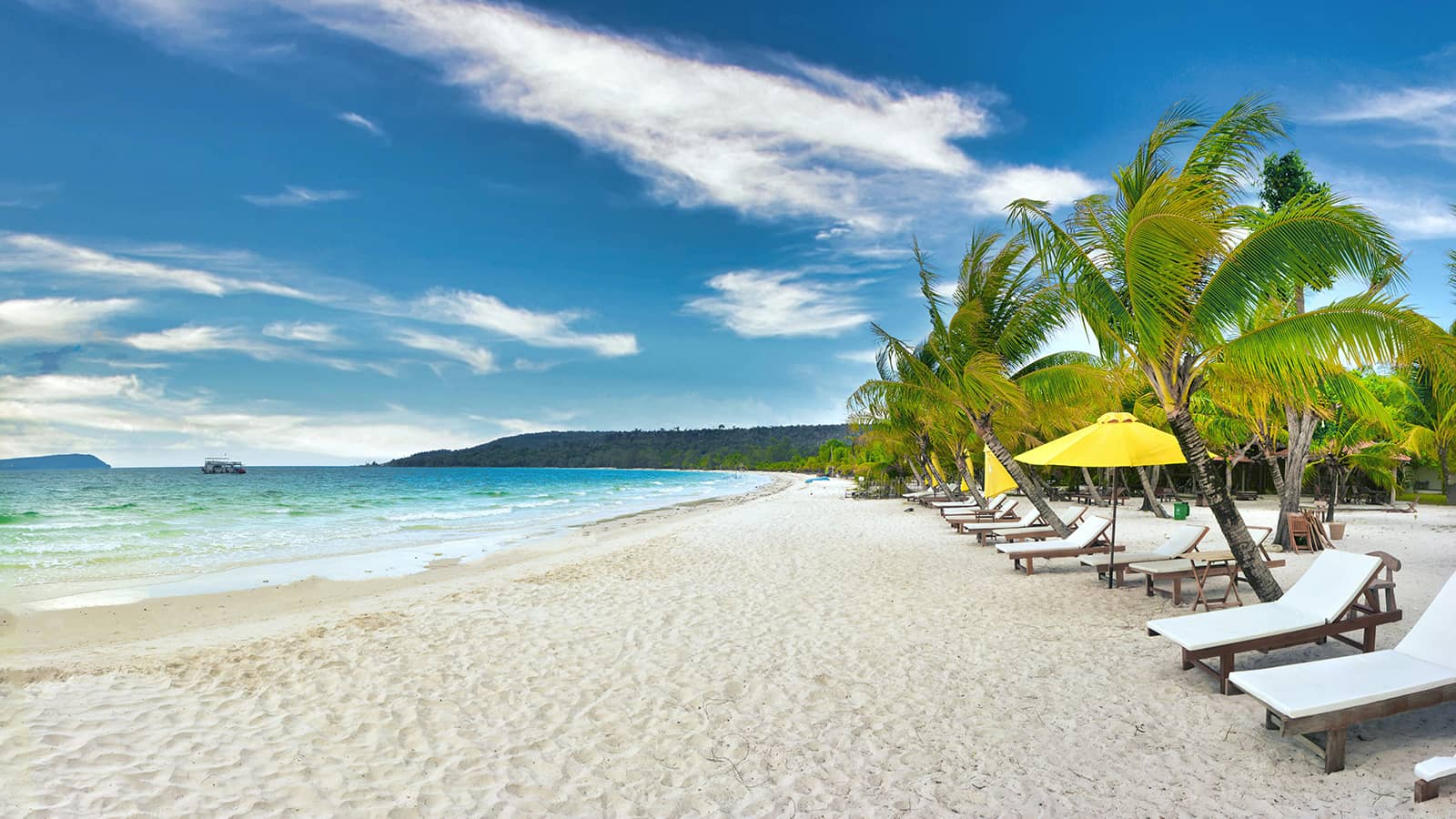
📷 Featured image by Alireza Akhlaghi on Unsplash.