On this page
- How Grab Works in Thailand
- Bolt: The Cheaper Challenger
- Grab vs Bolt: Which App to Open First
- When Tuk-Tuks and Songthaews Beat an App
- Tapping Through Bangkok: BTS and MRT
- Booking Intercity Transport Online
- Ferries and Long-Tail Boats: Where Apps Stop
- 2026 Budget Reality
- Common Mistakes to Avoid
- Frequently Asked Questions
You land in Bangkok, the heat hits you, and a driver at the arrivals hall quotes a price that feels far too high. You have no idea what the fair rate is, and your phone has no local Transport app yet. This is the most common transport headache for first-time visitors to Thailand. In 2026, the fix is a small set of apps, one contactless bank card, and a clear sense of when to ignore your phone entirely. This guide covers all three, from Grab and Bolt in the city to booking trains, buses, flights, and ferries between regions.
How Grab Works in Thailand
Grab is the dominant ride-hailing, food delivery, and logistics app in Southeast Asia, and it is the first app most visitors install in Thailand. You can download it from the iOS App Store or Google Play Store. It works in major cities including Bangkok, Chiang Mai, Phuket, Pattaya, Hua Hin, and Hat Yai. It is less common in very rural or remote areas.
The app offers several services:
- GrabCar: private car service in Economy, Premium, and SUV options.
- GrabBike: a motorcycle taxi, often the fastest choice for short distances in heavy traffic.
- GrabTaxi: hails a standard metered taxi through the app, usually with a booking fee added.
- GrabFood, GrabMart, GrabExpress: food delivery, groceries, and parcels.
You can pay with cash, a credit or debit card linked in the app, or a GrabPay Wallet that you top up in several ways.
Booking a ride, step by step
- Download Grab and register with your phone number.
- Enter your pickup location and destination.
- Choose a service, such as GrabCar Economy.
- Check the fixed fare shown on screen and confirm the booking.
- Track the driver’s arrival and check the vehicle and driver details.
- Pay with the method you selected, cash or in-app.
The fixed fare is the main appeal. Fares run about 20-30% higher than a metered taxi for the same distance, but you know the price before you move. That removes the haggling and the “meter is broken” conversation. In Bangkok at midday, a GrabBike weaving between stopped cars, with exhaust heat on your legs and a borrowed helmet on your head, is a very different experience from sitting in a stationary taxi. For a short hop, it can be far quicker.
Bolt: The Cheaper Challenger
Bolt is an international ride-hailing app that has gained real traction in Thailand through low prices. It is also available on the iOS App Store and Google Play Store. The service has a strong presence in major cities and tourist destinations, often overlapping with Grab’s service areas.

Bolt offers private cars in Economy, Comfort, and XL categories. It also runs Bolt Tuk Tuk in some cities, such as Bangkok and Phuket, at a fixed price. This is useful if you want the tuk-tuk experience without a negotiation. Payment options are cash or a credit or debit card linked in the app.
Base fares typically run 30-40 THB plus distance and time. Fares are often 10-20% lower than Grab for comparable routes and vehicle types.
Grab vs Bolt: Which App to Open First
The sensible approach is to install both and compare. Here is how they stack up for a typical 5 km ride in Bangkok:
- Grab (GrabCar Economy): about 80-150 THB, with a base fare of 40-50 THB.
- Bolt (Economy): about 70-130 THB, with a base fare of 30-40 THB.
Both apps apply surge pricing during peak hours, bad weather, or high demand, and the increase can be significant. Bolt’s surge can sometimes be less aggressive than Grab’s, but this varies by moment and location. That is why checking both apps before you book is worth the ten seconds it takes. Bolt’s aggressive pricing has increased its market share, and that competition keeps Grab’s prices in check, although Grab generally stays slightly higher.
When Tuk-Tuks and Songthaews Beat an App
Apps are not always the best tool. In smaller towns, beach areas, and parts of Chiang Mai, the local options are often easier and cheaper.
Songthaews
Songthaews are red, open-air pickup trucks with two benches in the back. They run shared fixed routes or can be chartered privately. Riding one through Chiang Mai, with warm air rushing through the open sides and the smell of grilled pork drifting from roadside stalls, is a small taste of real local life.
- Fixed route: flag one down and state your destination. If it is on their route, hop on and pay the driver when you get out. Expect 10-30 THB per person for short distances.
- Charter: negotiate the price and destination before boarding. Prices range from 150 THB for short trips to 500+ THB for longer hires.

Tuk-tuks
Tuk-tuks are three-wheeled auto-rickshaws. They are iconic, but they often charge tourist prices and do not use meters. A short ride of 1-2 km can cost 50-200 THB depending on location, time of day, and your negotiation. Rides in high-tourist areas cost significantly more. Hail one on the street, state your destination clearly, and agree the fare before you get in.
A useful trick is to check the Grab or Bolt fare for the same route first. It gives you a realistic benchmark for the negotiation.
Tapping Through Bangkok: BTS and MRT
Bangkok’s rail network is the fastest way to beat the city’s traffic. It has two separate systems: the elevated BTS Skytrain and the underground MRT subway. They connect at several stations, but they need separate tickets or compatible payment methods. There is no universal joint ticket, so a transfer means exiting one system and entering the other, with separate fares.
BTS Skytrain
- Rabbit Card: a reloadable stored-value card from BTS station ticket offices. It needs a refundable deposit (for example 100 THB) and a minimum top-up (for example 100 THB). It suits frequent users.
- Single Journey Ticket: paper tickets or RFID tokens from vending machines or ticket counters.
- One-Day Pass: 150 THB for unlimited rides in a day.
- Fares: 17-62 THB per journey depending on distance.
MRT Subway
- MRT Plus Card: a reloadable stored-value card from station ticket offices, with a refundable deposit and minimum top-up.
- Single Journey Token: RFID tokens from vending machines or ticket counters.
- Fares: 17-43 THB per journey depending on distance.
The contactless shortcut
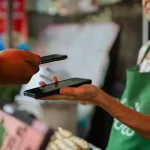
The biggest change for visitors is EMV contactless payment. Since late 2024 and early 2025, the BTS has progressively rolled out acceptance of contactless Visa and Mastercard credit and debit cards at the gates, and the MRT has implemented the same. Tap your card on the reader at the entry gate, wait for the green light, and walk through. At your destination, tap the same card on the exit reader. The fare is calculated and charged automatically. This removes the ticket queue entirely. Full network adoption by 2026 is still worth confirming at your station, so keep a small amount of cash or a Rabbit Card as a backup.

Booking Intercity Transport Online
Once you leave the city, apps and websites shift from instant rides to advance booking. Each mode has its own best channel.
Domestic flights
Thai AirAsia (airasia.com), Nok Air (nokair.com), and Thai Lion Air (lionairthai.com) are budget carriers that mainly operate from Don Mueang (DMK). Bangkok Airways (bangkokair.com) is a full-service airline operating from Suvarnabhumi (BKK), known for boutique airports such as Samui and Sukhothai. You can book through airline websites and apps, or through Skyscanner, Traveloka, Klook, or Trip.com. Budget carriers keep strict baggage rules, so checked luggage is often a separate purchase.
VIP buses
Nakhonchai Air (nakhonchaiair.com) and Sombat Tour (sombattour.com) are reputable operators. 999 Transport (The Transport Co. Ltd.) is a government-run service that operates from major bus terminals. VIP class has 24-32 seats with reclining seats, blankets, and snacks. First Class has 36-40 seats with fewer amenities. Book through 12go.asia, BusOnlineTicket.co.th, or Klook, or directly at terminals such as Mo Chit 2 in Bangkok.
State Railway of Thailand
The official booking site is dticket.railway.co.th, where booking opens 30-90 days ahead depending on route and class. You can also buy at any SRT station, or use 12go.asia, which often adds a small service fee but can be easier for international travellers. The overnight train is one of Thailand’s best travel experiences. You settle into a 2nd Class AC sleeper berth, the carriage rocks gently on the tracks, and the attendant converts your seat into a bed behind a curtain. Sleeper trains, especially 2nd Class AC, need booking several weeks ahead in peak seasons: November to February, Songkran, and New Year.
Ferries and Long-Tail Boats: Where Apps Stop
Grab and Bolt do not cover the water, and island transport is where you most need a plan.
Ferries
- Lomprayah (lomprayah.com): high-speed catamarans serving Chumphon and Surat Thani to Koh Tao, Koh Phangan, and Koh Samui, plus routes in the Andaman Sea.
- Seatran Discovery (seatrandiscovery.com): catamaran services in the Gulf.
- Raja Ferry Port (rajaferryport.com): larger, slower car ferries mainly between Donsak (Surat Thani) and Koh Samui or Koh Phangan.

Book through 12go.asia, Klook, or Bookaway, or directly at pier counters, local travel agencies, or operator websites. Online booking is increasingly recommended for popular routes in high season.
Long-tail boats
These traditional wooden boats with powerful engines handle short transfers, island tours, and remote beaches. The engine roars, spray hits your face, and the limestone cliffs of the Krabi coast slide past. Typical uses include Railay Beach transfers and the 4 Islands Tour from Krabi. You arrange them directly with boatmen at beaches or piers, or through your hotel or a local tour desk. Prices are negotiable.
2026 Budget Reality
All prices below are estimates for 2026 in Thai Baht and can shift with fuel costs, inflation, and policy changes.
Budget
- BTS or MRT trips: 17-62 THB (BTS) and 17-43 THB (MRT) per journey
- Songthaew fixed route: 10-30 THB per person
- Shared long-tail transfer: 100-300 THB per person
- 3rd Class train seat, Bangkok to Chiang Mai: 250-350 THB
- Raja Ferry, Donsak to Koh Samui or Koh Phangan: 250-450 THB
Mid-range
- Bolt 5 km ride in Bangkok: 70-130 THB
- VIP bus, Bangkok to Chiang Mai: 600-900 THB
- VIP bus, Bangkok to Surat Thani: 650-950 THB
- 2nd Class AC sleeper, Bangkok to Chiang Mai: 800-1,200 THB
- High-speed catamaran, Donsak to Koh Samui or Koh Phangan: 400-700 THB
- Budget flights: 800 THB (promotional, no baggage) to 3,000+ THB (standard, with baggage)
Comfortable
- Grab 5 km ride in Bangkok (GrabCar Economy): 80-150 THB
- VIP bus, Bangkok to Phuket: 800-1,200 THB
- 1st Class AC sleeper, Bangkok to Chiang Mai: 1,400-1,800 THB
- 1st Class AC sleeper, Bangkok to Surat Thani: 1,200-1,600 THB
- Bangkok Airways: 2,500 THB to 5,000+ THB on popular routes
- Chumphon to Koh Tao with Lomprayah: 800-1,100 THB
- Private long-tail island tour: 1,500-3,000 THB, plus national park fees of 200-400 THB per person for foreigners
Common Mistakes to Avoid
- Trusting the first fare you see. Surge pricing can inflate Grab and Bolt fares in rain or rush hour. Compare both apps and consider the train.
- Not negotiating before boarding. Tuk-tuks, charter songthaews, and long-tail boats all require an agreed price first. Fixing it afterwards rarely goes your way.
- Using different cards at entry and exit gates. On the BTS and MRT, tap the same contactless card both times, or the fare will not calculate correctly.
- Assuming a joint rail ticket exists. BTS and MRT are separate systems with separate fares, so budget for two charges on any transfer.
- Leaving sleeper trains to the last minute. Popular 2nd Class AC berths sell out weeks ahead in peak season.
- Forgetting baggage costs on budget flights. A promotional fare from 800 THB excludes checked luggage, which you may need to buy separately.
- Expecting ride-hailing everywhere. Grab is less common in rural and remote areas, so keep cash and local options in mind.
- Forgetting park fees. Private island tours exclude national park fees of 200-400 THB per person for foreigners.

Frequently Asked Questions
Is Grab or Bolt cheaper in Thailand?
Bolt is often 10-20% cheaper than Grab for comparable routes and vehicle types, with a base fare of about 30-40 THB versus 40-50 THB. Both use surge pricing, so check both apps before booking, especially during rush hour or rain.
Can I pay for Grab or Bolt with cash in Thailand?
Yes. Grab accepts cash, credit or debit cards linked in the app, and GrabPay Wallet. Bolt accepts cash and linked cards. Carry small notes, because drivers may not have change for large bills, and keep cash handy in case card payment fails.
Can I use my foreign credit card on the BTS and MRT?
In most cases, yes. The BTS and MRT have rolled out contactless Visa and Mastercard acceptance at the gates since late 2024 and early 2025. Tap the same card at entry and exit. Confirm full network coverage at your station in 2026, and keep a backup payment option.
Do Grab and Bolt work on the islands and in rural areas?
Not reliably. Grab is widely available in cities like Bangkok, Chiang Mai, Phuket, Pattaya, Hua Hin, and Hat Yai, but is less common in rural or remote areas. On islands, expect to use songthaews, tuk-tuks, and long-tail boats, and negotiate fares first.
How much should a tuk-tuk ride cost in Thailand?
For a short ride of 1-2 km, expect roughly 50-200 THB depending on location, time of day, and negotiation. Tourist areas cost more. Tuk-tuks do not use meters, so agree the price before you get in, or compare it with a Grab or Bolt fare.
📷 Featured image by Saif71.com on Unsplash.