On this page
- How Thailand’s Visa System Actually Works in 2026
- Visa-Exempt Entry: The 30-Day Stamp Explained
- Visa on Arrival: Who Uses It and What to Expect at the Airport
- Applying Through the Thailand e-Visa Portal: Step by Step
- Where VFS Global Still Fits In
- Tourist Visa Types and What Each One Covers
- Land Border Crossings: Rules and Practical Transport
- Common Mistakes That Get Applications Rejected or Cause Airport Problems
- 2026 Budget Reality: What a Thai Visa Actually Costs
- Frequently Asked Questions
Getting a Thai visa sorted used to mean a trip to a consulate, a queue, and a week of uncertainty. By 2026, the process has shifted significantly online — but the shift has created its own confusion. Many travellers still don’t know whether to use the Royal Thai Embassy’s e-Visa portal, book through VFS Global, or simply show up and rely on a visa-exempt stamp. Getting this wrong can mean a denied boarding pass or a long wait at the immigration hall at Suvarnabhumi. Here is exactly how each pathway works, who it applies to, and what to prepare.
How Thailand’s Visa System Actually Works in 2026
Thailand does not use a single universal visa system. Instead, entry depends on your nationality, how long you plan to stay, and which border or airport you arrive at. There are four main pathways: visa-exempt entry, Visa on Arrival, a pre-arranged Tourist Visa applied through the e-Visa portal or VFS Global, and specialty visas like the Thailand Elite.
The biggest change since 2024 is the maturity of the thaievisa.go.th portal. What was a patchy rollout in 2021 is now the standard application channel for most nationalities. Physical walk-in applications at many embassies have been phased out in favour of this system. The COVID-era Thailand Pass was permanently discontinued on 1 July 2022 and plays no role in 2026 entry planning — no registration, no vaccination proof, no travel insurance requirement tied to entry.
Your two most reliable official sources for checking current rules are mfa.go.th (Ministry of Foreign Affairs Thailand) and immigration.go.th (Immigration Bureau of Thailand). Rules do change, and neither this article nor any third-party site replaces checking those directly before you book flights.
Visa-Exempt Entry: The 30-Day Stamp Explained
Citizens of the USA, UK, Canada, Australia, New Zealand, most EU countries, Japan, South Korea, Singapore, Malaysia, and dozens of other nations can enter Thailand without a visa and receive a 30-day stamp on arrival. This applies to both air and land entry.
The conditions are straightforward: your passport must be valid for at least six months beyond your entry date, and you should carry a confirmed onward or return ticket showing you will leave within 30 days. Airlines frequently check for this before boarding, even if Thai immigration doesn’t ask. You may also be asked to show proof of funds — the official guidance cites 10,000 THB per person or 20,000 THB per family — though enforcement varies in practice.
If you need more time, you can extend the 30-day stamp once at any Thai Immigration Office for a fee of 1,900 THB. This gives you an additional 30 days, for a maximum of 60 days total on a single visa-exempt entry. The process involves showing up at the immigration office (Bangkok’s main office is at Chaeng Watthana), filling out a TM.7 form, submitting a passport photo, and paying the fee. Arrive early — the queue at Chaeng Watthana can stretch well into the afternoon.
Visa on Arrival: Who Uses It and What to Expect at the Airport
The Visa on Arrival (VOA) is for specific nationalities not covered by the visa-exempt list — including citizens of China, India, Kazakhstan, and Uzbekistan, among others. It grants a stay of up to 15 days and costs 2,000 THB, paid in cash in Thai Baht at the airport counter.
The VOA desks at Suvarnabhumi (BKK) and Don Mueang (DMK) are clearly signposted once you pass the jet bridge. The queue can be the most frustrating part: during peak arrival waves — particularly when multiple long-haul flights land simultaneously at Suvarnabhumi — waits of two to three hours are possible. Arrive prepared.
At the counter, you will need to submit your passport, one recent 4×6 cm passport photograph, a confirmed return or onward ticket within 15 days, proof of accommodation, and evidence of 10,000 THB per person or 20,000 THB per family in funds. The fee must be exact change in cash. The VOA cannot be used to enter via most land borders, so if you are crossing from Malaysia or Cambodia, check the current rules at immigration.go.th before travelling.
Applying Through the Thailand e-Visa Portal: Step by Step
For nationalities that need a Tourist Visa in advance — or those who want 60 days without needing an extension — the official portal is thaievisa.go.th. By 2026, this is the primary application channel for most Royal Thai Embassies and Consulates worldwide. Here is how it works.
- Create an account at thaievisa.go.th using your email address. Keep this login — you will track your application status here.
- Select your embassy. Choose the Royal Thai Embassy or Consulate responsible for your country of residence. This is usually not based on nationality alone, so read the selection carefully.
- Choose your visa type. For tourism, select Tourist Visa (TR) and choose single, double, or multiple entry depending on your plans.
- Fill the application form. Personal details, travel history, travel plans, accommodation, and purpose of visit. Be accurate — inconsistencies are a common reason for rejection.
- Upload documents. All files must be in PDF or JPEG format. Required documents include: passport bio-data page (valid six months from entry), passport-sized photo on a white background taken within the last six months, confirmed inbound and outbound flight itinerary, proof of accommodation (hotel bookings or a rental agreement), and a bank statement. Financial requirements for a single-entry TR are at least 20,000 THB per person or 40,000 THB per family. METV applications require significantly more.
- Pay the fee by Visa, MasterCard, or JCB. The system converts the THB fee into your local currency at the current rate.
- Track and receive. Processing typically takes 3–7 business days. Once approved, the e-Visa arrives as a PDF to your registered email. Print it out and present it alongside your passport at the immigration counter.

Apply at least two to three weeks before departure. If you are travelling during Thai public holidays (Songkran in April is the busiest window), allow even more time.
Where VFS Global Still Fits In
VFS Global is a private company that handles the administrative side of visa applications on behalf of various governments. It does not make visa decisions — that remains entirely with the Royal Thai Embassy.
For most major Western markets, VFS Global’s role in Thai visa applications has shrunk considerably since 2024, because thaievisa.go.th has replaced the need for physical submission. However, VFS Global still operates for missions that have not fully migrated to the e-Visa system, and for certain Non-Immigrant visa categories that continue to require physical document submission in specific regions.
If you need to use VFS Global, the process is:
- Go to vfsglobal.com, select your country, then Thailand.
- Book an appointment at your nearest VFS application centre.
- Prepare documents matching the Royal Thai Embassy requirements (the same list as the e-Visa process above).
- Attend your appointment, submit documents, and pay both the Thai Embassy visa fee and the VFS Global service fee.
- Track your application via the VFS portal and collect your passport once processing is complete.
VFS Global charges a separate service fee on top of the Thai Embassy fee. In 2026, these service fees typically range from 800 THB to 1,500 THB equivalent in local currency, depending on the country. Always verify the exact fee on the VFS website for your specific location before booking.
Tourist Visa Types and What Each One Covers
There are three Tourist Visa (TR) options within the e-Visa system, and picking the right one saves money and avoids unnecessary paperwork later.
- Single Entry Tourist Visa: One entry, up to 60 days. Fee: 1,000 THB. The right choice for a straightforward first visit or a single trip.
- Double Entry Tourist Visa: Two entries, each up to 60 days, within a six-month validity window from the date of issue. Fee: 2,000 THB. Useful if you plan to leave Thailand briefly (to Laos or Penang, for example) and re-enter.
- Multiple Entry Tourist Visa (METV): Unlimited entries, each up to 60 days, over a six-month period. Fee: 5,000 THB. This one has stricter requirements — you will need to demonstrate a history of travel to Thailand, show a detailed itinerary, and provide substantially higher proof of funds. It suits long-term travellers who will cross borders regularly.
All three require the same core documents. The METV adds a layer of evidence: proof of previous visits, more detailed itineraries, and a stronger financial showing. If your bank statement is thin, the METV application is likely to be declined.
Land Border Crossings: Rules and Practical Transport
Entering Thailand overland is common, particularly on backpacker routes through Southeast Asia. The visa-exempt 30-day stamp applies at land borders, but there is an important nuance: some nationalities are limited to a certain number of visa-exempt land entries per calendar year, so check immigration.go.th for your specific situation before planning repeated overland crossings.
Standing at the Poipet crossing from Cambodia into Thailand’s Aranyaprathet on a busy morning — the smell of dust and food stalls mixing in the heat, long lines of travellers and motorbike taxis weaving around each other — gives you a real sense of how different this experience is from arriving at Suvarnabhumi.
From Malaysia: Padang Besar (rail) and Sadao (road) are the main crossings. The State Railway of Thailand (SRT) runs services from Padang Besar to Hat Yai and further north. Buses and shared taxis are standard at Sadao. Grab is available in Hat Yai and other larger Thai towns near the border.
From Laos: Friendship Bridge I at Nong Khai (near Vientiane) is the busiest crossing. Friendship Bridge II at Mukdahan and Friendship Bridge III at Nakhon Phanom are also operational. Buses and private transfers connect the bridges to town centres. From Nong Khai, SRT trains travel directly to Bangkok’s Hua Lamphong or Krung Thep Aphiwat (Bang Sue) stations.
From Cambodia: Poipet/Aranyaprathet is the highest-traffic crossing. Buses from Siem Reap and Phnom Penh stop on the Cambodian side. From Aranyaprathet, SRT trains and shared vans run to Bangkok. The journey takes several hours but is very manageable.
From Myanmar: Myawaddy/Mae Sot and Kawthaung/Ranong are the main options. Entry rules here are more complex — access may be limited to specific zones or short durations. Given the ongoing political situation in Myanmar as of 2026, always verify current crossing status before planning this route. A pre-arranged visa is strongly recommended over relying on any arrival option here.
Common Mistakes That Get Applications Rejected or Cause Airport Problems
The e-Visa system is clear, but avoidable errors remain the primary reason applications are delayed or refused.
- Passport validity: Many applicants overlook the six-month rule. If your passport expires within six months of your entry date, you will be denied boarding regardless of your visa status.
- Wrong embassy selected: The e-Visa system assigns applications by country of residence, not nationality. Selecting the wrong embassy causes processing delays and sometimes rejection.
- Inconsistent travel details: If your flight itinerary shows arrival on a different date from what you entered on the form, the application will be flagged.
- Bank statements in the wrong name: Statements must clearly show your name and sufficient funds. Screenshots of banking apps are not always accepted — export an official PDF or request a stamped statement.
- No onward ticket for visa-exempt travellers: Airlines at departure airports regularly check for return or onward flights. Without one, you may be denied boarding even for a visa-exempt trip.
- Applying too late: The 3–7 business day processing window is an average. During peak periods, it can stretch longer. Apply three weeks out minimum.
2026 Budget Reality: What a Thai Visa Actually Costs
Visa costs vary widely depending on your nationality and how you enter. Here is a realistic breakdown for 2026.
- Budget (visa-exempt entry, no extension): 0 THB for the visa itself. If you extend once at an immigration office, add 1,900 THB.
- Mid-range (Single Entry Tourist Visa via e-Visa): 1,000 THB visa fee, plus any currency conversion charges your card applies. No service fee if applying directly through thaievisa.go.th.
- Comfortable (Double Entry or METV): 2,000–5,000 THB for the visa. If VFS Global is involved in your country, add 800–1,500 THB equivalent in service fees.
- Visa on Arrival: 2,000 THB in cash (Thai Baht only) at the airport counter.
These figures cover the visa cost only. Budget separately for travel insurance, flights, and accommodation evidence — all of which immigration may ask to see at the counter.
Frequently Asked Questions
Can I apply for a Thailand Tourist Visa online from any country?
The thaievisa.go.th portal covers most countries where a Royal Thai Embassy or Consulate has adopted the system, and that list expanded significantly in 2024–2025. A small number of missions still process certain visa types physically or through VFS Global. Check the specific Thai mission website for your country of residence to confirm which system applies to you.
How long does the Thailand e-Visa take to process in 2026?
Standard processing is 3–7 business days from the date of a complete, correct submission. During peak periods such as Songkran or the December–January holiday rush, processing can take longer. Apply a minimum of three weeks before your intended departure date.
What is the difference between the e-Visa and the VFS Global process?
The e-Visa at thaievisa.go.th is a fully online application submitted directly to the Royal Thai Embassy — no physical documents, no in-person visit. VFS Global is a third-party service centre that handles physical document submission on behalf of the embassy for missions that still require it, adding a separate service fee on top of the standard visa fee.
Can I extend my visa-exempt stamp inside Thailand?
Yes. A 30-day visa-exempt stamp can be extended once at any Thai Immigration Office for 1,900 THB, giving you an additional 30 days. You will need your passport, one passport-sized photo, a completed TM.7 form, and the fee. The extension is granted at the officer’s discretion, though it is routinely approved for genuine tourists.
Do I need travel insurance to enter Thailand in 2026?
Travel insurance is not a mandatory entry requirement for Thailand in 2026. However, comprehensive travel insurance is strongly advisable given medical costs in private hospitals and the cost of emergency repatriation if something goes wrong during your trip.
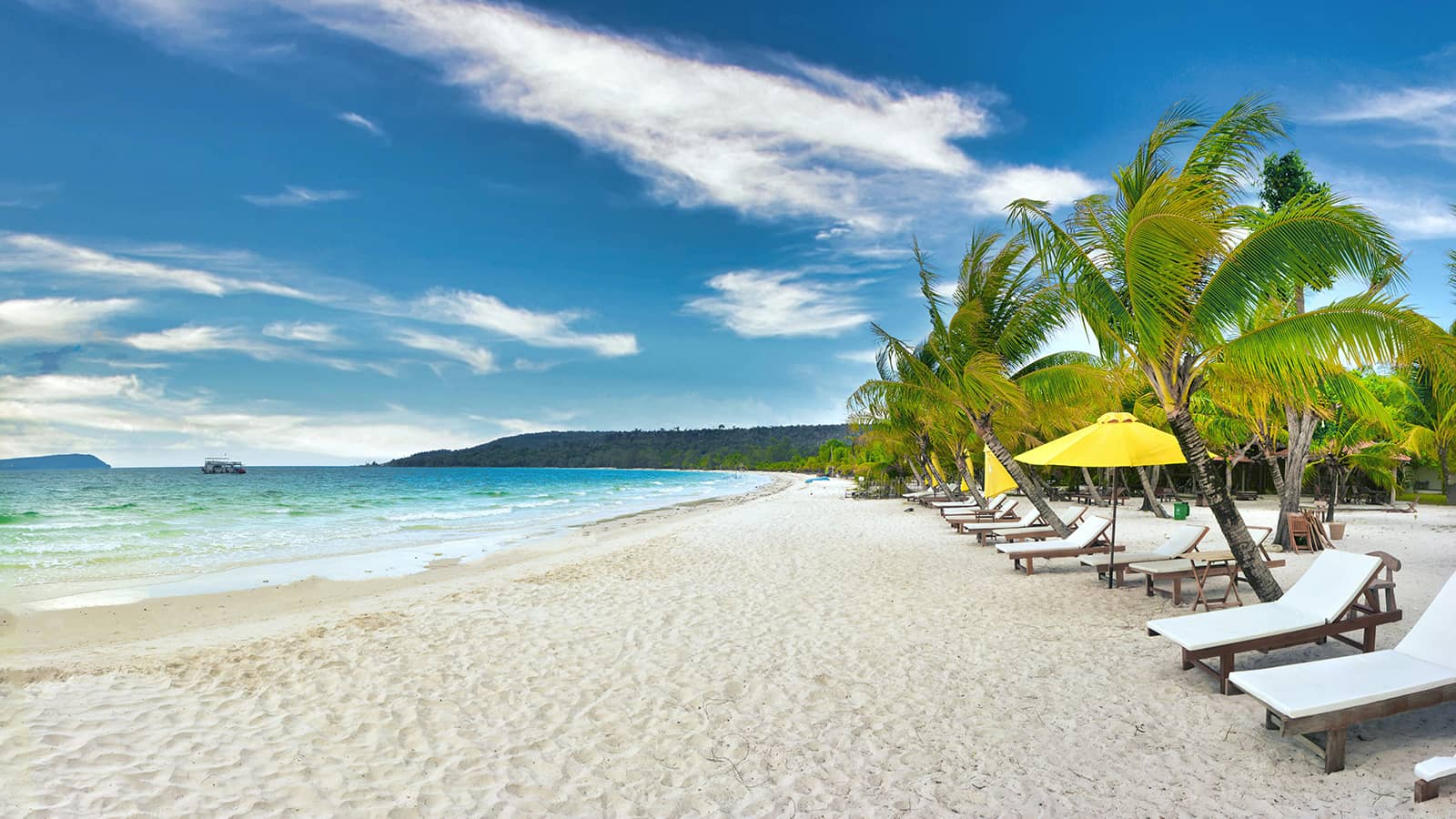
📷 Featured image by Dennis Gecaj on Unsplash.