On this page
- Chiang Rai’s Personality: Why Budget Backpackers Stay Longer Than Planned
- Best Neighborhoods for Backpackers
- Top Attractions on a Shoestring
- Eating Well in Chiang Rai
- Getting Around Without Burning Cash
- Day Trips Worth Your Baht
- Nightlife and Entertainment
- Shopping
- Accommodation Areas by Budget Tier
- Best Time to Visit
- Practical Tips: Safety, Tipping, Language, SIM Cards and Water
- 2026 Budget Breakdown
- Frequently Asked Questions
💰 Click here to see Thailand Budget Breakdown
💰 Prices updated: November, 2026. Budget figures are estimates — always verify before travel.
Exchange Rate: $1 USD = ฿33.74
Daily Budget (per person)
Shoestring: ฿900.00 – ฿1,500.00 ($26.67 – $44.46)
Mid-range: ฿2,000.00 – ฿4,000.00 ($59.28 – $118.55)
Comfortable: ฿6,000.00 – ฿12,000.00 ($177.83 – $355.66)
Accommodation (per night)
Hostel/guesthouse: ฿200.00 – ฿600.00 ($5.93 – $17.78)
Mid-range hotel: ฿1,000.00 – ฿2,500.00 ($29.64 – $74.10)
Food (per meal)
Budget meal: ฿60.00 ($1.78)
Mid-range meal: ฿250.00 ($7.41)
Upscale meal: ฿1,500.00 ($44.46)
Transport
Single metro/bus trip: ฿15.00 ($0.44)
Monthly transport pass: ฿1,200.00 ($35.57)
Chiang Mai prices keep creeping up, the old-town hostels fill early, and the smoke season makes planning stressful. So in 2026, more backpackers are riding 185 km north to Chiang Rai. It is quieter and cheaper, and it has some of the strangest, most beautiful temples in Southeast Asia. The catch is that Chiang Rai is spread out and its public transport is thin. If you do not plan for that, the money you save on food and beds goes on taxis. This guide shows you how to avoid that and enjoy the city on 700–1,000 THB a day.
Chiang Rai’s Personality: Why Budget Backpackers Stay Longer Than Planned
Chiang Rai feels like a small northern town that happens to have world-class art. Locals still eat breakfast at the morning market, motorbikes idle at the traffic lights, and the pace is slow. Nobody is trying to sell you a yoga retreat on every corner. The city sits on the Kok River, about 60 km from the Golden Triangle, where Thailand, Laos and Myanmar meet. Mountains close in from three sides, and tea and coffee farms cover the hills.
The city was the capital of the Lanna Kingdom before Chiang Mai, and you can still see it in the temples, the food, and the soft northern accent. Backpackers like it for three reasons. Prices are low. The people are relaxed and friendly. And the mix of art temples, hill-country scenery and night markets gives you five days of things to do without spending much.
Chiang Rai is also the main gateway for the Laos route. Many travellers cross at Chiang Khong to take the slow boat to Luang Prabang, so you will meet plenty of people heading in that direction.
Best Neighborhoods for Backpackers
The city centre is small, and you can walk across it in 30 minutes. Four areas matter for budget travellers.
Around the Golden Clock Tower
This is the heart of town. You are near cafés, massage shops, the Saturday walking street and plenty of cheap noodle places. It suits first-timers and anyone without a motorbike. The streets are noisy in the evening, but not by Bangkok standards.
Night Bazaar and Bus Terminal 1 Area
This is the practical choice for budget travellers. Local buses leave from Terminal 1 for the White Temple, Mae Sai and Chiang Saen. The Night Bazaar food hall is a short walk away, and the cheapest guesthouses cluster here. It is not pretty, but it saves you time and money.

Banphaprakan and Jetyod Roads
This is where you find cafés, small bars and boutique guesthouses with a little more character. It suits travellers who want a quieter base and do not mind a 10-minute walk to the bus terminal. Many of the better private rooms under 600 THB are here.
Along the Kok River
The riverside is greener and calmer. It suits people staying longer who want a garden, a cheap bicycle and some peace. You will want a motorbike or Grab for evenings, since the area has few late-night food options.
Top Attractions on a Shoestring
The famous sights are cheap, and some are free. Here is how to see them without wasting money.
- Wat Rong Khun (White Temple): Entry is 100 THB for foreign visitors. It sits about 13 km south of town. Arrive when it opens at 8:00. Early light bounces off thousands of mirrored glass pieces, and the only sound is tiny bells on the roof. By 10:30 the tour buses arrive and the magic fades.
- Wat Rong Suea Ten (Blue Temple): Free to enter, though a small donation is welcome. It is about 5 km from the centre. The deep blue interior and white Buddha statue look best in the late afternoon or in the evening, when the lights are on.
- Baan Dam (Black House): About 80 THB. Thawan Duchanee’s dark art complex is a collection of wooden houses filled with animal skins, horns and carved furniture. It sits roughly 10 km north of the centre. Give it about 90 minutes.
- Wat Phra Kaew (Chiang Rai): Free. This is where the Emerald Buddha was reportedly found in 1434, before it moved to Bangkok. It is quiet and peaceful, and a good first stop if you want less spectacle.
- Golden Clock Tower: Free. A short light and music show runs at 19:00, 20:00 and 21:00. It lasts a few minutes, so it is a quick stop on your evening walk.
- Doi Tung Royal Villa and Mae Fah Luang Garden: The entry fee changes by season and ticket type, so check on arrival. Budget about 200–300 THB for the combined sights. It is in the hills north of town and works as part of a larger loop.
All the major temples expect covered shoulders and knees. Carry a light scarf or sarong in your day bag so you do not get turned away at the gate.
Eating Well in Chiang Rai
You can eat three good meals a day for 200–300 THB if you go where the locals go. Here is where.
Morning Market and Municipal Markets
Kad Luang, the main municipal market, opens early and is the best place to start the day. Look for vendors selling khao soi, the northern coconut-curry noodle soup, from big pots. A bowl runs 40–60 THB. The air smells of toasted chilli and lemongrass, and the crispy noodles on top stay crunchy for the first few minutes. Also try sai oua (northern sausage) and sticky rice from grill stalls, about 10–20 THB per portion.
Night Bazaar Food Hall
The food court beside the Night Bazaar is the easiest dinner in town. You buy coupons at the counter and spend them at stalls selling grilled meats, northern curries, noodles and fruit shakes. Dishes are usually 40–90 THB. A stage show in the middle runs most evenings with traditional dance and music. Any unspent coupons can be refunded, so do not overbuy.
Saturday Walking Street
Thanalai Road closes to traffic on Saturday evenings and fills with snack stalls. Expect skewers, grilled bananas, spring rolls and northern sausages from 10 THB, and full plates at 40–70 THB. Walk the whole street first and see what is sizzling before you commit.
Cheap Cafés and Local Noodle Shops
Small noodle shops around the clock tower serve nam ngiao (a tomato-pork noodle soup) and khanom jeen for 40–60 THB. For coffee, Chiang Rai grows its own beans. A hot Thai-grown americano costs 50–90 THB in most cafés, and some stalls sell iced coffee for 35–45 THB.
Most small restaurants close between 20:00 and 21:00, so eat early. Drinking water is cheap, and 7-Eleven stocks everything you need if you miss dinner.
Getting Around Without Burning Cash
Chiang Rai has no BTS Skytrain or MRT. No train reaches the city yet either. The Den Chai–Chiang Rai–Chiang Khong railway is under construction, but you should not plan around it for 2026. The main options are buses, songthaews, Grab and motorbikes.
Local Buses and Songthaews
Blue local buses leave Bus Terminal 1 for the White Temple (about 25–30 THB), Mae Sai, Chiang Saen and other towns. Fares are cheap, usually 20–70 THB depending on distance. Buses are not frequent in the afternoon, so go early and ask the driver about the last return.

Grab and Taxis
Grab works in Chiang Rai, but there are fewer drivers than in Bangkok or Chiang Mai, so waiting times can reach 10–15 minutes. Short rides in town cost roughly 60–120 THB. Tuk-tuks exist but are few, and they cost more than Grab if you do not negotiate. Agree on the price before you get in.
Motorbike and Bicycle Rental
An automatic scooter costs about 200–300 THB per day, less if you rent by the week. Bicycles cost 100–150 THB. Legally you need a valid licence and an International Driving Permit that covers motorbikes. Police checkpoints are common, and fines usually start around 500 THB. Wear a helmet, and avoid unlit rural roads after dark.
Arriving in the City
The airport is about 8 km north of the centre, and a fixed-price taxi into town costs roughly 150–200 THB. From Chiang Mai, buses take three to four hours and cost about 180–350 THB. From Bangkok, a bus takes 10–12 hours and costs 700–1,200 THB. Budget flights from Bangkok sometimes dip below 1,000 THB if you book early. Long-distance buses stop at Bus Terminal 2, a few kilometres out of town. You can take a songthaew or Grab from there to the centre, or a local bus to Terminal 1.
Day Trips Worth Your Baht
Doi Mae Salong (Santikhiri)
This is a former Chinese Nationalist settlement high in the hills, about 60 km northwest of town. It is famous for oolong tea and Yunnanese food. Allow a full day on a scooter, or stay overnight in a homestay for 300–600 THB. The roads are steep with sharp curves, so only go if you are comfortable on a bike. Songthaews run from Mae Chan, but the schedule is limited.
Golden Triangle and Chiang Saen
Take a local bus from Terminal 1 to Chiang Saen (about 1–1.5 hours, roughly 40–60 THB). The old town has ruined temples, quiet lanes and a Mekong riverfront. From there, a songthaew or short ride takes you to the Golden Triangle viewpoint at Sop Ruak. Budget 300–500 THB for transport and food.
Mae Sai and the Border
Mae Sai is Thailand’s northernmost town, about 60 km from Chiang Rai. Buses cost around 50–70 THB. The border crossing to Tachileik in Myanmar has opened and closed often in recent years, so check the current rules before you plan. The market streets are good for cheap snacks and souvenirs.

Hot Springs and Waterfalls
Hot springs near Mae Kachan and Pong Phrabat are cheap and make a good half-day with a scooter. Khun Korn waterfall, about an hour out, is the tallest in the province and best from June to November when the water flows hard. Entry to national park areas for foreigners is typically 100–300 THB.
Phu Chi Fa
This cliff-top viewpoint near the Laos border is about 100 km from town. Sunrise above the mist is the draw. You need your own transport or a shared van, and it makes more sense as an overnight trip. Dress warmly in the cool season, because it can be close to 10°C at dawn.
Nightlife and Entertainment
Chiang Rai is not a party city, and that is part of the appeal. Nights here mean cold beer, live acoustic music and conversation.
- Night Bazaar stage: Free northern dance and music most evenings. Grab a Chang beer for 60–80 THB and watch for an hour.
- Bars around the clock tower and Jetyod Road: Small, friendly bars with live guitar, pool tables and travellers from the hostels. Beer is usually 60–100 THB, with cheaper happy-hour deals.
- Saturday Walking Street: Open-air stages, street performers and food stalls. It is the liveliest night of the week.
- 7-Eleven benches: The classic budget move. A bottle of beer costs about 45–60 THB at the shop, and you can drink it at hostel common areas.
Most bars wind down by midnight. If you want clubs, Chiang Mai is a short bus ride away. Be aware that Thailand’s alcohol sales have legal restrictions, so shops may not sell between 14:00 and 17:00 and may stop earlier on certain holidays.
Shopping
Chiang Rai is not about malls. You come here for local crafts, tea and coffee.
- Saturday Walking Street: The best place for handmade bags, hill-tribe textiles, silver jewellery and local snacks. Bargaining is normal, but keep it friendly. A small discount of 10–20 percent is enough.
- Night Bazaar: More tourist-focused, with souvenirs, T-shirts and basic clothing. Prices are fixed at many stalls.
- Kad Luang Market: Great for dried fruit, spices, chilli pastes and northern snacks. You will pay local prices, so it is the best place for edible souvenirs.
- Doi Chaang coffee and Mae Salong oolong tea: Buy coffee beans and tea in small packs for 100–300 THB. They make better gifts than most souvenirs.
- Central Plaza Chiang Rai: Air-conditioned, with a supermarket, pharmacy and food court. It is useful for sunscreen, toiletries and rainy afternoons.

Accommodation Areas by Budget Tier
Budget (150–600 THB)
Dorm beds in the Night Bazaar and clock tower area cost 150–300 THB. Private fan rooms in guesthouses are 350–600 THB. Look for lockers, free water refills, and a common area where you can meet other travellers. Book direct by message when you can, since some small guesthouses beat online prices.
Mid-Range (900–1,800 THB)
This tier buys air-conditioning, a private bathroom and breakfast in a boutique guesthouse or small hotel. Banphaprakan Road and the riverside have the best options. Many offer pools, which are a real bonus in April.
Luxury (3,000–8,000+ THB)
Riverside resorts and hillside villas offer spas, pools and views. A few large properties near the Golden Triangle go well above this range. If you are mostly backpacking but want to treat yourself, one night at a luxury resort can still cost less than a week in Bangkok.
Best Time to Visit
The cool season, from November to February, is the best time for most travellers. Mornings are 10–15°C and days are comfortable. It is also the most expensive, so book beds in advance around Christmas and New Year.
The hot season runs from March to May. Temperatures can reach 35–40°C. From late February to April, burning season brings heavy smoke across the north, and air quality can be poor. If you are sensitive, check air quality on an app such as IQAir and carry N95 masks.
The rainy season, from June to October, is green and cheap. Showers usually come in the afternoon, and waterfalls look their best. Roads in the hills can be slippery, so take extra care on a scooter.
Festivals to time around:
- Songkran (13–15 April): Thailand’s water festival. Chiang Rai is lively but less chaotic than Chiang Mai.
- Loy Krathong and Yi Peng (November): Floating lanterns and krathong baskets on the Kok River.
- Cool-season flower festivals (roughly December to January): Dates change each year, so check locally.

Practical Tips: Safety, Tipping, Language, SIM Cards and Water
Entry Rules in 2026
Most visitors now get a 60-day visa exemption, which was extended from 30 days in 2024. Rules can change, so check the official site before you fly. You also need to complete the Thailand Digital Arrival Card online before you arrive. It is free and takes a few minutes. A proposed tourist entry fee of 300 THB has been discussed for some time, so confirm the current status before you travel.
Safety
Chiang Rai is one of the calmer places in Thailand. The biggest risks are motorbike accidents, stray dogs on rural roads, and smoke in burning season. Use your hostel locker and keep your passport copy on your phone.
Tipping
Tipping is not expected. Rounding up a taxi fare or leaving 20–50 THB at a nice restaurant is appreciated. Do not tip at street stalls.
Language
Standard Thai works everywhere. Northern Thai has its own words, and locals love it when you try. “Aroi” means delicious, and “khop jai” means thank you. English is common in guesthouses and cafés, but less so in markets, so a translation app helps.
SIM Cards and Internet
Tourist SIMs from AIS or True cost roughly 300–600 THB for 7–15 days with good data. eSIMs are available if your phone supports them. Coverage is solid in town and patchy in the mountains, so download offline maps before day trips.
Water and Closing Hours
Do not drink tap water. Refill machines around the city sell filtered water for about 1 THB per litre, and bottled water costs 10–15 THB. Many local restaurants close by 20:00–21:00, and the morning market winds down around noon. Some small shops close for a lunch break, so plan your errands in the morning.
Ethical Choices
Skip long-neck village visits and elephant shows. Both can be exploitative. Spend your money at locally run cafés, markets and homestays, where it helps people directly.
2026 Budget Breakdown
Here are realistic daily costs per person in Chiang Rai in 2026.
Budget Backpacker: 700–1,000 THB per day
- Dorm bed: 150–300 THB
- Food (market and food court): 200–300 THB
- Local transport: 50–150 THB
- Attractions: 0–100 THB
- Drinks and extras: 100–200 THB
Mid-Range: 1,800–3,000 THB per day
- Private room with air-conditioning: 900–1,800 THB
- Food (cafés and sit-down restaurants): 400–700 THB
- Scooter rental or Grab: 250–500 THB
- Attractions and tours: 100–400 THB
Comfortable: 4,000–8,000+ THB per day

- Resort or boutique hotel: 3,000–6,000 THB
- Restaurants and cocktails: 800–1,500 THB
- Private driver or tours: 1,000–2,500 THB
To stay at the low end of the budget tier, sleep in a dorm, eat at Kad Luang and the Night Bazaar, rent a scooter only for one or two days, and share costs with travellers you meet. A typical five-day budget trip, including a couple of day trips, comes to roughly 4,000–5,500 THB excluding flights.
Frequently Asked Questions
Is Chiang Rai cheaper than Chiang Mai?
Yes, usually by 15–25 percent. Dorm beds, scooter rentals and street food cost a little less, and there are fewer tourist-priced cafés. Chiang Rai also has fewer paid attractions in the city itself. The trade-off is that sights are further apart, so transport can eat into your savings.
How many days do you need in Chiang Rai?
Three days covers the White Temple, Blue Temple, Black House and the night markets. Add two more days for Doi Mae Salong, the Golden Triangle or a hot spring day. Many backpackers stay four to five days because daily costs are so low and the pace is relaxed.
Can you get to Chiang Rai from Chiang Mai cheaply?
Yes. Buses from Chiang Mai’s Arcade Terminal 3 take three to four hours and cost roughly 180–350 THB depending on the class. Standard fares are at the lower end. There is no train to Chiang Rai yet, so the bus is the cheapest and simplest option.
Do I need a motorbike licence in Chiang Rai?
Legally, yes. You need a valid licence from your home country and an International Driving Permit that covers motorbikes. Police run checkpoints, and fines typically start around 500 THB. Insurance may also be void without a licence. Many rental shops do not ask, but a crash without one can cost far more.
Is Chiang Rai safe for solo backpackers?
Yes, it is one of Thailand’s calmer cities. Violent crime against tourists is rare, and the main risks are motorbike accidents, stray dogs and smoke in burning season. Use your hostel locker, keep bike keys secure, and avoid unlit rural roads at night. Many solo women travellers say they feel comfortable here.
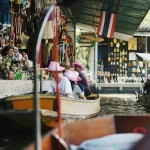
📷 Featured image by Benjamin Simier on Unsplash.