On this page
- Visa-Free Entry: Who Qualifies and What Officers Ask For
- Visa on Arrival: Fee, Documents and Airport Steps at BKK and DMK
- Tourist Visa (TR) and the e-Visa for Longer Stays
- Extending Your Stay and the Cost of Overstaying
- What Changed Since 2024, Including the Thailand Pass Question
- Land Borders: Malaysia, Laos, Cambodia and Myanmar
- A Smooth-Entry Checklist
- 2026 Visa Budget Reality
- Common Mistakes to Avoid
- Frequently Asked Questions
Thai visa advice online is a mess. One forum post says 30 days, another says 60. A third still talks about COVID forms. Meanwhile, border touts are happy to “help” you with paperwork you don’t need. This guide answers the ten questions travellers ask most, with the fees, documents and steps you need in 2026. Rules and fees can change, so confirm your own passport’s status on the official sites before you book flights.
Visa-Free Entry: Who Qualifies and What Officers Ask For
Citizens of many countries can enter Thailand without a visa. This includes the United States, United Kingdom, Canada, Australia, New Zealand, Japan, South Korea, Singapore, Malaysia and most European Union member states. For most Western nationalities the standard visa-exempt stay is 30 days, and some nationalities have been given longer exemption periods. Check the full, current list on the Ministry of Foreign Affairs site (www.thaievisa.go.th) or the Immigration Bureau site (www.immigration.go.th).
Visa-free entry is for tourism only. Officers and airline check-in staff may ask for:
- A passport valid for at least six months beyond your intended date of entry.
- Proof of onward travel: a confirmed flight out of Thailand within your permitted stay. Airlines often check this before you even board.
- Proof of funds: officially 10,000 THB per person or 20,000 THB per family, in cash or a bank statement. This is rarely checked, but it is the official rule.
If you plan to stay longer than your exemption, you can extend once at an Immigration Office (covered below) or apply for a visa in advance.
Visa on Arrival: Fee, Documents and Airport Steps at BKK and DMK
Visa on Arrival (VoA) is for citizens of certain countries who can get a short visa at major international airports and some land borders. It grants up to 15 days. Countries such as China, India, Kazakhstan and Saudi Arabia have typically been eligible. Thailand has sometimes given temporary visa exemptions to some of these nationalities, such as the 30-day exemptions for China and Kazakhstan in late 2023 and early 2024. Check whether yours is still in force or has reverted to VoA.
The VoA fee is 2,000 THB. Bring cash in baht. Card payment is not guaranteed and may carry extra fees.
Bring these documents:
- Passport valid for at least six months from entry
- Completed VoA application form (available at the counter, sometimes downloadable in advance)
- One recent 4×6 cm photo, taken within the last 6 months
- Confirmed onward ticket within the 15-day period
- Accommodation booking confirmation
- Proof of funds (10,000 THB per person or 20,000 THB per family)

At Suvarnabhumi (BKK) or Don Mueang (DMK), follow this process:
- Follow the “Visa on Arrival” signs after you leave the aircraft.
- Fill in the application form. Staff may help.
- Attach your photo and gather your passport, ticket, accommodation proof and fee.
- Hand everything to the VoA counter.
- Wait. Processing can take 30 minutes to 2 hours, depending on how many flights landed at once.
- Collect your passport with the 15-day VoA stamp.
- Join the regular immigration queue for your entry stamp.
Expect a long wait after a busy wave of arrivals. Bring a pen, since the forms are filled in by hand.
Tourist Visa (TR) and the e-Visa for Longer Stays
If your nationality is not visa-exempt or eligible for VoA, or you want more than 15 or 30 days, you need a Tourist Visa (TR) before you travel. Since 2024 the main route for most Thai visas, including the TR, is the online e-Visa system at www.thaievisa.go.th. This means far fewer trips to embassies.
Single-entry vs multiple-entry
- Single-entry TR: up to 60 days, with one extension of 30 days possible at an Immigration Office in Thailand. Fee: 1,000 THB.
- Multiple-entry TR: valid for six months from issue. Each entry gives up to 60 days, and each stay can be extended once for 30 days. Fee: 5,000 THB.
Fees are paid in the local currency equivalent at the time of application.
What you will need to upload
- Passport valid for at least six months (single-entry) or one year (multiple-entry) from your intended entry date
- Recent digital passport-style photo (within 6 months)
- Confirmed round-trip flight tickets
- Hotel bookings or a letter from a host in Thailand
- Bank statement showing funds, for example 20,000 THB per person or 40,000 THB per family
- Proof of residence, such as a utility bill or national ID showing your home address
- Employment, student or business registration proof
- Travel insurance (recommended, not always mandatory)
The e-Visa steps
- Create an account at www.thaievisa.go.th.
- Choose “Tourist Visa” and select single or multiple entry.
- Fill in the online form carefully.
- Upload your documents in the required size and format.
- Pay the fee online by credit or debit card.
- Submit and wait. Processing usually takes 5–10 business days, and you get an email when approved.
- Print the e-Visa confirmation and carry it to Thailand.

If you want to live in Thailand for years rather than weeks, the Thailand Elite Visa is a paid long-stay membership programme. It is a separate route from the tourist visa. Check the official programme website for current packages and prices before you decide.
Extending Your Stay and the Cost of Overstaying
You can extend a 30-day visa-exempt entry or a 60-day Tourist Visa at any local Immigration Office. The extension is typically 30 days and costs 1,900 THB.
Bring:
- TM.7 application form (at the office or from www.immigration.go.th)
- Original passport with at least six months of validity
- Photocopies of your photo page, current visa or entry stamp, and the TM.6 departure card if you have one
- One recent 4×6 cm photo
- Proof of address: a hotel booking printout, landlord letter, or house registration for long-term rentals
- Proof of funds, in case they ask
Here is how it works at an office such as Chaeng Wattana in Bangkok:
- Arrive soon after opening. These offices get busy.
- Pick up a TM.7 form.
- Fill it in and glue on your photo.
- Make your photocopies. Copy shops are usually at or near the office and charge a small fee.
- Take a queue number for “Visa Extension” and wait.
- Submit your papers and pay 1,900 THB.
- Answer a few questions if asked. They keep your passport while it is processed, usually 1–3 hours on the same day.
- Collect your passport with the new extension stamp.
Always apply before your current stay ends. Overstaying costs 500 THB per day, up to a maximum of 20,000 THB. Longer overstays can mean detention, deportation and blacklisting from re-entering Thailand for several years.
What Changed Since 2024, Including the Thailand Pass Question
Is the Thailand Pass still required? No. It was officially discontinued on July 1, 2022. In 2026 you do not register for it, upload vaccine certificates, or show COVID-19 test results. Entry is based on your passport and visa status again.
These are the changes that matter most now:
- Exemption lists get reviewed. Both the list of countries and the length of stay can change. Do not rely on a blog post, including this one, without checking the official list.
- Arrival paperwork is moving online. The paper TM.6 arrival/departure card has largely been phased out for air arrivals. Thailand has been replacing it with an online Thailand Digital Arrival Card (TDAC). Check www.immigration.go.th before you fly for what applies to your arrival date. Land borders and extensions may still ask for the paper card, so be prepared.
- Land entry limits. Past rules limited how many visa-exempt land entries you could make per calendar year. This has been relaxed or removed for many people. Check current rules if you plan several land crossings in a row.

Land Borders: Malaysia, Laos, Cambodia and Myanmar
The same basic rule applies on land and in the air. Nationalities eligible for 30 days visa-free generally get the same 30 days at a land border, and your passport needs six months of validity. Borders can close or change rules at short notice, so check before you travel.
From Malaysia
The main crossings are Padang Besar to Sadao (the busiest, with an integrated checkpoint and direct State Railway of Thailand trains to Hat Yai), Rantau Panjang to Sungai Kolok, and Bukit Berapit to Betong.
- VoA is generally not available at land borders for nationalities that would get it at airports. Most VoA nationalities should get a visa in advance.
- Proof of onward travel, like a bus or train ticket, is advisable.
At Padang Besar, get your Malaysian exit stamp first. Then go to Thai immigration, show your passport and fill in an arrival card if asked. After you receive your entry stamp, take the SRT train to Hat Yai or local transport onward.
From Laos
The most popular crossing is the First Thai-Lao Friendship Bridge from Vientiane to Nong Khai. Others are the Second Bridge (Savannakhet to Mukdahan) and the Third Bridge (Thakhek to Nakhon Phanom).
- Get your exit stamp on the Vientiane side.
- Take the shuttle bus across the bridge (about 20 THB) or a private taxi.
- If you’re eligible for VoA, go to the VoA counter first. Fill in the form, attach your photo and pay 2,000 THB for 15 days.
- Go to the regular Thai immigration counter and get your entry stamp. Have your arrival card ready if requested.
- Take a tuk-tuk or taxi to the Nong Khai train station for SRT services to Bangkok.

Ignore anyone near the border offering “visa services”. Only deal with the official immigration counters.
From Cambodia
The busiest crossing is Poipet to Aranyaprathet. Quieter options are Pailin to Ban Laem, and Koh Kong to Had Lek for Trat and Koh Chang.
- Get your exit stamp in Poipet. The area is chaotic.
- Walk through “no man’s land” to the Thai side.
- If eligible for VoA, use the VoA counter first (2,000 THB, 15 days, with photo and form).
- Proceed to the regular Thai immigration counter and get your entry stamp.
- Take a shared minivan, bus or taxi from Aranyaprathet to Bangkok or elsewhere.
Poipet is known for scams. Touts will push “express” services and visa help. Walk past them and go only to the official immigration buildings.
From Myanmar
Myanmar crossings are the most restricted and the least predictable. Tourist access is often limited or closed because of the political and security situation. Historic crossings include Mae Sai to Tachileik, Mae Sot to Myawaddy, and Ranong to Kawthoung. If they are open to tourists, visa-exempt entry is typically limited to Mae Sai/Tachileik and Mae Sot/Myawaddy. VoA is generally not available for tourists, so arrange any needed visa beforehand. Check your government’s travel advice and the Royal Thai Embassy or Consulate right before planning any Myanmar crossing.
A Smooth-Entry Checklist
This is the short version for Question 10: what to have ready whichever way you enter.
- Passport: valid at least six months beyond your entry date. This is non-negotiable.
- Onward ticket: printed or digital, within your permitted stay.
- Accommodation proof: a hotel booking or host address, especially for longer stays.
- Funds: officially 10,000 THB per person, rarely checked.
- Photos: a few 4×6 cm passport photos.
- Arrival/departure card: if you are given a TM.6, fill it in fully and keep the departure part with your passport.
- Official sources: the Royal Thai Embassy or Consulate in your country, www.immigration.go.th and www.thaievisa.go.th.
- Getting from the airport: download the Grab app before you land for a safe, metered-style ride into the city.
2026 Visa Budget Reality
Your entry and stay costs depend on which route you take. These figures use the official fees above and do not include flights, photos or photocopies.
- Budget (0 THB): visa-exempt entry for 30 days. Add about 20 THB if you use the shuttle bus across the Nong Khai bridge.
- Mid-range (1,000 to 2,900 THB): a single-entry Tourist Visa at 1,000 THB. Add the 1,900 THB extension for a total of 2,900 THB. Or use Visa on Arrival at 2,000 THB if your nationality qualifies.
- Comfortable (5,000 to 6,900 THB): a multiple-entry Tourist Visa at 5,000 THB, plus a 1,900 THB extension on one of the stays for 6,900 THB total.

Common Mistakes to Avoid
- Booking one-way tickets. Airlines often refuse boarding without proof of onward travel, even before you reach Thai immigration.
- Cutting passport validity too fine. Six months beyond your entry date is the requirement.
- Arriving at an airport VoA counter with no cash or photo. The fee is 2,000 THB in baht, and you need a 4×6 cm photo.
- Assuming VoA works at every land border. It is available at some Laos and Cambodia crossings, but generally not at Malaysian or Myanmar ones.
- Using border “agents”. Poipet and other crossings attract touts. Official immigration officers inside the designated buildings are the only people you need.
- Applying for an extension too late. Go before your authorised stay ends, and arrive early with all your copies.
- Trusting old information. The Thailand Pass is gone, but exemption lists and arrival-card systems change. Check the official sites before travelling.
Frequently Asked Questions
How long can I stay in Thailand without a visa?
Most Western passport holders, including those from the United States, United Kingdom, Canada, Australia and most EU countries, get 30 days visa-free. Some nationalities may qualify for longer exemption periods, so check the official MFA list for your passport. You need a passport valid for six months and proof of onward travel.
What happens if I overstay my visa in Thailand?
The fine is 500 THB per day, capped at 20,000 THB. Longer overstays can lead to detention, deportation and blacklisting from re-entering Thailand for several years. The safest option is to apply for an extension at an Immigration Office before your permitted stay expires, not after.
Do I still need the Thailand Pass to enter Thailand?
No. The Thailand Pass system was officially discontinued on July 1, 2022. In 2026 you do not need to register for it, upload vaccination certificates or show COVID-19 test results. Entry rules are back to pre-pandemic basics: a valid passport, the right visa or exemption, and proof of onward travel.
How much does a Thai visa extension cost and how long does it take?
An extension costs 1,900 THB and usually adds 30 days. You apply at any local Immigration Office with a TM.7 form, your passport, photocopies, a 4×6 cm photo and proof of address. Processing at offices like Chaeng Wattana in Bangkok usually takes 1–3 hours on the same day.
Can I get a Visa on Arrival at Thailand’s land borders?
It depends on the border. Eligible nationalities can get Visa on Arrival (2,000 THB, 15 days) at some Laos and Cambodia crossings, including Nong Khai and Aranyaprathet. It is generally not available at Malaysian or Myanmar land borders, so get your visa in advance through thaievisa.go.th.
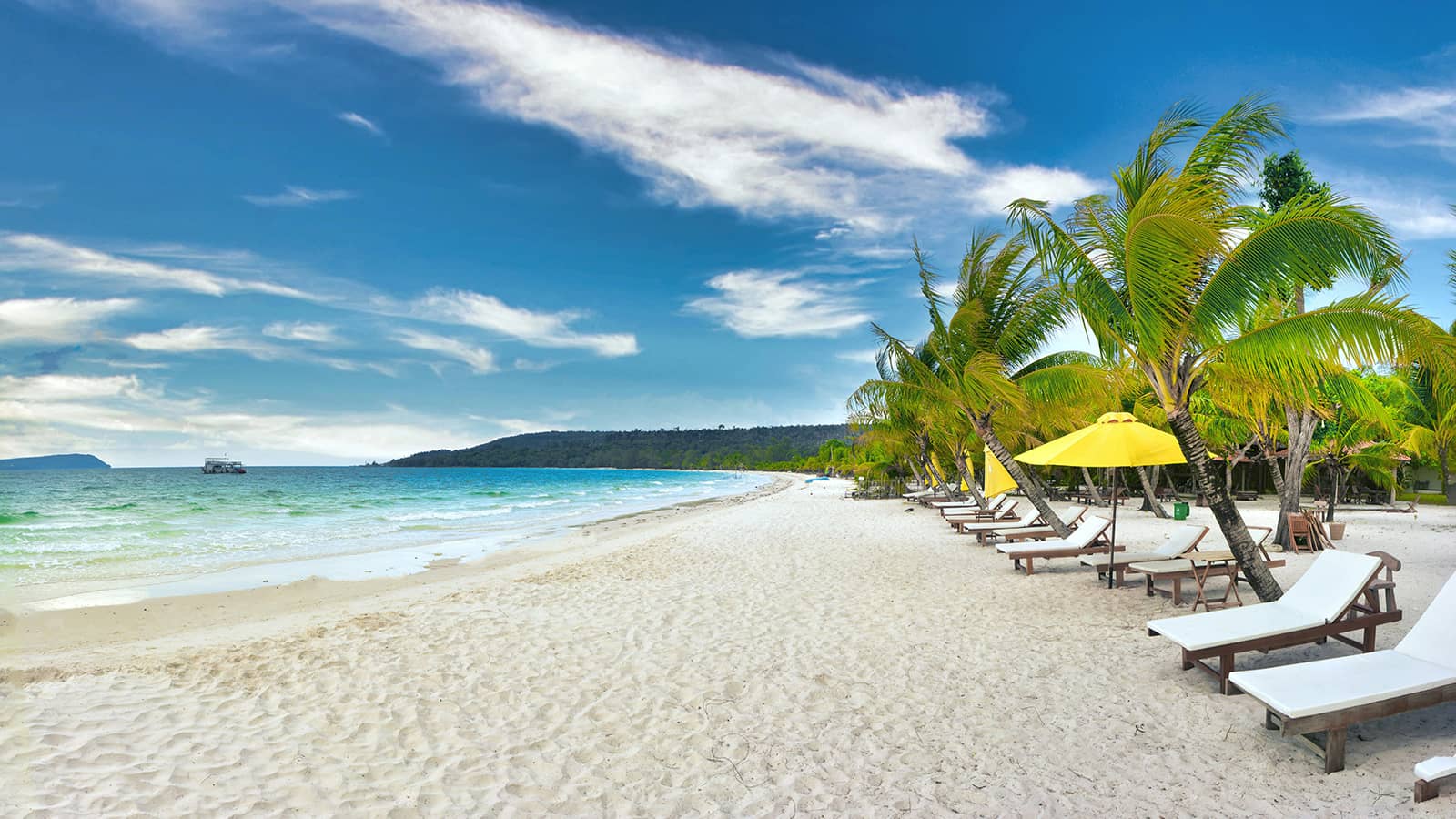
📷 Featured image by Albert Stoynov on Unsplash.