On this page
💰 Click here to see Thailand Budget Breakdown
💰 Prices updated: October, 2026. Budget figures are estimates — always verify before travel.
Exchange Rate: $1 USD = ฿33.60
Daily Budget (per person)
Shoestring: ฿900.00 – ฿1,800.00 ($26.79 – $53.57)
Mid-range: ฿2,150.00 – ฿4,000.00 ($63.99 – $119.05)
Comfortable: ฿6,000.00 – ฿12,000.00 ($178.57 – $357.14)
Accommodation (per night)
Hostel/guesthouse: ฿90.00 – ฿750.00 ($2.68 – $22.32)
Mid-range hotel: ฿1,400.00 – ฿3,500.00 ($41.67 – $104.17)
Food (per meal)
Budget meal: ฿70.00 ($2.08)
Mid-range meal: ฿250.00 ($7.44)
Upscale meal: ฿1,000.00 ($29.76)
Transport
Single metro/bus trip: ฿30.00 ($0.89)
Monthly transport pass: ฿1,155.00 ($34.38)
Most 2026 cost guides for northern Thailand lump Chiang Rai in with Chiang Mai, so travellers either overbudget or get caught out by costs nobody mentioned. Chiang Rai is cheaper for beds and sights, but spread-out attractions mean transport can quietly become your biggest expense. This guide shows where your baht actually goes, with 2026 prices for every part of the trip.
Why Chiang Rai Costs Less Than You Expect
Chiang Rai is a calm, green, small-town province in Thailand’s far north, close to the borders with Myanmar and Laos. The city centre is compact, the mountains are always on the horizon, and the pace is slow. You can finish a bowl of noodles, sit with a coffee, and still be at a temple before the tour buses arrive.
That calm keeps prices low. Fewer package tourists means guesthouses and hotels do not need to charge Phuket or Bangkok rates. A clean private room with air-conditioning can cost 600 to 900 THB, and a street meal is often 50 to 70 THB.
Some things changed after 2024. Thailand’s visa-free stay for many nationalities is now 60 days, which makes slow travel in the north far easier. Visitors must also complete the Thailand Digital Arrival Card (TDAC) online before landing. Chiang Rai’s airport, served by budget airlines from Bangkok’s Don Mueang, has made short trips cheaper. The long-planned railway to Chiang Rai is still not running, so do not plan around it.
Best Neighborhoods
Chiang Rai is small, so your choice of area is mostly about walking distance, noise, and how often you will pay for rides.
Old Town and Clock Tower Area
This is the best base for first-time visitors. The Golden Clock Tower, the Saturday Walking Street, many cafes, and several guesthouses are within a 15-minute walk. You can often skip transport entirely for a day. It suits solo travellers, couples, and anyone without a motorbike.
Night Bazaar and Bus Terminal Area
Near the old Bus Terminal 1 and the Night Bazaar, you get cheap hostels, food courts, and easy access to buses. It is busier and louder than the old town, but it is the most practical area if you arrive by bus or leave early for a day trip.
Riverside Along the Kok River
The Kok River runs just north of the centre. Riverside hotels and resorts are quieter, with garden views and slower mornings. You will take a short ride into town each evening, so budget 60 to 100 THB per trip. It suits couples and travellers who want rest more than activity.

Rim Kok and the Western Edge
West of the centre, you find larger resorts, rice fields, and open space. It is peaceful, but you need your own transport. This area works for families with a rental car or travellers happy to pay for taxis.
Top Attractions and What They Cost
Chiang Rai’s headline sights are cheap, and some are free. The real cost is getting between them, because they sit on different sides of the city.
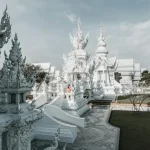
- Wat Rong Khun (White Temple): About 100 THB for foreign visitors. Arrive at opening time, around 8:00 am, when the mirrored glass flashes in the low sun and the crowds are thin. Allow 90 minutes.
- Wat Rong Suea Ten (Blue Temple): Free to enter, with a small donation welcome. The deep blue interior is calm and surprisingly quiet. About 30 to 45 minutes.
- Baan Dam Museum (Black House): Around 80 THB. A group of dark wooden buildings filled with animal skins, carved furniture, and the artist’s strange vision. Allow one hour.
- Wat Huay Pla Kang (Big Buddha): Free. The huge white Guanyin statue overlooks the hills, and you can climb the pagoda for views. Allow 45 minutes.
- Singha Park: Free to enter. Tram tours, bike rental, and the farm’s cafe cost extra, usually 100 to 300 THB in total. Good for half a day.
- Golden Clock Tower: Free. The evening light-and-music show runs at set times, usually 7:00, 8:00, and 9:00 pm.
- Hall of Opium (Golden Triangle): Around 200 THB. A well-made museum that explains the region’s history.
If you see the White Temple, Blue Temple, Black House, Big Buddha, and the Clock Tower, your total entry fees will be roughly 180 to 250 THB. That is excellent value for a full sightseeing day.
Food and Drink Scene
Food is where Chiang Rai saves you the most money. Most meals cost 50 to 120 THB, and you can eat very well without entering a tourist restaurant.
Night Markets and Food Courts
The Chiang Rai Night Bazaar near Phahonyothin Road has a large food court with Thai, northern, and Chinese dishes, plus a small stage with live music in the evening. Most plates cost 50 to 100 THB, and beers are around 70 to 100 THB. On Saturday evening, the Saturday Walking Street on Thanon Thanalai and nearby roads fills with stalls. Smoke from grilled sausages and pork skewers drifts over the crowd, and grilled chicken, sticky rice, and northern sausages cost 20 to 80 THB per portion.

Morning Markets
Kad Luang, the city’s main fresh market, is the place for cheap breakfast. Look for rice porridge, steamed buns, soy milk, and northern-style noodle soups for 40 to 70 THB. Most vendors finish by late morning, so go early.
Local Restaurants and Cafes
Small family restaurants around the old town sell northern noodle soup and rice dishes for 60 to 120 THB. A plate of khao soi usually costs 50 to 80 THB at a simple shop and up to 120 THB at a nicer cafe. Mid-range Thai restaurants charge 150 to 300 THB per main dish, and western-style meals run 250 to 450 THB.
Coffee and Drinks
Northern Thailand grows excellent coffee. A cup of local coffee costs 60 to 120 THB at most cafes, and specialty coffee shops charge a little more. A large bottle of beer is 55 to 70 THB at a convenience store and 80 to 120 THB at a bar.
Getting Around
Chiang Rai has no BTS Skytrain or MRT, so getting around means road transport. This is the cost many first-time visitors forget to plan for.
- Walking: Free and realistic in the old town and around the Night Bazaar.
- Songthaews and local buses: Shared trucks and local buses cost about 20 to 40 THB inside town. Routes to outer sights are limited, so ask locals first.
- Tuk-tuks and motorcycle taxis: A short ride is usually 60 to 100 THB. Agree on the price before you get in.
- Grab: The app works in the city, but there are fewer drivers than in Bangkok or Chiang Mai. Expect 60 to 150 THB for most rides and longer waits for trips outside the centre.
- Motorbike rental: About 250 to 350 THB per day for an automatic scooter, with discounts for weekly rentals. Fuel adds about 50 to 100 THB per day. You need a valid licence with a motorbike endorsement, and you should wear a helmet.
- Car with driver: 1,800 to 3,000 THB per day for the main temple loop. This works well for groups of three or four.
Getting to Chiang Rai
Buses from Chiang Mai take about three to four hours and cost roughly 250 to 450 THB, depending on the class. From Bangkok, overnight buses cost around 700 to 1,200 THB and take 10 to 12 hours. Budget flights from Bangkok’s Don Mueang usually cost 1,000 to 2,500 THB one way, with the lowest prices outside holidays.

Day Trips
Day trips are where your budget can swing most. Prices below are for a motorbike or private car, not a group tour.
Doi Mae Salong
A mountain village about 90 minutes from the city, known for tea plantations and Chinese-Yunnanese food. The road winds through hills, and tea terraces at Choui Fong can be visited for free. A private car costs about 1,800 to 2,500 THB for the round trip, and a scooter costs 300 to 400 THB for the day plus fuel. Allow a full day.
Golden Triangle (Sop Ruak)
Around 60 km north, where Thailand, Laos, and Myanmar meet along the Mekong. The Hall of Opium and the viewpoint are the main stops. Allow five to six hours, and add a Mekong boat ride of 400 to 600 THB per person if you want one.
Mae Sai
Thailand’s northernmost town sits about an hour from Chiang Rai. It is a border market with cheap snacks and goods. Stay on the Thai side, since conditions across the border can change quickly. A bus is only 40 to 70 THB each way.
Doi Tung
A hill area with the Mae Fah Luang Garden and the Royal Villa, about an hour from the city. Combined entry is around 200 THB. The gardens are cool, flowery, and calm, especially in the cool season. Allow half a day.
Nightlife and Entertainment
Chiang Rai is not a party city, and that helps your wallet. Evenings are about food, music, and a few drinks, not expensive clubs.
The Night Bazaar’s open-air stage has live music and cheap beer. Small bars and pubs near the clock tower and Jetyod Road offer acoustic nights, pool tables, and cold beer for 80 to 150 THB. Craft beer and cocktails cost 150 to 250 THB. Rooftop bars are rare, but several hotels have terrace bars where a drink costs 150 to 300 THB. Most places wind down by 11:00 pm to midnight.
For a free evening, watch the Golden Clock Tower show. Then stroll the riverfront, where cool air and the smell of grilled corn drift from the vendor carts.
Shopping
Chiang Rai’s shopping is about local products and handicrafts, not designer brands.

- Saturday Walking Street: Hand-made bags, hill-tribe fabrics, jewellery, and small gifts. Prices start low, and polite bargaining can save 10 to 20%.
- Night Bazaar: Souvenirs, clothing, and snacks. Expect T-shirts for 100 to 200 THB.
- Tea and coffee: Buy tea at Doi Mae Salong or the Choui Fong plantation, usually 100 to 400 THB per bag. Local coffee beans cost about 150 to 350 THB per pack.
- Doi Tung products: Quality woven goods, ceramics, and coffee from the Doi Tung project, with fixed prices.
- Central Plaza Chiang Rai: Air-conditioned, with international brands, a supermarket, and a food court. Useful on rainy days.
Accommodation Areas by Budget Tier
Budget (300 to 900 THB per night)
Dorm beds start at 250 to 450 THB, and simple private rooms with fan or air-conditioning cost 500 to 900 THB. The Night Bazaar area and old town have the best choice. Book ahead for weekends in the cool season.
Mid-Range (1,200 to 3,000 THB per night)
This is the sweet spot. For about 1,500 to 2,500 THB you get a clean, stylish room, a pool in many cases, and a good breakfast. Riverside and old-town boutique hotels are the best options.
Luxury (4,000 THB and above)
Luxury resorts in and around Chiang Rai range from 4,000 to 15,000 THB per night. The most famous, in the Golden Triangle, such as Anantara Golden Triangle, have elephant-focused experiences and river views. The top tented camps run well above 40,000 THB per night, usually with meals and activities included.
Best Time to Visit
- Cool season (November to February): Daytime temperatures of 24 to 30°C, cool mornings at 12 to 18°C, and clear skies. This is peak season, with the highest room rates and the biggest crowds at the White Temple.
- Hot season (March to May): Temperatures of 33 to 38°C. From February to April, smoke from crop burning can cause poor air quality. If you have breathing problems, avoid this period.
- Rainy season (June to October): Warm, green, and cheaper. Showers usually come in the afternoon, and room rates can fall by 20 to 30%. Hill roads may be slippery.
Festivals to plan around include Songkran in mid-April and Loy Krathong and Yi Peng in November, when lanterns fill the sky. A flower festival is often held around late December to January. These dates bring higher prices, so book early.

Practical Tips
- Safety: Chiang Rai is very safe. The main risks are motorbike accidents and rain on hill roads. Wear a helmet and avoid riding at night in the mountains.
- Tipping: Not required. Rounding up or leaving 20 to 50 THB at a sit-down restaurant is appreciated. Drivers and guides are usually tipped 100 to 300 THB.
- Language: English works in hotels and cafes, but not always in markets. Learn simple Thai phrases such as “khop khun” (thank you) and “tao rai” (how much).
- SIM cards: Tourist SIMs from AIS or True cost about 300 to 600 THB for 15 to 30 days, with strong data coverage in the city. Mountain areas can be weaker.
- Water: Do not drink tap water. A large bottle costs 10 to 15 THB.
- Cash and ATMs: Foreign cards usually incur a 220 THB ATM fee per withdrawal. Take out larger amounts less often.
- Closing hours: Many small local restaurants close by 8:00 or 9:00 pm, and markets close early in the day. Some shops pause in the afternoon heat. Plan dinner before 8:00 pm.
Budget Breakdown
These are realistic 2026 daily costs per person, excluding flights to Thailand.
Budget Traveller: 900 to 1,300 THB per day
- Dorm bed or basic room: 300 to 500 THB
- Food: 300 to 400 THB
- Local transport: 100 to 200 THB
- Entry fees and extras: 100 to 200 THB
Mid-Range Traveller: 2,500 to 4,000 THB per day
- Hotel room: 1,400 to 2,200 THB
- Food and drinks: 600 to 900 THB
- Scooter, fuel, or Grab: 300 to 600 THB
- Activities and entry fees: 200 to 500 THB
Comfortable Traveller: 6,000 to 12,000 THB or more per day
- Resort or boutique hotel: 4,000 to 8,000 THB
- Restaurants and drinks: 1,200 to 2,000 THB
- Private driver: 1,800 to 3,000 THB
- Activities, spa, tours: 500 to 1,500 THB
Sample Trip Totals (5 Days, Excluding Flights)
- Budget: about 5,000 to 6,500 THB
- Mid-range: about 13,000 to 20,000 THB
- Comfortable: about 30,000 to 60,000 THB
Keep 5 to 10% extra for surprises such as laundry, snacks, and souvenirs.
Frequently Asked Questions
How much does a trip to Chiang Rai cost per day in 2026?
Most travellers spend 900–1,300 THB per day on a budget trip, 2,500–4,000 THB at mid-range, and 6,000 THB or more when staying comfortably. These figures cover a room, meals, local transport, and entry fees. International flights, tours, and shopping are extra, so add them to your own total.
Is Chiang Rai cheaper than Chiang Mai?
Yes, slightly. Chiang Rai has fewer tourists, so hotel rooms and guesthouses often cost 10–25% less than similar places in Chiang Mai. Food prices are almost the same. The main extra cost in Chiang Rai is transport, because attractions are spread out and you will need a motorbike, driver, or tour.

How many days do you need in Chiang Rai?
Three days is enough for the White Temple, Blue Temple, Black House, the Saturday Walking Street, and one longer day trip. Add a fourth or fifth day if you want Doi Mae Salong, Doi Tung, or a slow mountain stay. Longer stays lower your daily cost because you can rent a motorbike weekly.
Do I need cash in Chiang Rai?
Yes. Markets, street stalls, songthaews, and small guesthouses mostly take cash only. Thai QR payments work at many shops if you have a Thai bank account, but most visitors do not. Carry 1,000–2,000 THB in small notes, and expect a 220 THB fee on each foreign card ATM withdrawal.
What is the cheapest way to see the White Temple, Blue Temple, and Black House?
Take a local songthaew or Grab to each site, or rent a motorbike for about 250–350 THB per day. A shared group tour costs roughly 800–1,500 THB. A private driver costs 1,800–3,000 THB for the day but saves time, especially for groups of three or four.