On this page
- Why Chiang Rai’s Food Scene Deserves More Credit
- Street Food Stalls & Night Markets After Dark
- Morning Markets & Breakfast Spots
- Northern Thai Specialties to Order
- Hill Tribe Influences on the Menu
- Chiang Rai’s Coffee & Tea Culture
- Vegetarian & Vegan Eating in Chiang Rai
- Best Restaurants & Local Eateries by Area
- 2026 Budget Breakdown for Food in Chiang Rai
- Practical Food Tips for Eating in Chiang Rai in 2026
- Frequently Asked Questions
💰 Click here to see Thailand Budget Breakdown
💰 Prices updated: October, 2026. Budget figures are estimates — always verify before travel.
Exchange Rate: $1 USD = ฿33.60
Daily Budget (per person)
Shoestring: ฿900.00 – ฿1,800.00 ($26.79 – $53.57)
Mid-range: ฿2,150.00 – ฿4,000.00 ($63.99 – $119.05)
Comfortable: ฿6,000.00 – ฿12,000.00 ($178.57 – $357.14)
Accommodation (per night)
Hostel/guesthouse: ฿90.00 – ฿750.00 ($2.68 – $22.32)
Mid-range hotel: ฿1,400.00 – ฿3,500.00 ($41.67 – $104.17)
Food (per meal)
Budget meal: ฿70.00 ($2.08)
Mid-range meal: ฿250.00 ($7.44)
Upscale meal: ฿1,000.00 ($29.76)
Transport
Single metro/bus trip: ฿30.00 ($0.89)
Monthly transport pass: ฿1,155.00 ($34.38)
Chiang Rai gets overshadowed by Chiang Mai in almost every travel conversation, and that’s a genuine shame when it comes to food. In 2026, with the new direct flights from Bangkok’s Don Mueang Airport increasing traffic to Chiang Rai International Airport, more travelers are finally arriving here — but many still spend their meals at tourist-facing restaurants near the White Temple without exploring the city properly. This guide fixes that. Whether you have two days or a full week, here’s exactly where to eat and what to order in Chiang Rai.
Why Chiang Rai’s Food Scene Deserves More Credit
Chiang Rai sits at a geographical and cultural crossroads that makes its food genuinely unlike anywhere else in Thailand. The province borders Myanmar to the north and Laos to the east, and that proximity shapes everything on the plate. Yunnan Chinese traders, Shan migrants, Akha hill tribe communities, and lowland Thais have all cooked alongside each other here for generations, and the result is a food scene that’s layered, unpredictable, and deeply satisfying.
The city itself is small — walkable in a way Chiang Mai stopped being years ago. That scale means the same grandmother who sells you khao soi at 7am might also be the one sourcing her noodles from a family in the next village. Ingredients here are hyperlocal: bitter herbs from highland gardens, mushrooms foraged from teak forests, and tea leaves from estates just 30 kilometres north in Mae Salong. The food costs less than Chiang Mai, the crowds are smaller, and the kitchens haven’t been adjusted for tourist palates to the same degree.
If you’ve eaten your way through Bangkok or Chiang Mai and thought you understood northern Thai food, Chiang Rai will correct you.
Street Food Stalls & Night Markets After Dark
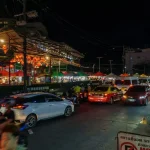
The Night Bazaar on Phahonyothin Road is the most accessible starting point — it runs every evening from around 6pm and draws a solid mix of locals and visitors. The stalls along the outer edge of the bazaar, rather than the centre, tend to serve more authentic food at lower prices. Look for the sai ua (northern Thai sausage) grilled over charcoal; you’ll smell it from 20 metres away, that sharp hit of lemongrass and galangal smoke rising through the cool evening air.
The Saturday Walking Street on Thanalai Road is Chiang Rai’s best weekly food event. It runs from roughly 5pm to 10pm and draws vendors selling everything from Akha-style grilled corn to Yunnanese pork bao. It’s busier than the Night Bazaar but the variety is exceptional. Arrive by 5:30pm to get first pick before the best stalls sell out.

For something more local, head to the cluster of food stalls near Clock Tower Square on any weekday evening. These are predominantly frequented by Chiang Rai residents — office workers, families, university students — and the food reflects that. Portions are generous, prices are honest, and nobody is going to hand you an English menu.
The Sunday Walking Street on Jetyod Road is slightly smaller than the Saturday version but worth knowing if your schedule aligns. It wraps around the temple grounds and has a strong selection of dessert vendors, including khanom krok (coconut rice pancakes) cooked in cast iron pans until the edges are crisp and the centres stay just barely molten.
Morning Markets & Breakfast Spots
Chiang Rai’s best food often happens before 9am, and most tourists miss it entirely. The Chiang Rai Municipal Market (Talat Nakhon) on Uttarakit Road is the city’s main fresh market and it runs from around 5am. By 8am the best vendors are already packing up. This is where you’ll find bowls of khao tom (rice porridge) served with pickled vegetables and salted fish, alongside vendors selling pre-prepared nam prik ong (northern Thai chili dip with pork) in bags to take home.
For sit-down breakfast, the stretch of small shophouses along Banphaphakan Road near Wiang Chai Road has several Chinese-Thai coffee shops (raan kafae boran) that open by 6am. Order pa thong ko (deep-fried dough sticks) with a glass of sweet condensed milk coffee, and you’ll understand why northern Thais have been starting their mornings this way for decades.
The Mae Chan market, about 25 kilometres north of the city, is worth a morning detour if you have a motorbike or rental car. It operates primarily as a highland produce market and you’ll see ingredients here — purple highland rice, foraged ferns, wild ginger varieties — that don’t make it down to the city markets.
Northern Thai Specialties to Order
Eating in Chiang Rai without ordering these dishes is a missed opportunity. These are the plates that define the region’s identity on the table:

- Khao Soi: The golden bowl of egg noodles in a coconut-curry broth, topped with crispy fried noodles and served with pickled mustard greens, shallots, and lime on the side. Chiang Rai’s version tends to be slightly less sweet than Chiang Mai’s, with a cleaner, more pronounced spice.
- Kaeng Hang Le: A slow-braised Burmese-influenced pork curry with ginger, turmeric, and tamarind. It’s darker, more aromatic, and less coconut-forward than central Thai curries. Order it with sticky rice.
- Nam Prik Num: A roasted green chili dip served warm with raw vegetables and pork rinds for dipping. The smokiness from the charred chilies and garlic is its defining character.
- Sai Ua: Northern Thai herb sausage. The pork is mixed with lemongrass, kaffir lime leaves, dried chilies, and galangal before being stuffed into casing and grilled. Sold by the link at markets and as a main dish at restaurants.
- Khao Niao Mamuang: Mango sticky rice appears across Thailand, but the glutinous rice grown in Chiang Rai province has a particular chewiness and the mangoes ripen exceptionally sweet here from March through May.
- Larb Moo: Minced pork salad dressed with roasted rice powder, fish sauce, lime juice, and dried chilies. The northern version is drier and more intensely spiced than the Isaan interpretation.
Hill Tribe Influences on the Menu
No other Thai province has the same density of highland ethnic communities as Chiang Rai, and their culinary fingerprints show up in ways that most visitors don’t recognize. The Akha people, concentrated in villages around Mae Fah Luang and the northern highlands, cook with a bold use of fermented ingredients — fermented soybean paste, dried and smoked meats, and wild herbs that don’t appear anywhere in central Thai cooking.
In Chiang Rai city, you’ll find Akha-run restaurants near the bus terminal and on the eastern side of the city that serve miang — betel leaf wrapped parcels filled with roasted coconut, dried shrimp, lime, ginger, and chili — as an appetizer. It’s a preparation that predates Thai cuisine as we recognize it.
The Yunnanese Chinese community, settled in Chiang Rai for generations after migrating from Yunnan province in southern China, runs a significant portion of the city’s best food. Their influence is most visible in Yunnanese-style noodles (served in a clear, gently spiced pork broth with rice noodles and braised pork), in the quality of the local pu er tea served at many cafés, and in the Yunnanese pork dishes — including khao mu daeng (red pork over rice) — available at older shophouse restaurants in the city centre.
The Mae Salong area, about 65 kilometres northwest of Chiang Rai, is the epicentre of Yunnanese-Thai culture and worth a half-day trip specifically for the food: braised pork rice sets, handmade Yunnanese pasta dishes, and the freshest oolong tea you’ll find in Southeast Asia.
Chiang Rai’s Coffee & Tea Culture
The Golden Triangle is famous for its past, but in 2026 it’s increasingly known for something more pleasant: exceptional coffee and tea. The highlands north of Chiang Rai — particularly around Doi Chang, Doi Tung, and Mae Salong — produce some of the best arabica coffee in Asia, and the city’s café scene has grown considerably since 2024 with new specialty coffee shops opening alongside the longstanding Thai-style filter coffee houses.
Doi Chaang Coffee has multiple locations in Chiang Rai city and offers both espresso-based drinks and traditional Thai iced coffee. The beans are grown at over 1,200 metres altitude and the roasting is done locally. A single-origin pour-over here will cost between 80–150 THB and is genuinely worth it.
For tea, the road up to Mae Salong is lined with tea estates selling oolong, green tea, and aged pu er directly off the mountain. The tea houses along Mae Salong’s main street brew pots table-side and the experience of sitting with a 200 THB pot of fresh oolong while looking out over terraced tea fields is one of the most satisfying things you can do in northern Thailand.
Back in Chiang Rai city, the cluster of independent cafés around Singhaklai Road and Rimkhong Road near the Kok River has expanded noticeably in 2025–2026. These are small, design-conscious spaces serving good beans with relaxed atmospheres — a solid option for afternoon downtime between market visits.
Vegetarian & Vegan Eating in Chiang Rai
Chiang Rai is more manageable for vegetarians than its size might suggest, partly because of the Buddhist food traditions that run through the region and partly because of the highland vegetable abundance that makes plant-forward cooking natural here.
The Jay (เจ) restaurants — strictly vegetarian Thai restaurants following Buddhist dietary principles — are clustered near Chiang Rai’s temples. Look for yellow flags with red characters outside shophouses; these signal a Jay establishment. Dishes like pad pak ruam (stir-fried mixed vegetables), khao man (rice cooked in soy milk instead of chicken broth), and tofu-based curries are reliably available and typically cost 50–80 THB per dish.

The Night Bazaar and walking street markets have improved significantly for vegan eaters since 2024, with several dedicated stalls now marking plant-based options explicitly. The grilled corn, papaya salad prepared without fish sauce on request, and fresh spring rolls are safe bets at most stalls if you communicate your requirements clearly.
The phrase “kin jay” (กินเจ) communicates vegetarian eating to most vendors, though if you need strict vegan preparation with no fish sauce, the phrase “mai sai nam pla, mai sai man hoi, mai sai nam man hed” (no fish sauce, no oyster sauce, no shrimp paste) covers the key bases.
Best Restaurants & Local Eateries by Area
These are established spots with consistent quality as of 2026:
- Phu Lae Restaurant (near the Night Bazaar): A go-to for northern Thai classics. The kaeng hang le and nam prik num are benchmarks. Busy at lunch and dinner, no reservations, open-air seating. Expect to wait 10 minutes for a table on weekend evenings.
- BaanChivitMai Bakery: Run by a social enterprise supporting at-risk youth, this café near the Clock Tower serves good espresso, excellent cakes, and simple Western-style breakfast. The profits support the foundation’s programs. Coffee from 60 THB, meals from 120 THB.
- Lung Eed Noodles (Naresuan Road): A no-frills shophouse serving khao soi and northern noodle soups. The broth is made fresh daily and runs out by 1pm. Arrive before noon. Bowls cost 60–80 THB.
- Cabbages & Condoms Chiang Rai: The Chiang Rai branch of this well-known social enterprise restaurant serves solid Thai food in a relaxed garden setting. Good for groups. Mid-range pricing at 150–300 THB per main.
- Wang Come Night Food Court: The food court behind Wang Come Hotel is a local institution. Multiple stalls, covered seating, fluorescent lighting — exactly what a real Thai food court should feel like. Everything costs 50–100 THB per plate.
2026 Budget Breakdown for Food in Chiang Rai
Chiang Rai is meaningfully cheaper than Chiang Mai for food, and the gap hasn’t closed much despite the increased tourist traffic in 2026.
- Budget eating (street stalls, markets, Jay restaurants): 150–300 THB per day covers three meals comfortably. A bowl of khao soi costs 60–80 THB, grilled sausage from a market stall runs 40–60 THB for a generous serve, and fresh fruit from the morning market is 20–40 THB.
- Mid-range (local restaurants, food courts, casual sit-down): 400–700 THB per day. This gets you two proper restaurant meals plus coffee. Expect to pay 120–200 THB per main dish at a decent local restaurant, with drinks adding another 40–80 THB.
- Comfortable dining (better restaurants, specialty coffee, café lunches): 800–1,500 THB per day. This tier covers meals at social enterprise restaurants, specialty coffee at multiple cafés, and one quality dinner. Even at this level, Chiang Rai represents good value compared to Bangkok or tourist-heavy Chiang Mai.

Note that the 2026 price environment reflects modest inflation compared to 2024, particularly for cooking oil and imported ingredients, but local produce remains cheap due to Chiang Rai’s agricultural abundance.
Practical Food Tips for Eating in Chiang Rai in 2026
- Spice levels: Northern Thai food is not as chili-forward as Isaan cooking, but it’s not mild either. The phrase “phet nit noi” means “a little spicy” and is worth knowing. Don’t assume your khao soi is going to be gentle — ask.
- Market hours: Morning markets run 5am–9am and wind down fast. Night markets open at 5–6pm and close by 10pm most nights. Nothing runs through the midday heat.
- QR payment: Thai QR code payment (PromptPay) is accepted at a growing number of market stalls in Chiang Rai as of 2026, but carry cash. Markets near tourist areas have adopted it faster than outer neighborhood stalls.
- Food safety: Ice at established stalls and restaurants is commercially produced and generally safe. Be more cautious with raw vegetable garnishes at very small stalls — rinse if you’re sensitive. Tap water is not safe for drinking; filtered water bottles cost 10–15 THB at convenience stores.
- Timing your meals: Many of the best local restaurants, particularly noodle shops, serve only until mid-afternoon and close by 2–3pm. Plan accordingly or you’ll find closed shutters at 4pm.
- Language: English menus are available at tourist-adjacent restaurants but rare at local spots. A translation app with a camera function handles most Thai menus effectively. Google Translate’s camera mode works well offline if you download the Thai language pack.
- Ordering sticky rice: With northern Thai food, always ask for khao niao (sticky rice) rather than steamed jasmine rice. It’s the traditional accompaniment and most stalls will have it. At some places you’ll need to ask explicitly — it’s not always placed automatically.
Frequently Asked Questions
What is the most famous food in Chiang Rai?
Khao soi is the dish most associated with the north, and Chiang Rai has excellent versions. Beyond that, northern Thai staples like sai ua sausage, nam prik num, and kaeng hang le pork curry define the local table. The Yunnanese-influenced noodle dishes found in Chiang Rai’s Chinese community areas are equally distinctive and less well-known outside the province.
Is Chiang Rai food spicy?
Northern Thai food is moderately spicy — less intense than Isaan cooking but not mild. Dishes like khao soi have a gentle heat from the curry paste, while nam prik num (roasted green chili dip) has a more pronounced kick. You can always request phet nit noi (slightly spicy) or mai phet (not spicy) at most stalls and restaurants.
Where is the best night market in Chiang Rai for food?
The Saturday Walking Street on Thanalai Road is the strongest overall option for food variety and local atmosphere. The Night Bazaar on Phahonyothin Road runs every night and is more accessible, but the Saturday market has better vendor diversity. Both run from roughly 5–10pm. Arrive early for the best selection before popular stalls sell out.
How much does food cost per day in Chiang Rai?
Budget travelers can eat very well on 200–300 THB per day sticking to street stalls and markets. Mid-range eating at local restaurants costs 400–700 THB daily. Even comfortable dining with specialty coffee and restaurant meals typically stays under 1,500 THB per day — Chiang Rai remains one of the most affordable food cities in Thailand in 2026.
Is it easy to eat vegetarian in Chiang Rai?
Yes, more so than most Thai cities of similar size. The Jay restaurant network near the city’s temples provides reliable strictly vegetarian meals, and the abundance of local produce means vegetable-forward dishes are common. Tell vendors “kin jay” to signal vegetarian needs. For strict vegan requirements, ask specifically for no fish sauce, oyster sauce, or shrimp paste when ordering.
📷 Featured image by Harish Bharti on Unsplash.