On this page
- Tipping Is Not Mandatory — But Here’s Why It Matters
- Who to Tip, How Much, and When
- The Golden Rule — Always Tip in Cash
- Paying for Everything Else: ATMs, Cards, and Digital Wallets
- 2026 Budget Reality — Tips and Fees in Real Numbers
- Common Mistakes That Cost Tourists Money
- Frequently Asked Questions
💰 Click here to see Thailand Budget Breakdown
💰 Prices updated: October, 2026. Budget figures are estimates — always verify before travel.
Exchange Rate: $1 USD = ฿33.60
Daily Budget (per person)
Shoestring: ฿900.00 – ฿1,800.00 ($26.79 – $53.57)
Mid-range: ฿2,150.00 – ฿4,000.00 ($63.99 – $119.05)
Comfortable: ฿6,000.00 – ฿12,000.00 ($178.57 – $357.14)
Accommodation (per night)
Hostel/guesthouse: ฿90.00 – ฿750.00 ($2.68 – $22.32)
Mid-range hotel: ฿1,400.00 – ฿3,500.00 ($41.67 – $104.17)
Food (per meal)
Budget meal: ฿70.00 ($2.08)
Mid-range meal: ฿250.00 ($7.44)
Upscale meal: ฿1,000.00 ($29.76)
Transport
Single metro/bus trip: ฿30.00 ($0.89)
Monthly transport pass: ฿1,155.00 ($34.38)
One of the most common questions travellers ask before visiting Thailand is whether they need to tip — and if so, how much. In 2026, as more restaurants quietly add service charges to bills and digital payment screens increasingly prompt you for a gratuity percentage, the confusion has only grown. The short answer is that tipping is not required in Thailand, but knowing the unwritten rules will save you from accidentally stiffing someone who gave you genuinely good service, or from over-tipping out of habit imported from back home.
Tipping Is Not Mandatory — But Here’s Why It Matters
Thai wages in the service sector are not structured around tips the way they are in the United States or Australia. A restaurant server, massage therapist, or hotel porter receives a base wage regardless of what customers leave on the table. That said, service industry salaries remain modest in 2026, and a small tip — even 50 THB — can represent a meaningful portion of someone’s daily income.
Think of tipping in Thailand less as an obligation and more as a direct thank-you. When a spa therapist spends 90 minutes working through genuine tension in your shoulders, or when a tour guide navigates your entire family through Chiang Mai’s old city with patience and local knowledge, leaving a few banknotes is the clearest signal that you noticed the effort. No app, no review, no star rating carries the same weight as folded cash handed directly to the person who helped you.
The key distinction to make before anything else: tipping culture in Thailand is informal, personal, and cash-based. Understanding that frame shapes everything that follows.
Who to Tip, How Much, and When
Restaurants
Always check your bill first. Many mid-range and upscale restaurants catering to tourists include a 10% service charge plus 7% VAT, both listed separately on the bill. When you see “SC” or “Service Charge” printed there, no additional tip is required. That said, if your server was exceptional, leaving 20–50 THB in cash on the table as you leave is a generous and appreciated gesture.
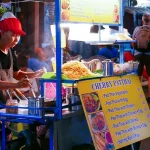
For smaller local restaurants, market canteens, and family-run spots without a service charge, a tip of 5–10% of the bill is appropriate. For very cheap meals under 200 THB — a bowl of boat noodles, a plate of pad krapao, the kind of meal you eat standing at a folding table while motorcycle fumes drift past — simply rounding up or leaving 20–40 THB is perfectly sufficient. Nobody expects a percentage calculation at a street stall.
Spas and Massage Therapists
This is the one area in Thailand where tipping is genuinely expected, and skipping it entirely after a good session is considered poor form. A reasonable guide:
- One-hour massage: 50–100 THB
- Two-hour massage or full body treatment: 100–200 THB
- Exceptional service or a premium spa experience: 10–15% of the total bill
Hand the tip directly to your therapist after the session.
Hotels
- Bellhops and porters: 20–50 THB per bag when they assist you to your room
- Housekeeping: 20–50 THB per day, left on the pillow or bedside table with a small “Thank You” note
- Concierge: Not typically tipped unless they go significantly out of their way — securing a hard-to-book restaurant reservation, for example. In that case, 100–200 THB is appropriate.
Tour Guides and Drivers
- Private full-day guide: 200–500 THB per day, scaled to the quality of the experience and the size of your group
- Group tour guide: 50–100 THB per person for a half-day, 100–200 THB per person for a full day
- Private car hire (full day): 100–200 THB for the driver
- Taxis and Grab: Tipping is not expected. Rounding up to the nearest 10–20 THB is a friendly gesture but entirely optional.
- Tuk-tuks: Rounding up is sufficient.
Hairdressers and Beauty Salons
50–100 THB for a haircut or beauty treatment is standard. Hand it directly to the person who did the work, not the cashier.
The Golden Rule — Always Tip in Cash
When you pay for a meal or service by card and the terminal asks you to add a tip, that money often does not reach the individual who served you — it goes into a pooled fund or, in some cases, directly to the business. Tipping by card also creates a paper trail that some staff prefer to avoid for tax reasons that are entirely their own business.
Always tip in small denomination Thai Baht banknotes: 20, 50, and 100 THB notes are ideal. Keep a supply of these in a separate pocket so you are not fumbling through your wallet every time.
Paying for Everything Else: ATMs, Cards, and Digital Wallets
Tipping is only one piece of the payment puzzle in Thailand. Knowing how to access your money efficiently will save you significant fees over a multi-week trip.
ATMs
ATMs from major banks — Kasikorn Bank (KBank), Bangkok Bank, Siam Commercial Bank (SCB), and Krungthai Bank — are everywhere in Thailand. The flat fee for withdrawing with a foreign card is 220 THB per transaction, charged by the Thai bank on top of whatever fees your home bank adds. To minimise this, withdraw larger amounts less frequently rather than small amounts often. Most machines dispense between 10,000 and 30,000 THB per transaction.
One more thing: when the ATM screen asks whether you want to proceed “with conversion” (your home currency) or “without conversion” (THB), always choose without conversion. This is called Dynamic Currency Conversion (DCC), and the exchange rate offered by the ATM operator is almost always worse than the rate your bank applies. Pay in THB every time.
Credit and Debit Cards
Visa and Mastercard are accepted at major hotels, department stores, large supermarkets like Tops and Lotus’s, and international restaurant chains. In 2026, contactless payments via Visa PayWave and Mastercard PayPass are increasingly common at these locations. American Express and JCB are accepted at a narrower range of venues.
Cards are rarely accepted at street food stalls, local markets, smaller guesthouses, or independent shops. A small number of establishments still impose a 2–3% surcharge for card payments, though this practice has been declining. Always carry cash as a backup — it is not optional, it is essential.
PromptPay QR Code
PromptPay is Thailand’s national instant payment system and it is everywhere — from large supermarkets to noodle stalls with a laminated QR code taped to the wall. For most Western travellers, direct use requires a Thai bank account, which tourists typically do not have. However, in 2026, cross-border QR payment links with several ASEAN countries (including Malaysia’s DuitNow, Singapore’s PayNow, Indonesia’s QRIS, and Vietnam’s VietQR) mean travellers from those countries can scan Thai PromptPay codes using their home banking apps. Travellers from China can use Alipay and WeChat Pay, which are integrated with the PromptPay network.
TrueMoney Wallet
Tourists can download the TrueMoney Wallet app (iOS and Android), register with a foreign phone number and passport, and top it up with cash at any 7-Eleven or TrueMoney kiosk. It is accepted at 7-Eleven stores, convenience shops, and a growing range of online services. More details at truemoney.com.
Rabbit Card and Rabbit LINE Pay
The Rabbit Card is a stored-value card used primarily on the BTS Skytrain in Bangkok. You buy one at any BTS station and top it up with cash. It is the most convenient way to pay for the Skytrain and avoids the queue for single-journey tickets every time. Rabbit LINE Pay (rabbitlinepay.com) extends this into a broader e-wallet, but it is primarily designed for users with Thai bank accounts — less straightforward for short-term visitors.
Currency Exchange
For the best exchange rates, avoid airport and hotel counters entirely. Look for reputable exchange booths such as SuperRich (superrichthailand.com), which consistently offer competitive rates in Bangkok and major tourist cities.
2026 Budget Reality — Tips and Fees in Real Numbers
Here is what tipping and payment costs actually look like across a typical day in Thailand in 2026, broken down by travel style.
Budget Traveller (guesthouses, street food, local transport)
- Street food meals: no tip expected, round up by 10–20 THB if you want
- Local massage shop (1 hour at 250–350 THB): tip 50 THB
- BTS Skytrain single journey: 17–59 THB depending on distance (Rabbit Card reduces friction)
- ATM withdrawal fee: 220 THB per transaction — withdraw larger amounts to reduce frequency
- Estimated daily tipping spend: 50–150 THB
Mid-Range Traveller (mid-tier hotels, restaurant dining, occasional tours)
- Restaurant bill with service charge already included: leave 20–50 THB extra for the server
- Hotel porter: 40–50 THB per bag
- Hotel housekeeping: 50 THB per day
- Spa treatment (90 min at 800–1,200 THB): tip 100–150 THB
- Half-day group tour guide: 100 THB per person
- Estimated daily tipping spend: 200–400 THB
Comfortable / Upscale Traveller (luxury hotels, private guides, premium spas)
- Private full-day guide: 300–500 THB
- Private driver: 150–200 THB
- Premium spa (2-hour treatment at 2,500–4,000 THB): tip 200–400 THB
- Fine dining (service charge usually included): leave 50–100 THB in cash
- Estimated daily tipping spend: 500–1,000 THB
Common Mistakes That Cost Tourists Money
A few habits to unlearn before you land:
- Tipping 20% automatically: American-style tipping percentages are excessive in most Thai contexts. A 200 THB tip on a 400 THB bill at a small restaurant would genuinely surprise the server.
- Accepting Dynamic Currency Conversion: Always pay in THB at ATMs and card terminals. The “convenience” of your home currency at a merchant rate costs you real money on every transaction.
- Exchanging money at the airport: Rates at Suvarnabhumi (BKK) and Don Mueang (DMK) arrival halls are consistently poor. Exchange just enough for your first taxi or meal, then find a SuperRich booth in the city.
- Leaving a tip at the front desk: In many hotels and spas, tips left at reception do not reliably reach the individual worker. Hand cash directly to the person who provided the service.
- Forgetting small bills: Handing a massage therapist a 1,000 THB note and expecting change is awkward for everyone. Stock up on 20 and 50 THB notes daily.
- Tipping with coins: Especially avoid 1 THB coins. They are broadly considered an insulting gesture when used as a tip.
- Assuming cards work everywhere: Even in Bangkok in 2026, a local market stall, a canal ferry, or a temple entrance booth will only take cash. Never leave your accommodation without THB in your pocket.
Frequently Asked Questions
Is tipping mandatory in Thailand?
No. Tipping in Thailand is never mandatory. Thai service workers receive a base wage and tips are treated as a bonus for good service. That said, in sectors like massage and spa services, a tip of 50–100 THB after a one-hour session is so common that skipping it entirely after good service would be noticed.
Should I tip if a service charge is already on my bill?
When a restaurant adds a 10% service charge to your bill, no additional tip is required. If the service was genuinely excellent, leaving 20–50 THB in cash on the table for the server is a kind gesture, but it is completely optional and not an expectation.
What is the ATM fee for foreign cards in Thailand in 2026?
Most Thai bank ATMs charge a flat fee of 220 THB per transaction for foreign-issued cards, in addition to any fees charged by your home bank. To reduce costs, withdraw larger amounts less frequently, and look for bank accounts from home that refund international ATM fees — several fintech cards are well suited to Thailand travel.
Can I use Google Pay, Apple Pay, or PayPal in Thailand?
In 2026, Google Pay and Apple Pay have limited acceptance in Thailand compared to Europe or North America. Some larger retailers and hotels may accept them via contactless terminals, but they are far from universal. PayPal is not a standard point-of-sale payment method in Thailand. Cash and Thai QR-based payments remain dominant for everyday spending.
How much cash should I carry daily in Thailand?
A practical daily cash budget depends on your travel style. Budget travellers should carry 500–1,000 THB for tips, transport, and small purchases. Mid-range travellers should carry 1,500–2,500 THB. Always have small denominations — 20, 50, and 100 THB notes — readily accessible so tips and street food payments stay simple and fast.
📷 Featured image by Chris Lawton on Unsplash.