On this page
- Still Quiet Enough to Actually Relax
- The Islands — What Each One Is Actually Like
- Beaches and Natural Highlights Worth Planning Around
- Where to Eat Around the Trang Islands
- Getting to Trang Province
- Getting Between the Islands
- Day Trips and Cave Detours Worth Adding
- Evenings on the Trang Islands
- Where to Stay — Islands and Budget Tiers
- When to Go — Seasons and Honest Expectations
- Practical Tips for Island Hopping in 2026
- Budget Breakdown — What to Expect to Spend Daily in THB
- Frequently Asked Questions
💰 Click here to see Thailand Budget Breakdown
💰 Prices updated: October, 2026. Budget figures are estimates — always verify before travel.
Exchange Rate: $1 USD = ฿33.60
Daily Budget (per person)
Shoestring: ฿900.00 – ฿1,800.00 ($26.79 – $53.57)
Mid-range: ฿2,150.00 – ฿4,000.00 ($63.99 – $119.05)
Comfortable: ฿6,000.00 – ฿12,000.00 ($178.57 – $357.14)
Accommodation (per night)
Hostel/guesthouse: ฿90.00 – ฿750.00 ($2.68 – $22.32)
Mid-range hotel: ฿1,400.00 – ฿3,500.00 ($41.67 – $104.17)
Food (per meal)
Budget meal: ฿70.00 ($2.08)
Mid-range meal: ฿250.00 ($7.44)
Upscale meal: ฿1,000.00 ($29.76)
Transport
Single metro/bus trip: ฿30.00 ($0.89)
Monthly transport pass: ฿1,155.00 ($34.38)
Still Quiet Enough to Actually Relax
While Koh Samui sells out in December and Koh Phi Phi fills every longtail with day-trippers by 10am, the Trang Islands sit roughly 100 kilometres further south and still feel like a genuine secret. That said, 2026 has brought a small but noticeable uptick in visitors since Trang Airport expanded its flight connections in late 2025 — so the window to experience these islands before serious mass tourism arrives is real, but not infinite. If you’ve been sitting on this trip, now is the right time.
The Islands — What Each One Is Actually Like
The Trang archipelago stretches along the Andaman coast in Trang Province and covers around a dozen named islands, though only a handful are set up for visitors. Each has its own character.
Koh Muk
This is the entry point for most visitors, and for good reason. The western side hosts the famous Tham Morakot (Emerald Cave), and the village side has a small but functioning cluster of guesthouses and restaurants. It’s the most connected island, with the most consistent boat schedules. The eastern half is Muslim-majority fishing village territory — quiet, respectful, and genuinely interesting to walk through in the early morning when fishermen are sorting their night’s catch by the wooden jetty.
Koh Kradan
The most visually stunning of the group. The reef that fringes the southern tip is in better shape than almost anywhere else in this part of the Andaman, and the beach itself — pale sand, clear water, no jet skis — justifies the journey alone. Accommodation options are limited and deliberately low-key. It gets a Christmas and New Year surge every year, but outside those weeks it stays calm.
Koh Ngai (Koh Hai)
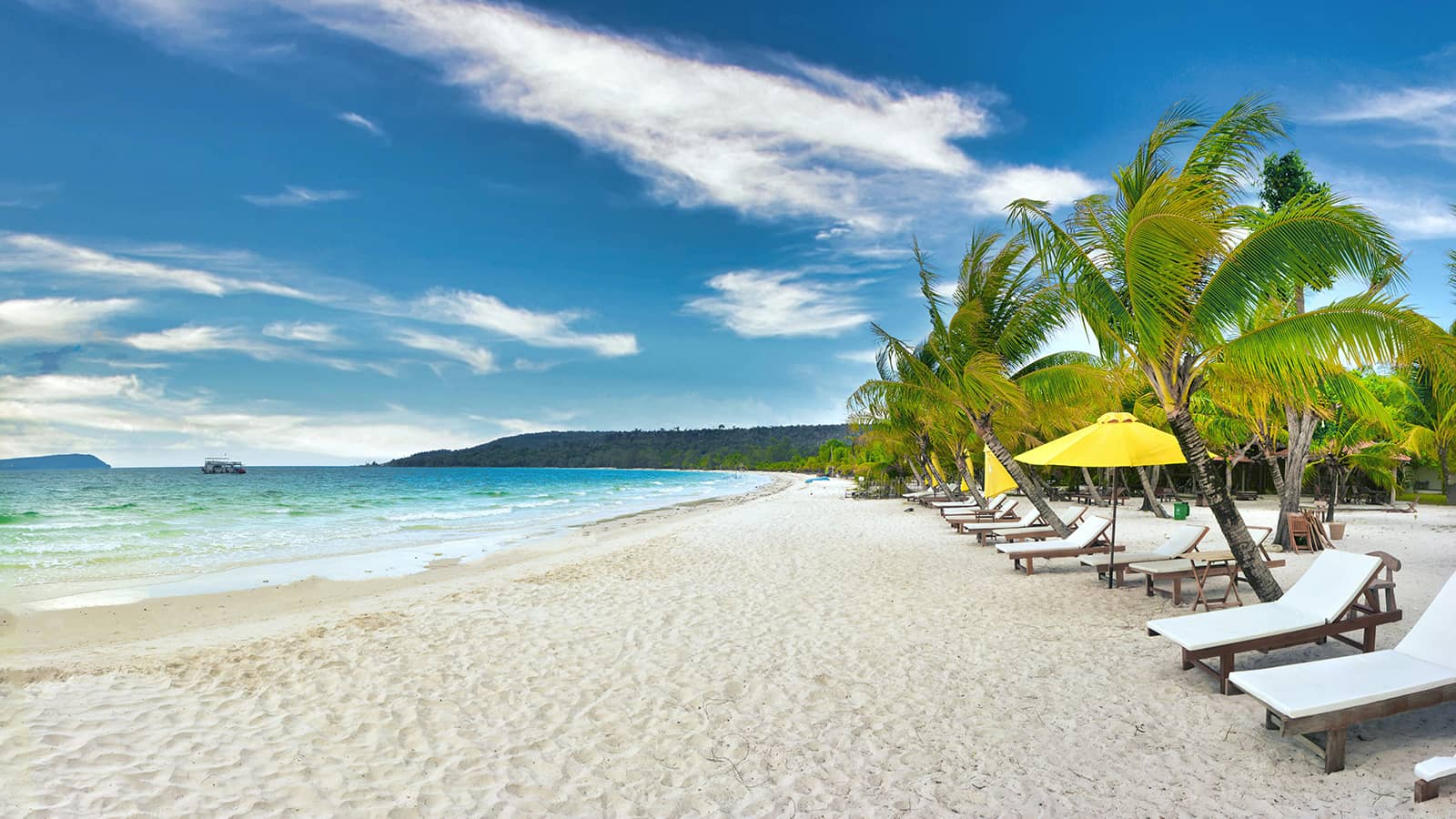
Sits on the border between Trang and Krabi provinces and is sometimes marketed as a Krabi island. The long eastern beach is lined with small resorts, and the water colour here — a deep layered turquoise that shifts depending on the angle of the sun — is among the most photogenic in the entire region. Good for snorkelling directly from the beach without a boat trip.
Koh Libong
Trang’s largest island and almost entirely off the tourist radar. Around 5,000 people live here, mostly Muslim fishing communities. The mangrove channels on the eastern side are a habitat for dugongs — Thailand’s remaining wild population clusters around Libong’s sea grass beds. There are no party bars, no beach clubs, and almost no other foreign travellers most of the year. That’s either a problem or the whole point, depending on who you are.

Koh Sukorn
Even quieter than Libong and shaped more like an agricultural island than a beach destination — rubber plantations, watermelon farms, and water buffalo. A handful of simple guesthouses cater to travellers who want total escape. The beaches are decent but not spectacular. The appeal is the pace and the people.
Beaches and Natural Highlights Worth Planning Around
The Trang Islands’ best natural features reward a bit of effort. Very few are accessible by simply walking out of your resort.
Tham Morakot — Emerald Cave, Koh Muk
You swim through a narrow, dark sea cave — roughly 80 metres — and emerge into a hidden lagoon surrounded by cliff walls and jungle above. The water inside the cave glows green when sunlight filters through from the lagoon side. Go early. By 11am the tour boats from Trang town arrive in waves and the cave becomes a queue of snorkelling tourists. At 8am you may have it to yourself. The swim requires basic confidence in the water — there’s no rope or guide, and the middle section is completely dark. If you’re staying on Koh Muk, the cave is around 20 minutes by longtail from the main pier — arrange it through your guesthouse rather than joining a tour from the mainland, or you’ll arrive at the same time as everyone else.
Koh Kradan’s South Reef
Bring your own mask and fins if you have them. The reef starts just metres from the beach in chest-deep water and extends outward to around 10 metres depth. Staghorn coral, parrotfish, and occasional reef sharks make this one of the more rewarding snorkelling sites in the south without needing to rent a full dive setup. The colours here in the late afternoon — the coral lit gold from the angle of the sun, the fish moving in slow circuits — are something you won’t see on a screen the same way you see them in person.
Dugong Spotting, Koh Libong
The Libong Archipelago Wildlife Reserve protects the sea grass beds around the island. Local longtail boat operators run early morning trips into the channels — the best window is roughly 6am to 8am. Sightings aren’t guaranteed, but the rate is high enough that experienced guides know which areas to check. These are wild animals in their actual habitat, not performing in an enclosure. Even a brief surface glimpse of one of these creatures — slow, enormous, and entirely unbothered by the boat — stays with you.

Hat Yao, Koh Ngai
A long, clean beach with gradual depth and almost no current. Safe for children and non-swimmers. In peak season the resorts along the beach are all occupied, but the beach itself never feels packed by Phuket or Samui standards.
Where to Eat Around the Trang Islands
Food on the islands themselves is simple and mostly resort-based. The real eating happens on the mainland — in Trang town — and you should factor in at least one meal there if your itinerary allows.
Trang Town
Trang has a legitimate food reputation among Thai travellers that foreigners almost entirely miss. The morning market on Tha Klang Road runs from around 5:30am and sells khanom jeen (fermented rice noodles with curry sauce ladled over them fresh), moo yang (grilled pork), and the Trang-specific roast duck that has its own fan base across the south. The night market near the clock tower sets up around 5pm and goes until 10pm — grilled seafood, satay, and fresh roti with condensed milk from the Muslim vendors in the back rows.
On Koh Muk
The restaurants near the village pier serve fresh catch fish and standard Thai dishes. Prices are fair. The seafood is genuinely fresh — boats come in daily. Nothing fancy, but the grilled barracuda with som tam at the open-sided restaurants facing the water is exactly the meal you came here for.
On Koh Kradan and Koh Ngai
You’re eating at your resort or a neighbouring resort. Options are limited and prices reflect that. Budget around 200–400 THB per main course. Pack snacks if you’re staying more than two nights and are on a strict budget.
On Koh Libong
There are a few local restaurants near the main ferry pier. Order the freshest thing on the menu — usually whatever fish the owner points at. Prices are low and portions are generous.
Getting to Trang Province
This is where most travellers lose time or get confused. Trang is not Krabi. It’s a separate province further south, and the transport options are different.

By Air
Trang Airport (TST) has expanded its scheduled services since late 2025. In 2026, Thai Airways and Nok Air both operate daily flights from Bangkok’s Don Mueang Airport. Flight time is approximately 1 hour 20 minutes. Fares range from around 1,200 THB (budget, booked in advance) to 3,500 THB one way. This is the fastest and most practical option from Bangkok.
By Train
The overnight sleeper from Bangkok Hua Lamphong or Bang Sue Grand Station (the main hub since 2022) reaches Trang in around 14–16 hours. Second-class sleeper tickets cost approximately 700–900 THB. It’s genuinely comfortable if you book a berth, and you wake up in Trang with no hotel night wasted.
By Bus
Southern bus services from Bangkok’s Southern Bus Terminal take 12–14 hours. VIP bus seats run around 600–900 THB. Useful if you’re combining Trang with Hat Yai or other southern stops.
From Krabi or Phuket
Shared minivans connect Krabi to Trang in roughly 2 hours (approximately 200–250 THB). From Phuket, expect 3.5 to 4 hours by minivan, around 350–400 THB. Both options drop you in Trang town near the bus terminal.
Getting Between the Islands
Once you’re in Trang, the islands are accessed primarily from Pak Meng Pier and Hat Yao Pier. Pak Meng is the main departure point for most island-hopping packages.
- Pak Meng to Koh Ngai: Approximately 30–40 minutes by speedboat. Longtail options exist but take longer.
- Pak Meng to Koh Muk: Around 25–35 minutes by speedboat. Regular services daily in high season.
- Pak Meng to Koh Kradan: Approximately 40–50 minutes by speedboat.
- Koh Lanta (Krabi) to Koh Ngai: Cross-province speedboat services run in high season, roughly 45 minutes. Useful if combining Trang with a Koh Lanta stay.
- Longtail charters between islands: Expect to pay 800–1,500 THB per boat per trip depending on distance and negotiation. Good for groups.
There is no fixed inter-island ferry network. Most island-hopping is done through organised day tours (sold at guesthouses and Trang town travel agents) or by chartering longtails. The day tours typically visit three islands in one trip and cost 800–1,200 THB per person including snorkelling gear and lunch.

Day Trips and Cave Detours Worth Adding
The mainland around Trang province is underrated and pairs well with island time.
Tham Le Khao Kob Cave
On the mainland, around 45 kilometres from Trang town. A river cave navigated by flat-bottomed boat with a guide holding a lantern. The formations inside are impressive and the experience is far less trafficked than anything in Phang Nga Bay. Getting there requires a rented motorbike or hired transport from Trang — around 600–800 THB return with a driver.
Hat Chao Mai National Park
The park covers the coastal area including several of the Trang islands and a stretch of mainland shoreline. The park headquarters near the mainland pier has a small nature centre and hiking trails through coastal forest. Worth a half-day if you have extra time before a ferry.
Trang Town Itself
Old Sino-Portuguese shophouse architecture along Viset Road, a genuine morning market culture, and the best food in the province. If your ferry back to the mainland lands in the afternoon, staying a night in town before flying home adds real value to the trip.
Evenings on the Trang Islands
Nightlife is not the reason to come here. If you want beach clubs, cocktail menus with 14 options, and fire shows, Koh Samui is three hours north. The Trang Islands wind down early by design.
On Koh Muk, a few simple beach bars stay open until around 11pm. Cold Singha beer, plastic chairs in the sand, maybe a guitar if the guesthouse owner is in the mood. The bioluminescent plankton that appears in the water near the pier on calm, dark nights is more interesting than any bar — wade in slowly and watch the blue sparks trail from your hands and feet in the dark water.
On Koh Ngai, some resorts have open-air bars facing the beach and offer cocktails until midnight. On Koh Kradan, evenings are essentially dinner and stargazing. Light pollution is minimal and the Milky Way is visible on clear nights from late October through April. On Koh Libong, things are quiet by 9pm without exception.
Where to Stay — Islands and Budget Tiers
Budget (under 800 THB per night)
Koh Muk has the most budget options — simple bungalows with fan cooling and cold showers near the village. Expect to pay 500–750 THB per night for a basic private room. Koh Libong has one or two very affordable guesthouses used primarily by Thai visitors and researchers working with the dugong conservation program — rooms around 400–600 THB.
Mid-Range (800–2,500 THB per night)
Koh Ngai has several well-run resorts in this range with air conditioning, en-suite bathrooms, and included breakfast. Koh Muk’s better guesthouses also sit in this tier. You’ll get a clean, comfortable room with a view for 1,200–2,000 THB on most islands outside peak season.
Comfortable (2,500–6,000 THB per night)
Koh Kradan has a small number of boutique resorts aimed at couples and honeymooners, with beachfront positioning and better food. Prices during Christmas and New Year week can hit 8,000–10,000 THB per night at the top properties. Book months in advance for those dates. Koh Ngai also has a few higher-end properties with private beach access and pool access in this price range.
When to Go — Seasons and Honest Expectations
The Andaman coast operates on a clear split season. Getting this wrong means arriving to closed resorts and cancelled boats.
High Season: November to April
The driest, calmest period. Seas are flat, visibility for snorkelling is excellent, and all boats run on schedule. December to February is peak within peak — prices are highest and Koh Kradan and Koh Ngai in particular fill up. Book accommodation well in advance. March and April are excellent shoulder months with lower prices and fewer tourists while conditions remain good.
Low Season: May to October
The monsoon affects the Andaman coast from roughly May through October. Seas become rough, many guesthouses and resorts close entirely (especially on Koh Kradan and Koh Ngai), and boat services are suspended or unreliable. Some travellers visit Koh Libong and Koh Sukorn in the shoulder months (May and October) when conditions are mixed but often manageable. Do not plan a Trang island trip in July or August expecting reliable access — it’s genuinely unsafe to be on small boats in those conditions.
Festivals Worth Timing Around
Trang’s Vegetarian Festival in October is among the more intense versions in southern Thailand — street processions, firewalking, and food stalls converting to all-vegetarian menus throughout town. If your dates overlap with it, stay a night in Trang town and attend. It runs for nine days, timing based on the lunar calendar.
Practical Tips for Island Hopping in 2026
- Cash is essential. ATMs exist in Trang town but not reliably on the islands. Bring enough baht before boarding any ferry — some resorts and all small restaurants operate cash only.
- SIM cards: Buy an AIS or DTAC tourist SIM at Trang Airport or in town. Signal on Koh Muk and Koh Ngai is adequate (4G most of the time). Koh Libong and Koh Sukorn have patchy coverage at best.
- Water: Never drink tap water. Bottled water is available on all inhabited islands, usually 10–20 THB per 1.5-litre bottle. Most resorts provide refill stations — bring a reusable bottle.
- Sun protection: UV index at this latitude is extreme from 10am to 3pm. Factor 50 sunscreen, a rash guard for snorkelling, and a hat are non-negotiable, not optional extras.
- Reef-safe sunscreen: Hat Chao Mai National Park now enforces the ban on chemical sunscreens (oxybenzone and octinoxate) within park boundaries. Mineral sunscreen with zinc oxide is the compliant and correct choice.
- Respect the communities: Several islands have significant Muslim populations. Dress modestly when walking through villages — cover shoulders and knees. This is basic courtesy, not an inconvenience.
- Health: The nearest hospital with emergency capacity is in Trang town. Minor clinics exist on Koh Muk. Travel insurance that covers medical evacuation is worth having for any island stay.
- Electricity: Power on some islands is generator-based, running from early evening to around midnight only. Charge devices when you can.

Budget Breakdown — What to Expect to Spend Daily in THB
Budget Traveller
- Accommodation (fan bungalow, Koh Muk): 500–700 THB
- Food (local restaurants, simple meals): 200–350 THB
- Transport (shared boat transfers): 200–400 THB
- Activities (snorkelling gear rental, cave entry): 150–300 THB
- Total: approximately 1,050–1,750 THB per day
Mid-Range Traveller
- Accommodation (AC resort room with breakfast, Koh Ngai): 1,500–2,200 THB
- Food (resort meals plus one town meal): 500–800 THB
- Transport (speedboat transfers, private longtail): 400–700 THB
- Activities (island-hopping day tour, dive): 800–1,500 THB
- Total: approximately 3,200–5,200 THB per day
Comfortable Traveller
- Accommodation (boutique beachfront resort, Koh Kradan): 3,500–6,000 THB
- Food (resort dining plus transfers): 1,000–1,800 THB
- Transport (private speedboat, transfers included): 1,000–2,000 THB
- Activities (private dive charter, kayaking): 1,500–3,000 THB
- Total: approximately 7,000–12,800 THB per day
Frequently Asked Questions
Which Trang Island is best for first-time visitors?
Koh Muk is the most practical starting point — it has the best boat connections, a range of accommodation, and the Emerald Cave on its doorstep. From there you can day trip to Koh Kradan and Koh Ngai without changing your base. It’s also the most affordable of the main islands.
Can you visit the Trang Islands as a day trip from Krabi?
Technically yes — some operators run speedboat day trips from Koh Lanta to Koh Ngai. But it’s a long day and you’ll spend a significant portion of it on the water. Staying at least one night on the islands is a far better use of the journey. The Trang Islands reward slowness, not rushing.
Is it safe to swim in the sea around the Trang Islands?
During high season (November to April), conditions are generally calm and safe. Currents can be strong around headlands and cave entrances — always ask your guesthouse or a local guide before swimming in unfamiliar spots. During low season, do not attempt open water swimming — conditions can deteriorate rapidly.
Are the Trang Islands suitable for families with young children?
Yes, particularly Koh Ngai, which has a long shallow beach with minimal current and gentle waves in high season. Koh Muk is also manageable. Koh Kradan and Koh Libong are more suited to adults — limited facilities and more remote access make logistics harder with young children.
Do I need to book island accommodation in advance?
For December, January, and the week around Thai New Year (Songkran, mid-April), yes — book months ahead. Outside those windows, especially March to April and October to November, you can often arrive and find rooms available. Koh Libong and Koh Sukorn rarely fill up regardless of season.
Explore more
Is a Kanchanaburi Day Trip from Bangkok Worth It?
📷 Featured image by Norbert Braun on Unsplash.