On this page
- Koh Lanta — The Laid-Back Long-Stay Favourite
- Koh Kood — Thailand’s Last Truly Quiet Island
- Koh Tao — The Best Place to Get Dive-Certified in Southeast Asia
- Koh Lipe — The Andaman’s Southernmost Gem
- Koh Chang — The Big Island That Most Bangkok Travellers Overlook
- Day Trip or Overnight? How to Decide
- 2026 Budget Reality — What Each Island Actually Costs
- Getting to These Islands in 2026
- Frequently Asked Questions
💰 Click here to see Thailand Budget Breakdown
💰 Prices updated: October, 2026. Budget figures are estimates — always verify before travel.
Exchange Rate: $1 USD = ฿33.60
Daily Budget (per person)
Shoestring: ฿900.00 – ฿1,800.00 ($26.79 – $53.57)
Mid-range: ฿2,150.00 – ฿4,000.00 ($63.99 – $119.05)
Comfortable: ฿6,000.00 – ฿12,000.00 ($178.57 – $357.14)
Accommodation (per night)
Hostel/guesthouse: ฿90.00 – ฿750.00 ($2.68 – $22.32)
Mid-range hotel: ฿1,400.00 – ฿3,500.00 ($41.67 – $104.17)
Food (per meal)
Budget meal: ฿70.00 ($2.08)
Mid-range meal: ฿250.00 ($7.44)
Upscale meal: ฿1,000.00 ($29.76)
Transport
Single metro/bus trip: ฿30.00 ($0.89)
Monthly transport pass: ฿1,155.00 ($34.38)
By 2026, Phuket’s Patong Beach and Koh Samui’s Chaweng strip have become cautionary tales in over-tourism. Flight prices to both have surged, resort fees have climbed, and the crowds — particularly from November through April — can make the beach feel less like a holiday and more like a queue. The good news is that Thailand has over 1,400 islands, and most of them remain genuinely undervisited. These six alternatives offer real coastline, real food, and the kind of quiet that used to define Thai island travel.
Koh Lanta — The Laid-Back Long-Stay Favourite
Koh Lanta sits in Krabi province, about two hours south of Krabi Town by road and ferry. It has a long, flat west coast lined with beaches that face directly into the Andaman sunset — the sky goes amber, then deep pink, then purple, and the fishing boats drift into silhouette. That nightly spectacle alone explains why so many visitors plan a week and end up staying three.
The island has a distinct personality: slower, more local, more Muslim-majority in its northern villages. Lanta Old Town on the east coast is a row of century-old Chinese-Malay shophouses on stilts over the water, with a handful of good coffee spots and family-run seafood restaurants. The tourism infrastructure is solid — you won’t struggle to find comfortable accommodation or a decent massage — but it hasn’t tipped into the excess of Phuket.
Long Beach (Hat Khlong Dao) is the main tourist strip but still manageable. For something quieter, head to Hat Khlong Nin or the beaches south of Ban Sala Dan. Koh Lanta Marine National Park, accessible by longtail boat, includes Koh Rok — consistently ranked as one of the clearest-water snorkelling sites in Thailand.
- Best for: Couples, long-stay travellers, families with young children
- High season: November to April
- Avoid if: You want nightlife beyond a beach bar
Koh Kood — Thailand’s Last Truly Quiet Island
Koh Kood (also spelled Koh Kut) is in the Gulf of Thailand, close to the Cambodian border, and it has resisted the kind of development that swallowed Koh Chang to its north. There are no 7-Elevens on most of the island. The roads are mostly unpaved inland. The rivers — particularly Klong Chao — run clear enough to swim in, winding through jungle before opening into mangrove flats near the coast.
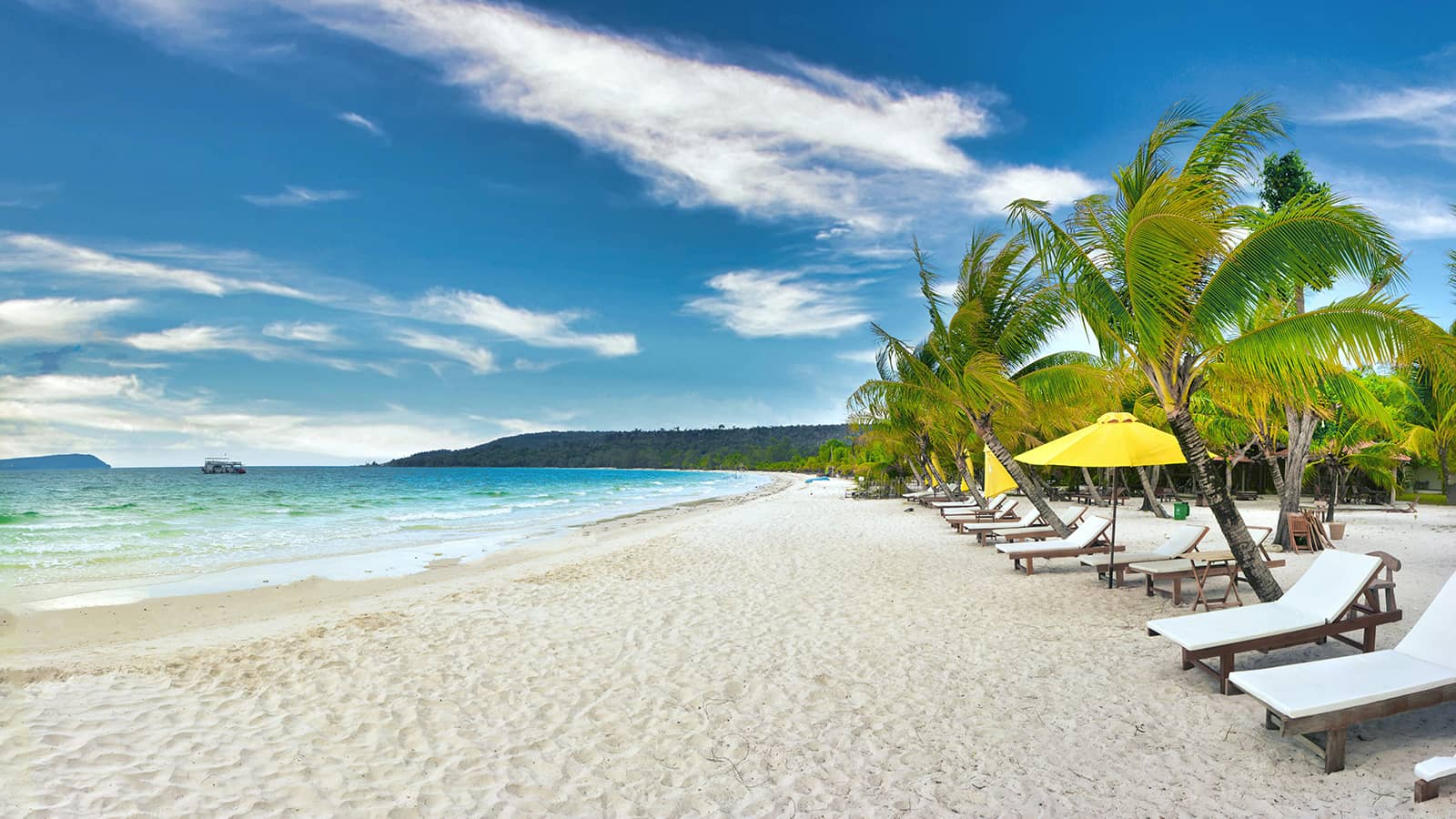
This is the island for people who are serious about doing nothing. The resorts here are mostly boutique or eco-leaning, and they’re genuinely spread out — you can walk a stretch of Ao Phrao beach in the morning and not pass another person for twenty minutes. The water is shallow and calm on the western shores, a pale aquamarine that photographs almost unbelievably well.
The tradeoff is price and access. Koh Kood is more expensive than its neighbours because nearly everything is imported by boat. Electricity is generator-based in many areas. Getting there requires a flight to Trat, then a ferry — or a direct speedboat from some piers. It’s the kind of effort that naturally filters out day-trippers and keeps the island in the shape it’s in.
- Best for: Honeymoons, digital detox, serious beach lovers
- High season: November to May
- Avoid if: Budget travel is a priority
Koh Tao — The Best Place to Get Dive-Certified in Southeast Asia
Koh Tao doesn’t pretend to be a relaxation island. It’s a working dive island, and it’s excellent at it. You can get a PADI Open Water certification here in three to four days for around 9,500–11,000 THB — one of the lowest prices for a legitimate certification anywhere in the world. The dive sites around the island include Chumphon Pinnacle, where whale sharks appear with reasonable frequency between March and May, and the HTMS Sattakut wreck, a decommissioned naval vessel sunk deliberately in 2011 and now heavily colonised by marine life.
Above water, Koh Tao has a compact social scene — Sairee Beach is lively without being overwhelming, and the north of the island around Mae Haad is calmer. The food scene has improved noticeably in 2025–2026, with better coffee shops and a handful of genuinely good restaurants beyond the dive school canteens. The island is small enough to explore by scooter in a few hours.
One practical note: Koh Tao has no hospital. The nearest hyperbaric chamber is on Koh Samui. Reputable dive schools brief you on this before you get in the water — if yours doesn’t mention it, that’s a warning sign.
- Best for: Solo travellers, divers at all levels, budget backpackers with a purpose
- High season: December to April, with good diving year-round
- Avoid if: You want a beach holiday with zero noise after 10pm
Koh Lipe — The Andaman’s Southernmost Gem
Koh Lipe is tiny — you can walk across it in fifteen minutes — and it sits inside the Tarutao Marine National Park, surrounded by some of the most transparent water in Thailand. The three main beaches (Sunrise, Sunset, and Pattaya) each have a different atmosphere, and the pedestrian-only Walking Street in the middle of the island is where you eat, drink, and buy things. There are no cars on Koh Lipe. That single fact changes the quality of the experience completely.
The coral around the island is in better condition than almost anywhere else in the Thai Andaman, partly because national park regulations limit certain activities and partly because it’s harder to reach. Snorkelling straight off the beach at Sunrise Beach in the early morning, with the water still calm and the light just hitting the coral gardens, is one of those moments that stays with you.
Getting here from Malaysia is also straightforward — there are direct ferries from Langkawi during high season, which makes Koh Lipe a popular first or last stop on a Thailand trip for those coming from the south.
- Best for: Snorkellers, couples, travellers combining Thailand and Malaysia
- High season: November to April (the island largely closes May to October)
- Avoid if: You need reliable internet for remote work
Koh Chang — The Big Island That Most Bangkok Travellers Overlook
Koh Chang is Thailand’s second-largest island and it’s only five hours from Bangkok by bus and ferry — a combination that makes it genuinely viable for long weekends in a way that the southern islands are not. Despite its size and proximity to the capital, it remains far less visited than Phuket or Koh Samui, and its interior is mostly protected national park: dense jungle, waterfalls, and hiking trails that most visitors never find.
The west coast has the main beaches — White Sand Beach (Hat Sai Khao) is the busiest and most developed, while Lonely Beach (Hat Tha Nam) has kept a backpacker energy, and the southern stretches like Bang Bao are quieter still, with a stilted fishing village turned into a casual hub of seafood restaurants and dive shops. The water is greenish rather than the Andaman’s blue-clear, but the island more than compensates with its scale, its food, and its easy access.
- Best for: Bangkok-based travellers, families, wildlife and hiking enthusiasts
- High season: November to April
- Avoid if: Postcard-blue water is non-negotiable
Day Trip or Overnight? How to Decide
None of these islands work as day trips — and that’s part of the point. All five require at least one night to make the journey worthwhile, and most reward stays of three nights or longer. Here’s a quick breakdown:
- Koh Lanta: Minimum 3 nights. The island’s pace only reveals itself after the first day.
- Koh Kood: Minimum 3–4 nights. The journey is too involved for anything shorter.
- Koh Tao: If you’re diving, block out 4–5 days for certification. Non-divers can do 2 nights comfortably.
- Koh Lipe: 2–3 nights is ideal. The island is small; you’ll cover it thoroughly in that time.
- Koh Chang: 2–3 nights minimum. It’s big enough that a single night doesn’t do it justice.
2026 Budget Reality — What Each Island Actually Costs
Prices across all Thai islands have risen since 2023, partly due to higher fuel costs affecting ferry and boat operations, and partly due to post-pandemic demand. Here’s a realistic per-person daily budget for each island in 2026, covering accommodation, food, and local transport (not including activities):
Koh Lanta
- Budget: 900–1,400 THB/day (fan bungalow, street food, scooter hire)
- Mid-range: 2,000–3,500 THB/day (air-con resort, sit-down meals)
- Comfortable: 5,000–9,000 THB/day (beachfront villa, seafood dinners)
Koh Kood
- Budget: Not really applicable — limited cheap options exist
- Mid-range: 3,500–6,000 THB/day
- Comfortable: 8,000–20,000 THB/day (boutique and luxury resorts dominate)
Koh Tao
- Budget: 700–1,200 THB/day (dive school dorms, noodle shops)
- Mid-range: 1,800–3,000 THB/day
- Comfortable: 4,000–7,000 THB/day
Koh Lipe
- Budget: 1,200–1,800 THB/day
- Mid-range: 2,500–4,500 THB/day
- Comfortable: 6,000–12,000 THB/day
Koh Chang
- Budget: 700–1,200 THB/day
- Mid-range: 1,800–3,500 THB/day
- Comfortable: 4,500–9,000 THB/day
Getting to These Islands in 2026
Access has improved on several routes since 2024, though some islands remain deliberately hard to reach:
- Koh Lanta: Fly to Krabi, then take a minivan and ferry (about 2.5 hours total). Krabi now has direct international flights from several Southeast Asian cities, reducing the Bangkok layover.
- Koh Kood: Fly to Trat (Bangkok Airways from Suvarnabhumi), then ferry or speedboat from Laem Sok pier. The flight is around 50 minutes. There are also overnight bus-and-ferry combinations from Bangkok’s Ekkamai terminal.
- Koh Tao: Fly or take a train to Chumphon, then a high-speed catamaran (1.5 hours). Alternatively, take the overnight train from Bangkok Hua Lamphong to Chumphon — a genuinely pleasant journey that arrives in time for morning ferries.
- Koh Lipe: Fly to Hat Yai, then transfer to Pak Bara pier (1.5–2 hours by minivan), then take a ferry. Or fly to Langkawi in Malaysia and take a direct seasonal ferry across. In 2025, a new minivan service from Hat Yai airport to Pak Bara launched with fixed pricing at 350 THB per person — much better than the previous negotiated taxi chaos.
- Koh Chang: Bus from Bangkok’s Ekkamai or Morchit terminal to Trat (4–5 hours), then a short songthaew ride to Ao Thammachat or Centerpoint Ferry pier, then 30 minutes by ferry. Budget airlines fly Suvarnabhumi to Trat for around 900–1,800 THB if you book ahead.
Frequently Asked Questions
Which Thai island is best for first-time visitors who want to avoid crowds?
Koh Lanta is the most practical choice for first-timers avoiding the Phuket and Samui crowds. It has reliable infrastructure — good accommodation options, easy transport, and solid food — without the overdeveloped resort-strip feel. Koh Chang is a close second if you’re travelling from Bangkok and want to keep the trip short.
Is it safe to travel to Koh Lipe as a solo traveller?
Yes. Koh Lipe is generally very safe for solo travellers, including solo women. The island is small and pedestrian-friendly, and the Walking Street is sociable without being rowdy. The main risk is practical: limited medical facilities, so travel insurance with evacuation cover is strongly recommended before you go.
What is the best time of year to visit these islands?
November to April is peak season for all five islands. The Andaman islands (Koh Lanta, Koh Lipe) face monsoon weather from May to October and some partially close. The Gulf islands (Koh Tao, Koh Chang, Koh Kood) are accessible for more of the year, though the September–October period brings the heaviest rain to that coast.
Can I visit multiple islands in one trip?
Yes, but be realistic about travel time. Combining Koh Lanta and Koh Lipe works well on an Andaman trip — there are direct ferries between them in high season. Koh Tao and Koh Chang are on opposite coasts and don’t combine naturally. Plan island-hopping within the same sea, not across both coasts, unless you have three weeks or more.
How much spending money should I budget per day for a Thai island holiday in 2026?
A comfortable mid-range budget across most of these islands runs 2,500–4,000 THB per day, covering a decent air-con room, three meals, one or two drinks, and local transport. Koh Kood sits higher at 4,000–6,000 THB. Koh Tao and Koh Chang are the most budget-friendly options at under 1,500 THB per day if you travel simply.
📷 Featured image by RODOLFO BARRETTO on Unsplash.