On this page
- What Hua Hin Actually Feels Like
- The Beaches: Which One Is Right for You
- Night Markets: Where Locals and Visitors Both Show Up
- Family Activities Beyond the Beach
- Where to Eat in Hua Hin
- Getting to Hua Hin from Bangkok and Beyond
- Getting Around Once You’re There
- Day Trip or Overnight? Making the Call
- 2026 Budget Reality
- Frequently Asked Questions
💰 Click here to see Thailand Budget Breakdown
💰 Prices updated: October, 2026. Budget figures are estimates — always verify before travel.
Exchange Rate: $1 USD = ฿33.60
Daily Budget (per person)
Shoestring: ฿900.00 – ฿1,800.00 ($26.79 – $53.57)
Mid-range: ฿2,150.00 – ฿4,000.00 ($63.99 – $119.05)
Comfortable: ฿6,000.00 – ฿12,000.00 ($178.57 – $357.14)
Accommodation (per night)
Hostel/guesthouse: ฿90.00 – ฿750.00 ($2.68 – $22.32)
Mid-range hotel: ฿1,400.00 – ฿3,500.00 ($41.67 – $104.17)
Food (per meal)
Budget meal: ฿70.00 ($2.08)
Mid-range meal: ฿250.00 ($7.44)
Upscale meal: ฿1,000.00 ($29.76)
Transport
Single metro/bus trip: ฿30.00 ($0.89)
Monthly transport pass: ฿1,155.00 ($34.38)
Hua Hin has a reputation problem — not because it’s bad, but because people keep underestimating it. Most visitors expect a quiet beach town and leave surprised by how much is actually here. In 2026, after the completion of several new hotel and retail projects along Phetkasem Road, the town has grown without losing its core identity: relaxed, royal, and genuinely family-friendly in a way that Phuket or Koh Samui simply aren’t. If you’re planning a trip and wondering whether Hua Hin is worth more than a weekend, this guide answers that honestly.
What Hua Hin Actually Feels Like
Hua Hin is Thailand’s oldest beach resort, and the Thai royal family’s continued use of Klai Kangwon Palace here gives the town a different energy from anywhere else on the coast. It’s orderly, clean, and unpretentious. You’ll see Thai families on evening strolls along the promenade, golfers heading out at dawn, and retirees from Europe settled into routines at the same café every morning.
This is not a party destination. The nightlife is low-key. The vibe is closer to a European seaside town than to the backpacker trail. That’s exactly why Bangkok families drive the 200 kilometres south for long weekends — and why it works so well for international visitors travelling with kids or parents.
Since 2024, the town has also seen a quiet surge in digital nomads and long-stay visitors drawn by relatively affordable rents, good internet infrastructure, and the recently expanded coworking scene around Soi 94. The new Blue Line MRT extension connecting the inner Gulf coast in 2025 hasn’t reached Hua Hin itself yet, but improved rail services from Bangkok have made the journey noticeably faster.
The Beaches: Which One Is Right for You
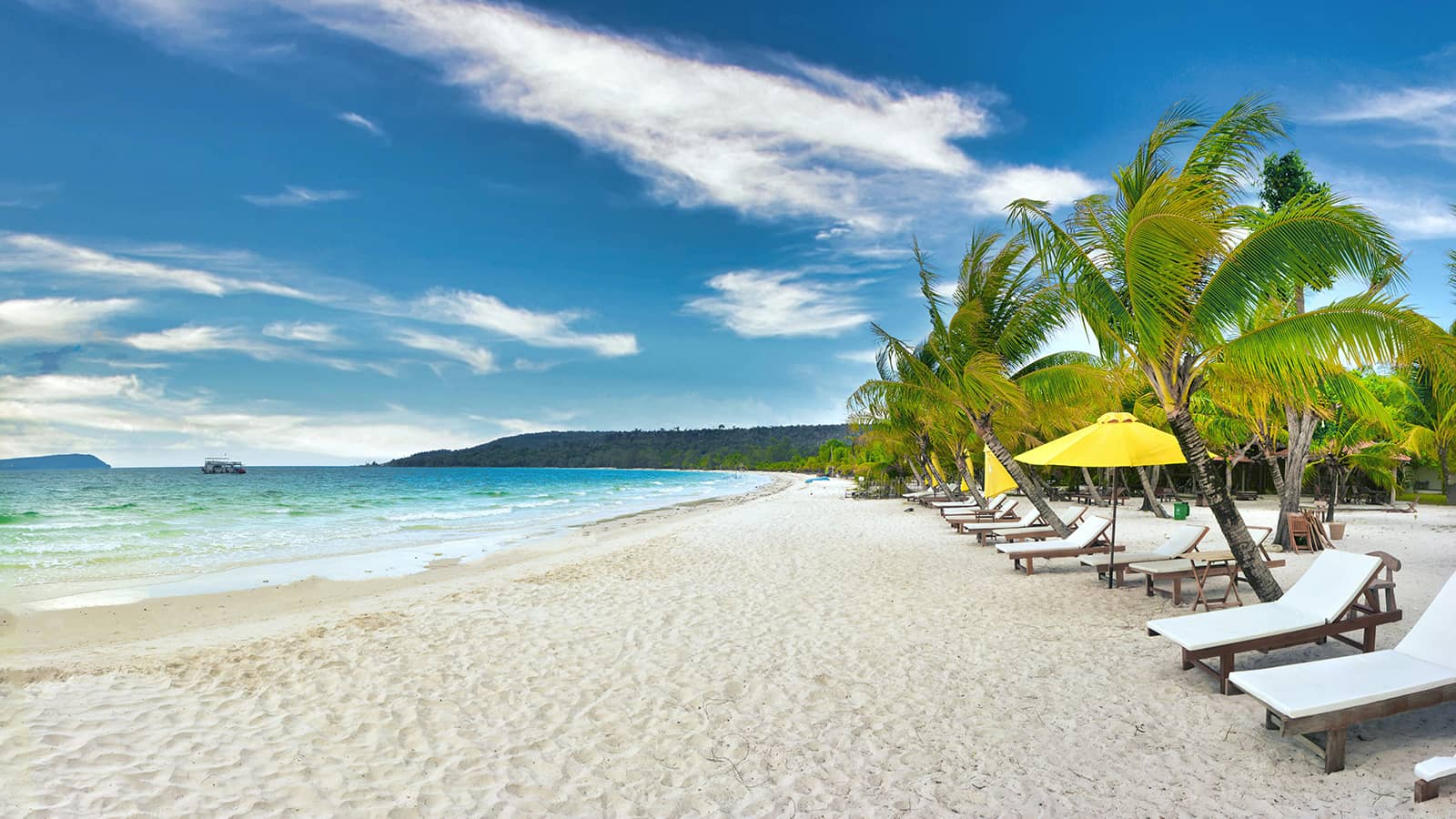
Hua Hin Beach — the main strip — runs for roughly 5 kilometres and is wide, firm-sanded, and calm enough for swimming for most of the year. The water turns rough during the southwest monsoon (May to October), but unlike the Andaman coast, Hua Hin faces the Gulf of Thailand and remains accessible year-round. The northern end near the pier is busier and better for people-watching. The southern end near Khao Takiab hill is quieter and backed by casuarina trees that shade it beautifully in the afternoon.
Khao Takiab Beach, just south of the main town, has a different feel — fishing boats anchored offshore, a hilltop temple, and monkeys on the path up to the viewpoint. It’s good for a half-day visit rather than a full beach day.
If you want to escape the crowds entirely, head 20 kilometres south to Suan Son Pradiphat Beach, which is managed by the Thai military and kept immaculate. Entry costs around 30–50 THB. The pine trees that line the shore give it a slightly surreal, Mediterranean look, and on weekdays you’ll often have long stretches almost to yourself.
Night Markets: Where Locals and Visitors Both Show Up
Hua Hin’s night markets are among the best on the Gulf coast, and they’ve managed to stay genuinely local despite the tourist traffic. The most famous is the Hua Hin Night Market on Dechanuchit Road, operating every evening from around 5pm until midnight. The smell of grilling satay and fresh seafood hits you before you even reach the entrance — smoke curling from charcoal braziers lined up along the alley, fish sauce caramelising over flame-scorched tiger prawns.
The Chatchai Market, open daily in a covered building near the train station, is where locals actually shop. It’s noisier, less curated, and the prices reflect it — fresh fruit, cheap pad thai, and piles of dried goods. Worth going once for the atmosphere even if you don’t buy anything.
On weekends, the Cicada Market near Khao Takiab draws a more design-conscious crowd with handmade goods, art, live music, and food trucks. It’s open Friday to Sunday from 5pm. The quality varies, but the layout is well done and the food stalls here tend toward more adventurous options — Korean-Thai fusion, craft beer, grilled oysters.
Family Activities Beyond the Beach
Hua Hin’s family infrastructure is genuinely impressive for a town its size. Vana Nava Water Jungle, a large water park on Phetkasem Road, is the headline option for kids — it’s well-maintained, has a dedicated area for younger children, and won’t drain your budget compared to equivalent parks in Bangkok. Entry in 2026 runs around 800–1,200 THB per person depending on age and season.
The Hua Hin Hills Vineyard, about 30 kilometres inland, makes for an easy half-day outing. You can taste local wines, walk the vines, and eat a decent lunch overlooking the hills. It’s not Bordeaux, but the setting is peaceful and the wine is better than you’d expect. Kids enjoy the open space and the tram tour of the property.
Plearn Wan, a recreated 1950s Thai village turned lifestyle market near the town centre, is well-designed and not as tacky as it sounds. There are old-school Thai snacks, retro signage, and a genuine attempt at preserving mid-century aesthetics. It works as a one-hour stop, especially with children who enjoy the novelty of it.
The town also has a small but well-regarded aquarium and regular elephant sanctuary day trips to projects in the hills inland — though verify the sanctuary’s ethical credentials before booking, as standards vary considerably.
Where to Eat in Hua Hin
Seafood is the reason to eat seriously in Hua Hin. Meekaruna Seafood on Naretdamri Road has been operating for decades and remains the benchmark for grilled whole fish and blue swimmer crab. It’s not cheap by local standards — expect 600–1,200 THB per person for a proper meal — but the quality is consistent. Arrive before 7pm or expect to wait.
For something simpler and cheaper, the seafood stalls at the Hua Hin Fishing Pier are unbeatable at lunchtime. Choose your fish from the iced display, agree on a price, and it comes back grilled or steamed within minutes. The pla kapong (sea bass) steamed with lime and chilli is particularly good here.
Brasserie de Paris on Naretdamri Road is the reliable option when the group wants something other than Thai food — French-accented menu, solid wine list, and a terrace facing the sea. It’s been around long enough to know what it’s doing. For casual Thai breakfast, the shophouse restaurants around the Chatchai Market serve excellent joke (rice porridge) and pa tong ko (fried dough) from around 6am.
Getting to Hua Hin from Bangkok and Beyond
Train is the most comfortable option from Bangkok. The State Railway of Thailand runs several daily departures from Hua Lamphong and Bang Sue stations, and the journey takes around 3.5 to 4.5 hours depending on the service. First and second class air-conditioned seats run from 200–500 THB. The Hua Hin train station is one of the prettiest in Thailand — a restored Victorian-era structure — and worth arriving at rather than bypassing.
Buses from Bangkok’s Southern Bus Terminal (Sai Tai Mai) depart frequently and take around 3–4 hours. Tickets cost 150–250 THB. Several private bus companies also operate from central Bangkok pickup points at slightly higher prices but with more comfort.
Driving from Bangkok takes about 2.5–3 hours via Highway 35 and the Phetkasem Road. Traffic on Friday evenings and Sunday afternoons heading back to Bangkok can be brutal — add an hour at minimum. There are no domestic flights to Hua Hin from Bangkok; the nearest airports with scheduled service are Suvarnabhumi and Don Mueang.
Getting Around Once You’re There
The town centre is walkable for most sights and markets. For beaches further afield, songthaew (shared pickup trucks) run fixed routes along the main roads for 20–50 THB. Motorbike taxis are available at marked stands. Renting a bicycle from guesthouses or dedicated rental shops (around 100–150 THB per day) is genuinely viable — Hua Hin is flat and the traffic is manageable compared to Bangkok or Phuket.
Grab operates in Hua Hin and is the easiest way to get a metered, hassle-free ride. In 2026, there are also a handful of golf cart taxi services operating in the beach hotel zones, aimed primarily at resort guests.
Day Trip or Overnight? Making the Call
Hua Hin works as a day trip from Bangkok only if your goal is narrow — say, a single beach afternoon and dinner. The 3.5-hour each-way journey makes it exhausting as a one-day effort, and you’ll spend most of your time on the road. A minimum of two nights is the honest recommendation if you want to actually see the markets, explore more than one beach, and eat properly.
Three to four nights makes sense for families or anyone wanting to add a day trip to Sam Roi Yot National Park (the cave temple there, Tham Phraya Nakhon, is genuinely spectacular and only 60 kilometres north). For long-stay visitors or remote workers, Hua Hin can easily absorb a week or two before the town’s relatively limited size becomes noticeable.
2026 Budget Reality
Accommodation
- Budget: Guesthouses and small hotels near the night market: 500–900 THB per night
- Mid-range: Comfortable beach hotels with pools: 1,800–3,500 THB per night
- Comfortable: Established resort properties (Anantara, Rosewood, Intercontinental): 5,500–12,000+ THB per night
Food
- Budget: Market meals, street food: 60–150 THB per meal
- Mid-range: Restaurant lunch or dinner with drinks: 300–700 THB per person
- Comfortable: Full seafood dinner or resort restaurant: 1,000–2,000+ THB per person
Activities
- Vana Nava Water Park entry: 800–1,200 THB
- Golf (18 holes, high season): 2,500–5,000 THB including caddy
- Cooking class: 1,200–2,000 THB
- Sam Roi Yot day trip (private vehicle): 2,500–4,000 THB
A practical daily budget for two people travelling mid-range — decent hotel, two restaurant meals, one activity — sits around 4,000–6,000 THB total per day, not including accommodation.
Frequently Asked Questions
Is Hua Hin good for families with young children?
Yes — it’s one of the best family destinations in Thailand. The beach is calm and swimmable, the town is clean and walkable, and there are purpose-built family attractions like Vana Nava Water Park. The relatively low-key nightlife also means less noise pollution around hotels at night, which matters when travelling with young kids.
When is the best time to visit Hua Hin?
November through February is the peak season — cool, dry, and the sea is calm and clear. March to May is hot but still dry. The Gulf coast monsoon runs May to October, bringing occasional rough seas and rain. The Gulf-facing location means Hua Hin stays partly accessible year-round, though August can bring sustained rain.
Is Hua Hin safe for tourists in 2026?
Hua Hin has a strong safety record. Petty theft at busy markets is the main concern — keep wallets secure and bags zipped in crowded areas. Scams targeting tourists are far less common here than in Bangkok or Pattaya. The town has a visible local police presence, and the royal connections mean standards of public order are maintained consistently.
How far is Hua Hin from Bangkok, and what’s the best way to get there?
Hua Hin is roughly 200 kilometres south of Bangkok. Train is the most scenic and comfortable option for independent travellers, with the journey taking 3.5 to 4.5 hours. Private minivans from central Bangkok offer a faster and more convenient alternative for around 250–350 THB.
Does Hua Hin have good options for non-beach activities?
More than most visitors expect. Golf, wine tasting at the inland vineyard, the Cicada artisan market, Sam Roi Yot National Park caves, cooking classes, and cycling routes through the surrounding countryside all provide solid alternatives. Hua Hin works well for mixed groups where not everyone wants to spend every hour on the sand.
📷 Featured image by David Gardiner on Unsplash.