On this page
- What Thailand Actually Costs in 2026
- Visa Options and What They Cost Upfront
- The 180-Day Tax Rule — What Changed and What It Means for Your Income
- Health Insurance — The Number Most Nomads Underestimate
- How City Choice Dramatically Changes Your Monthly Burn Rate
- Hidden Costs That Eat Into Your Budget
- Is Thailand Still a Good Deal Compared to Its Competitors?
- Frequently Asked Questions
Thailand has been on the digital Nomad map for over a decade, and for much of that time the pitch was simple: high quality of life, low cost of living, reliable internet, and warm weather year-round. That pitch still holds up — but only if you arrive with accurate numbers. Too many nomads in 2026 are budgeting based on blog posts written in 2021 or 2022, then landing in Bangkok or Chiang Mai and discovering that rents have climbed, visa rules have tightened, and the Thai government is paying closer attention to long-stay foreigners than it ever has before. This guide cuts through the outdated information and gives you honest 2026 figures so you can make a real decision.
What Thailand Actually Costs in 2026
The headline answer: Thailand is still affordable by global standards, but it is no longer the bargain basement destination it was five years ago. Costs have risen sharply in post-pandemic years and have not come back down. Here is what a realistic monthly budget looks like across three spending tiers, covering accommodation, food, transport, utilities, and general living — excluding visa costs and health insurance, which are covered separately below.
Budget Tier — Around 35,000–50,000 THB per month
At this level you are renting a basic studio apartment in a non-central area, eating most meals at local restaurants and street stalls, using public transport, and spending carefully. This is genuinely comfortable by local standards but requires discipline if you are used to Western conveniences. Expect a furnished studio for 8,000–14,000 THB per month outside city centres, local meals for 60–150 THB each, and a monthly transit pass or regular Grab rides totalling 2,000–4,000 THB.
Mid-Range Tier — Around 65,000–90,000 THB per month
This is where most experienced nomads settle. You get a modern one-bedroom apartment with a gym and pool, eat out freely including at Western restaurants a few times a week, take occasional weekend trips, and do not stress about spending 500 THB on a massage or 300 THB on a craft beer. Monthly rent in this bracket runs 18,000–28,000 THB in Bangkok or Phuket, slightly less in Chiang Mai.
Comfortable Tier — 110,000 THB and above per month
A spacious condo in a prime location, regular fine dining, gym memberships, short domestic flights, and a lifestyle that genuinely rivals what you would have in a major European city — at a fraction of the price. At this level Thailand is an obvious bargain compared to its Western equivalents.
Visa Options and What They Cost Upfront
This is the area where Thailand changed most dramatically between 2023 and 2026. The days of indefinite visa runs to a neighbouring country are effectively over for serious long-stay nomads. Thai immigration enforcement tightened in 2024 and has remained strict. Here are your real options in 2026.
Destination Thailand Visa (DTV)
Introduced in mid-2024 and now the most popular entry route for nomads, the DTV allows a 180-day stay per entry, with one extension of another 180 days — so potentially 360 days on a single visa. It costs 10,000 THB to apply, is a multiple-entry visa valid for five years, and requires proof of 500,000 THB in accessible funds. Processing takes roughly 30 days. The DTV does not grant work rights with Thai companies but is accepted for remote workers earning income from abroad.
Thailand Elite Visa (now Thailand Privilege Card)
Rebranded and restructured, the Thailand Privilege Card offers long-stay visas from 5 to 20 years depending on the tier you choose. Entry-level packages start at around 900,000 THB for a 5-year visa. It includes airport fast-track service and some concierge benefits. Expensive upfront, but for nomads planning to base in Thailand long-term, the per-year cost becomes competitive. Processing is now handled entirely online and takes 2–4 weeks.
Long-Term Resident Visa (LTR)
Targeted at higher earners and retirees, the LTR requires a minimum income of USD 80,000 per year for the Work-from-Thailand Professional category. It grants a 10-year renewable visa, a work permit for local employment if needed, and importantly, a specific tax exemption on foreign-sourced income remitted to Thailand. If you earn above that threshold, the LTR is worth the 50,000 THB application fee for the tax benefit alone.
Multiple-Entry Tourist Visa (METV)
Still valid but increasingly impractical for full-time nomads. The METV gives you 6 months of 60-day stays. It does not offer the same legal clarity as the DTV for remote workers, and repeated METV use is flagged by immigration more readily in 2026 than it was previously.
The 180-Day Tax Rule — What Changed and What It Means for Your Income
This is the issue that generated the most anxiety in the nomad community in 2024, and it remains misunderstood in 2026. Thailand’s tax rules say that anyone who spends 180 days or more in Thailand in a calendar year is considered a Thai tax resident. That has always been the case. What changed in 2024 was the Revenue Department’s interpretation of which foreign income is assessable.
Before 2024, a common workaround was to remit foreign income earned in one year into Thailand only in the following year — under the old rules, that income was not taxable. The Revenue Department closed that loophole. From 1 January 2024 onward, all foreign-sourced income remitted to Thailand by a tax resident is assessable in the year it is remitted, regardless of when it was earned.
In practical terms: if you spend 180+ days in Thailand in 2026 and transfer money from your overseas accounts into Thailand, the Thai Revenue Department expects you to declare that income and potentially pay tax on it at progressive rates between 5% and 35%.
The LTR visa holders are explicitly exempt from this rule for foreign-sourced income. Everyone else is technically subject to it, though enforcement against individual nomads remains inconsistent in 2026. The smart move is to get advice from a Thai tax professional rather than relying on forum posts — the cost of a consultation (typically 3,000–8,000 THB) is far less than a tax penalty.
Health Insurance — The Number Most Nomads Underestimate
Thailand’s private hospitals are genuinely excellent — modern, well-equipped, and staffed by doctors who often trained abroad. They are also not cheap, and without insurance a single hospitalisation can cost 100,000–500,000 THB or more. This is not a hypothetical: motorbike accidents, dengue fever, and appendicitis do not wait for convenient timing.
In 2026, health insurance for a nomad in Thailand costs roughly:
- Basic international coverage (20–29 age group): 25,000–40,000 THB per year
- Comprehensive international coverage (30–39 age group): 45,000–70,000 THB per year
- Comprehensive international coverage (40–49 age group): 70,000–110,000 THB per year
- 50+ age group: 100,000–180,000 THB per year, depending on health history
The DTV visa requires proof of health insurance with a minimum coverage of 40,000 THB for outpatient and 400,000 THB for inpatient care. Many nomads buy a basic policy to satisfy the visa requirement and then hold a separate international policy for real coverage — that stacks the cost but is the realistic approach if you want genuine protection.
How City Choice Dramatically Changes Your Monthly Burn Rate
Where you live in Thailand matters as much as how you live. The same lifestyle costs meaningfully different amounts depending on which city you choose.
Bangkok
Thailand’s capital has grown significantly more expensive since 2022. The BTS Skytrain and MRT network expanded again in 2025, making more neighbourhoods accessible — but also pushing rental prices up along new lines. A modern one-bedroom apartment near a BTS station now typically runs 20,000–32,000 THB per month. The city offers the widest range of work infrastructure, international connections, and lifestyle options, but it carries a corresponding price tag. Expect a realistic comfortable monthly burn of 70,000–90,000 THB.
Chiang Mai
Still the most cost-effective major city in Thailand for nomads. Equivalent apartments to Bangkok run 12,000–20,000 THB per month. Food costs are lower, transport is cheaper, and the pace is slower. The main drawback is that Chiang Mai experiences severe air quality problems from agricultural burning between February and April — AQI regularly reaches hazardous levels during that window, which affects quality of life and has health implications for anyone with respiratory issues. Budget nomads can live well here on 45,000–60,000 THB per month.
Phuket
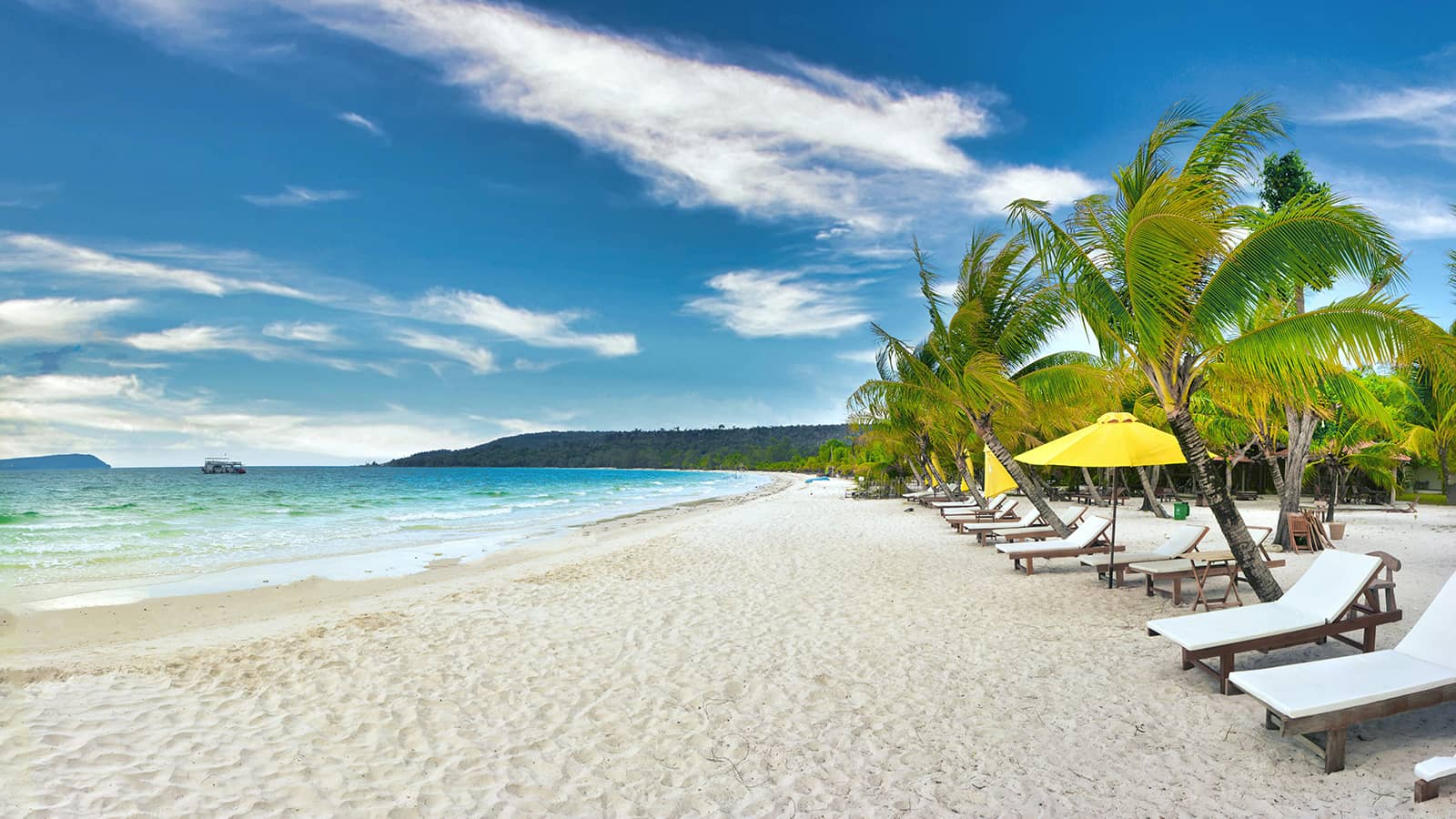
More expensive than Chiang Mai, more seasonal than Bangkok. Rental prices in beachside areas have risen sharply since 2022 as the island attracted both post-pandemic tourism and a wave of longer-stay residents. A good one-bedroom apartment near the beach runs 20,000–35,000 THB per month. The lifestyle payoff — the Andaman coast stretching out turquoise and flat on a clear morning — is real, but Phuket is not the budget destination it once was. Realistic monthly spend: 65,000–85,000 THB.
Koh Samui
The least practical city for full-time nomads purely from a logistics standpoint — island infrastructure means higher food prices (most produce is imported from the mainland), less reliable internet in some areas, and transport that depends on either renting a scooter or paying for taxis with no fixed metering system. That said, for nomads who prioritise lifestyle over cost and want beach living without Phuket’s tourist density, Samui works. Budget 75,000–95,000 THB per month for a comfortable life there.
Hidden Costs That Eat Into Your Budget
The costs most nomads fail to account for when building their Thailand budget fall into a few consistent categories.
- Banking and currency transfer fees: Transferring money into Thailand via traditional banks costs 3–5% in fees and poor exchange rates. Using services like Wise or a multi-currency account cuts this to under 1%. Over a year, on a 70,000 THB monthly budget, this difference is real money.
- SIM and data: Thailand’s mobile data is genuinely cheap — a monthly unlimited data SIM from AIS or DTAC runs 300–600 THB. This is one area where the value proposition has held firm.
- Air conditioning: Thailand is hot. Running air conditioning in your apartment will add 1,500–4,000 THB to your electricity bill per month depending on how much you use it and how well-insulated your building is. Many apartments advertise low rent but have electric bills that shock new arrivals.
- Visa trips and renewals: Even with a DTV, document preparation, potential legal assistance, and travel costs for visa processing add up over a year. Budget 15,000–25,000 THB annually as a visa-related overhead.
- Annual flights home: If you plan to see family or handle business in your home country once a year, factor in return airfare. From Bangkok, a return flight to Europe runs 25,000–55,000 THB in 2026 depending on season and airline.
Is Thailand Still a Good Deal Compared to Its Competitors?
The honest comparison in 2026 pits Thailand against its main regional rivals for nomad attention: Vietnam, Indonesia (Bali), Malaysia, and Georgia.
Vietnam — particularly Ho Chi Minh City and Hanoi — remains cheaper than Thailand on accommodation and food. But Vietnam’s visa situation for long-stay nomads is less straightforward, and the infrastructure gap with Bangkok is significant for anyone doing serious work.
Bali has become comparable in cost to Thailand’s mid-range tier since 2023, and the introduction of Indonesia’s digital nomad visa comes with its own restrictions. The island’s traffic and infrastructure problems are well-documented.
Malaysia, specifically Kuala Lumpur, is often overlooked. It offers excellent infrastructure, English language use, cheaper alcohol (Thailand’s alcohol pricing is kept high by taxation), and a solid nomad community. The Malaysia My Second Home programme is an option for longer stays. It is a genuine alternative worth considering.
Georgia (the country) surged in nomad popularity post-2022 and remains very cheap, but the European time zone and lack of beach lifestyle make it a different product entirely.
Against all of these, Thailand in 2026 still offers one of the best overall packages: excellent healthcare, mature nomad infrastructure, unmatched food variety (the smoky char of a grilled satay skewer from a roadside cart, eaten standing up after midnight, costs 15 THB and is one of the finest things you will eat anywhere), cultural richness, domestic travel options, and a government that — despite tightening some rules — actively wants digital nomads and their spending in the country. The price of entry has gone up, but the value delivered has largely kept pace.
If your monthly income is above 80,000 THB, Thailand in 2026 remains an excellent financial decision compared to living in a major Western city. If your income is below 50,000 THB per month, the margins are tighter than they were in 2022, and cities like Chiang Mai or a budget-focused approach become essential rather than optional.
Frequently Asked Questions
How much money do I need to live comfortably in Thailand as a digital nomad in 2026?
A realistic comfortable budget in Bangkok or Phuket is 70,000–90,000 THB per month, including accommodation, food, transport, utilities, and entertainment. In Chiang Mai, you can achieve the same quality of life for around 55,000–70,000 THB. These figures exclude health insurance and visa costs, which should be budgeted separately.
Do I need to pay tax in Thailand as a digital nomad?
If you spend 180 or more days in Thailand in a calendar year and remit foreign income into the country, you are technically a Thai tax resident and that income is assessable under rules updated in 2024. LTR visa holders are exempt. Everyone else should consult a Thai tax professional. Enforcement against individual nomads is currently inconsistent, but the legal obligation exists.
What is the best visa for digital nomads in Thailand in 2026?
For most nomads, the Destination Thailand Visa (DTV) is the most practical option. It costs 10,000 THB, allows up to 360 days per visit cycle on a 5-year multiple-entry visa, and is designed for remote workers. Higher earners above USD 80,000 annual income should consider the LTR visa for its tax advantages and 10-year residency.
Is Chiang Mai still cheap for digital nomads?
Yes, Chiang Mai remains the most affordable major city in Thailand for nomads in 2026, running roughly 20–30% cheaper than Bangkok for equivalent accommodation and lifestyle. The main caveat is serious air quality issues between February and April due to agricultural burning, which makes those months difficult for many residents.
Has Thailand gotten more expensive since 2022?
Yes, noticeably. Rental prices in Bangkok and Phuket have risen 20–35% since 2022. Food and utilities have also increased, driven by inflation and higher post-pandemic demand. Thailand is still affordable relative to Western cities, but nomads budgeting on pre-2023 figures will find their money goes meaningfully less far than older sources suggest.
📷 Featured image by Helena Lopes on Unsplash.