On this page
- Vibe & Character: Two Very Different Versions of “Relaxed”
- Beaches & Water Quality: Sand, Sea, and the Swimming Reality
- Getting There in 2026: Time, Cost, and How Much Effort You Want to Spend
- Food Scene & Nightlife: Where Things Actually Get Good
- 2026 Budget Reality: What Both Destinations Actually Cost
- Day Trip or Overnight? Matching the Destination to Your Schedule
- Who Should Pick Which Destination
- Frequently Asked Questions
💰 Click here to see Thailand Budget Breakdown
💰 Prices updated: October, 2026. Budget figures are estimates — always verify before travel.
Exchange Rate: $1 USD = ฿33.60
Daily Budget (per person)
Shoestring: ฿900.00 – ฿1,800.00 ($26.79 – $53.57)
Mid-range: ฿2,150.00 – ฿4,000.00 ($63.99 – $119.05)
Comfortable: ฿6,000.00 – ฿12,000.00 ($178.57 – $357.14)
Accommodation (per night)
Hostel/guesthouse: ฿90.00 – ฿750.00 ($2.68 – $22.32)
Mid-range hotel: ฿1,400.00 – ฿3,500.00 ($41.67 – $104.17)
Food (per meal)
Budget meal: ฿70.00 ($2.08)
Mid-range meal: ฿250.00 ($7.44)
Upscale meal: ฿1,000.00 ($29.76)
Transport
Single metro/bus trip: ฿30.00 ($0.89)
Monthly transport pass: ฿1,155.00 ($34.38)
With long weekends increasingly precious and Thai beach crowds only growing, the choice between Hua Hin and Koh Chang in 2026 is trickier than it looks on a map. One is a two-hour drive from Bangkok with a royal resort pedigree; the other is an overnight journey to a jungle island that still feels genuinely remote. Neither is wrong — but picking the wrong one for your style will cost you both time and money.
Vibe & Character: Two Very Different Versions of “Relaxed”
Hua Hin is Thailand’s oldest beach resort town, and it wears that History openly. The royal family has kept a palace here for generations, which gives the town a certain composed, grown-up energy. You get a working fishing port alongside wine bars, Italian restaurants, and a night market that runs like clockwork. It feels like a place where people genuinely live, not just visit. In 2026, the western end of town around Khao Takiab has filled in with boutique hotels and low-key beach clubs, while the town centre remains a pleasant mix of Thai families, retirees, and European long-stay visitors.
Koh Chang is a different proposition entirely. Thailand’s second-largest island sits in the Gulf of Thailand close to the Cambodian border, and getting there still requires commitment. Once you arrive, the island’s interior is almost entirely dense mountain jungle — national park land that hasn’t been developed and won’t be. Hat Sai Khao (White Sand Beach) on the northwest coast is lively and social, while the southern beaches like Lonely Beach and Klong Kloi are genuinely quiet. The vibe swings between backpacker-casual and eco-resort tranquil, sometimes within the same kilometre.
Beaches & Water Quality: Sand, Sea, and the Swimming Reality
Hua Hin’s beach is long — around 5 kilometres of firm, pale sand that stretches south from the pier. It’s ideal for morning walks and sunsets, but honest travellers know it’s not a postcard-perfect swimming beach. The water is shallow and can be murky after rain. Jellyfish appear between October and January. The beach is also shared with horses (yes, really — local operators offer rides along the shoreline) and, closer to town, with fishing boats that dock near the pier. It’s beautiful in a lived-in way, not a pristine-escape way.
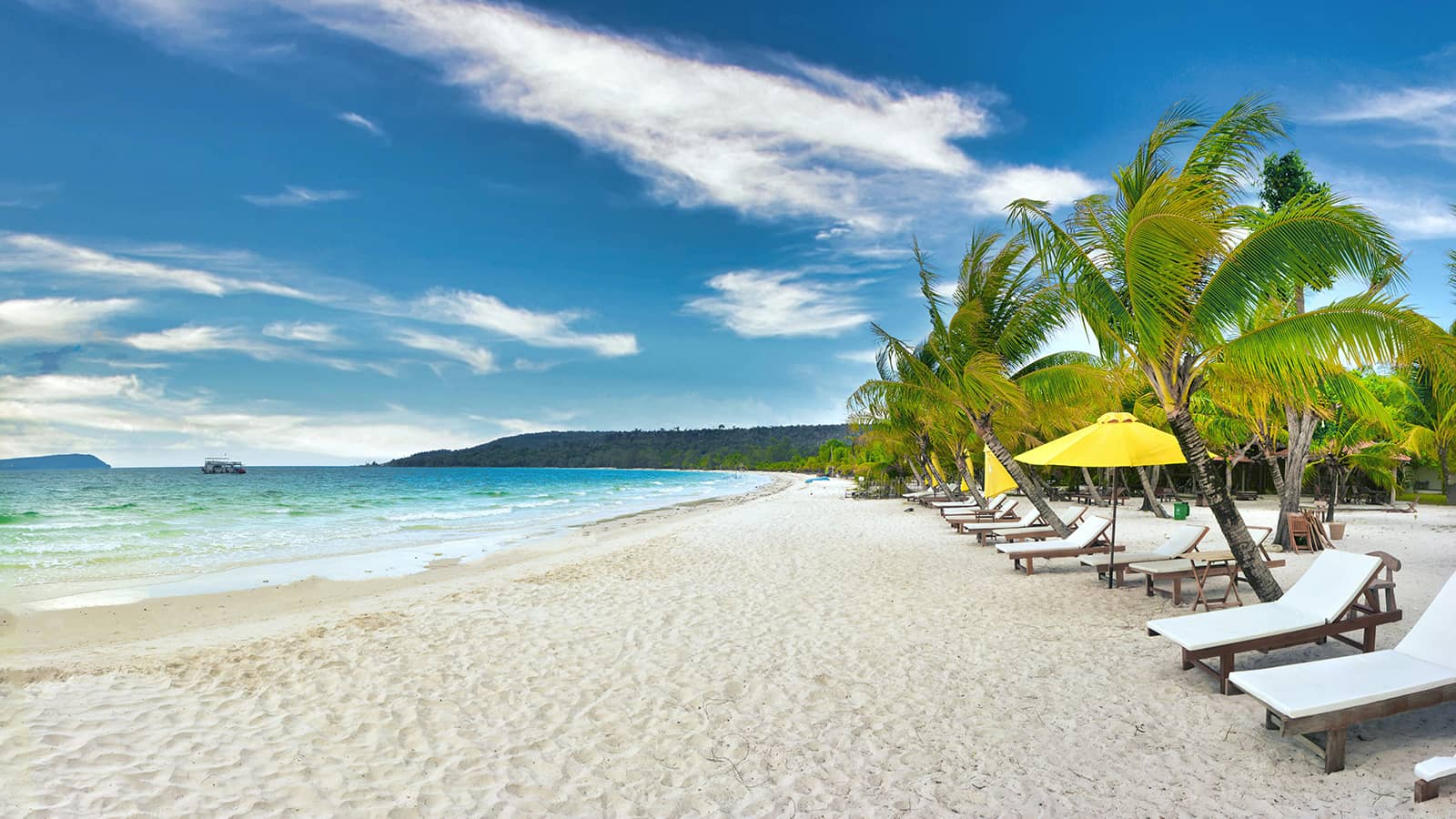
Koh Chang’s beaches genuinely compete with Thailand’s best. Hat Sai Khao has fine white sand and clear, warm water — the kind that turns a convincing shade of turquoise on sunny mornings. Snorkelling directly from the shore isn’t spectacular, but the nearby islands of Koh Wai and Koh Mak (accessible by speedboat or slow ferry) have excellent coral reefs. The water quality across Koh Chang’s west coast has improved noticeably since stricter marine national park enforcement began in earnest in 2024. Swimming is safe and comfortable from November through April.
Getting There in 2026: Time, Cost, and How Much Effort You Want to Spend
Hua Hin is easy. From Bangkok’s Victory Monument or Mo Chit BTS station, you board a direct bus operated by Transport Co. or one of several private operators. Journey time is around 3.5 hours and fares run between 200–350 THB depending on the service. Driving yourself via Highway 4 is faster on a quiet morning (around 2.5 hours), though traffic leaving Bangkok on Friday evenings can add another 90 minutes. The Hua Hin train station, a gorgeous colonial-era building, still operates but the journey from Hua Lamphong takes 4–5 hours — scenic, not fast.
Koh Chang requires layering your transport. The most common route in 2026: fly Bangkok Don Mueang to Trat Airport (55 minutes, roughly 1,200–2,500 THB one way depending on booking window), then take a minivan to Tha Dan Kao pier (around 200 THB), and finally board a car ferry to the island (80 THB per person, 300–500 THB for a car). Total door-to-door from central Bangkok: 4–5 hours if your flight connects well. Budget airline capacity on the Don Mueang–Trat route has expanded in 2026 with additional Nok Air frequencies, which has kept fares competitive. Alternatively, overnight buses from Bangkok’s Eastern Bus Terminal (Ekkamai) to the ferry pier run nightly and cost around 350–500 THB, arriving in time for the morning ferry — a good option if you want to save a night’s accommodation cost.
Food Scene & Nightlife: Where Things Actually Get Good
Hua Hin punches well above its size on food. The night market near Dechanuchit Road remains one of the best in the Gulf region — charcoal-grilled seafood, boat noodles, mango sticky rice stalls that run until 11pm. For a more formal meal, the cluster of Thai seafood restaurants near the fishing pier on the northern end of town offer fresh-caught dishes at prices that feel almost unreasonably fair for the quality. A whole grilled barramundi with lime and chilli can arrive at your table for under 400 THB. Hua Hin’s western food scene — Italian, French, Spanish tapas bars — is also genuine, not just tourist-facing. Craft beer bars have multiplied since 2024.
Koh Chang’s food scene is concentrated on Hat Sai Khao and Hat Klong Phrao. Seafood barbecue restaurants line the beach road, and the quality is high — particularly at the locally run spots that have been here for decades rather than the newer resort-operated restaurants. Nightlife on Koh Chang is meaningful but contained: Hat Sai Khao has a strip of open-air bars that run until 1am or so, with live music at a handful of venues on weekends. It’s convivial and social, not loud or overwhelming. Lonely Beach, despite the name, has a small cluster of bars popular with younger backpacker crowds. The rest of the island is quiet after 10pm.
2026 Budget Reality: What Both Destinations Actually Cost
Hua Hin
- Budget: Guesthouse or mid-town hotel 600–1,000 THB/night. Street food meals 60–120 THB. Total daily spend possible around 1,200–1,800 THB.
- Mid-range: Boutique hotel or beach resort 2,500–4,500 THB/night. Mix of restaurant and street food meals. Daily spend 3,500–6,000 THB.
- Comfortable: Full-service beachfront resort 6,000–15,000 THB/night. Daily spend 8,000–18,000 THB with dining, spa, activities.
Koh Chang
- Budget: Bungalow or hostel dorm on Hat Sai Khao or Lonely Beach 400–900 THB/night. Food from beach shacks 80–150 THB per meal. Daily spend around 1,200–2,000 THB — but factor in transport costs to get here.
- Mid-range: Comfortable resort on Hat Klong Phrao 3,000–6,000 THB/night. Daily spend 4,500–8,000 THB.
- Comfortable: Eco-resort or boutique property on quieter beaches 7,000–18,000 THB/night. Daily spend climbs quickly with speedboat trips and dive excursions.
One honest note: Koh Chang’s transport costs make short trips proportionally more expensive. If you’re only going for two nights, the ferry fares, minivan transfers, and flight cost eat significantly into the value. Hua Hin rewards a quick weekend far more efficiently on cost-per-enjoyment terms.
Day Trip or Overnight? Matching the Destination to Your Schedule
Hua Hin works as a day trip from Bangkok, but it’s not ideal. By the time you arrive, find the beach, eat lunch, and think about heading back, you’ve lost most of the afternoon. A single overnight stay is the sweet spot — you get an evening at the night market, a proper morning on the beach, and you’re back in Bangkok by early afternoon. Two nights feels leisurely and right for most visitors.
Koh Chang is never a day trip — the logistics simply don’t allow it. A three-night minimum is the honest recommendation, with four or five nights making far better use of the travel effort. The island rewards people who slow down: rent a motorbike and explore the ring road, take a full-day snorkelling trip to Koh Wai, hike to a waterfall in the national park. Those activities need time, and rushing through them misses the point entirely.
Who Should Pick Which Destination
Choose Hua Hin if you:
- Are travelling with young children or elderly family members who need easy, low-stress access
- Have a long weekend (Friday night to Sunday) with limited time to spare
- Want a varied food and nightlife scene beyond the beach itself
- Are based in Bangkok and just need to exhale somewhere civilised for 48 hours
- Prefer a town with infrastructure — hospitals, international restaurants, ATMs everywhere
Choose Koh Chang if you:
- Want a genuine island feeling with jungle, waterfalls, and real seclusion
- Have at least four nights and are happy to slow down
- Are interested in snorkelling, diving, or island-hopping to Koh Wai or Koh Mak
- Are travelling solo or as a couple looking for somewhere that still feels undiscovered
- Don’t mind the journey — and ideally enjoy it as part of the adventure
Frequently Asked Questions
Is Hua Hin or Koh Chang better for families with young children?
Hua Hin is the more practical family choice. The beach is calm and walkable, the town has good restaurants and hospitals nearby, and getting there requires no ferry crossings or complex transfers. Koh Chang is manageable for families with older children, but the journey and the island’s hilly roads add logistical complexity that parents of toddlers often find exhausting.
What is the best time of year to visit each destination?
Both destinations sit in the Gulf of Thailand and share similar weather patterns. November through March is ideal for both — dry, sunny, with calm seas. Koh Chang has a harsher rainy season (May–October) than Hua Hin, with stronger swells on the west coast. Hua Hin receives some rain year-round but rarely suffers badly enough to ruin a trip.
Can I visit Koh Chang without flying from Bangkok?
Yes. Overnight buses from Bangkok’s Ekkamai Eastern Bus Terminal run directly to the ferry pier near Trat at around 350–500 THB — see the Getting There section above for full timings and ferry details.
Is Hua Hin worth visiting if I’ve already been to Hua Hin years ago?
Yes, particularly if you haven’t visited since 2023. The Khao Takiab end of town has developed substantially with new beach clubs and boutique properties. The craft beer scene, expanded market area near Cicada Market, and improved cycling infrastructure along the beachfront make it feel meaningfully refreshed compared to even three or four years ago.
Which destination has better snorkelling and diving?
Koh Chang wins on water activities by a significant margin. The nearby islands of Koh Wai, Koh Mak, and the HTMS Chang wreck dive site offer far better underwater experiences than anything accessible from Hua Hin. Hua Hin’s coastline has limited marine interest for divers. If snorkelling or diving is a priority, Koh Chang is the clear answer.
📷 Featured image by Panuson Norkaew on Unsplash.