On this page
- What Makes Hua Hin Different From Other Thai Beach Towns
- Getting There From Bangkok in 2026
- Where to Stay — From Guesthouses to Grand Hotels
- The Food Scene — Where to Actually Eat
- What to Do Beyond the Beach
- Day Trip or Weekend? How to Structure Your Time
- 2026 Budget Reality
- Practical Tips Before You Go
- Frequently Asked Questions
💰 Click here to see Thailand Budget Breakdown
💰 Prices updated: October, 2026. Budget figures are estimates — always verify before travel.
Exchange Rate: $1 USD = ฿33.60
Daily Budget (per person)
Shoestring: ฿900.00 – ฿1,800.00 ($26.79 – $53.57)
Mid-range: ฿2,150.00 – ฿4,000.00 ($63.99 – $119.05)
Comfortable: ฿6,000.00 – ฿12,000.00 ($178.57 – $357.14)
Accommodation (per night)
Hostel/guesthouse: ฿90.00 – ฿750.00 ($2.68 – $22.32)
Mid-range hotel: ฿1,400.00 – ฿3,500.00 ($41.67 – $104.17)
Food (per meal)
Budget meal: ฿70.00 ($2.08)
Mid-range meal: ฿250.00 ($7.44)
Upscale meal: ฿1,000.00 ($29.76)
Transport
Single metro/bus trip: ฿30.00 ($0.89)
Monthly transport pass: ฿1,155.00 ($34.38)
Bangkok weekenders face a familiar problem in 2026: the old escapes are getting crowded. Pattaya feels overwhelming for a two-day reset. Koh Samet requires planning ahead for ferries. But Hua Hin — just 200 kilometres south of the capital — keeps delivering a genuinely different pace, and it does so without asking much of you. The catch is knowing what to actually do once you get there, which is what this guide covers.
What Makes Hua Hin Different From Other Thai Beach Towns
Hua Hin is Thailand’s oldest royal beach resort. The Thai royal family has maintained a palace here — Klai Kangwon, meaning “Far From Worries” — since 1926, and that royal association has shaped everything about the town. It is quieter, more conservative, and more polished than the party-focused islands to the south. You will not find go-go bars lining the main drag or beach touts every 10 metres.
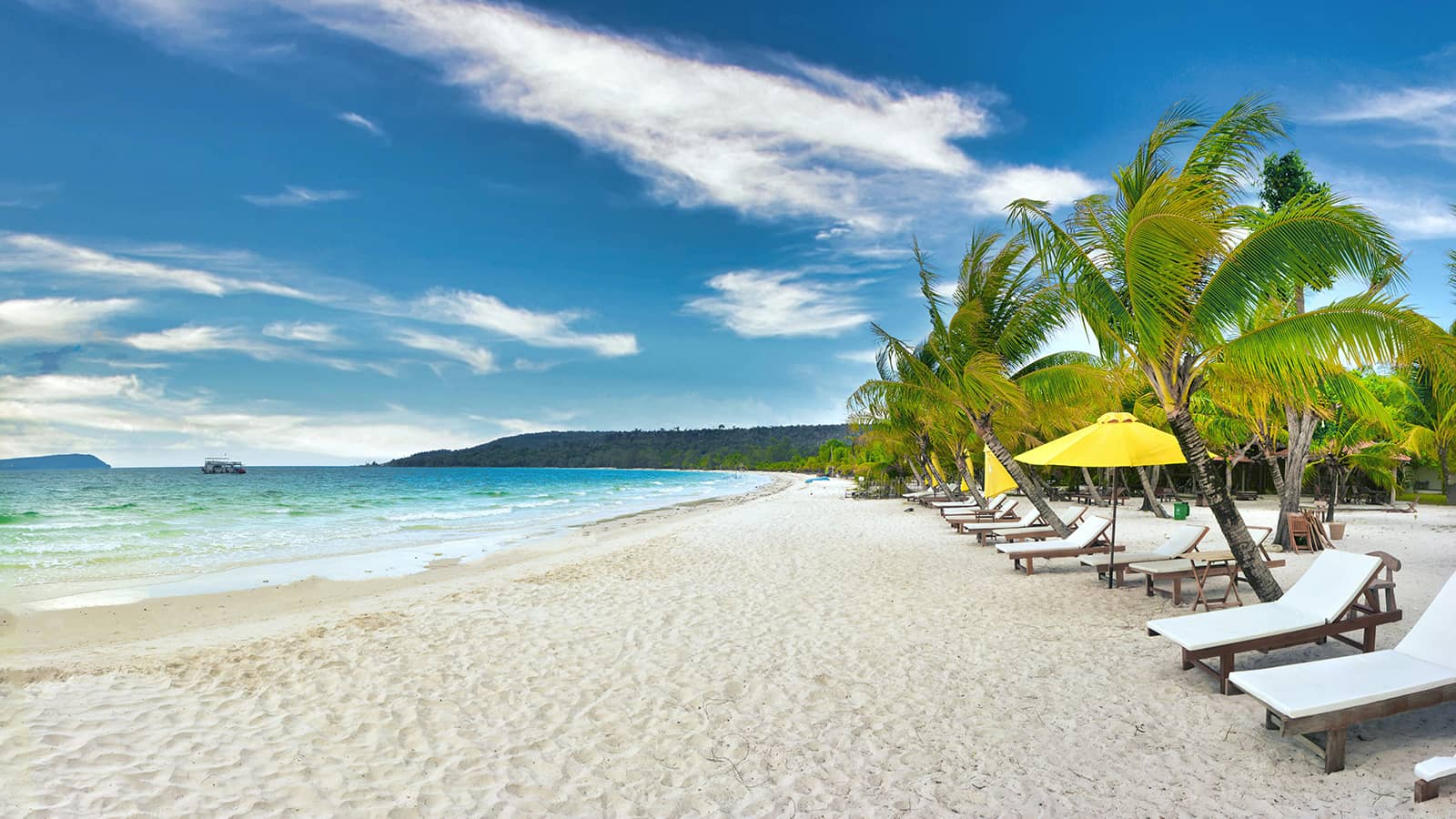
The beach itself stretches roughly 5 kilometres of firm, pale sand backed by low-rise hotels and casuarina trees. The water is calm and warm — typically around 29°C between March and October — and the surf is gentle enough for kids. What gives Hua Hin its character is the combination of old-school Thai resort culture, a large community of long-stay European expats, excellent seafood, and easy access to national parks and vineyards within an hour’s drive.
The town’s night market on Dechanuchit Road still has that slightly chaotic, smoky energy of a proper Thai market — woks hissing, vendors calling, plastic stools packed around low tables — but it never tips into the feeling of being a performance for tourists. That balance is rare.
Getting There From Bangkok in 2026
The Southern Line train from Hua Lamphong or Bang Sue Grand Station remains one of the most pleasant ways to arrive. The express trains take roughly 3.5 to 4 hours and cost between 200–650 THB depending on class. First-class air-conditioned sleepers on the overnight train are a surprisingly comfortable option if you want to save a night’s accommodation on a longer trip south.
Buses from Bangkok’s Southern Bus Terminal (Sai Tai Mai) at Borommaratchachonnani Road run frequently and take about 3.5 hours for around 180–250 THB. Several private bus operators — Sombat Tour and others — offer direct services from Victory Monument and Ekkamai that are more convenient for most Bangkok residents.
By car, the journey down Highway 35 to Highway 4 takes about 2.5 to 3 hours without traffic, though Friday afternoons can add an hour. As of 2026, there is no direct high-speed rail link to Hua Hin yet, though the Bang Sue–Nakhon Ratchasima high-speed project has renewed discussion about expanding the southern corridor eventually.
There is no commercial airport in Hua Hin handling scheduled domestic flights as of 2026. Hua Hin Airport (HHQ) handles private and charter traffic only.
Where to Stay — From Guesthouses to Grand Hotels
Hua Hin has a wider accommodation range than most Thai beach towns its size. The two anchor properties are the legendary Centara Grand Beach Resort — the colonial-style hotel that has anchored the beachfront since 1923 and still has that faded-glamour grandeur — and the Anantara Hua Hin Resort, which sits in lush garden grounds with a more contemporary luxury feel.
For mid-range stays, the area around Soi 51 (locally called Soi Mòòban Tawanron) has several clean, comfortable guesthouses and small boutique hotels in the 800–1,800 THB per night range. The Baan Bayan Heritage Hotel on Naretdamri Road is a restored teak villa from the 1930s that offers real character at mid-range prices — a better choice than a generic chain hotel at the same price point.
Budget travellers should look at the guesthouses north of the night market, many of which offer basic air-conditioned rooms from 500–700 THB per night. The Ibis Styles Hua Hin is a reliable, affordable option for those who want a brand name without the full resort price tag.
The Food Scene — Where to Actually Eat
Hua Hin is serious about seafood, and the fishing boats you see anchored off the pier in the morning are not decoration. The Chatchai Market, just off Phetkasem Road near the clock tower, is where locals shop and eat breakfast — look for the stalls selling khanom jiin (rice noodles with curry) and fresh-grilled fish from around 5 AM. The market gets busy by 7 AM and winds down by mid-morning, so go early.
For dinner, Naretdamri Road runs parallel to the beach north of the pier and is lined with seafood restaurants. Saeng Thai Restaurant at the end of the fishing pier is the most famous, and deservedly so — the deep-fried sea bass with garlic and pepper and the steamed clams in Thai herbs are consistently good. Expect to pay 400–800 THB per person for a full seafood meal with rice and drinks.
For something more local and cheaper, the night market on Dechanuchit Road runs from about 6 PM to midnight. The satay stalls near the entrance do skewers of chicken and pork over charcoal — the smoke drifts down the whole street and announces itself before you even see the stalls. Eat here for 150–250 THB and spend what you save on fresh coconut ice cream further down.
Wine enthusiasts should note that Monsoon Valley Vineyard, about 25 kilometres west of town, operates a restaurant on-site where you can pair Thai food with locally produced wine. It is genuinely good and genuinely Thai — one of the few places in the country producing wine commercially from indigenous grape varieties.
What to Do Beyond the Beach
Khao Sam Roi Yot National Park sits about 50 kilometres south of Hua Hin and is one of the most undervisited national parks in central Thailand. The name means “Mountain of Three Hundred Peaks,” and the dramatic limestone karsts rising from coastal marshland look nothing like the rest of the Gulf of Thailand coast. The park’s highlight is Phraya Nakhon Cave, a large cavern with a royal pavilion at its centre — sunlight pours through two ceiling openings and illuminates the pavilion in the late morning, usually around 10–11 AM. The hike in takes about 40 minutes each way and is moderately steep. Entrance is 200 THB for foreigners.
Closer to town, the Hua Hin Hills Vineyard and the nearby Cicada Market (a weekend art and craft market that runs Friday to Sunday evenings) are worth a few hours. Cicada attracts local artists, musicians, and food vendors and has a relaxed garden atmosphere quite unlike the main night market.
For golfers, Hua Hin has five courses within 30 kilometres, including Black Mountain Golf Club, which regularly appears on lists of Asia’s best courses. Green fees start from around 2,500 THB on weekdays.
Day Trip or Weekend? How to Structure Your Time
A day trip from Bangkok is technically possible but leaves you little time to actually decompress — you will spend half the day in transit. Hua Hin earns its value over two nights.
Friday evening: Arrive, check in, walk to Naretdamri Road for seafood dinner. Early night.
Saturday: Morning at Chatchai Market for breakfast, then the beach until early afternoon. Afternoon: drive or hire a car to Khao Sam Roi Yot, arriving by 3 PM for the cave hike (the light is still good and the heat is less brutal). Return to town for the Cicada Market in the evening.
Sunday: Late breakfast, a slow morning on the beach or a round of golf, then depart by early afternoon to avoid the Sunday evening traffic surge back to Bangkok.
If you have only one night, prioritise the seafood dinner and a morning at Chatchai Market over the national park — the park needs a full afternoon to do properly.
2026 Budget Reality
- Budget (per person, per day): 800–1,400 THB. Covers a guesthouse room (shared with a partner), market meals, and beach time. No big excursions.
- Mid-range (per person, per day): 1,800–3,500 THB. Comfortable boutique hotel, restaurant dinners, a tuk-tuk or songthaew for getting around, one paid attraction.
- Comfortable (per person, per day): 4,500–9,000 THB. Resort hotel with pool access, seafood dinners on Naretdamri Road, car rental or driver for day trips, spa treatment.
Transport from Bangkok adds 180–650 THB per person each way by bus or train. Car rental in Hua Hin for a full day runs 900–1,500 THB for a basic vehicle. Motorbike rentals start from 250–350 THB per day and remain the easiest way to explore the surrounding area independently.
Practical Tips Before You Go
Hua Hin is a year-round destination, but the best months are November through April when humidity is lower and rainfall minimal. May to October brings occasional heavy rain — not continuous, but enough to interrupt beach days. The town does not shut down in low season the way some island destinations do.
The town is large enough that walking everywhere is impractical. Songthaews (shared pickup trucks) run fixed routes for 20–40 THB and cover most of the main roads. Tuk-tuks are plentiful but negotiate the fare before you get in — 60–120 THB for most in-town trips is fair. Grab operates in Hua Hin as of 2026, which has made getting around much more straightforward than it used to be.
The Hua Hin Tourism Authority office near the clock tower on Phetkasem Road provides free maps and current information on events and temple festivals. In 2026, the TAT introduced a new digital visitor information platform — the QR codes on street signs around the old town link to updated attraction information in English, Thai, and Chinese.
Dress modestly if you plan to visit any of the temples or the Klai Kangwon Palace area — shorts and sleeveless tops are not appropriate and you will be turned away at some sites.
Frequently Asked Questions
Is Hua Hin worth visiting for a weekend trip from Bangkok?
Yes, especially if you want beaches without the chaos of the southern islands. Two nights gives you enough time to eat well, swim, and do at least one excursion like Khao Sam Roi Yot. The train or bus journey is easy and affordable, making it one of Bangkok’s most practical weekend escapes.
What is the best time of year to visit Hua Hin?
November through April offers the most reliable weather — low humidity, minimal rain, and calm seas. December and January are peak months with cooler evenings around 22–24°C. The wet season (May–October) is cheaper and less crowded, though afternoon storms can cut beach time short on some days.
Is Hua Hin good for families with young children?
Very much so. The beach has gentle waves and shallow water, the town is safe and walkable, and there are water parks nearby — Vana Nava Water Jungle on Phetkasem Road is popular with children. The general atmosphere is calm and non-party-focused, which suits families better than places like Pattaya or Koh Phangan.
Can you visit Klai Kangwon Palace in Hua Hin?
The palace grounds are occasionally open to the public when the royal family is not in residence. Access is not guaranteed and schedules are not published far in advance. Check with the local TAT office on arrival. Even from the road outside, the grounds and architecture are worth a short detour on a bike or tuk-tuk.
What is the local currency situation — can I use cards easily in Hua Hin?
Major hotels, resort restaurants, and larger shops accept credit and debit cards. Markets, street food stalls, small guesthouses, and tuk-tuks are cash only. ATMs are widely available throughout town. Withdraw cash on arrival — carrying 1,000–2,000 THB in small bills covers most day-to-day expenses comfortably.
📷 Featured image by Yavor Punchev on Unsplash.