On this page
- Ayutthaya — Ancient Capital Within 90 Minutes
- Kanchanaburi — History, Rivers, and Jungle Calm
- Khao Yai — Wildlife and Vineyards on Bangkok’s Doorstep
- Amphawa and the Mae Klong Railway Market — Two Iconic Stops, One Trip
- Koh Samet — The Closest Beach Escape from Bangkok
- Erawan Waterfall and Hellfire Pass — A Different Side of Kanchanaburi
- 2026 Budget Reality — What a Day Trip Actually Costs
- Getting There Without Stress — Transport Options Compared
- Frequently Asked Questions
💰 Click here to see Thailand Budget Breakdown
💰 Prices updated: October, 2026. Budget figures are estimates — always verify before travel.
Exchange Rate: $1 USD = ฿33.60
Daily Budget (per person)
Shoestring: ฿900.00 – ฿1,800.00 ($26.79 – $53.57)
Mid-range: ฿2,150.00 – ฿4,000.00 ($63.99 – $119.05)
Comfortable: ฿6,000.00 – ฿12,000.00 ($178.57 – $357.14)
Accommodation (per night)
Hostel/guesthouse: ฿90.00 – ฿750.00 ($2.68 – $22.32)
Mid-range hotel: ฿1,400.00 – ฿3,500.00 ($41.67 – $104.17)
Food (per meal)
Budget meal: ฿70.00 ($2.08)
Mid-range meal: ฿250.00 ($7.44)
Upscale meal: ฿1,000.00 ($29.76)
Transport
Single metro/bus trip: ฿30.00 ($0.89)
Monthly transport pass: ฿1,155.00 ($34.38)
Bangkok in 2026 hits differently than it did a few years ago. The city is louder, more congested, and the tourist crowds around Wat Pho and Khao San Road have become genuinely exhausting by mid-morning. The new Rama IX expressway extension has helped commuters, but weekend traffic leaving the city toward Pattaya and Samut Prakan is still a wall of brake lights by 8 a.m. If you have a spare day — or even just a long afternoon — the areas surrounding Bangkok offer some of Thailand’s most rewarding escapes, and most are closer and cheaper than first-time visitors expect.
Ayutthaya — Ancient Capital Within 90 Minutes
Ayutthaya was the capital of the Kingdom of Siam for over 400 years, and what remains today is one of Southeast Asia’s most atmospheric UNESCO World Heritage Sites. The ruins aren’t behind glass in a museum — you walk among them, feel the heat radiating off the old brick, and watch monks in saffron robes pass headless Buddhas that have stood since the 14th century.
The city sits about 80 kilometres north of Bangkok, and the train from Hua Lamphong or Bang Sue Grand Station is the most civilised way to arrive. Trains run regularly from 6 a.m. and the journey takes between 1 hour 20 minutes and 1 hour 45 minutes depending on the service. Third-class seats are basic but perfectly fine for this distance. The fare is as low as THB 15 on the ordinary train, or around THB 345 on a rapid service.
Once there, rent a bicycle near the station bridge for THB 50–80 per day and cross the river by ferry (THB 5) to reach the temple island. Wat Mahathat — home to the famous tree-root Buddha head — is best visited before 9 a.m. when the light is soft and the crowds haven’t arrived. Wat Phra Si Sanphet and Wat Chaiwatthanaram are the other essential stops, the latter spectacular at golden hour when the towers turn amber in the fading light.
Kanchanaburi — History, Rivers, and Jungle Calm
About 130 kilometres west of Bangkok, Kanchanaburi carries the weight of World War II history — this is where Allied prisoners of war were forced to build the Death Railway under brutal conditions. The JEATH War Museum and the Thailand-Burma Railway Centre tell the story honestly and without spectacle. But Kanchanaburi is not a dark destination. The town itself is quiet, the Kwai Noi and Kwai Yai rivers are genuinely beautiful, and the surrounding hills feel like a different country entirely.
The famous Bridge on the River Kwai is right in town and easily walkable. Most people spend fifteen minutes on the bridge itself, cross it on foot, and then head south along the riverbank where guesthouses offer floating bungalows above the water. This area has a slow, lazy energy — tuk-tuks loaded with tourists are rare here, replaced by locals on motorbikes and the occasional long-tail boat.
The train from Thonburi Station (Bangkok’s western terminus, reachable by MRT to Itsaraphap and then a short taxi) departs twice daily and takes about 2.5 hours. Buses from Southern Bus Terminal (Sai Tai Mai) run more frequently and cost THB 90–130. A minivan from Victory Monument takes around 2 hours and costs THB 120.
Khao Yai — Wildlife and Vineyards on Bangkok’s Doorstep
Khao Yai National Park is Thailand’s oldest national park and one of its most biodiverse. At roughly 200 kilometres from Bangkok, it pushes the definition of a “day trip,” but many people make it work by leaving the city by 6 a.m. and returning after dark. The park sits at elevation — temperatures run 5 to 8 degrees cooler than Bangkok, and on a clear morning, the air genuinely smells of rain and forest rather than exhaust.

Elephants, gibbons, hornbills, and occasionally leopards call this park home. The Haew Narok waterfall is the most dramatic sight in the park — a multi-tiered drop through thick jungle that roars during the wet season (June–October). Wildlife spotting is best done with a licensed guide at dawn or dusk; guides are available at the park entrance and typically charge THB 800–1,500 for a half-day walk.
What surprises most first-time visitors is the wine country on Khao Yai’s doorstep. The plateau around Pak Chong town has developed into a legitimate wine region, with GranMonte and PB Valley among the best-known estates. Both offer tours and tastings, and the rolling vineyards against the green hills look nothing like the rest of Thailand. It’s genuinely disorienting in the best way.
Getting there without a car requires taking a bus from Mo Chit (Northern Bus Terminal) to Pak Chong, then a songthaew (shared pickup truck) into the park. Total journey time is around 3 hours. Alternatively, several Bangkok-based operators run guided day trips by air-conditioned minivan from THB 1,500 per person.
Amphawa and the Mae Klong Railway Market — Two Iconic Stops, One Trip
These two destinations sit within 20 kilometres of each other in Samut Songkhram province, about 70–80 kilometres southwest of Bangkok, and combining them makes for one of the most visually memorable day trips available from the capital.
Mae Klong Railway Market is exactly what it sounds like: a fresh market built directly on active train tracks. When the train approaches — four times daily — vendors collapse their awnings and pull their stalls back with practised efficiency, the locomotive passes within centimetres of the produce, and everything goes back to normal within seconds. It’s theatrical, and unlike some of Thailand’s Instagram-famous spots, it’s completely genuine. The market has been operating this way for decades because the train and the market grew up together, not as a tourist attraction.

Amphawa floating market, a 20-minute songthaew ride away, is best in the late afternoon and evening when the canal-side restaurants fire up their grills. The smell of fresh river prawns and squid cooking over charcoal drifts across the wooden bridges, and the narrow khlong is thick with long-tail boats. Firefly boat tours operate after dark from around 7:30 p.m. for THB 60–80 per person — the fireflies cluster in the mangroves along the riverbanks and blink in near-synchrony, which is one of those genuinely strange and beautiful things you don’t expect from a Bangkok day trip.
From Bangkok, take the BTS to National Stadium, then a minivan from the nearby pickup point (departures roughly every 30 minutes, THB 80–100 to Amphawa). A shared taxi or songthaew covers the short hop to Mae Klong.
Koh Samet — The Closest Beach Escape from Bangkok
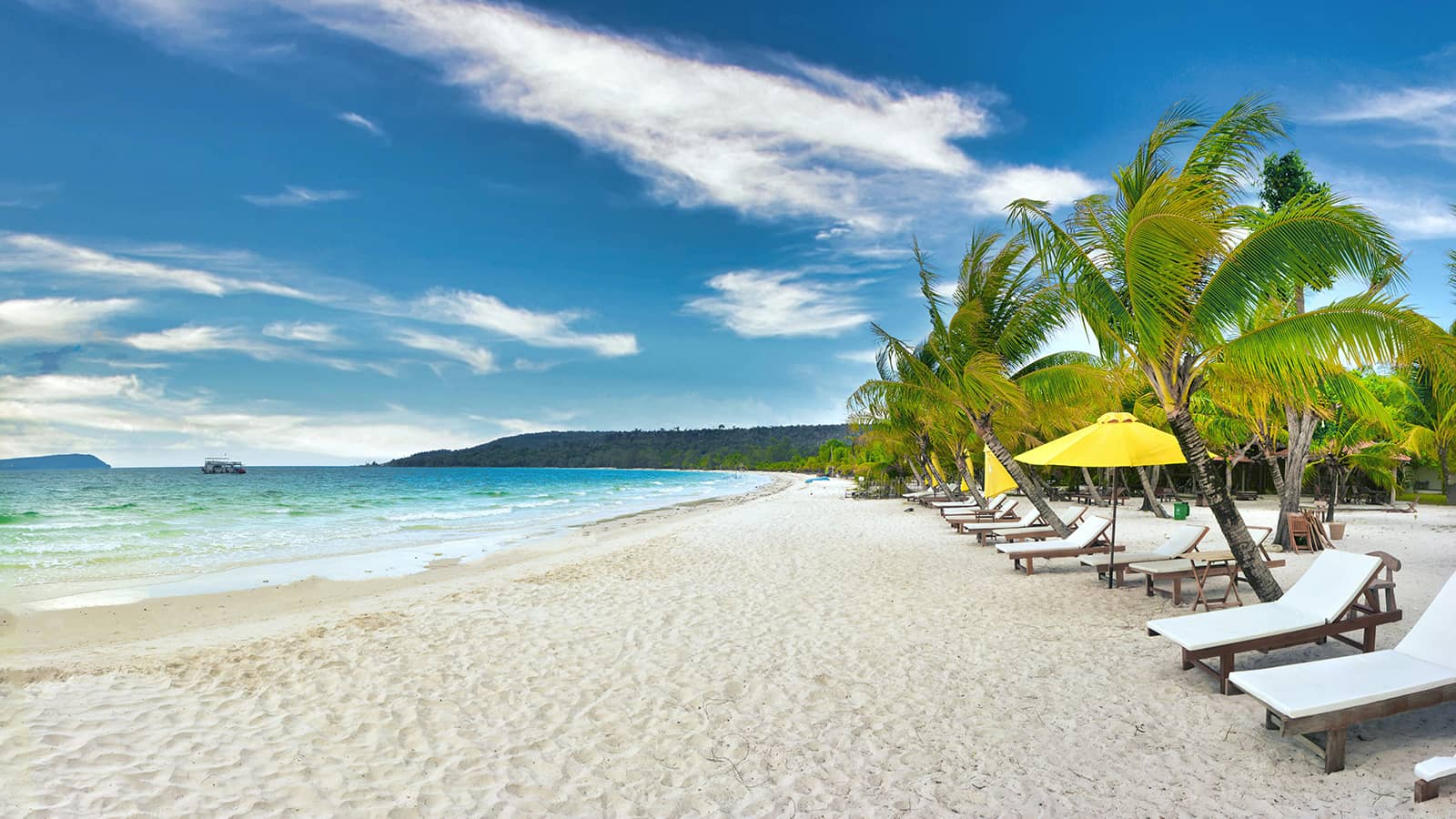
If the goal is sand and salt water, Koh Samet is the answer. The island sits about 200 kilometres southeast of Bangkok in Rayong province — technically a stretch for a day trip, but manageable if you leave early and don’t mind a long return. A more realistic approach is to treat it as an overnight, but plenty of people do it in a day.
The journey combines a bus from Ekamai Eastern Bus Terminal to Ban Phe pier (about 3–3.5 hours, THB 150–180), then a 30-minute speedboat or 45-minute ferry to the island (THB 70–120). The national park entrance fee is THB 200 for foreigners. Hat Sai Kaew on the northern tip has the most facilities; Ao Phai and Ao Phutsa are quieter and cleaner. The water is clear, the sand is white-ish, and the island is small enough to walk across in an hour.

Koh Samet is not the most spectacular island in Thailand — it can’t compete with the Andaman coast. But it’s 3–4 hours from Bangkok rather than a flight and a ferry, and that proximity is the entire point. For a quick mental reset between Bangkok days, it works perfectly.
Erawan Waterfall and Hellfire Pass — A Different Side of Kanchanaburi
Erawan National Park is about 65 kilometres north of Kanchanaburi town — reachable by bus from the local bus station for THB 50. The park’s centrepiece is a seven-tiered waterfall where the pools run turquoise-green from the calcium carbonate in the limestone. The colour is not a filter or a marketing exaggeration. Swimming is permitted at most levels, and the fish (mostly small doctor fish) are so accustomed to visitors that they’ll nibble at your skin if you stand still. The climb to the upper tiers is steep and slippery in places — wear shoes with grip, not flip-flops.
Hellfire Pass is about 80 kilometres northwest of Kanchanaburi town, closer to the Myanmar border. It’s a section of the Death Railway cut through solid rock by Allied POWs working night shifts under torchlight — hence the name. The Hellfire Pass Memorial Museum, operated by the Australian government, is quietly excellent and free to enter. The cutting itself is preserved and you can walk through it, which is a different experience from reading about it in a museum.
Combining both in one day is ambitious but possible with an early start. Most visitors choose one or the other depending on whether the priority is nature or history.

2026 Budget Reality — What a Day Trip Actually Costs
Costs have shifted since 2024. Fuel surcharges on minivans and buses have pushed transport prices up by roughly 10–15 percent. National park entrance fees for foreigners were revised upward in early 2026 — Khao Yai now charges THB 400 per person (up from THB 300), and Erawan is THB 300 (up from THB 200). Budget accordingly.
- Budget day trip (Ayutthaya by train, self-guided): THB 400–700 total, including transport, entry fees, bicycle rental, and a simple meal at a local restaurant near the temple island.
- Mid-range day trip (Kanchanaburi by bus + floating bungalow lunch): THB 1,000–1,800 per person, including bus fare both ways, museum entries, a river lunch, and a long-tail boat ride.
- Comfortable guided day trip (Khao Yai with wine tasting): THB 2,500–4,500 per person for a minivan tour including guide, park entry, lunch, and a vineyard tasting session.
Street food for lunch at any of these destinations runs THB 50–120 per dish. A sit-down meal at a riverside restaurant in Kanchanaburi or Amphawa typically costs THB 200–400 per person with drinks. Accommodation, if you decide to extend to an overnight, ranges from THB 350 (fan-cooled guesthouse dorm) to THB 2,500+ for a private room at a boutique riverside property.
Getting There Without Stress — Transport Options Compared
Bangkok’s transport options for day trippers improved noticeably in 2025–2026. The expanded MRT network now connects more of the city’s bus terminals to the rail system, which cuts the time spent getting out of Bangkok itself.
Train
Best for Ayutthaya and Kanchanaburi. Cheap, relaxed, no traffic concerns. Book seats on rapid services through the State Railway of Thailand website or app — same-day seats are usually available on weekdays, but weekends fill faster than you’d expect.
Minivan (shared)
The default for most day-trippers heading to Amphawa, Kanchanaburi, and Koh Samet connections. Faster than buses, cheaper than private transfers. The downside is fixed departure points (Victory Monument, Mo Chit, Ekamai) and a slightly cramped ride. They leave when full, not on a strict schedule, so allow 20–30 minutes flexibility at departure.

Private car or ride-share
Grab long-distance bookings are now available in 2026 for select routes including Bangkok–Ayutthaya. Prices are fixed in-app and typically run THB 1,200–1,800 one-way for a full car. Worth it for groups of 3–4 splitting the cost, or if you want door-to-door service without dealing with terminals.
Guided tour
For Khao Yai especially, a guided tour adds real value — the park is large, wildlife spotting requires knowledge, and having a local explain what you’re seeing changes the experience. For Ayutthaya or Amphawa, guides are less necessary since both destinations are compact and easy to navigate independently.
One practical note for 2026: traffic leaving Bangkok on Saturday mornings is significantly worse than Sunday mornings due to weekend market culture. If flexibility exists, Sunday departures before 7 a.m. or after 9 a.m. avoid the worst of it. Return journeys on Sunday evenings from any destination are slow — the expressway backs up from around 4 p.m.
Frequently Asked Questions
What is the easiest day trip from Bangkok for first-time visitors?
Ayutthaya is the most straightforward. The train from Bang Sue Grand Station is direct, cheap, and reliable. Once there, a bicycle and ferry get you to the main temples quickly. The entire trip — including travel — fits comfortably into eight hours without rushing, and no guide is necessary.
Can I visit Koh Samet as a day trip from Bangkok?
Technically yes, but it’s tight. You need to leave Bangkok by 6 a.m. to reach the beach by 10 a.m., which gives you about five hours before starting the return journey. An overnight stay makes far more sense and is worth the extra cost. Day-trippers often find the travel time eats too much of the day.

Are day trip prices from Bangkok higher in 2026 than before?
Yes, modestly. National park entrance fees for foreigners increased in early 2026, and minivan fares reflect fuel cost increases from 2025. Expect to budget roughly 10–15 percent more than 2024 prices for transport and entry fees. Food and accommodation have remained relatively stable at most destinations.
What is the best time of year for day trips from Bangkok?
November through February is the most comfortable period — lower humidity, cooler temperatures, and clear skies. Khao Yai’s waterfalls are most impressive during and just after the rainy season (June–October). Ayutthaya can be visited year-round, though visiting in the dry season (November–April) means less flooding around the ruins.
Do I need to book day trips from Bangkok in advance?
For self-guided trips by train or minivan, advance booking is rarely necessary except on Thai public holidays when transport fills quickly. For guided Khao Yai tours, booking 2–3 days ahead is sensible on weekends. Floating markets like Amphawa are busiest on weekends but don’t require reservations to visit.
Explore more
The Ultimate Bangkok Bucket List: Top Things to Do & See
Bangkok Itinerary: The Perfect 3-Day Guide for First-Time Visitors
The Ultimate Guide to Shopping in Bangkok: Malls, Markets & More
📷 Featured image by Florian Wehde on Unsplash.