On this page
- Chiang Rai in 2026: More Than Just the White Temple
- 1. Wat Rong Khun — The White Temple
- 2. Wat Rong Suea Ten — The Blue Temple
- 3. Baan Dam — The Black House Museum
- 4. Doi Tung Royal Villa & Mae Fah Luang Garden
- 5. The Golden Triangle
- 6. Mae Fah Luang Art & Culture Park
- 7. Wat Phra Kaew — Chiang Rai’s Original Emerald Buddha Temple
- 8. Singha Park
- 9. Wat Huay Pla Kang — The Giant Guanyin Statue
- 10. Hill Tribe Villages & Doi Mae Salong
- 11. Oub Kham Museum
- 12. Kok River — Long-tail Boat Trips
- 13. Chiang Rai Night Bazaar & Saturday Walking Street
- 14. The Clock Tower & Central Chiang Rai at Night
- 15. Wat Phra That Doi Chom Thong
- Practical Tips for Visiting Chiang Rai’s Attractions in 2026
- 2026 Budget Breakdown — Chiang Rai Attractions
- Frequently Asked Questions
💰 Click here to see Thailand Budget Breakdown
💰 Prices updated: October, 2026. Budget figures are estimates — always verify before travel.
Exchange Rate: $1 USD = ฿33.60
Daily Budget (per person)
Shoestring: ฿900.00 – ฿1,800.00 ($26.79 – $53.57)
Mid-range: ฿2,150.00 – ฿4,000.00 ($63.99 – $119.05)
Comfortable: ฿6,000.00 – ฿12,000.00 ($178.57 – $357.14)
Accommodation (per night)
Hostel/guesthouse: ฿90.00 – ฿750.00 ($2.68 – $22.32)
Mid-range hotel: ฿1,400.00 – ฿3,500.00 ($41.67 – $104.17)
Food (per meal)
Budget meal: ฿70.00 ($2.08)
Mid-range meal: ฿250.00 ($7.44)
Upscale meal: ฿1,000.00 ($29.76)
Transport
Single metro/bus trip: ฿30.00 ($0.89)
Monthly transport pass: ฿1,155.00 ($34.38)
Chiang Rai in 2026: More Than Just the White Temple
Most travelers who arrive in Chiang Rai still have the same plan: see the White Temple, maybe the Blue Temple, then head straight back to Chiang Mai or hop across to Pai. In 2026, that’s a genuine waste. Chiang Rai has quietly built one of the most diverse attraction lists in northern Thailand — a royal garden on a misty mountain, a private museum that rivals anything in Bangkok, a river route few tourists bother with, and a working tea farm on a hill that used to be poppy fields. The new Chiang Rai International Airport expansion completed in late 2025 also means direct routes from Bangkok’s Suvarnabhumi are more frequent, so getting here without a nine-hour bus ride is no longer difficult. Give this city three full days. You’ll understand why by the end of this guide.
1. Wat Rong Khun — The White Temple
The White Temple is arguably the most photographed building in Thailand outside of Bangkok’s Grand Palace, and standing in front of it on a clear morning, you understand why immediately. Every surface is coated in white plaster embedded with millions of mirror fragments that catch the sun and scatter it in all directions — the effect at 8am, before the tour buses arrive, is almost blinding in the best possible way. Architect Chalermchai Kositpipat has spent decades building this as a living artwork, and it genuinely isn’t finished. New pavilions and murals appear every few years.
The bridge you walk across to enter the main hall passes over a pit of reaching hands — representing souls trapped in a cycle of suffering — which sets a tone quite different from a typical Thai temple. Inside, murals mix Buddhist imagery with pop culture references: superheroes, sci-fi villains, and politicians appear alongside demons and deities. It’s deliberately provocative and the effect is unforgettable.

- Opening hours: 08:00–17:30 daily
- Entry fee: 100 THB for foreigners (2026 rate, unchanged)
- Getting there: 13 km south of Chiang Rai city; Grab is easiest at around 80–100 THB one way
- Best time to visit: First thing in the morning on a weekday
2. Wat Rong Suea Ten — The Blue Temple
Where the White Temple is stark and sharp, Wat Rong Suea Ten is all deep cobalt, electric blue, and gold. The temple sits about 3 km from the city center and draws far smaller crowds than its more famous rival, which makes it a more peaceful experience. The main hall’s interior is extraordinary — a massive white Buddha glows under a ceiling covered entirely in blue and gold patterns, and the craftsmanship is meticulous in a way that rewards slow looking.
The name translates roughly to “Temple of the Dancing Tiger,” a reference to local legend. The whole complex was completed relatively recently but feels rooted in something older. Photography inside is unrestricted, which is uncommon for Thai temples of this quality.
- Entry fee: Free
- Opening hours: 07:00–20:00 daily
- Best light for photography: Late afternoon when the blue tiles intensify
3. Baan Dam — The Black House Museum
If the White Temple represents light and aspiration, Baan Dam — the Black House — is its deliberate shadow. The late artist Thawan Duchanee spent decades collecting and constructing this complex of over 40 dark wooden buildings filled with animal bones, skins, horns, antique weapons, and deeply unsettling art. There is nothing sanitized about this place. A dining table in one hall is set with crocodile skin seats, rhinoceros skulls, and snake skeleton centerpieces. It’s macabre, wildly creative, and one of the most singular places in all of Thailand.

The buildings themselves are a study in Lanna architecture taken to an extreme — dark teak, angular rooflines, animal skulls mounted at every corner. The grounds are spacious and surprisingly tranquil in the early morning when the light filters through trees onto the strange sculptures between buildings.
- Entry fee: 80 THB
- Opening hours: 09:00–17:00 daily, closed some Tuesdays
- Location: About 4 km north of the city center
4. Doi Tung Royal Villa & Mae Fah Luang Garden
Roughly 45 km north of Chiang Rai city, the Doi Tung development sits at around 1,500 meters elevation and involves a royal villa, a stunning Swiss-inspired garden, and the broader Mae Fah Luang Foundation project that transformed what was once a major opium-growing region into coffee farms, macadamia orchards, and sustainable workshops.
The Royal Villa itself was built for the Princess Mother and has been preserved exactly as it was during her lifetime — modest by royal standards but full of personal touches, surrounded by gardens that bloom brilliantly from December through February. The adjacent Mae Fah Luang Garden covers several hectares and is meticulously maintained with Thai and foreign plants arranged across hillside terraces. On a clear day, the views into Myanmar are unmistakable.
- Entry fee: Villa 90 THB, Garden 200 THB, combined ticket 250 THB
- Opening hours: 07:00–17:30 daily
- Getting there: Rent a motorbike from Chiang Rai (recommended) or hire a songthaew for the day — the road involves steep switchbacks that reward the effort
5. The Golden Triangle
The point where Thailand, Laos, and Myanmar meet at the Mekong River is one of those places that carries more atmosphere in the name than in the reality — and yet it’s still genuinely worth the trip. The actual viewing point near Sop Ruak (about 60 km from Chiang Rai) lets you stand on Thai soil and watch longboats cross between all three countries in plain sight. The river here is wide and brown-gold in the dry season, and the scale of it puts the geography into perspective.

The Hall of Opium museum nearby is far better than its location in a tourist zone suggests. It traces the entire history of the opium trade in the region with serious scholarship and well-designed exhibits — easily two hours of genuinely interesting material.
- Hall of Opium entry: 200 THB
- Best combination: Pair the Golden Triangle with Doi Tung as a single day trip heading north
- Boat to Laos side viewpoint: Around 40 THB for a short river loop
6. Mae Fah Luang Art & Culture Park
Often confused with the Mae Fah Luang Garden at Doi Tung (they are separate), this park in central Chiang Rai holds the largest collection of Lanna art, artifacts, and antiques in the country. It covers granaries, rice barns, meeting halls, and spirit shrines — all relocated from across northern Thailand and Shan State and reconstructed on a single beautifully landscaped property.
What makes this different from a typical open-air museum is the quality of the collection inside the buildings. Lacquerware, Buddha images, teak furniture, and ceremonial objects span several centuries of Lanna culture. It’s the kind of place that takes about two hours to do properly and leaves you understanding northern Thailand in a way no temple visit alone can.
- Entry fee: 200 THB
- Opening hours: 08:00–18:00, closed Mondays
- Location: Mu 1, Tambon Robwiang, a short Grab ride from the city center
7. Wat Phra Kaew — Chiang Rai’s Original Emerald Buddha Temple

Before Bangkok claimed the Emerald Buddha, it lived here. Wat Phra Kaew in central Chiang Rai is where the famous statue was discovered in 1434 — lightning split a chedi and revealed the jade image inside. The original is long gone (a replica now sits in the temple), but the wat itself is one of the most beautiful in the north: a classic Lanna-style chedi surrounded by naga balustrades, quiet temple dogs, and monks going about their morning routines.
Because it sits in the middle of the city and isn’t marketed as aggressively as the “color temples,” it retains an authenticity that those famous Instagram spots can’t offer. Dress modestly, walk slowly, and you’ll have much of it to yourself most mornings.
- Entry fee: Free
- Opening hours: 06:00–21:00 daily
- Location: Central Chiang Rai, easily walkable from most guesthouses in the city
8. Singha Park
Owned by the Singha Corporation, this 8,000-rai working farm on the outskirts of Chiang Rai is nothing like the agricultural estate it sounds. The scale is the first surprise — rolling hills of tea, strawberries, and flowers stretch as far as you can see, and the light at golden hour turns the whole landscape amber and green. Hot air balloon rides operate in season (roughly November to February), and the views from altitude over the surrounding mountains are exceptional.
In 2026, Singha Park has also expanded its cycling routes and added a new glamping section, making it a legitimate overnight option for those wanting to slow down outside the city. The on-site food options are better than expected — a farm-to-table restaurant serves lunch using produce grown on the property.
- Entry fee: 30 THB (tram tour available for an additional 50 THB)
- Hot air balloon: Around 4,500–6,000 THB per person depending on season
- Opening hours: 08:00–18:00 daily
- Location: About 10 km east of the city center

9. Wat Huay Pla Kang — The Giant Guanyin Statue
The enormous white Guanyin statue visible from the highway north of Chiang Rai draws almost no mention in mainstream travel guides, which makes it one of the best low-crowd experiences in the area. The statue is nine stories tall and you can climb inside it — each floor holds a different shrine space and the top level opens onto an outdoor viewing platform where the mountain panorama in every direction is genuinely dramatic on a clear day.
The complex below includes a large Chinese-style temple with vivid red lacquer and gold decoration — quite different from the Lanna aesthetic of most Chiang Rai temples, reflecting the strong Yunnanese Chinese influence in this part of Thailand. The whole visit takes about 90 minutes and costs almost nothing.
- Entry fee: Free (donation suggested for the statue climb)
- Opening hours: 07:00–19:00 daily
- Location: About 8 km north of the city on Route 110
10. Hill Tribe Villages & Doi Mae Salong
The mountains around Chiang Rai are home to several distinct hill tribe communities — Akha, Lahu, Yao, Karen, and Hmong among them. Visiting responsibly in 2026 means choosing community-based tourism operators over the older “human zoo” style village tours that trafficked in long-neck Karen women as tourist exhibits. The Chiang Rai Tourism Authority has strengthened guidelines around this since 2024, and most reputable guesthouses can connect you with ethical operators.
Doi Mae Salong is the standout destination in this category — a mountain town at 1,300 meters elevation that was settled by Nationalist Chinese soldiers (Kuomintang) after their defeat in the Chinese Civil War. The culture here is unmistakably Yunnan Chinese: oolong tea plantations, Chinese-script shop signs, morning mist over rolling tea rows, and vendors selling dried mushrooms and tea pressed into cakes. The 30-minute morning mist window between 6am and 7am is one of the most beautiful natural scenes in northern Thailand.

- Distance from Chiang Rai: About 70 km; roughly 90 minutes by motorbike or car
- Best time to visit: November to February for the mist and cool temperatures
- Accommodation: Several small guesthouses on the main street from around 400–900 THB per night
11. Oub Kham Museum
Most visitors to Chiang Rai miss this entirely, which is baffling given the quality of what’s inside. Oub Kham is a private museum housing one of the most important collections of artifacts from the Lanna Kingdom, as well as items from the Shan, Tai Lue, and Tai Khoen cultures of neighboring countries. The exhibits include royal regalia, ceremonial costumes, lacquerware, and ritual objects that you simply will not find displayed this well anywhere else.
Entry is by guided tour only, which runs in English at scheduled times. The guide on duty makes an enormous difference — the best ones can explain the significance of a 500-year-old bronze object in a way that makes you genuinely understand the society that created it. Budget about two hours here.
- Entry fee: 300 THB (includes guided tour)
- Opening hours: 08:00–17:00, tours run at set times — confirm in advance
- Location: 81/1 Naresuan Road, Chiang Rai city
12. Kok River — Long-tail Boat Trips
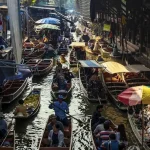
The Mae Kok River runs directly through Chiang Rai city and connects it to the Mekong, passing through mountain villages and forested stretches that barely register when you’re on the road above. A long-tail boat from the pier at Th. Tanalai heading upstream toward Tha Ton takes about four to five hours and passes Akha and Karen villages, elephant camps (the ethical, no-riding variety), and some of the most undeveloped riverine scenery left in northern Thailand.
The sound and sensation of a long-tail boat — the raw engine noise reverberating off narrow river banks, the spray on your arms, the sudden appearance of a bamboo house on stilts around a bend — makes this one of the most experiential things you can do in Chiang Rai. You can also go the other direction and take a boat downriver, shorter and calmer, ending at one of the riverside restaurants for lunch.

- Chiang Rai to Tha Ton boat: Around 350–500 THB per person (shared), or charter for around 2,500–3,500 THB
- Pier location: Off Tanalai Road near the northern edge of the city
- Season: Boats run year-round but the river can be very low March through May
13. Chiang Rai Night Bazaar & Saturday Walking Street
The Night Bazaar on Phahonyothin Road operates every evening and is primarily aimed at tourists — handicrafts, hill tribe textiles, silver jewelry, and the usual mix of elephant pants and novelty magnets. The food court inside, however, is excellent and genuinely local: grilled pork neck, sticky rice steamed in bamboo, northern Thai sausage (sai ua), and a particularly good khao soi stall near the back entrance that fills up by 6:30pm.
Saturday Walking Street on Tanalai Road is a different experience altogether — it runs only on Saturdays and takes over several city blocks with vendors selling locally made products, produce from hill tribe communities, and food that the vendors themselves eat at home. It’s louder, more crowded, and considerably more authentic than the nightly bazaar. The aroma of grilling meats and caramelized sugarcane juice hangs over the whole street from dusk until close to midnight.
- Night Bazaar hours: 18:00–23:00 daily
- Saturday Walking Street hours: 17:00–23:00 Saturdays only
- Sunday Walking Street: A similar event runs on Saturdays near Wat Ming Mueang — worth combining if you’re in town on a weekend

14. The Clock Tower & Central Chiang Rai at Night
Chalermchai Kositpipat — the same artist behind the White Temple — also designed Chiang Rai’s golden Clock Tower on Baromtrailokanat Road. Every evening at 19:00, 20:00, and 21:00 it puts on a short light and music show that draws a crowd of locals and tourists to the roundabout. It lasts about five minutes and it’s genuinely lovely: the tower glows amber and gold, and the streets around it fill with food carts and people on evening walks.
The broader area around the clock tower and the adjacent Ropwiang area makes for excellent evening wandering — small bars, cafes roasting northern Thai arabica, and a relaxed pace that reminds you this is still a city where people actually live, not just visit. It lacks the frenetic nightlife of Chiang Mai, and for many travelers, that’s exactly the point.
- Light show times: 19:00, 20:00, 21:00 daily (roughly 5 minutes each)
- Location: Baromtrailokanat Road, central Chiang Rai
15. Wat Phra That Doi Chom Thong
The hilltop temple overlooking the Kok River in the city’s northern quarter is the oldest sacred site in Chiang Rai, predating the city’s founding by King Mengrai in 1262. The views from the terrace — river below, mountains layered in the haze to the north — are the best free panorama in the city itself. It’s a five-minute walk up from the road and almost always quiet, even on weekends. The chedi here is genuinely ancient, and the low-key atmosphere feels appropriate for somewhere this historically significant.
- Entry fee: Free
- Opening hours: Dawn to dusk
- Best time: Early morning or late afternoon for the river light
Practical Tips for Visiting Chiang Rai’s Attractions in 2026
Getting around: Chiang Rai city center is small enough to walk or cycle. For attractions outside the city — White Temple, Baan Dam, Singha Park, Doi Tung, Golden Triangle — renting a motorbike (200–250 THB per day) gives the most flexibility. Grab works well within the city but becomes unavailable in more remote areas. Songthaews (shared red trucks) connect the city to some outer areas but run on unpredictable schedules.

New airport access in 2026: The expanded Mae Fah Luang–Chiang Rai International Airport now handles significantly more Bangkok-Chiang Rai routes following the terminal expansion completed in Q4 2025. AirAsia, Thai Lion Air, and Nok Air all increased frequency on this route. Flight time from Bangkok is about 1 hour 20 minutes. A taxi from the airport to city center costs around 150–200 THB by metered taxi or 120 THB with Grab.
Dress code: Temples require covered shoulders and knees. Bring a light scarf — the heat means you’ll want to carry it rather than wear it until you arrive. The White Temple has sarongs available to borrow at the entrance.
Weather: Chiang Rai has three clear seasons. Cool and dry (November–February) is peak season and the most pleasant for outdoor attractions. Hot and hazy (March–May) brings smoke from agricultural burning that reduces visibility and air quality significantly — Doi Mae Salong loses most of its scenic appeal during this period. Rainy season (June–October) keeps the air clean and the landscape green but some mountain roads become difficult.
SIM cards: Buy at the airport or any 7-Eleven. AIS and DTAC both have strong coverage across Chiang Rai city and most major attractions. Mountain areas like Doi Mae Salong have patchier signal. A 30-day unlimited data SIM costs around 299–399 THB in 2026.
Language: English is spoken at all major tourist attractions and most guesthouses. In markets and on songthaews, basic Thai numbers and “thank you” (khob khun krap/ka) go a long way toward a warmer reception.

2026 Budget Breakdown — Chiang Rai Attractions
Here’s a realistic daily cost breakdown for visiting Chiang Rai’s major attractions in 2026, covering entry fees, transport, food, and accommodation.
Budget Traveler
- Accommodation (guesthouse dorm or basic private room): 200–400 THB
- Food (street food, market meals, food courts): 150–250 THB per day
- Transport (motorbike rental or shared songthaew): 200–300 THB
- Entry fees (free temples + 1 paid attraction): 80–200 THB
- Total daily estimate: 630–1,150 THB
Mid-Range Traveler
- Accommodation (guesthouse or small hotel, private room with A/C): 500–900 THB
- Food (mix of street food and sit-down restaurants): 300–500 THB per day
- Transport (Grab + motorbike rental): 300–500 THB
- Entry fees (White Temple, Baan Dam, Oub Kham, etc.): 400–600 THB
- Total daily estimate: 1,500–2,500 THB
Comfortable Traveler
- Accommodation (boutique hotel or superior guesthouse): 1,200–2,500 THB
- Food (good restaurants, specialty coffee, one nicer dinner): 600–1,000 THB
- Transport (private hire or Grab throughout): 600–1,000 THB
- Entry fees + activities (hot air balloon, museum tours, guided trips): 1,000–6,000 THB depending on activities chosen
- Total daily estimate: 3,400–10,500 THB
The hot air balloon at Singha Park is the single biggest discretionary expense in Chiang Rai’s attraction list. Everything else is remarkably affordable — you can see 10 of the 15 attractions above for under 1,000 THB total in entry fees.
Frequently Asked Questions
How many days do you need to see Chiang Rai properly?
Three full days is the minimum to cover the city’s major attractions without rushing. Day one handles the White Temple, Blue Temple, and Baan Dam. Day two works for a northern loop to Doi Tung, the Golden Triangle, and Doi Mae Salong. Day three covers the city itself — Oub Kham Museum, Wat Phra Kaew, the Clock Tower area, and the Saturday or Sunday walking street if timing allows.
Is the White Temple worth visiting in 2026?
Yes, but arrive early. The White Temple remains genuinely extraordinary — there’s nothing else like it in Thailand — but the crowds between 10am and 3pm significantly diminish the experience. An 8am arrival on a weekday in the cool season gives you the best version of one of the most visually striking buildings in Southeast Asia.
What is the best way to get from Chiang Mai to Chiang Rai?
The greenbus (Green Bus) from Chiang Mai Arcade Bus Terminal runs frequently and takes about three hours to Chiang Rai Bus Terminal, costing around 130–180 THB. Private minivans are faster (roughly 2.5 hours) and cost around 200–250 THB. In 2026, there are no direct train connections — the nearest northern rail terminus is Chiang Mai. Flying is overkill for this distance.
Is Chiang Rai safe for solo travelers?
Chiang Rai is consistently one of the safest cities in Thailand for solo travelers, including solo women. The city is small enough to feel manageable, petty theft is rare, and guesthouse staff are generally attentive and helpful. Standard precautions apply: don’t leave valuables visible on a parked motorbike, use Grab at night rather than negotiating with unmetered tuk-tuks, and be aware of the drink scene in a small number of bars near the Night Bazaar.
What is the best time of year to visit Chiang Rai?
November through February is the clear peak season — cool temperatures between 15–25°C, clean air, good visibility in the mountains, and the flower blooms at Doi Tung and Singha Park at their best. March to May brings serious haze from agricultural burning that makes outdoor and mountain attractions much less rewarding. June through October is green and uncrowded but some mountain roads and the Kok River boat service can be disrupted by heavy rain.
Explore more
10 Best Chiang Rai Day Trips You Can’t Miss
Chiang Rai City Center: Your Ultimate Guide to the Heart of the City
10 Best Bars in Chiang Rai for Every Vibe (From Chill to Party)
Chiang Rai Night Bazaar: What to Eat, See, and Buy for a Perfect Evening
📷 Featured image by Waranont (Joe) on Unsplash.