On this page
- Why Your Translator App Will Fail You at the Worst Moment
- Greetings, Politeness, and Why Your Gender Changes Every Sentence
- Tones: The Part Every Guidebook Undersells
- Numbers, Prices, and Holding Your Own at a Market
- Getting Around: Taxis, Tuk-Tuks, and Not Getting Lost
- Ordering Food and Managing Dietary Needs
- Emergency Phrases and Health Situations
- 2026 Budget Reality: What You’ll Be Paying and How to Ask About It
- Frequently Asked Questions
Why Your Translator App Will Fail You at the Worst Moment
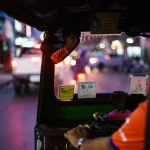
In 2026, most Travelers arrive in Thailand with Google Translate installed and a quiet confidence that technology has the language barrier covered. That confidence usually holds until you’re standing in the rain outside a tuk-tuk in Chiang Mai, your phone battery is at 4%, the driver speaks zero English, and you need to tell him you are going to the wrong address. Knowing even a handful of real Thai phrases — spoken out loud, not typed into a screen — changes the entire experience. Thais respond warmly when you try, even imperfectly. That warmth opens doors that no app can unlock.
Greetings, Politeness, and Why Your Gender Changes Every Sentence
The first thing to understand about spoken Thai is that politeness particles are not optional. They are baked into the language and signal respect. In Thai, how you end a sentence tells people whether you are being polite or rude — and it changes depending on whether you are male or female.
Male speakers end polite sentences with krap (also spelled khrap, pronounced with a short, soft “p” at the end — almost like “kup”). Female speakers use ka (a falling, gentle sound). These particles appear at the end of almost every sentence when you want to sound respectful.
- Sawadee krap / Sawadee ka — Hello, goodbye, good morning, good evening. One phrase covers all of it. The “w” in sawadee is soft, almost like “sawahdee.”
- Khop khun krap / Khop khun ka — Thank you. Say this often. Thais notice when visitors are genuinely grateful.
- Mai pen rai — No problem, never mind, it’s okay. You’ll hear this constantly. It captures the Thai attitude toward life’s small frustrations.
- Kho thot krap / Kho thot ka — Excuse me, or I’m sorry. Use it before asking a question or when you bump into someone.
- Chai — Yes. Mai chai — No. Simple and essential.
- Phood Thai mai dai — I can’t speak Thai. Honest, practical, and often gets a smile.
- Phood cha cha noi dai mai? — Can you speak slowly please? Genuinely useful when someone replies to your attempt at Thai with a full paragraph of Thai.

The wai — pressing your palms together at chest height and giving a slight bow — accompanies many greetings. You do not need to initiate the wai with market vendors or tuk-tuk drivers, but if someone wais you, return it. Failing to return a wai reads as dismissive.
Tones: The Part Every Guidebook Undersells
Thai is a tonal language with five tones: mid, low, falling, high, and rising. The same syllable spoken in a different tone means a completely different word. The classic example is mai, which can mean new, wood, not, silk, or a question marker — entirely depending on the tone. This is what makes Thai genuinely hard for English speakers to master.
The good news: for basic travel purposes, context does most of the heavy lifting. If you are standing in front of a mango sticky rice stall and you point at the food while saying aroy (delicious), nobody will misunderstand you because you used a slightly wrong tone. Where tones matter more is in numbers, names, and directional phrases where the meaning is less obvious from context.
A Practical Tone Cheat Sheet
- Mid tone — flat, like saying a word in a monotone. Think of how you’d say “okay” when mildly resigned.
- Low tone — start slightly below your normal speaking pitch and hold it there. Not dramatically low — just a notch down.
- Falling tone — start mid-high and let your voice drop. Like the “oh” in “oh no.”
- High tone — push your voice above your normal range and hold. Like a question in English but without the rise at the end.
- Rising tone — start low and sweep upward, like the end of a genuine English question: “Really?”

For the phrases in this guide, don’t spend time memorizing tone markers before your trip. Instead, listen. YouTube has hundreds of short clips with native Thai speakers saying these exact travel phrases. Listen three times, repeat out loud three times, and you will land close enough for real communication. The muscle memory of hearing and speaking beats any diagram on a page.
Numbers, Prices, and Holding Your Own at a Market
Thai numbers are consistent and logical — once you know 1 through 10, you can build every number you need by combining them. These are worth memorising properly because you will use them every single day.
- 1 — neung
- 2 — song
- 3 — sam
- 4 — see
- 5 — ha
- 6 — hok
- 7 — jet
- 8 — paet
- 9 — gao
- 10 — sip
- 20 — yee sip
- 100 — roi
To say 15: sip ha. To say 350: sam roi ha sip. It builds predictably.
Essential Money and Bargaining Phrases
- Tao rai krap/ka? — How much is it? The most useful four syllables in Thailand.
- Phaeng pai — Too expensive.
- Lot dai mai? — Can you reduce the price? Polite but direct. Use it at markets and with tuk-tuks, not in proper shops.
- Ao neung an — I’ll take one of these. Point at the item as you say it.
- Mai ao krap/ka — I don’t want it. Essential when you are being followed by persistent vendors.
- Mee … mai? — Do you have…? Fill in the blank. Mee nam mai? — Do you have water?

Bargaining is appropriate at open-air markets, street stalls, and when negotiating transport. It is not appropriate at convenience stores, restaurants with printed menus, or malls. The rule of thumb: if there is no price tag visible, the price is often negotiable. Start at roughly 60–70% of the asking price and meet somewhere in the middle. Keep the exchange light and friendly — hard bargaining over small amounts leaves a bad taste on both sides.
Getting Around: Taxis, Tuk-Tuks, and Not Getting Lost
Thailand’s transport landscape shifted considerably by 2026. Bangkok’s MRT and BTS networks now cover more of the city than ever, and the Grab app handles most urban journeys cleanly with in-app addresses. But outside the app ecosystem — in smaller towns, on islands, or when technology fails — spoken directions remain essential.
- Pai … dai mai krap/ka? — Can you go to…? Follow with the destination name.
- Yoot tee nee — Stop here. Say it clearly when you want the driver to pull over. Knowing this phrase has saved countless travelers from being taken two kilometres past their guesthouse.
- Glai — Far. Glai mai? — Is it far?
- Glai glai — Close, nearby.
- Taang sai — Turn left. Taang kwa — Turn right. Trong pai — Go straight.
- Sathanee rot fai yoo tee nai? — Where is the train station? Swap the last word for your destination: sathanee rot me (bus station), sanam bin (airport), rong raem (hotel).
- Khit tao rai? — How much do you think it will cost? Good to ask before getting into an unmetered vehicle.
In Bangkok’s older neighbourhoods and on islands like Koh Samui, the smell of two-stroke motorbike exhaust still fills the narrow sois (side streets) in the mornings — this is the texture of local transport that no BTS station reaches. Having even basic directional phrases lets you navigate that world confidently.

Ordering Food and Managing Dietary Needs
Thai food culture rewards people who engage with it directly. Pointing at pictures works, but asking the right questions gets you a better meal and sometimes a better price on a dish the vendor is proud of.
- Aroy mak — Very delicious. Say this after eating and watch the cook’s reaction.
- Phet nit noi — A little spicy. Mai phet — Not spicy. Phet mak — Very spicy (if you mean it).
- Mai sai phak chee — Without coriander/cilantro. A frequent request.
- Mai sai naam pla — Without fish sauce. Useful for vegetarians.
- Kin jay — I eat vegetarian (Buddhist vegetarian, which typically means no meat and no pungent vegetables like garlic and onion). Look for yellow flags with red text outside restaurants — these signal jay food.
- Kin mangsa wirat — I eat vegetarian (Western style, meaning no meat but garlic and onion are fine). Important distinction in Thailand, where these are treated differently.
- Ao … an neung — One order of… Point at the dish or say the name.
- Kep tang noi krap/ka — Bill please. You can also mime signing a cheque — universally understood.
- Nam plao krap/ka — Still water, please. Nam yen — Cold water.
At a night market stall, the sizzle of a wok hitting high heat and the bright, sharp smell of garlic in oil tells you a dish is being made fresh. Being able to say phet nit noi at that exact moment — right as the cook looks at you for direction — is the difference between a personalised meal and one made for a generic tourist.
Emergency Phrases and Health Situations
Nobody plans to need these, but knowing them before something happens is genuinely important. In a medical or safety situation, clarity matters more than politeness particles.

- Chuay duay! — Help! (urgent)
- Riak rot payaban duay — Call an ambulance.
- Tam ruat — Police. Riak tam ruat — Call the police.
- Mai sabai — I don’t feel well.
- Jep tee nee — It hurts here. Point to the area of pain.
- Pom/Chan pae … — I am allergic to… (pom for male speakers, chan for female). Then name the allergen in English — most medical staff understand common allergen words.
- Rong payaban yoo tee nai? — Where is the hospital?
- Khanom yang mee insurance — I have insurance. Say this at the hospital registration desk.
- Klua — Fear/scared. Yang klua — I am scared. Useful in unexpected situations to convey you are distressed.
Thailand’s tourist-area hospitals and international clinics, particularly in Bangkok, Phuket, and Chiang Mai, have strong English-speaking staff in 2026. In rural areas and smaller islands, the situation is less consistent. These phrases bridge the gap when English breaks down.
2026 Budget Reality: What You’ll Be Paying and How to Ask About It
Prices in Thailand have risen noticeably since 2023, partly due to post-pandemic demand and rising domestic costs. Here is a realistic picture of what you will spend, and what to say when discussing money.
Street Food and Casual Eating
- Budget: 50–80 THB per dish at street stalls and local canteens
- Mid-range: 120–250 THB at sit-down Thai restaurants with menus
- Comfortable: 350–700 THB at modern Thai restaurants in Bangkok or resort towns
Transport
- Bangkok BTS/MRT single journey: 17–70 THB depending on distance
- Grab car ride (10 km in Bangkok): 100–180 THB
- Tuk-tuk (always negotiate): 60–200 THB for short trips
- Songthaew (shared taxi) in Chiang Mai: 30–60 THB per person
Accommodation
- Budget guesthouse/hostel: 350–700 THB per night
- Mid-range hotel: 800–2,500 THB per night
- Comfortable hotel: 2,500–6,000 THB per night
When you want to ask whether a price includes something specific — breakfast, for instance — say: Ruam ahan chao duay mai? (Does it include breakfast?). For transport, Khit tao rai tot? means “What’s the total cost?” Both phrases have saved travelers from unpleasant surprises at checkout.

Frequently Asked Questions
Do I really need to learn Thai phrases if I’m only visiting tourist areas?
Technically no — English is widely spoken in tourist zones in 2026. But practically, knowing basic phrases changes the quality of your trip. Vendors respond differently, drivers are more honest with fares, and locals treat you with noticeably more warmth. Even ten phrases make a measurable difference to how your journey feels.
Is it offensive if I get the tones wrong?
Not at all. Thais are accustomed to foreigners attempting the language with imperfect tones. Context, body language, and the situation around you carry a lot of meaning. Getting tones wrong might occasionally cause confusion or amusement — neither is a problem. Trying is always better than not trying.
What is the most important Thai phrase to know before arriving?
Beyond sawadee krap/ka, the single most practical phrase is tao rai krap/ka — how much is it? You will use it multiple times every day, from markets to transport to food stalls. It signals intent, opens negotiation, and works in virtually every commercial exchange you will have in Thailand.
Do Thai people use the wai greeting with tourists?
Yes, frequently in service contexts — hotel staff, temple workers, and restaurant servers often wai visitors. You should return the wai when it is given to you. Do not wai children, street vendors, or junior staff first — the wai flows upward by social hierarchy. When uncertain, a slight nod with a smile is always appropriate.
Are translation apps reliable for Thai in 2026?
Translation apps have improved considerably and handle written Thai (menus, signs) well. Spoken Thai remains harder for apps to process accurately in noisy environments like markets and traffic. For emergencies, medical situations, or complex negotiations, apps are a useful backup — but not a replacement for knowing key phrases by heart.
📷 Featured image by chris robert on Unsplash.