On this page
- Why Chiang Mai Still Delivers in 2026
- Sacred Temples Worth Your Time
- Elephant Experiences Done Right
- Cooking Classes and Food Markets
- Night Bazaar, Walking Streets, and Markets
- Adventure and Nature Activities
- The Old City and Moat Area
- Chiang Mai’s Arts and Craft Scene
- Meditation, Wellness, and Muay Thai
- Day Trips from Chiang Mai
- Nightlife, Rooftop Bars, and Live Music
- 2026 Budget Breakdown
- Practical Tips for 2026
- Frequently Asked Questions
💰 Click here to see Thailand Budget Breakdown
💰 Prices updated: October, 2026. Budget figures are estimates — always verify before travel.
Exchange Rate: $1 USD = ฿33.60
Daily Budget (per person)
Shoestring: ฿900.00 – ฿1,800.00 ($26.79 – $53.57)
Mid-range: ฿2,150.00 – ฿4,000.00 ($63.99 – $119.05)
Comfortable: ฿6,000.00 – ฿12,000.00 ($178.57 – $357.14)
Accommodation (per night)
Hostel/guesthouse: ฿90.00 – ฿750.00 ($2.68 – $22.32)
Mid-range hotel: ฿1,400.00 – ฿3,500.00 ($41.67 – $104.17)
Food (per meal)
Budget meal: ฿70.00 ($2.08)
Mid-range meal: ฿250.00 ($7.44)
Upscale meal: ฿1,000.00 ($29.76)
Transport
Single metro/bus trip: ฿30.00 ($0.89)
Monthly transport pass: ฿1,155.00 ($34.38)
Why Chiang Mai Still Delivers in 2026
A lot of travelers arrive in Chiang Mai expecting it to feel like a smaller, quieter Bangkok. It doesn’t. The north has its own pace, its own food, its own dialect, and its own soul — and after the infrastructure upgrades of the past two years, the city has somehow managed to get more accessible without losing what made it worth visiting in the first place. The one real pain point in 2026 is the smoke season. Between February and April, agricultural burning pushes air quality into genuinely unhealthy territory, and some visitors who didn’t plan around it have regretted it. Time your trip right, and Chiang Mai remains one of Southeast Asia’s most rewarding cities. Here are 25 things that actually earn your time.
Sacred Temples Worth Your Time
Chiang Mai has over 300 wats, which sounds overwhelming until you accept that maybe a dozen deserve your full attention and the rest are living neighborhood spaces you stumble into between errands. The good news: the best ones are genuinely spectacular.
1. Wat Phra That Doi Suthep
The gold-plated chedi on the mountain above the city is the image most people associate with Chiang Mai, and it earns that reputation. Take the songthaew from near Chiang Mai Zoo for around 50 THB per person up the mountain road, climb the 309-step naga staircase, and stand at the top as the valley spreads out below you in the early morning haze. The gilded pagoda catches the light around 7–8am in a way that feels almost theatrical. Get there before 9am to beat the tour buses.
2. Wat Chedi Luang
In the heart of the Old City, this 15th-century temple complex houses a partially ruined chedi that was once the tallest structure in the Lanna kingdom. The monks here participate in “Monk Chat” most mornings — a genuinely interesting 30-minute conversation program where novices practice English and answer questions about their daily life. No performance, no charge, no agenda.

3. Wat Suan Dok
Less visited than Chedi Luang but architecturally striking, especially at dusk when the white chedis against the purple mountain backdrop become almost surreal. This is also a strong base for the city’s meditation programs if that’s on your list.
4. Wat Umong
A forest temple with underground tunnels dating back to the 1300s. Quiet, slightly mossy, and filled with philosophical quotes tacked to trees. The turtles in the pond don’t care that you’re there. This is one of the few temples in Chiang Mai that genuinely rewards a slow, aimless wander.
5. Wat Sri Suphan (Silver Temple)
In the Wualai silversmith district south of the Old City. The entire bot is covered in hand-beaten silver and aluminium panels — intricate, obsessive work that catches afternoon light beautifully. Note that women cannot enter the main hall, though the exterior is freely viewable and impressive enough.
Elephant Experiences Done Right
6. Spend a Day at an Ethical Elephant Sanctuary
This is arguably the single most important activity decision you’ll make in Chiang Mai. The rule in 2026 is straightforward: if the elephants are performing, giving rides, or being trained with hooks, walk away. The reputable sanctuaries — Elephant Nature Park in Mae Taeng, Elephant Jungle Sanctuary, and Ran-Tong Elephant Care — let you feed, walk alongside, and observe elephants in semi-natural settings. Elephant Nature Park was founded by Sangduen “Lek” Chailert and remains the benchmark for elephant welfare in Thailand.
Half-day programs run from around 1,500–2,500 THB. Full-day programs including lunch and a longer forest walk cost 3,500–4,500 THB. Book directly through the sanctuary’s website — third-party resellers in the Old City charge significantly more and the money doesn’t always reach the animals.
Cooking Classes and Food Markets
7. Take a Chiang Mai Cooking Class
The standard format is a market visit in the morning followed by cooking four to five northern Thai dishes, then eating everything you made. The market stop at Warorot (Kad Luang) or the Ton Payom market near Chiang Mai University is often the better half — you learn to identify ingredients like galangal, kaffir lime leaf, and long coriander in the context of a working market, not a tourist demo kitchen. Class prices range from 900–1,800 THB for a half-day session.
8. Eat at Warorot Market (Kad Luang)
This is the city’s oldest and most functional fresh market, a two-storey building near the Ping River that local families use daily. The ground floor is produce and dried goods. The upper floor has some of the cheapest and best northern Thai food in the city — khao soi, sai oua (northern sausage), nam prik noom (green chilli dip) with crispy pork rinds, and mango sticky rice. Budget 60–120 THB for a full meal.
9. Nimman Food Scene
Nimmanhaemin Road and its surrounding sois have shifted from being purely cafe-and-brunch territory to a genuinely eclectic dining district in 2026. Soi 9 and Soi 13 are particularly dense with interesting options — Japanese ramen spots, Korean BBQ joints, and a few excellent northern Thai restaurants that serve full-sit-down meals with multiple dishes. The Maya Mall food court on Level 4 remains one of the most reliable cheap options in the area, with most dishes 60–100 THB.
Night Bazaar, Walking Streets, and Markets
10. Saturday and Sunday Walking Streets
Saturday’s walking street runs along Wualai Road in the silversmith district south of the Old City. Sunday’s takes over Wichayanon Road and stretches through the heart of the Old City. Both have food stalls alongside craft vendors — khao niao (sticky rice) with grilled meats, fresh spring rolls, coconut pancakes, and skewers of everything imaginable. Sunday’s street gets very crowded by 7pm; arrive at 5pm when vendors are still setting up and you can actually see the crafts.

11. Chiang Mai Night Bazaar
The permanent Night Bazaar complex on Chang Klan Road has operated for decades. In 2026 it’s still going strong — a mix of fixed-price souvenir shops, negotiable clothing stalls, food courts, and nightly Khantoke dinner-and-dance shows in the upper floors. The prices here are higher than the walking streets, but the advantage is that it operates every night of the week. The basement food court (Anusarn Market) is the best eating option in the complex.
12. Talat Rot Fai Chiang Mai (Night Market)
The Saturday Ratchaphruek Night Market near the Royal Park Rajapruek is Chiang Mai’s version of Bangkok’s train market concept — vintage goods, local designers, live acoustic sets, and serious street food spread across a large outdoor space. It draws a mostly local Thai crowd, which keeps the food quality high and the prices honest. Getting there requires a Grab car (around 80–120 THB from the Old City).
Adventure and Nature Activities
13. Zip-Lining Through the Jungle Canopy
Flight of the Gibbon and Jungle Flight are the two established operators with the longest track records for zip-line canopy tours in the forests north of Chiang Mai. Half-day tours run from 2,500–3,500 THB including hotel transfer. The platforms are up to 40 metres above the forest floor, and on a clear morning in November or December, the view across the canopy toward the mountains is genuinely worth the briefing session and the harness.

14. Mountain Biking on Doi Suthep’s Trails
X-Trail Chiang Mai and a handful of smaller operators run guided mountain bike descents from near the summit of Doi Suthep down to the city. You’re not doing the climbing — a truck takes you up, you ride down through forest trails and rural villages. It’s not technical, and it suits people with basic bike confidence. Half-day tours run around 1,200–1,800 THB.
15. Trekking to Hill Tribe Villages
Two and three-day treks into the mountains north and west of Chiang Mai remain popular in 2026. The responsible operators brief you on community engagement ethics before the trip — no showing up with candy for children, no treating communities like a zoo. Pooh Eco Trek and Eagle House are frequently recommended by long-term expats for running small groups with actual English-speaking guides rather than someone who can say “up here, down here.”
The Old City and Moat Area
16. Walk the Old City Walls and Moat at Golden Hour
The square moat that surrounds the original Lanna city is about 1.5 kilometres per side — a 6-kilometre walk around the entire perimeter that takes around 90 minutes at a relaxed pace. Do it between 5:30pm and 7pm when the light drops behind the mountains and the moat reflects the remaining sky. The surviving sections of the ancient brick walls are at the corner bastions, particularly Tha Phae Gate on the east side, which is still the emotional centre of the city. Street food carts set up around the gate by 6pm.
17. Explore the Lanes Inside the Old City
The grid of lanes between the main roads inside the moat is where the real character lives. Ratchamankha Road is lined with boutique guesthouses, small galleries, and quiet cafes. The alley behind Wat Chedi Luang has a cluster of Monk Chat benches and shade trees. Even without a specific destination, 45 minutes of wandering inside the moat will produce at least one temple courtyard, one unexpected café, and one cat sleeping somewhere it has no right to be comfortable.

Chiang Mai’s Arts and Craft Scene
18. Bo Sang Umbrella Village and San Kamphaeng Road
The handicraft corridor along San Kamphaeng Road, about 9 kilometres east of the Old City, is where Chiang Mai’s traditional craft industries are concentrated — teak furniture, lacquerware, hand-painted silk, carved stone, and celadon ceramics. Bo Sang village at the end of the road specialises in hand-painted paper and fabric umbrellas. You can watch artisans paint the bamboo-and-mulberry-paper parasols in real time. Prices are fixed in most shops, and quality is genuinely higher here than in the Night Bazaar souvenir stalls.
19. Wualai Road Silverwork
The Saturday Walking Street’s home territory is also the working heart of Chiang Mai’s silversmith community. Several workshops along Wualai Road welcome visitors to watch the repousse process — silver sheet hammered over carved wooden molds to create the relief patterns on bowls, belts, and jewelry. A hand-beaten silver bracelet starts around 400–800 THB depending on weight and pattern complexity.
Meditation, Wellness, and Muay Thai
20. Temple Meditation and Mindfulness Retreats
Wat Suan Dok runs a Monday evening meditation class open to foreigners for a donation, and Wat Umong has longer retreat options. For dedicated retreat programs, Northern Insight Meditation Centre (Wat Ram Poeng) runs 10-day Vipassana courses in the tradition of Mahasi Sayadaw — serious, silent, and structured. Apply months in advance. For something less intense, several guesthouses around the Old City run daily one-hour introductory sessions for 200–400 THB.
21. Thai Massage on Every Corner — Choose Carefully
Chiang Mai has more massage shops than it has 7-Elevens, which is saying something. The Lila Thai Massage chain employs women from Bangkok’s Lard Yao women’s prison as part of a rehabilitation program — it’s genuinely good massage at honest prices (250–350 THB for one hour of traditional Thai massage) and your money goes somewhere worth supporting. The school at the Old Medicine Hospital on Wichayanon Road is another consistently high-quality option.

22. Watch a Live Muay Thai Fight
Kawila Boxing Stadium near the Night Bazaar hosts fights most Friday and Saturday nights. A ringside seat costs around 400–600 THB. The atmosphere is local, loud, and completely unpretentious — not a tourist production. Arrive early to watch the undercard bouts featuring younger fighters. The betting and the pre-fight rituals (wai kru ram muay) are as interesting as the fights themselves. If you want to train, most Muay Thai gyms in the city offer walk-in morning sessions for around 400–500 THB per session.
Day Trips from Chiang Mai
23. Doi Inthanon National Park
Thailand’s highest mountain at 2,565 metres is about 90 kilometres southwest of Chiang Mai and takes around 2 hours by car. The park holds waterfalls, hill tribe villages, cloud forest, and two Royal Chedis built to honour the King and Queen — set at around 2,200 metres altitude with manicured gardens that feel oddly out of place in the best way. Entry is 300 THB for foreigners (updated rate from 2025). Hire a driver for the day (1,200–1,800 THB) or join a shared minivan tour (600–900 THB per person).
24. Chiang Rai Day Trip
Three hours north by bus (first-class buses from Arcade Bus Terminal, 150 THB) or 2.5 hours by car. The White Temple (Wat Rong Khun), Black House (Baan Dam Museum), and Blue Temple (Wat Rong Suea Ten) are all within 30 minutes of each other. This is a genuinely full day — leave Chiang Mai by 7am and return by 8pm if you’re driving. Note that the White Temple was further restored in 2025 after flood damage, and new sections of the complex have opened.

25. Pai — The Mountain Town
762 curves of mountain road northwest of Chiang Mai, Pai is technically a 3-hour minivan ride (150 THB from Chiang Mai Arcade Terminal) but the journey is half the experience. The town itself is small, walkable, and heavily backpacker-oriented with hot springs, a canyon, waterfall walks, and one of the most relaxed atmospheres in northern Thailand. It’s best as an overnight trip rather than a day return, but the day trip is doable if you have a strong stomach for mountain roads.
Nightlife, Rooftop Bars, and Live Music
Chiang Mai’s nightlife is compact but genuine. Nimman is where the creative-class drinking happens — cocktail bars, wine rooms, and the occasional rooftop with mountain views. The bars along Nimmanhaemin Soi 9 are walking distance from each other and stay active until midnight. The Riverhouse Pub near the Night Bazaar has live acoustic sets most evenings and a terrace over the Ping River that gets breezy in cool season. For something with more edge, the bars inside the Old City along Moon Muang Road and around Tha Phae Gate stay open late and attract a younger, more mixed crowd. The area around Zoe in Yellow (on Ratvithi Road) has long been the backpacker party zone — still going in 2026, still noisy, still a good time if that’s what you’re after.
2026 Budget Breakdown
Chiang Mai remains one of the most affordable cities in Thailand for independent travelers, though prices have moved since 2023.
- Budget traveler (dorm beds, street food, songthaews): 600–900 THB per day. A dorm in a clean Old City hostel runs 200–350 THB per night. Street meals average 60–100 THB each.
- Mid-range traveler (private room, mix of street food and sit-down restaurants, Grab rides): 1,500–2,500 THB per day. A solid guesthouse or boutique hotel near the Old City or Nimman costs 700–1,400 THB per night for a private room with air-con.
- Comfortable traveler (design hotel, full-service meals, private transfers): 3,500–6,000+ THB per day. Boutique design hotels in Nimman and the riverside district charge 2,500–5,000 THB per night. A sit-down dinner for two with drinks in a mid-range restaurant runs 400–900 THB.

Activities are the main variable cost. An ethical elephant sanctuary day, a cooking class, and a Doi Inthanon trip can add 8,000–12,000 THB to a week’s budget on their own. Plan these in advance.
Practical Tips for 2026
Getting Around
The red songthaews (shared pickup trucks) are Chiang Mai’s public transit and should be your default for short hops — they run fixed routes and charge a flat 30–40 THB per trip within the city. Grab is reliable and transparent on pricing for point-to-point travel. Tuk-tuks are negotiation-heavy and typically more expensive than Grab for the same distance. Many travelers rent a motorbike (200–300 THB per day with a passport deposit) — perfectly sensible if you have experience, risky if you don’t.
New Airport Terminal Update
Chiang Mai International Airport’s expanded international terminal, which began phased opening in late 2025, is now fully operational. Check-in and immigration processing times have improved, but the airport is handling significantly more flights following the expansion. Arrive 2 hours before domestic flights and 2.5 hours before international departures to avoid stress.
SIM Cards and Connectivity
AIS, DTAC (now part of True), and NT all have counters in the arrivals hall. A 30-day tourist SIM with 30GB data runs around 299–399 THB. Connectivity is excellent throughout the city and in most national parks and trekking zones.
Smoke Season — The Serious Warning
February through April is when agricultural burning season creates PM2.5 levels that regularly exceed 150 µg/m³ — well into the “unhealthy” and sometimes “hazardous” range. Check the Air4Thai or IQAir apps before booking. People with respiratory conditions should consider avoiding this period entirely. November through February is cool, dry, and clear — the best weather window by a significant margin.

Safety and General Common Sense
Chiang Mai is safe by most regional standards. The main risks are traffic (motorbike accidents remain the top cause of tourist injury in Thailand), temple dress code violations leading to discomfort or being turned away (cover shoulders and knees), and overpaying for activities booked through guesthouses rather than directly. Tap water is not drinkable — bottled water is everywhere for 7–15 THB per 1.5 litre bottle.
Tipping
Not mandatory, but appreciated. Leave 20–50 THB at street food stalls if you were treated well. In sit-down restaurants, 10% is a fair tip. Massage therapists appreciate 50–100 THB on top of the session price. Elephant sanctuary guides, cooking class instructors, and trek leaders typically receive 100–200 THB per day from a satisfied group.
Frequently Asked Questions
How many days do you need in Chiang Mai?
Four to five days covers the Old City temples, one major activity (elephant sanctuary or cooking class), the walking streets, and a day trip. Seven days lets you go deeper — a second day trip, a meditation session, more time in the craft districts. Chiang Mai rewards a slower pace, and most people who stay a week wish they had stayed two.
Is Chiang Mai worth visiting in 2026?
Yes, provided you avoid the smoke season (February–April). The city has improved its infrastructure with the expanded airport terminal and better public transport options, while the core appeal — temples, food, nature, crafts, and a manageable pace — remains intact. It’s more developed than five years ago but hasn’t turned into a resort city.

What is the best area to stay in Chiang Mai?
The Old City moat area suits first-time visitors who want walkable access to temples and markets. Nimman suits travelers who want cafes, restaurants, and a more modern urban feel. The Riverside (Charoen Prathet Road area) suits those who want boutique hotels in a quieter setting. Budget travelers should look at hostels inside or just east of the Old City on Moon Muang Road.
How do you get from Chiang Mai to Bangkok?
By air is the default — AirAsia, Thai Airways, Bangkok Airways, and Nok Air all fly the route, with flights taking 1 hour 15 minutes. Airfares run 600–2,500 THB depending on lead time and airline. The overnight sleeper train from Chiang Mai Railway Station takes 12–14 hours and is a genuinely enjoyable experience — first-class sleeper berths cost around 1,100–1,300 THB and are usually clean and comfortable.
Is Chiang Mai safe for solo travelers?
Chiang Mai is considered one of Thailand’s safest cities for solo travel, including solo female travelers. The Old City is well-lit, walkable, and has a dense enough tourist population that you’re rarely isolated. Standard precautions apply: don’t leave drinks unattended in bars, use Grab at night rather than flagging random tuk-tuks, and share your itinerary with someone before trekking into the mountains.
Explore more
The Ultimate Guide to Chiang Mai Nightlife: Bars, Clubs & Live Music
The Ultimate Chiang Mai Food Guide: Where to Eat Now
Chiang Mai Night Bazaar: Your Essential Guide to Bargains, Bites & Souvenirs
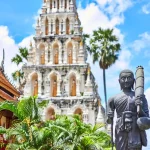
📷 Featured image by Tom Lorber on Unsplash.